
For firetruck enthusiasts, young aspiring firefighters, and seasoned professionals in the firefighting and emergency services, understanding the price of a fire truck is more than just numbers; it’s about recognizing the essential role these vehicles play in community safety and emergency response. This comprehensive guide will take you through the various types of fire trucks, their costs, the factors influencing those prices, pricing for specialized units, and the latest market trends. By diving into these chapters, readers will gain insight into how each fire truck is not only a vehicle but a crucial asset in firefighting efforts and emergency situations.
Pricing the Engine of Service: Decoding How Much a Fire Truck Costs Across Sizes, Specs, and Missions
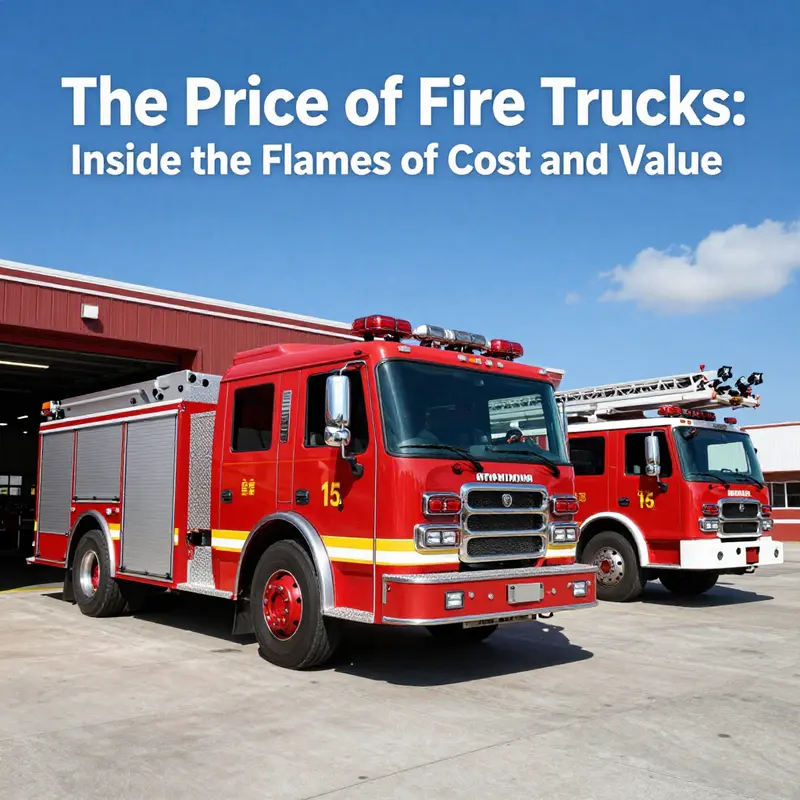
When a fire department sits down to plan a new apparatus, the sticker price is only the last line on a long page. The final figure reflects a careful balance of speed, safety, and serviceability, all weighed against the department’s needs and its community’s expectations. A fire truck is not a single commodity but a highly customized platform built to perform across a wide range of emergencies. The price is driven by the type of vehicle, its size and weight, the level of equipment installed, and how much time and labor the manufacturer must invest to tailor the chassis to a department’s exact requirements. In practice, there is no universal price tag. The market spreads widely because every fire department designs its own mission profile, from basic life-saving water operations to high-angle rescues and hazardous materials responses. The result is a spectrum that stretches from modest sum to seven figures, depending on how far a department chooses to go beyond the basics.
Different configurations anchor the conversation about cost. The most common workhorse, the pumper fire engine, carries water, a pump, hoses, and basic defense tools. Its price tends to sit in a broad middle ground. While older ranges described a spread from roughly two hundred fifty thousand to six hundred thousand dollars, contemporary market dynamics and more robust safety and efficiency standards have nudged typical authorizations higher. A practical expectation for a new standard pumper is often in the range of three hundred thousand to five hundred thousand dollars, though a department that opts for higher performance pumps, larger water tanks, or specialized onboard equipment can easily drift toward or beyond the upper end of that band. These numbers are not merely numbers; they reflect decisions about how quickly a fire engine can deploy to a scene, how much water it can carry before being connected to a hydrant, and how many crew-ready configurations it can support during a complex incident.
Ladder trucks, or aerial platforms as they are commonly described, operate on a different calculus. The extendable ladder adds reach, height, and operational flexibility, allowing crews to access upper floors and rooftops with greater speed and safety. The price scale for these units is steeper, driven by the need for a robust chassis, hydraulics, a long ladder segment, stabilizing outriggers, and a raft of safety and stabilization systems. Even with steady manufacturing technology, ladder trucks sit in a higher price tier. Estimates commonly place standard aerial ladders from around six to seven hundred thousand dollars, with many configurations easily surpassing one million dollars and occasionally climbing toward or beyond the one and a quarter million mark, depending on ladder length, load capacity, and the sophistication of on-board systems.
Rescue pumper units blend firefighting capability with enhanced rescue tools. They ride in between the standard pumper and the specialized ladder or hazmat platforms in terms of price, reflecting the integration of cutting-edge rescue tools, heavier-duty pump configurations, and often larger crews and compartments designed to carry a broader set of equipment. Pricing for these combinations typically lands somewhere in the mid-range, commonly between three hundred fifty thousand and seven hundred thousand dollars. As with other apparatus, a department paying for advanced stabilization systems, cutting-edge lighting, or specialized medical equipment may see figures that exceed the baseline range.
Specialized units, including hazmat, foam, or wildland variants, present the highest end of the spectrum for many departments. These trucks are designed for particular kinds of emergencies and require specialized tanks, pumps, filtration, containment features, and unique safety systems tailored to the hazards they face. The price range for these specialized configurations often starts around four hundred thousand dollars and can extend well past the million-dollar line, especially when the mission profile demands extreme reliability, fast deployment, and heavy-duty protective layers against hazardous materials or rugged environments. The overarching message is simple: the more a department expects a vehicle to do—across conditions, terrain, and incident types—the higher the price can climb.
A central truth underpins all these figures: the base chassis matters, but what you put on top of it matters even more. The chassis type—the foundation of any fire apparatus—varies by brand, model, performance envelope, and the expected life of the fleet. Heavier, more capable chassis enable better performance under load but add to the upfront investment. Then there is the equipment list. Pumps, hoses, ladders, lights, sirens, onboard tools, and modern electronics are not merely add-ons; they define the vehicle’s response time, its ability to sustain operations during a long incident, and the crew’s ability to stay safe. A larger water tank or higher-capacity pump, for instance, can reduce diving into a hydrant recharge during a multi-scene incident, but those advantages come at a cost. Customization compounds the price further. Departments often demand specific compartment layouts, specialized storage for tools, and configuration of controls for a particular crew flow. The labor and installation processes that assemble the body onto the chassis and integrate the electrical, hydraulic, and software systems are substantial, and they are rarely optional. In the end, every superstructure decision feeds back into the price tag, sometimes in increments that may feel surprising until you understand the ripple effect behind each choice.
The market also accommodates a path for those watching budgets closely: the used-vehicle market. For departments that can accept a shorter service life or that need to stretch funds further, refurbished or pre-owned apparatus can present a compelling option. Prices for used fire apparatus typically fall in a broad range, often between one hundred thousand and three hundred thousand dollars. The caveats, however, are real and nontrivial. With older vehicles come higher maintenance costs, more frequent replacements of key components, and the possibility of safety and reliability concerns that may require more frequent inspections or retrofits to comply with current standards. The upfront savings can be offset by the longer-term financial commitments to keep aging machinery operational and safe. When weighing new versus used, most departments perform a lifecycle cost analysis that examines not just the immediate acquisition price but maintenance, parts availability, potential downtime, and the broader implications for response readiness over the asset’s service life.
Industry observations and market reporting consistently emphasize that there is no single fixed price in this space. The reasons lie in the customization-driven nature of modern fire apparatus and the fact that communities vary widely in their expected response profiles. Some departments emphasize rapid water deployment and quick-mobility crews for urban dispatch, while others require rugged off-road capability for rural or wildland contexts. In practice, the purchase process begins with a department outlining its operational priorities, followed by a procurement phase in which manufacturers or authorized dealers provide quotes tailored to those requirements. The negotiation may involve tradeoffs between upfront price and long-term service agreements, warranties, and maintenance packages. It is common for departments to request several rounds of design iterations before arriving at a final configuration that balances performance, risk, and budget. This flexible, consultative process is central to why the final price can diverge so widely even among vehicles that seem similar on the surface.
From a planning perspective, the decision-making framework used by departments tends to blend tactical and strategic considerations. On the tactical side, the department evaluates how quickly a vehicle can reach a scene, how much water it can deliver, and how many concurrent operations it can support without compromising crew safety. On the strategic side, the department must contemplate total cost of ownership, availability of trained personnel for ongoing maintenance, and the ability to integrate the new apparatus into existing fleet-wide maintenance ecosystems. In many jurisdictions, the financial plan for a new engine includes not just the sticker price but the expected costs of parts, inspections, and potential upgrades over the next decade. The result is a holistic view of affordability that many readers will recognize as a practical approach to investing in public safety. The core takeaway is straightforward: the price you see is the product of many purposeful decisions aimed at aligning a vehicle’s capabilities with the community’s risk profile and service expectations.
For readers curious about market options, the path toward procurement can begin with a survey of available fire-trucks-for-sale options, including both new and used possibilities. The landscape includes a range of configurations and price points designed to meet different budgets and mission requirements. When exploring these choices, it is helpful to consider not only the sticker price but also how the vehicle’s features match the department’s operational realities. A smaller department in a tight budget may prioritize a reliable pumper with essential equipment, while a larger district facing diverse incident types may invest in a ladder or specialized unit with advanced safety and rescue capabilities. The careful alignment of mission, equipment, and maintenance capacity ultimately determines the value of the investment.
For the reader seeking a concrete anchor, it is worth noting that ongoing costs extend beyond the initial purchase. Maintenance contracts, parts availability, and trained technician support shape the true cost of ownership. Departments frequently negotiate service agreements that guarantee timely maintenance and predictable repair costs, reducing the risk of unexpected expenses during emergencies. Training for crews to operate and maintain the new apparatus is another line item that often requires careful budgeting. Even with a well-planned purchase, the total financial picture remains dynamic as technology evolves and standards shift. All of these factors underscore why the question ‘how much is a fire truck?’ cannot be answered with a single figure. It is a question about tradeoffs, risk tolerance, and the practical realities of keeping communities safe with equipment that must perform under pressure, day after day, year after year.
For readers who want a concise frame, consider the following synthesis: a standard new pumper commonly lands in the three-hundred-to-five-hundred-thousand-dollar range, with higher-end configurations edging toward or beyond the five-hundred-thousand-dollar mark. A ladder unit starts higher, frequently touching or surpassing seven hundred thousand dollars and sometimes climbing past a million depending on ladder reach and additional features. Rescue-pumper hybrids sit between these extremes, while specialized units can exceed a million when mission-specific demands demand extreme durability, containment, or off-road capability. Used options offer immediate relief to tight budgets but require careful due diligence to assess life-cycle costs and safety implications. Across all configurations, the central truth remains: the price is a reflection of the protector’s mission in a given place, and the choices reflect the story of that community’s resilience.
To learn more about the nuances behind these figures, readers can consult industry analyses that break down pricing by vehicle type and operational requirements. If you’re exploring options in the market, you can start by reviewing available listings in the broader sector and consider how the features align with local risk profiles. For those who want to delve deeper into the numbers, the FireRescue1 overview provides a detailed framework for understanding how pricing unfolds across different configurations and purposes. It’s a reminder that a fire truck is not merely a purchase; it is a strategic investment in emergency response readiness, community safety, and the ability to respond decisively when seconds count.
In the discussion of options and price ranges, one practical path often stands out for departments balancing budget with capability: web-based marketplaces and direct manufacturer discussions can reveal a spectrum of configurations and real-world price points. As a note for readers who want to explore the market further, a sample entry point for current listings is the page dedicated to fire-trucks-for-sale, which aggregates a range of new and used apparatus suitable for different communities. This resource can help illuminate what is possible within various budget envelopes and how different configurations translate into operational benefits on the front lines. fire-trucks for sale.
External resource: For a comprehensive breakdown of types and pricing with current market ranges, see the detailed analysis provided by FireRescue1. https://www.firerescue1.com/fire-truck-costs/types-and-pricing/article/4096835/
The Price of Readiness: How Equipment, Customization, and Craft Shape Fire Truck Costs
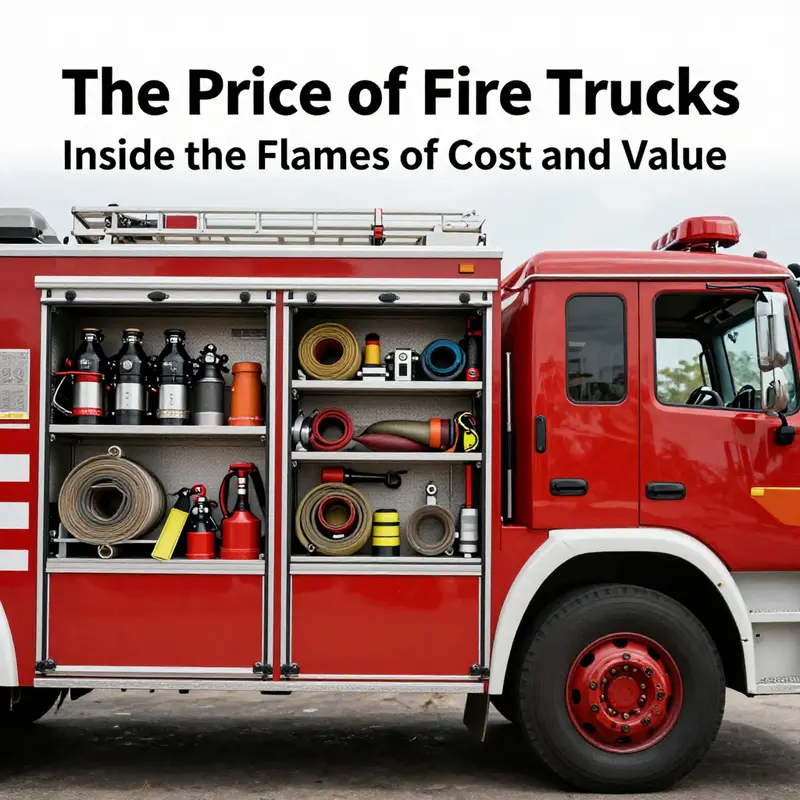
When you ask how much a fire truck costs, you are asking how a city pays for readiness. The short answer is that there is no single price tag. The long answer is a negotiated figure that reflects size, purpose, configuration, and the exact tools a department wants at its side in a burning building, on a smoky hillside, or beside a flooded street. Fire trucks are not off the rack purchases; they are custom built instruments designed to perform under extreme stress, in varied environments, with tight budgets and competing public safety demands. In that sense they resemble specialized equipment more than ordinary vehicles, and their price becomes a conversation about value, durability, and the likelihood of returning to the station ready for the next call.
At the heart of every price discussion is the fundamental choice of chassis. The base vehicle—the sturdy platform that supports pumps, tanks, ladders, and crews—varies widely in size and capability. Heavier, more robust chassis cost more, but they also enable longer service life and greater reliability under demanding conditions. The cost difference is not simply about a bigger machine; it’s about load bearing capacity, driveline endurance, suspension architecture, and the confidence that a chassis can handle long shifts, high mileage routes, and the vibrations of high-pressure hydraulics. As you move from one build to another, the chassis becomes the silent architect of the final price.
Equipment is the next major price driver, and this is where the budget math becomes both intricate and highly individualized. A basic pumper, designed to deliver water quickly to the seat of a blaze, carries a fundamental mix of pumps, hoses, and water tanks. But even within that category, options proliferate. The pump’s output, the size of the water tank, and the number of discharge outlets all influence weight, cost, and maintenance needs. Departments often request higher-capacity pumps to ensure rapid delivery in districts with limited hydrants or large urban footprints. Beyond the pump and tank, specialized equipment such as high-capacity foam injection systems, remote-controlled pumps, thermal imaging cameras, and water-mist or modern dry-chemical extinguishing systems can dramatically alter both performance and price. These features boost firefighting effectiveness, reduce the time to initial knockdown, and improve operator safety, but they also demand more sophisticated components, stricter testing, and more complex integration with the vehicle’s electrical and hydraulic systems.
The texture of customization also leaves a large imprint on the final invoice. No two fire departments use the same tool the same way, so manufacturers tailor builds to fit operational realities. A rural department may prioritize larger water tanks and simpler maintenance access, while an urban department may demand compact body layouts that maximize storage space, integrated EMS capabilities, and sophisticated rescue tools. Customizations can range from altering chassis configurations—such as larger tanks or higher pump capacities—to installing specialized platforms like aerial ladder extensions or turntable ladders with extended reach. Each customization adds design work, engineering validation, testing of fit and finish, and integration with onboard systems. The result is a vehicle that is not only fit for purpose but also compliant with regional safety codes and department standard operating procedures. The more a department asks for in terms of platform features, storage arrangements, and crew accommodations, the more the price drifts upward.
Material and manufacturing quality also shape cost in meaningful ways. High-performance materials such as corrosion-resistant aluminum alloys for bodies and heat-resistant steel for critical components enhance durability and safety but raise procurement costs. Precision manufacturing, welding standards, and stringent quality controls add another layer of expense. The build process often includes extensive testing: leak checks, pressure tests, load simulations, and endurance testing to ensure the vehicle can perform in harsh climates and over a long service life. This is not mere assembly; it is an engineering-driven process that translates expectations into a robust, reliable platform. When a department asks for extended service life, better resale value, or superior resilience in extreme conditions, the price follows suit.
In recent years, the integration of smart technologies has become a defining differentiator in fire truck pricing. Modern apparatus increasingly incorporates intelligent control systems, real-time diagnostics, GPS tracking, and centralized monitoring of all critical subsystems. These digital layers deliver situational awareness, reduce response times, and help with preventive maintenance. They also add to the total cost through software development, cybersecurity considerations, and ongoing software updates. The result is a vehicle that can communicate its status to the station, to command, and to the crew on a run, while also guiding service technicians toward faster, more accurate repairs. For communities weighing upfront costs, these long-term operational advantages—improved uptime, fewer unexpected failures, and better data for budgeting—are essential considerations, even when the initial price is higher.
The aftermarket, often overlooked in casual conversations, quietly shifts the final number as well. After-production additions—lighting packages, enhanced communication systems, specialized tool storage, emergency medical supplies, and modular compartments—improve readiness but also create new procurement lines. Some departments prefer bundled packages that offer convenience and a predictable cost structure; others opt for modular selections, choosing items a la carte to align with a fixed budget. The trade-off is clear: added convenience and readiness versus higher per-item costs and more complex integration. This is where negotiation and a clear definition of needs become crucial. Teams that enter the process with a precise understanding of how a truck will be used, where it will operate, and which capabilities are non-negotiable tend to secure a better balance of upfront cost and long-term performance.
As a practical matter, the price ranges you’ll encounter reflect a broad spectrum of needs. A basic model can start around 100,000 dollars, a reminder that even the most essential rescue and firefighting capabilities come with a price tag shaped by industrial-scale engineering. More common configurations—pumper units with standard pumps, moderate tank sizes, and a solid array of hoses and tools—often fall in the several hundred thousand-dollar range. If a department requires a ladder, a turntable, or a mid-range aerial platform, prices frequently rise into the several hundred-thousand-to-over-a-million-dollar territory, depending on ladder length, reach, and the sophistication of the supporting systems. Rescue pumper configurations, which merge firefighting capacity with specialized rescue tools, typically land in the mid-to-upper hundreds of thousands. When specialized units—such as those designed for hazmat, foam-centric operations, or wildland firefighting—enter the equation, the cost can push beyond a million dollars, especially if long-range ladders, extensive safety systems, or ruggedized components are specified. Each scenario is a negotiation between the department’s mission, the expected operating environment, and the available funding.
The price you pay also reflects the level of customization and the broader lifecycle costs that accompany any purchase. The sticker price on the manufacturer’s quote is only the beginning. A well-planned ownership model considers maintenance, parts availability, and the eventual resale value. Higher-quality materials and more sophisticated electronics can lower lifecycle costs by reducing downtime and extending service life, even if the upfront price is higher. Conversely, aggressively trimmed configurations with cheaper components may save money at the outset but incur higher maintenance costs and more frequent replacements over the truck’s useful life. Departments that build a budget not just for the purchase but for the full lifecycle often achieve better overall value, even if their initial outlay appears larger.
To close the loop on this complex calculus, it helps to recognize that there is no universal price. The final figure emerges from a chain of choices anchored in how a department intends to use the vehicle, what environments it traverses, and how it believes crews should interact with the machine. For readers navigating this landscape, the essential step is to secure multiple quotes, review detailed specifications, and assess how each option aligns with operational goals. Departments should also consider the impact of training, spare parts, and maintenance contracts, all of which influence the true cost of ownership over the years. When a budget process is grounded in a clear understanding of both capabilities and constraints, the resulting fire truck becomes not just a vehicle but a carefully engineered tool for safeguarding communities.
For readers seeking a practical glimpse into current market offerings and listings, many departments and buyers explore available inventory through dedicated listings. If you are researching potential procurement paths or just curious about what is publicly available, you can explore fire trucks for sale to see how different configurations appear in real-world markets. The listings often illustrate how the same price band can yield very different setups, depending on the needs a department prioritizes and the level of customization included. This kind of exposure helps demystify the pricing spectrum and reinforces the idea that the value of a fire truck lies in its tailored alignment with local realities, rather than in a single universal price anchor.
In parallel with this discussion, authoritative guidelines and research continue to shape how departments think about the economics of fire apparatus. The National Fire Protection Association has published resources on fire truck pricing and customization, underscoring that the most significant price drivers are the equipment level and the degree of customization. Their guidance helps standardize expectations and provides a benchmark against which departments can measure proposals from manufacturers and dealers. The NFPA work also emphasizes the importance of design validation, safety testing, and long-term reliability as part of the overall cost calculus. For practitioners seeking a deeper dive into the economics and engineering behind these orders, this external resource offers a rigorous, standards-based perspective that complements field experience and budgeting practice.
The journey from initial concept to final delivery is thus a narrative of trade-offs and strategic choices. Departments weigh the immediacy of need against the promise of future readiness. They balance the allure of cutting-edge technology against the prudence of proven reliability. They consider how a vehicle’s design will influence dispatch efficiency, crew safety, and maintenance workflows for the next two decades. In the end, the price tag is a reflection of a larger commitment: to ensure that the first responders who face danger in service to their communities have the right tools, at the right time, with the right measures in place to stay safe and effective. This is the essence of why fire truck costs vary so widely and why they warrant careful, context-based consideration rather than a single, one-size-fits-all number.
For those who want to explore further or see how these principles apply in real procurement conversations, ongoing discussions and case studies abound across the sector. And while prices will never be uniform, the guiding thread remains clear: equipment quality, customization, and a disciplined approach to lifecycle value determine how much readiness costs today—and how much protection it delivers tomorrow. To further anchor this understanding in established practice, readers can refer to the official resource on pricing and customization for authoritative validation and context: https://www.nfpa.org/Code-Updates/Fire-Service-Resources/Fire-Truck-Pricing-and-Customization
Pricing Specialized Fire Trucks: Understanding Costs and Value
Pricing a fire truck—especially a specialized unit designed for hazardous environments, wildland work, or complex rescue scenarios—depends on more than a single sticker price. It reflects a carefully negotiated mix of core capabilities, lifecycle considerations, and supplier reliability, tailored to a department’s incident patterns, terrain, and budget constraints over decades of service. While the headline price is visible, the true cost of ownership includes components such as chassis selection, pump capacity, body configuration, on‑board tools, safety systems, install labor, and post‑purchase support. This chapter outlines the main price drivers and how departments can approach budgeting for mission-critical equipment.
Core price drivers
- Chassis: weight rating, horsepower, drivetrain, and optional enhancements affect durability and long-term life-cycle costs. Heavier, more capable platforms generally carry higher upfront costs but may reduce maintenance or replacement needs over time.
- Equipment package: pump size and type, ladder length, hose and tool inventories, and the sophistication of onboard systems have a substantial impact on the quote. Higher capabilities typically raise both purchase price and training needs.
- Customization: body layout, crew access, cabinet integration, and safety features influence cost in meaningful ways beyond base specs.
- Installation and labor: assembly, hydraulic and electrical integration, testing, and certification add to the total upfront and can affect lead times.
- Compliance and post-sale support: NFPA 1901 conformity, regional standards, documentation, and service network reliability can shift pricing and risk management.
Total cost of ownership and market dynamics
In most markets, specialized units are offered on a spectrum from modular, lower-cost configurations to high-end platforms with advanced rescue capabilities. Regions with mature supply chains may command higher upfront prices but benefit from robust parts availability and service. Conversely, emerging markets may access lower-entry price points through regional production hubs while requiring trade-offs in customization or support. Beyond the purchase price, departments should consider maintenance, inspections, spare parts availability, and upgrade paths to keep pace with evolving safety standards.
Practical budgeting approach
- Start with defined mission: translate the department’s most frequent incident types and terrain into a precise set of required capabilities.
- Gather multiple quotes based on the same specification to compare inclusions, warranties, training, and support.
- Look beyond the base price to understand what is included (installation, commissioning, and any required downtime during take‑over).
- Evaluate total cost of ownership over a 15–20 year horizon, including maintenance cycles, parts availability, and potential future upgrades.
External references
For additional context on international pricing and compliance considerations, consult procurement guidance and market analyses from reputable sources and the manufacturer specifications for NFPA 1901 compliance. If you are researching options, look at recent listings to understand common configurations and typical lead times. A well‑configured vehicle, paired with reliable maintenance and part supply, tends to deliver lower lifecycle risk and more dependable mission readiness over time.
The Price of Protection: How Economic Currents Shape Fire Truck Costs and What It Means for Communities
When a fire department begins the hunt for a new apparatus, the field of vision expands beyond paint options and hose diameters. The price tag becomes a doorway into a broader conversation about safety doctrine, service expectations, and how communities prioritize risk. Fire trucks are not generic commodities; they are highly customized instruments designed to meet the specific topography, call patterns, and human factors of a department. Because of that, the final price is not a single fixed figure but the result of a chain of decisions about size, configuration, equipment, and the level of sophistication demanded by today’s emergencies. Size matters, yes, but it is only the first dial in a complex instrument. A standard pumper, which forms the backbone of most fleets, tends to fall in a price band that, in recent years, hovers around the low to mid hundreds of thousands of dollars. The general sense today places a typical pumper in the neighborhood of $300,000 to $500,000, with some variations depending on regional market dynamics, optional upgrades, and the level of onboard technology. This range reflects a balance between a reliable water pump, a workable tank volume, durable construction, and the essential equipment that crews rely on to begin suppressing a blaze efficiently. In many departments, this is the workhorse that defines readiness, particularly in communities where the daily call volume does not demand extended aerial reaches or multimodal rescue configurations.
If the mission requires reach beyond the street, ladder trucks enter the conversation. Aerial platforms can dramatically expand a department’s ability to fight fires in high-rise buildings or to conduct rescue operations from elevated positions. The price floor for these vehicles starts higher and climbs quickly with ladder length, booms, and the associated hydraulic and control systems. Contemporary estimates typically begin around $700,000 and can exceed $1 million when extended ladders and advanced onboard technology are needed. The math here is not merely about steel and hydraulics; it is about reliability and ergonomics at height. A few extra feet of ladder or a more sophisticated stabilization system can translate into meaningful improvements in safety margins for crews and occupants. For agencies serving dense urban cores or tall residential towers, those incremental upgrades pay dividends in minutes saved and hazards mitigated, even if the initial sticker price appears daunting.
Between the pumper and the ladder truck lies a space occupied by specialized configurations designed for rescue operations and for specific hazard environments. Rescue pumpers, for instance, blend firefighting capability with a curated set of extrication tools, stabilization gear, and advanced scene-management equipment. These vehicles usually sit in a price range of roughly $400,000 to $700,000, depending on the breadth of rescue tools, the complexity of the water flow systems, and the integration of on-board technology. In the same vein, specialized units built to address HazMat, foam deployment, or wildland interfaces typically command higher costs, often in the $400,000 to over $1 million zone. The common thread is that the more a department needs to address unique contingencies, the more the price reflects not just a bigger machine, but a smarter, more adaptable one.
What drives these price variations? Several constants run through the calculation. The chassis choice matters as a financial anchor. Heavier, high-capacity platforms command premium pricing because they demand more robust frames, stronger suspensions, and powertrains engineered to sustain long, demanding service. Yet the chassis is but the stage for the drama of equipment. The pump and water handling configuration, the type and length of ladders, the sheer number of hoses and fittings, the lighting and communication systems, and the onboard safety features all push the total upward. The equipment list is not merely about capability; it is about reliability, maintenance access, and the ease with which crews can operate under stress. And then there is customization—the tailored interior layouts, the storage solutions, and the ergonomic design details that reduce fatigue and speed response times during emergencies. Customization, in short, is not a cosmetic flourish; it is a strategic investment that keeps responders effective when every second counts.
Labor and installation complete the triad of price-influencing factors. The shipyard or manufacturer must assemble the body onto the chassis, integrate engines and pumps, install electrical and hydraulic systems, and run a battery of tests to verify performance. The more bespoke the configuration, the longer the build time and the greater the engineering effort required. This is why two trucks that look similar on the showroom floor can diverge in price by tens or even hundreds of thousands of dollars once the final fit and finish are decided. The long horizon of a fire department’s service life also makes the economics of maintenance highly consequential. A higher upfront price can be counterbalanced by features that reduce downtime, facilitate easier parts replacement, and allow for simpler upgrades as technology evolves. In that sense, the initial price becomes a lens into the anticipated lifecycle costs, not a solitary marker of value.
Macro-economic conditions inject another layer of complexity into the pricing puzzle. In recent years, the cost of key inputs—steel, electronics, tires—has risen, sometimes sharply. Inflation and global supply chain disruptions have pushed up assembly costs and delivered longer lead times for order fulfillment. At the same time, the market has trended toward more technically sophisticated apparatus. Departments increasingly seek vehicles with safer operation, smarter diagnostics, better fuel efficiency, and stronger ergonomic design. Each of these enhancements can push the price higher, but they can also yield long-term benefits through improved reliability, reduced maintenance burden, and safer day-to-day operations for crews.
These dynamics present a particular challenge for smaller communities and agencies with tight budgets. Rising prices compress the buying power of local tax bases and can lead to longer replacement cycles or deferred modernization, even as safety expectations grow. The cost pressure is not only about purchasing power; it reflects the growing demand for compliance with evolving safety, environmental, and performance standards. New standards may require upgrades to braking systems, lighting, emissions controls, or onboard power management. Each upgrade elevates the upfront cost while also offering the promise of better compliance, durability, and crew protection. The result is a procurement environment in which departments confront a balancing act: how to secure current capability without overstretching future financial commitments.
To navigate this landscape, many departments are adopting practical strategies that align with both fiscal discipline and public safety. Regional cooperation has emerged as a powerful lever. By pooling orders and sharing procurement expertise, communities can negotiate better terms, secure more favorable warranties, and benefit from standardization that reduces cost and complexity across fleets. Another strategy centers on the total cost of ownership. Rather than focusing solely on upfront price, many agencies analyze maintenance, spare parts availability, fuel use, and anticipated downtime. A vehicle with higher upfront price could, over its service life, prove cheaper to operate if it features modular components, easier access for maintenance, and longer intervals between major overhauls. This broader view helps districts justify investments that might otherwise be questioned in a single-budget cycle.
A third option, especially tempting in tight fiscal environments, is the refurbished or pre-owned market. Refurbished apparatus can deliver essential capabilities at a fraction of the cost of a new unit. With careful refurbishment standards, rigorous testing, and a clear warranty framework, these vehicles can bridge the gap between capability and affordability. For departments weighing such choices, the marketplace presents a spectrum of options and risk profiles, requiring careful due diligence to ensure reliability and compatibility with existing systems. When appropriate, listings for sale can be a sensible way to balance price with performance, provided risk is managed through transparent refurbishment histories and robust inspection regimes. If you are weighing such choices, you can explore the broader marketplace and, when appropriate, review listings under the banner of fire trucks for sale to assess what balance of price and capability best serves your region.
In the financing space, grants and public-private partnerships add a layer of funding flexibility that can reshape what a department can purchase. Federal and state programs, local incentives, and regional collaborations can defray the capital outlay and enable modernization without sudden tax-rate spikes. These funding streams, coupled with disciplined budgeting and multi-year planning, help communities achieve a more predictable path to readiness. The best-practice approach often involves presenting a transparent, scenario-based plan that includes different inflation trajectories, potential supply delays, and maintenance cost estimates. When decision-makers can visualize long-term outcomes, the case for upgrading becomes easier to defend, even in fiscally constrained environments.
All these considerations point toward an evolving market: one that rewards thoughtful configuration, longer strategic horizons, and an emphasis on reliability and resilience. The trend toward smarter, safer, and more sustainable apparatus means that departments are increasingly seeking equipment that can evolve with shifting risks and regulatory expectations. Engines that prioritize fuel economy and emissions compliance, integrated safety features, and modular repair paths illustrate how the price tag today can translate into a more efficient, safer fleet tomorrow. This is not simply about spending more; it is about spending with a plan—allocating resources so that investment grows in capability, reduces downtime, and protects communities more effectively when called upon.
Ultimately, the question of how much a fire truck costs resolves into a broader narrative about public safety, fiscal responsibility, and the evolving needs of communities. The figures are large because the consequences of failure are large. Yet the market also offers pathways to balance: cooperative purchasing, total-cost-of-ownership analyses, refurbished options where appropriate, and robust funding instruments that align public investment with long-term safety outcomes. In this sense, pricing is not a static barrier but a dynamic decision space in which departments, manufacturers, and citizens collaborate to ensure readiness without compromising financial stability. The price of protection, then, reflects a community’s willingness to invest in resilience, the engineering discipline that underpins reliable response, and the shared conviction that safeguarding life and property merits deliberate, informed stewardship of scarce resources.
For a broader picture of market data and price movements across the apparatus landscape, industry analyses offer a continental view of demand shifts and the evolving mix of fleet types across communities of varying size. And for readers who want to explore current market listings to contextualize these trends, the general marketplace presents a spectrum of options aligned with diverse budgets and requirements. Fire Trucks for Sale. The conversation about cost is ongoing, but the core message remains steady: price is inseparable from purpose, and purpose is inseparable from the commitment to protect lives and livelihoods when danger arrives. External resources that illuminate this broader market context can be found through industry associations and market reports, which provide the macro lens through which local procurement decisions gain clarity. https://www.fama.org
Final thoughts
As we’ve explored the costs associated with fire trucks, it’s clear that these vital vehicles serve not just as apparatus for firefighting, but as integral components that embody safety and preparedness for our communities. From pumps and ladders to specialized units uniquely suited for hazardous materials, every fire truck tells a story of commitment to service and innovation. By understanding the nuances of their pricing and the market trends that shape their value, firetruck enthusiasts, aspiring firefighters, and professionals can better appreciate the significance of these incredible machines. It’s not just about the price tag; it’s about investing in safety and readiness for the future.