
Fire trucks represent more than just vehicles; they are the champions of emergency response and firefighting. Each truck is uniquely designed to tackle specific challenges faced by firefighters in their relentless battle against fire. Whether you’re a firetruck enthusiast admiring the engineering marvels, a young aspiring firefighter looking to understand the tools of the trade, or a seasoned emergency service professional eager to delve into the latest technology, this guide will illuminate the essential aspects of fire trucks. In the chapters ahead, we’ll explore the diverse types of fire trucks, their critical roles in emergency response, and the technological advancements shaping their evolution, ensuring that you gain a holistic understanding of what fire trucks truly are.
Beyond Types: Understanding What Fire Trucks Are and How They Serve
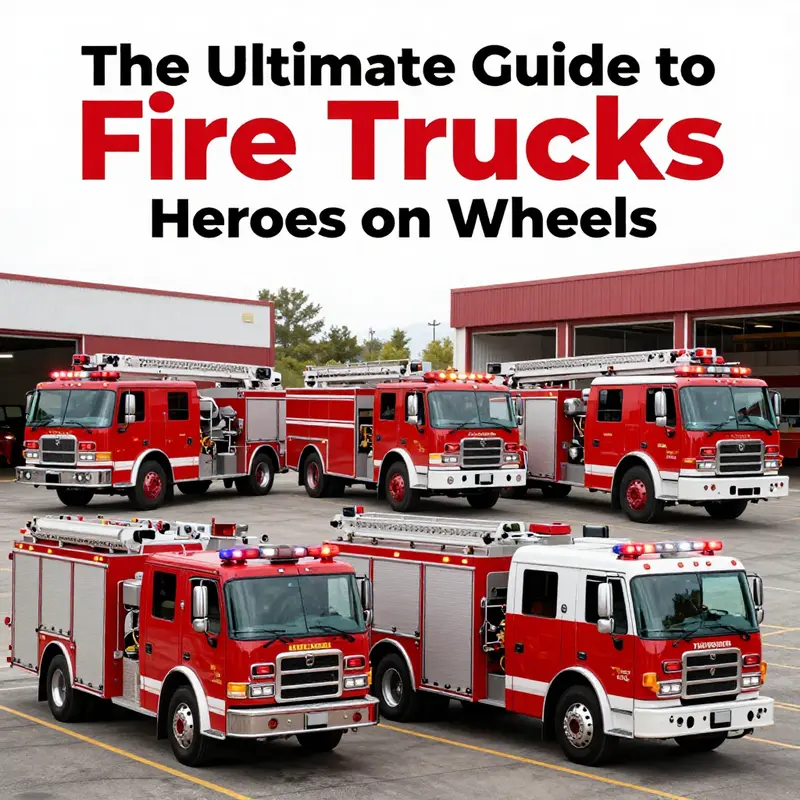
Fire trucks are not simply cars painted in bright colors with flashing lights. They are purpose-built platforms that bring together engineering, teamwork, and rapid decision-making to convert alarm into action. At their core, fire trucks are mobile toolkits designed to extend the reach of firefighters from a scene’s first moments to the critical minutes of rescue, suppression, and stabilization. The diversity among these vehicles reflects the variety of emergencies communities face and the need to tailor response to the terrain, the available water supply, and the complexity of hazards. Rather than a single uniform machine, a fleet of fire trucks represents a spectrum of capabilities, each designed to perform a core set of functions with precision and reliability. The result is a system where speed, access, and adaptability are the defining variables, and where the equipment carried on board is as carefully chosen as the crew who operate it.
All fire trucks share a common mission: to arrive quickly at the scene and to deliver the right tools to the right place at the right time. Yet the path from alarm to action diverges as soon as the vehicle rolls out. In urban settings, where hydrants are relatively close and high-rise interiors demand vertical access, the emphasis tends to be on water delivery, mobility through congested streets, and the ability to reach upper floors. In rural or wildland environments, where water sources can be scarce or far away, the emphasis shifts toward carrying larger water supplies, long-range hoses, and rugged suspension that can traverse uneven terrain. Each variation embodies a deliberate balance of weight, space, power, and reliability, all calibrated to meet the demands of the next incident.
The general fire engine, often called a pumper, forms the backbone of many urban fire departments. Its design centers on bringing water to the scene and delivering that water through a network of hoses and nozzles. A typical general engine carries a modest water tank, a pump capable of pressurizing water for multiple lines, and a compartmentalized chassis that holds an array of equipment—from malleable irons for forcible entry to cutting tools for basic extrication. The engine is a problem-solving machine on wheels, ready to adapt to the evolving needs of a fire scene. In addition to water, crews rely on a range of attack lines, sleeves and couplings, nozzles with adjustable spray patterns, and basic rescue gear that enables them to reach a victim or secure a compromised space. The efficiency of this setup often depends on standardization across a department: predictable compartments, consistent tool placement, and a reliable pump response that can be trusted under pressure.
Ladder trucks present a contrasting but complementary capability. They are distinguished by an extendable aerial ladder or a powered elevating platform that can rise to upper floors, overhangs, or swept eaves where a ground-level approach would be impractical or unsafe. High-rise firefighting and rescue operations rely on this reach to create egress routes for occupants and to access areas that are inaccessible by stairs or direct entry. A ladder truck carries not only the ladder itself but a suite of rope, rescue, and ventilation equipment that enables crews to create safe paths, ventilate smoke zones, and redeploy occupants to safety. The emphasis here is precision positioning and stability; the aerial apparatus must be deployed with precision on uneven terrain or in constrained urban canyons where every inch of elevation can translate into seconds saved for someone trapped above the lower floors.
In rural and suburban landscapes, the significance of water cannot be overstated. Water availability often determines the choice of apparatus, and big fire fighting trucks step into the foreground when hydrants are sparse or absent. These large-capacity vehicles carry substantial water reserves and robust pumping systems designed to move impressive volumes through long stretches of hose to a scene where water must be drawn from rural sources or carried from remote locations. Their foam systems may be integrated to combat special hazards, including fires involving flammable liquids where foam blankets can suppress vapors and prevent reignition. The presence of a foam-capable unit signals a commitment to addressing a wider spectrum of fire types, recognizing that not all flames respond to plain water alone. In the field, the operator’s goal is to sustain a steady stream of water and to maintain pressure as inflows and outflows change with the evolving conditions at the scene.
Another essential category is the rescue-focused vehicle, tasked with extrication and patient care when people are trapped by wreckage or hazardous environments. These units are outfitted with hydraulic tools that can cut through metal, spread gaps between obstructions, and stabilize a vehicle or structure to prevent further harm. Medical equipment for immediate care, lighting for night operations, and a durable framework for rapid patient transport are integrated into these platforms. The rescue truck represents a bridge between suppression and emergency medical services, where speed and careful handling can preserve life in the minutes after a crash or collapse.
Hazardous materials response units form a separate but equally critical branch of the fire service. HazMat teams must recognize and contain chemical, biological, radiological, or toxic threats. Their trucks carry detection instruments, sealed containment systems, and specialized protective ensembles that protect responders from exposure while they triage, isolate, and neutralize hazards. The overall goal is containment as much as removal, with a focus on establishing a safe perimeter, identifying the material involved, and coordinating with other agencies to manage the scene. The equipment carried by HazMat units is intentionally modular, allowing teams to tailor responses to the specific substances encountered while maintaining a priority on safety and decontamination for both the public and responders.
There are also more mobile, flexible platforms designed for specific contexts, such as service vans used by forest services or rural agencies. These vehicles balance mobility with payload, enabling rapid access to remote areas, but often with a larger turning radius and fewer enclosed spaces for bulky gear. They illustrate how response strategies adapt to geography: a vehicle that can weave through narrow trails and rough terrain may still sacrifice some storage capacity to stay agile where a traditional urban engine cannot comfortably operate. This spectrum—urban engines, aerial ladders, rural tankers, rescue and HazMat units, and mobile vans—tells a story of adaptation rather than uniformity. It reveals how departments thoughtfully assemble fleets that can cover a wide range of emergencies while maintaining the ability to mobilize quickly and effectively.
The design philosophy behind fire trucks extends beyond the physical apparatus to the choreography of response. A scene is rarely a single task but a sequence of actions: assess, access, attack, and stabilize. The first engine to arrive often acts as the primary water source, delivering the first assault line while additional units secure a path for ingress and search, deploy lighting for night operations, and ready rescue equipment. Ladder trucks may be positioned to provide vantage points for search-and-rescue or to create a safe egress corridor. Water tankers arrive to augment the water supply for long-duration fires, buying time until hydrants can be re-established or new sources found. Rescue units stand ready to extract victims and provide first aid, while HazMat teams set up containment procedures and request additional resources as needed. Each vehicle type has a specific role, but it is the team’s ability to coordinate—within minutes and often within seconds—that determines the outcome for those involved.
From a training perspective, the diversity of fire trucks means that departments invest heavily in cross-functional drills. Crews practice moving between platforms, communicating under noise and stress, and coordinating with a command structure that often shifts as the incident unfolds. The on-board equipment is mirrored by the crew’s knowledge: how to deploy a ladder safely, how to manage a pump panel, how to stage equipment so that it is accessible yet secure during dynamic operations. Even within a single department, the fleet may include several variants designed to handle neighborhood-specific needs, seasonal threats, or evolving hazards. This complexity is not a sign of disarray but a deliberate acknowledgment that no single vehicle can be the answer to every scenario. Instead, a well-balanced fleet paired with disciplined teamwork is what enables a rapid, organized, and effective response.
The relevance of this broader perspective becomes clear when considering the everyday life of a fire department. The apparatus is not merely a tool; it is a mobile presence that signals readiness and capability. A pump panel, a ladder winch, a foam concentrate chamber, a set of hydraulic tools—each component is a piece of a larger system designed to reduce risk and save lives. The communities served rely on that system to respond to a spectrum of emergencies that demand speed, precision, and careful risk management. In urban centers, the rhythm of calls may emphasize access and suppression, with a premium on water reliability and the ability to work in tight streets. In rural landscapes, the tempo may hinge on endurance and flexibility, leaning on a larger water reservoir and a chassis that can negotiate rough terrain. The interplay between these needs is what shapes the fleet and explains why there is no single model that fits every situation. The question is not merely what a fire truck can do, but how a department’s particular blend of vehicles enables it to meet its community’s risk profile.
In addition to their functional roles, fire trucks also serve as visual symbols of readiness. In many communities, a truck on the street is reassurance that safety resources are close at hand. This public-facing dimension matters because it reinforces trust and encourages a culture of preparedness. It reminds citizens that the apparatus is not an abstract capability but a tangible commitment to respond when alarms sound. At the same time, the way a department curates its fleet speaks to broader strategic choices—how it prioritizes training, maintenance, and investment to ensure resilience over time. Every instrument on board, every compartment, and every mounting bracket is part of a larger narrative about readiness, adaptation, and responsibility. The result is a living, evolving system that can extend a local department’s reach far beyond the confines of its station, touching lives at a moment when timing is everything.
For readers who want a sense of the real-world variety in display and collection, digressions about models and replicas can offer a distinct lens. Diecast representations of ladder trucks, with their movable booms and finely detailed cabs, provide a tactile way to study how the proportions and mechanisms translate into on-scene capability. While these models are primarily for display and education, they echo the core ideas of scale, effort, and engineering that govern every actual fire apparatus. They also highlight how the public imagination is shaped by the visible technology—the ladders that reach toward the sky, the bold colors that signal imminent action, and the organized compartments that hint at the complex choreography taking place inside.
As a practical matter, the diversity of fire trucks has implications for maintenance, training, and budgeting. A department cannot rely on a one-size-fits-all approach, because the demands of urban centers differ from those of rural districts or industrial complexes. Maintenance teams must be proficient across a spectrum of systems—from high-pressure pumping to hydraulic rescue tools and hazardous materials containment. Training programs must reflect the variety of scenarios crews may encounter, emphasizing both the fundamentals of vehicle operation and the nuanced procedures specific to each type of unit. Budgeting, too, becomes a balancing act: investing in new equipment that extends capabilities while preserving the reliability of existing platforms. In this context, a city’s investment in a well-rounded fleet is not simply about owning a set of machines; it is about maintaining a dynamic, capable, and safe engine of response that can adapt to evolving threats and changing landscapes.
For those who wish to explore current examples of how fleets are described or marketed in public-facing materials, there are resources that provide overviews of available apparatus. Fire departments and supporting organizations often publish summaries that explain the intended use of each vehicle, describe typical equipment configurations, and illustrate how the fleet supports a department’s strategic plan. When readers encounter these explanations, they gain a clearer sense of how the categories discussed here translate into real-world deployments and how each unit contributes to a cohesive response system. In that sense, the broad taxonomy of fire trucks is not just an academic construct; it is a practical framework that helps communities think about readiness on a day-to-day basis, while also guiding the professional development of those who operate and maintain the machines that stand between danger and safety.
If readers are curious about current market offerings or regional variations, they can examine publicly available listings and dealer portfolios that showcase a range of apparatus configurations. Though the specifics may differ by dealer and by region, the underlying logic remains consistent: to optimize water delivery, access, and rescue capability while ensuring reliability under the stress of real emergencies. The pathways from design to deployment are guided by a core constraint—response time—and the solution is a carefully curated assortment of vehicles that work together, not in isolation, to create a comprehensive, adaptable, and robust fire service. This is the essence of what fire trucks are: multidimensional instruments of resilience, crafted to protect lives, property, and the environmental fabric of the communities they serve.
For readers seeking further context about market options and current availability, the following resource offers a gateway to exploring the broader landscape of fire apparatus that departments consider when building or updating a fleet: fire trucks for sale. fire trucks for sale. While shopping decisions are complex and jurisdiction-specific, the chapter’s discussion of types, capabilities, and deployment scenarios provides a framework for understanding what to look for when evaluating different configurations and how each type can fit into a protective strategy tailored to local needs. The goal is not to promote any single solution but to illuminate how the right mix of vehicles, equipment, and training can translate into faster, safer responses when alarms sound.
External perspective and safety context are essential too. Standards and best practices guide the design, maintenance, and use of fire apparatus to ensure that each component operates reliably under demanding conditions. For a broad, standards-based view on safety and equipment performance, refer to established guidelines and framework resources provided by the leading safety organizations that shape how fire services plan, train, and execute the mission. https://www.nfpa.org
Engineered for Action: The Multifaceted Role of Fire Trucks in Emergency Response
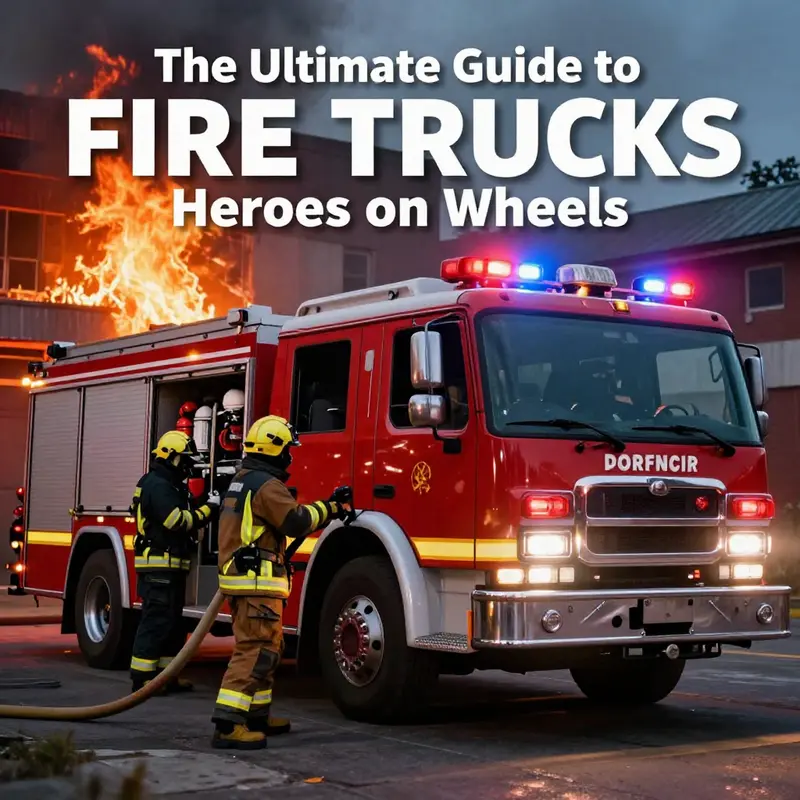
In the world of emergency response, a fire truck is more than a vehicle with a siren. It is a carefully engineered platform that brings together water, tools, people, and information into a single, mobile unit capable of adapting to a spectrum of crises. When a call comes in, the team does not simply drive to the scene; they deploy a versatile array of capabilities that enables rapid assessment, decisive action, and coordinated care. The first minutes after an incident are crucial, and fire trucks are designed to maximize those moments by delivering the right resources to the right place at high speed. They act as moving command posts, water delivery systems, rescue bays, and medical support stations all at once. This is the essence of their role in emergency response: to stabilize a situation, save lives, protect property, and minimize environmental impact through swift, strategic action.
At the heart of any fire truck is the ability to deliver water and fire suppressants quickly and under pressure. This starts with robust onboard pumps that can generate high-volume flow, pushing water from a tank or from a distant source through hoses to attack the fire. In rural or forested regions, where hydrants may be scarce or absent, some units carry large onboard water tanks designed to begin suppression immediately. In densely built urban environments, the same principle applies but with a greater emphasis on rapid engagement and mobility. The crew can deploy lines, stretch hose through narrow streets, and build a layered attack from multiple angles while additional units source supplemental water or deploy foam concentrates for specific hazards. The capacity to initiate a fire attack within minutes, sometimes seconds, can determine whether a fire grows beyond control or is contained to protect lives and minimize property loss. Foam technologies, when needed for flammable liquids, expand the toolkit further, allowing responders to blanket a burning area with a suppressant that resists spreading, reduces heat, and gives firefighters the leverage to advance their firefighting plan.
Beyond the hydraulic core, fire trucks carry a suite of systems that extend their utility beyond what people often imagine. Advanced pump packages, integrated with high-pressure hoses and adjustable flow rates, enable crews to tailor an attack to the size, layout, and fuel characteristics of the blaze. Thermal imaging cameras, now common on many engines, pierce smoke and darkness to reveal hot spots and guide hose placement, helping crews locate hidden flames and, crucially, identify potential victims. The presence of on-scene communications equipment turns the truck into a hub where information converges: incident command can monitor assignments, coordinate multiple units, and track progress as conditions evolve. In this sense, the fire truck operates not just as a tool carrier but as a bridge between frontline action and the larger strategic response.
The spectrum of operational roles is broad and continually expanding. Aerial ladder trucks, with their extendable booms and reach, provide access to upper floors, enabling rescue operations on higher stories and letting crews deploy water or rescue lines from above. These capabilities are indispensable in high-rise districts and during complex urban incidents. Foam trucks, specialized for fires involving flammable liquids, complement traditional water-based tactics by delivering foaming agents that reduce surface tension and suppress vapors, creating a safer environment for crews to work in. HazMat units are built to handle chemical, biological, or radiological threats, equipped with detection instruments, containment gear, and specialized PPE. Rescue trucks arrive with hydraulic tools, cutters, spreaders, and other devices designed to pry apart wreckage and free trapped victims. The goal across these configurations is clear: to deliver the right solution for the moment, with the flexibility to adapt to rapidly changing conditions on the ground.
This versatility is not merely about hardware; it is about the people who operate the vehicles. Firefighters are highly trained professionals who bring clinical judgment and technical skill to every call. The medical dimension of their work has grown substantially in many departments, with crews trained as emergency medical technicians or paramedics capable of delivering advanced life support. It is not unusual for a fire truck to arrive at a medical emergency, where the crew can stabilize a patient, manage airway issues, monitor vital signs, and coordinate with EMS teams or hospitals for seamless transfer of care. The integration of medical capability into the fire service reflects a broader understanding of risk and community needs: the fastest way to save lives is often to provide immediate, on-scene medical care while rescue and firefighting operations are being organized. In some communities, this dual capability means firefighters respond to heart attacks, injuries, and other urgent conditions, making the fire department a cornerstone of public health as well as public safety.
The design of a modern fire truck emphasizes accessibility and maneuverability, so responders can reach the scene quickly even in challenging environments. Smaller operators and compact chassis give fire departments options for navigating tight city cores or rough rural roads. Yet the same mission of speed and effectiveness drives larger, more capable platforms designed to deliver greater water volume, longer reach, and more extensive equipment rosters when the incident demands it. This balance—between compact agility and robust capability—allows fire services to tailor a fleet to the terrain, population density, climate, and risk profile of their jurisdiction. It also creates a dynamic where trucks can be deployed in rapid succession, with initial units establishing control and subsequent units reinforcing with specialized capabilities. In this way, fire trucks act as a force multiplier, expanding the reach of firefighters and enabling a synchronized, layered response.
As incidents unfold, the role of the fire truck becomes increasingly linked to incident command and information management. The concept of a mobile command post captured on a rugged chassis means that on-lookers see not just a fire engine but a moving nerve center. Dispatch information, on-scene assessments, and evolving strategy pass through the vehicle’s communications suite, and personnel monitoring systems can track crew safety, air quality, and structural integrity. In environments where conditions deteriorate rapidly—smoke-filled, heat-intense, or volatile—the ability to monitor multiple data streams from a single platform improves decision-making, reduces risk, and keeps responders aligned with best practices. The integration of digital mapping, real-time weather data, and resource tracking allows incident commanders to allocate units where they are most needed, stage water supplies for efficiency, and reconfigure tactic plans as the fire evolves. This convergence of firefighting, rescue, medical care, and command in one platform highlights how fire trucks have matured into the backbone of modern public safety missions.
The urban-rural spectrum provides another lens through which to understand the fire truck’s broad utility. In dense cities, where traffic congestion and building density create unique challenges, fire trucks must navigate streets with precision, park in close proximity to affected structures, and deploy aerial devices to reach upper floors and rooftops. The trench of urban risk is matched by a sophisticated array of protective gear, filtration systems, and communications protocols that maintain safety for personnel who operate in compromised environments. In rural and wilderness settings, the same platform may carry larger water reserves and off-road capabilities, enabling immediate action in remote locations where hydrants do not exist. Forest service engines, for example, adapt to long response times and the need for rapid attack on emergent wildfire fronts. They rely on high-capacity pumps and fuel-efficient designs to extend reach and sustain suppression efforts while crews work to construct containment lines. Across both scales, the fire truck’s mission remains consistent: bring the right tools to the right place at the right time, and do so in a way that protects life, property, and the environment.
The idea of a fire truck as a comprehensive emergency response platform resonates with communities. It is not just about suppressing flames; it is about stabilizing scenes, rescuing people from danger, delivering immediate medical care, and coordinating a broader response that may involve police, EMS, utility services, and public health authorities. This collaborative dimension is reinforced by the vehicles’ design and by the training of the crews who operate them. Firefighters learn to work under pressure, communicate clearly across multiple agencies, and maintain readiness through ongoing drills and continuing education. The result is a culture that prioritizes safety, adaptability, and service to the community. When a fire truck arrives, it signals not only the start of a response but the potential for a carefully choreographed sequence of actions designed to minimize harm and maximize resilience. In this sense, fire trucks are more than tools for fighting fires; they are dynamic platforms for life-saving intervention and community protection.
For readers interested in exploring the evolving configurations and practical options for these essential vehicles, there is value in understanding how departments match fleet capabilities to local conditions and budgets. The process often involves evaluating the balance between water delivery capacity, rescue capability, medical readiness, and the ability to reach challenging locations. Departments weigh the benefits of larger, more capable platforms against the cost implications and the need for rapid deployment in congested environments. The decision-making framework usually includes considerations such as worst-case scenario planning, response time targets, and the anticipated scale of incidents. In some cases, departments collaborate with manufacturers to tailor a vehicle to their specific terrain and operational requirements, achieving a customized blend of power, reach, and agility. For readers keen on seeing the practical side of fleet selection, the conversation can begin with a closer look at available configurations and deployment models in the market: fire trucks for sale.
The journey of a fire truck from the factory floor to the frontline is also a story about standards, safety, and continuous improvement. While the core mission remains consistent—protecting life and property—the tools and systems embedded in these vehicles continue to evolve. Innovations in pump efficiency, water-carrying capacity, sealing technologies, and corrosion resistance extend the life of a truck and enhance its reliability under demanding conditions. Innovations in detection, imaging, and monitoring contribute to safer operations by improving situational awareness and reducing exposure to hazards. The strategic importance of the fire truck in emergency response grows as communities expand, climate patterns shift, and the scale of potential disasters broadens. This is why the role of fire trucks is not static; it is a living framework that adapts to new threats and new expectations from the public. The vehicle, in its essence, remains a practical solution to a universal challenge: how to marshal the fastest, most capable response when seconds count and lives hang in the balance.
External resource: For a broader standards overview of fire service vehicle design and safety considerations, see https://www.nfpa.org.
From Electrification to Digital Command: The Modern Fire Truck as a Multi-Role Response Platform
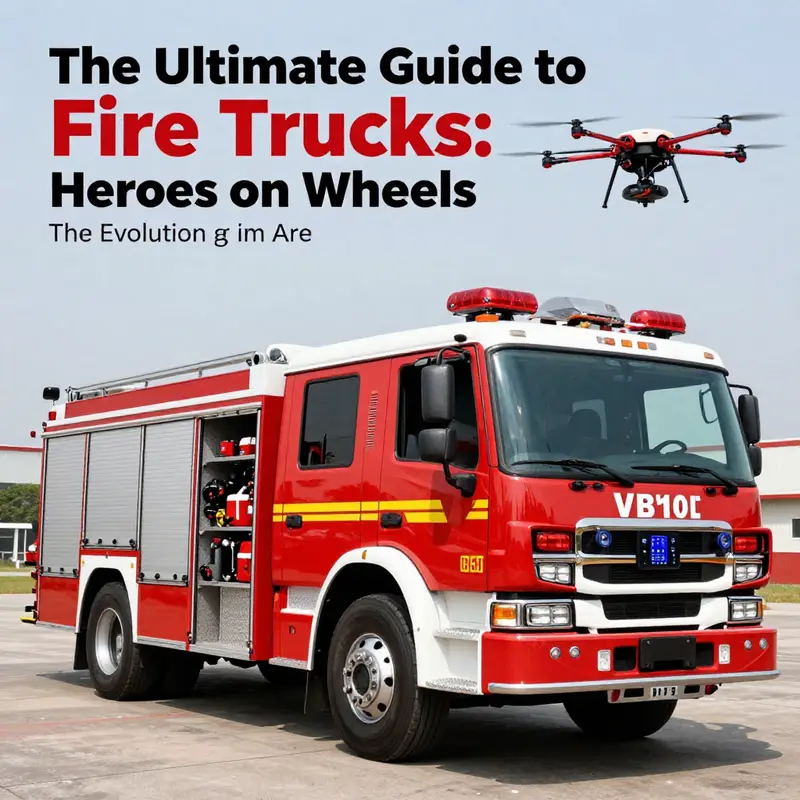
Fire machines have long traveled a path from simple means of transport to engines of strategic action. In the early days, the primary task was to deliver a steady stream of water and a set of basic tools to the scene. Today, the vehicle itself is a moving hub of decision making, communication, and rapid deployment of a wide range of capabilities. This transformation is not just about adding gadgets; it is a fundamental redefinition of what a fire truck is meant to accomplish. The modern apparatus operates as a multi-role response platform, capable of supporting structural fire operations, technical rescues, hazardous materials responses, and even advanced medical assistance. The shift is visible in three core dimensions: electrification, digital integration, and multi-tasking design. Together they convert the traditional vehicle into a flexible, field-based command center that can adapt to evolving emergencies while meeting stringent safety and environmental standards.
Electrification stands at the forefront of this evolution. Advances in battery chemistry, energy management, and modular electric drivetrains have begun to push heavy-duty fire apparatus beyond the realm of convention. The prospect of electrified fire trucks is appealing for several reasons. In dense urban landscapes, quieter operation reduces noise-induced disruption, especially at night or near schools and hospitals. Lower exhaust emissions improve air quality in neighborhoods where firefighters frequently respond, while reducing the carbon footprint of a fleet that operates under tight annual mileage. Yet electrification is more than a cleaner alternative; it also reshapes the fundamental tradeoffs of firefighting operations. Batteries add weight, a factor that influences payload, maneuverability, and the ability to climb stairs or negotiate tight streets. Engineers address these concerns with lighter materials, high-density cells, and advanced thermal management to prevent overheating during demanding tasks.
A key feature of modern electric powertrains is modularity. Fire departments vary widely in size, climate, and typical incidents. A modular drivetrain can be tailored with different battery capacities and power electronics to match the department’s operational tempo and infrastructure. Fast charging becomes a practical reality when paired with standardized depots and strategic charging hubs. The result is a fleet that can be replenished quickly between calls, reducing downtime and allowing more readiness for the next incident. Electrification also intersects with other technologies to create smarter energy use. Onboard power can support lighting, diagnostic systems, and even small life-support devices during medical scenes without draining critical water or foam supplies. In urban settings, where noise and emissions often draw scrutiny from residents and regulators, electrified apparatus offer a pathway to maintain tempo without compromising community well-being.
Still, the path to broad electrification is not without hurdles. Range limitations under high-load conditions, such as pumping water for long stretches or driving uphill with heavy equipment, require careful route planning and sometimes hybrid solutions. The upfront capital cost of new electric platforms can be significant. Yet as battery technology improves and fleets retire aging units, the economics begin to align with long-term savings in maintenance, fuel, and emissions penalties. In the broader market, these shifts reflect a growing recognition that the firefighting mission benefits when the vehicle itself embodies the evolution of the services it supports. As urban authorities pursue more sustainable operations, electrification becomes not just a feature but a strategic choice linked to urban resilience and public health.
The other pillar of modern fire trucks is an integrated digital ecosystem. The cab of today’s apparatus is a networked command post. Real-time data streams from in-cab devices, external sensors, and municipal GIS systems come together to inform tactical decisions on the ground. Firefighters arrive not only with tools but with situational awareness that is enhanced before they set foot in a burning building. Digital technologies enable rapid mapping of the incident scene, access to pre-incident plans, hydrant locations, and building layouts, all synchronized to the crew’s primary display. This access reduces guesswork at critical moments and accelerates the transition from initial assessment to decisive action. In practice, digital integration translates into safer, more efficient operations. For example, thermal imaging cameras can be viewed alongside building schematics and water supply status, guiding the crew toward the most efficient entry routes and effective water application points. Real-time weather and wind data can be integrated to anticipate fire spread, informing decisions about incident perimeter management and evacuation considerations. All of this happens while the vehicle remains in motion, enabling a seamless continuum from dispatch to completion of the mission.
The digital landscape also extends beyond the driver’s seat and into the dispatcher’s room and the incident command post. Modern fleets support field research and data sharing that connects responders across agencies. High-speed data links, secure communications, and interoperable protocols allow multiple units to work together as a cohesive team. This level of coordination is increasingly crucial when incidents cross jurisdictional boundaries or involve complex hazards. The goal is to maintain a unified command structure in which information is timely, accurate, and actionable. Fire trucks, thus, double as mobile data centers that collect, process, and disseminate critical intelligence to the teams that need it most. The integration of digital technologies is not an end in itself but a means to expand the department’s ability to predict, prepare, and respond with precision.
Alongside electrification and digital systems, advances in multi-tasking capabilities are reshaping what a fire truck can do in a single mission. Historically, the vehicle carried distinct tool sets aimed at specific job types. Today, onboard platforms are designed to support a spectrum of emergencies with adaptable, cross-functional configurations. Fire trucks are increasingly equipped with integrated communication networks that connect crews inside a structure with external incident command and medical personnel out on the street. Thermal imaging, GPS guidance for apparatus and water supply points, and automated diagnostics that monitor equipment health are becoming baseline expectations. Such features enable crews to perform structural firefighting, technical rescues, hazmat responses, and EMS support with fewer deployments of supplementary units. The vehicle becomes a simulator of coordinated action, its systems working in concert to reduce the hold times between recognition of a need and the deployment of a capable solution.
This multi-tasking capability also reshapes the safety envelope of the operation. Onboard diagnostics and predictive maintenance reduce the risk of equipment failure at critical moments. Real-time health checks of pumps, hoses, and electrical systems help prevent delays caused by malfunctioning components. Digital dashboards can alert crews to low-pressure zones or overheating in critical components, allowing preemptive adjustments before failures occur. The result is a more reliable machine that inspires confidence among responders and communities. The innovations extend to external equipment as well. With modular tool configurations, departments can tailor a single platform to their most frequent incident types, ensuring that the apparatus remains relevant as hazards evolve and urban landscapes shift. This adaptability is essential when budgets are constrained and fleet renewal cycles are elongated. The modern fire truck thus functions as a scalable platform—one that can grow with the community’s needs while maintaining readiness for the unexpected.
Market dynamics reinforce the transformative arc described above. Across the globe, rising fire risks—especially in the context of expanding wildland-urban interfaces and climate-driven extremes—drive a greater demand for technologically sophisticated vehicles. Stricter safety and environmental regulations push agencies to upgrade their fleets to meet higher performance and lower impact standards. As these factors converge, the market for advanced firefighting apparatus expands, inviting investment in electrification, digital integration, and multi-tasking capabilities. Forecasts indicate continued growth, with substantial emphasis on urban resilience and the ability to operate effectively in densely populated areas where emissions, noise, and footprint are under scrutiny. This macro-level push is matched by a recognition inside many departments that fleet modernization is a long-term strategy for risk reduction, cost containment, and enhanced public safety. Even so, persistent challenges accompany these trends. A notable obstacle is the slow replacement rate of aging fleets. Many departments still rely on older models that lack the capacity for rapid upgrades in battery, software, and hardware integration. Budgetary pressures, competing capital needs, and the complexity of integrating new technologies with legacy systems complicate the transition. In this context, strategic planning becomes as critical as technical advancement. Departments that adopt phased modernization, standardized interfaces, and interoperable protocols can maximize the return on investment while ensuring continuous readiness during the transition.
The horizon for fire trucks is shaped by both immediate needs and longer-term aspirations. Electrification promises cleaner operation and quieter streets, while digital platforms promise sharper decision-making, faster response times, and better collaboration across agencies. Multi-tasking configurations offer the flexibility to meet a broad range of incidents without requiring a parade of specialized vehicles. The combination of these capabilities yields a vehicle that is not merely a conveyance but a movable, adaptable engine of response. It carries with it the expectation that responders will reach the scene with the right tools, the right information, and the right plan for stabilization, rescue, and mitigation. In an era where emergencies increasingly intersect with complex hazards and high-density environments, the modern fire truck represents a disciplined synthesis of engineering, technology, and operational philosophy. It embodies the shift from a faithful instrument of water delivery to a trusted platform for command, coordination, and care in the moment when minutes matter most.
For readers who want to explore how these digital systems are reshaping field command and interoperability, a deeper dive into the topic can be found in this discussion: Overcoming challenges in fire command systems. The article highlights how integrated communication networks and standardized data sharing can reduce ambiguity at the incident scene, enabling more precise coordination among firefighters, EMS crews, and incident commanders. As technologies evolve, the ability to harmonize operations across agencies will become increasingly central to the effectiveness of modern firefighting. This aligns with the broader trend toward viewing the fire service as a connected ecosystem, where the vehicle, the crew, and the information environment function as a single, synchronized force rather than as separate, siloed components.
Looking ahead, the investment calculus for fire departments will continue to weigh upfront costs against long-term benefits. While the price tag for cutting-edge, electrified, digitally capable platforms is higher than for legacy models, the total cost of ownership can be reduced through lower fuel consumption, longer service life, and higher mission readiness. The ongoing development of standardized hardware and software interfaces will further streamline maintenance and upgrades, helping fleets remain capable without a continuous cycle of costly retrofits. In parallel, stronger emphasis on data ethics, cybersecurity, and resilient communications will be essential to protect the integrity of real-time information in high-stakes environments. The synergy of these elements—electrification, digital integration, and adaptable, multi-tasking design—positions the modern fire truck as a cornerstone of urban resilience and emergency response in the 21st century.
As cities grow and climates shift, communities will rely on these platforms to not only respond to fires but also to mitigate the consequences of disasters. The vehicle’s ability to deliver water, support rescue operations, coordinate with other responders, and manage incident information will be tested in increasingly complex scenarios. Yet the same capabilities that enable swift action also enable safer, more efficient operations. When a truck arrives with a team that knows the incident site before they step off the cab, a crucial edge is gained. When the vehicle can anticipate water supply needs, monitor equipment health, and share live data with command, the chances of protecting lives and property rise accordingly. This is the essence of the evolution described here: not merely an upgrade of equipment, but a reimagining of what a fire truck can be when technology and human expertise converge in the service of public safety.
External resource for further reading on market scope and technology trends in fire trucks: https://www.grandviewresearch.com/industry-analysis/fire-truck-market
Final thoughts
In summary, fire trucks are not only vital to firefighting efforts but also a symbol of hope and safety in communities. From their diverse types designed for specific tasks to their essential roles in emergencies, and the continuous advancements in technology, fire trucks embody the spirit of innovation in emergency response. Understanding what fire trucks are helps appreciate the countless lives they save and the dedicated professionals behind the wheel. As we continue on our journey towards safer communities, let’s celebrate these remarkable vehicles that stand ready to protect and serve.