
Introduction
As the severity of wildfire seasons intensifies, a troubling phenomenon known as “zombie fires” is emerging from the ashes of traditional wildfire threats. These latent infernos can smolder underground for months, often re-igniting long after conventional fire containment efforts have ceased. Unlike typical flames that blaze brightly and are detectable, zombie fires quietly lie in wait, ready to erupt with the right mix of environmental conditions.
This hidden menace is increasingly linked to climate change, as rising temperatures and erratic weather patterns fuel their occurrence and persistence. With the recent record-breaking fire seasons—where countries like Canada have seen a ten-fold increase in holdover fires compared to historical averages—the urgency for communities to prepare for these elusive fires is paramount.
As they pose a significant threat to both ecosystems and human populations, understanding zombie fires and equipping ourselves with effective detection and management strategies has never been more crucial. Their perplexing nature demands new approaches to wildfire preparedness that align with the evolving challenges of our changing climate.
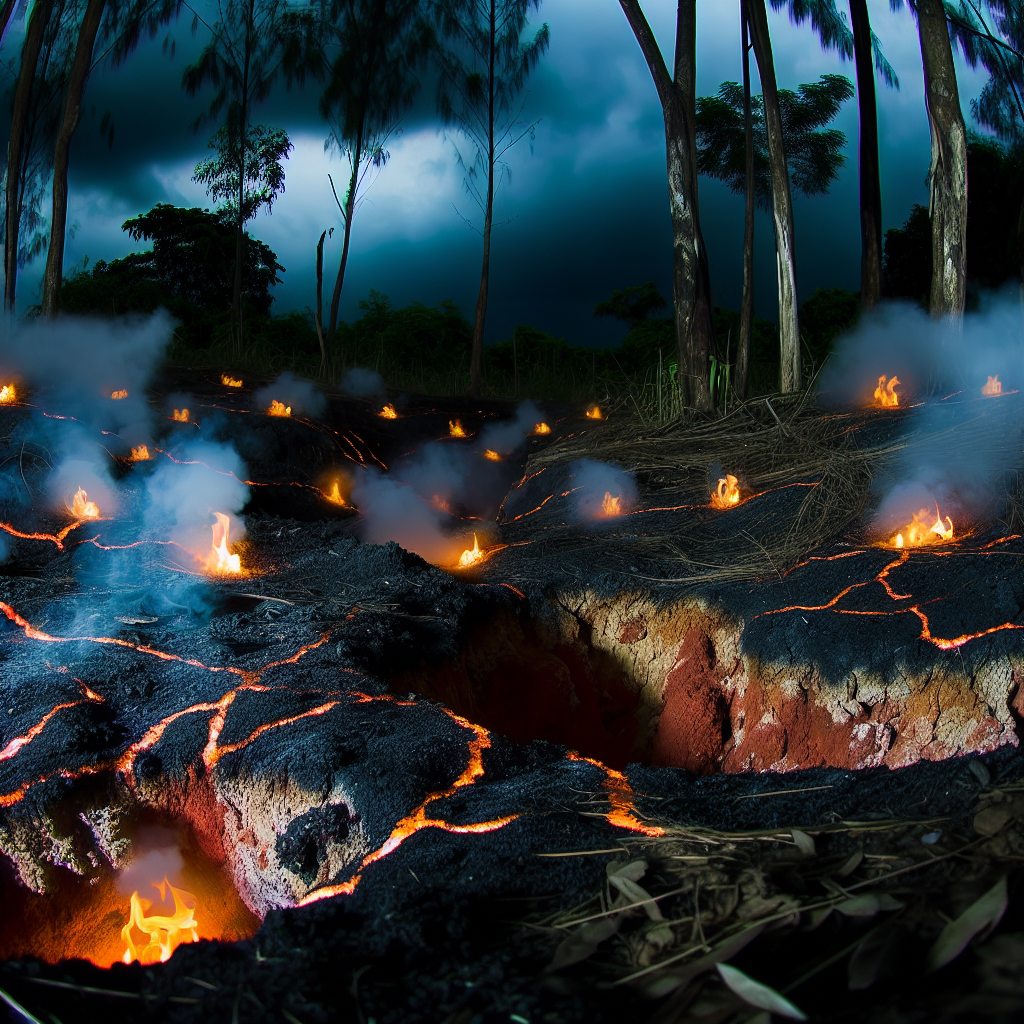
A simple visual representation illustrating a smoldering underground zombie fire scenario, showing potential surface fires. This image evokes urgency and highlights the hidden dangers associated with zombie fires.
This illustration showcases the impact of wildfire emissions, particularly focusing on the percentage of global emissions linked to Canada’s fire season. The visual ties back to the urgent theme of climate change.
Overview of Zombie Fires
-
Definition:
Zombie fires are smoldering fires that remain underground for long periods and can reignite when environmental conditions, such as warmth and dryness, become favorable. They primarily occur in peat-rich layers, such as those found in the Arctic tundra. -
Characteristics:
- These fires can smolder for months, even up to 8 months.
- They are often difficult to detect, remaining hidden beneath the surface while being insulated in peat.
- Zombie fires can reignite after rainfall, as moisture can help propagate the lingering underground heat.
-
Differences from Regular Wildfires:
- Unlike typical wildfires that burn visibly and affect the surface, zombie fires lie dormant and remain invisible, which complicates firefighting efforts.
- Regular wildfires typically result in immediate damage and visible flames; in contrast, zombie fires may go unnoticed until they emerge again.
-
Statistics:
- From 2005 to 2017, 48 zombie fires were documented across the Arctic.
- In 2019, over 100 zombie fires ignited, affecting around 100,000 hectares.
- The largest recorded event occurred in the Chuckegg Creek area, Canada, burning 350,134 hectares in just 12 weeks.
-
Environmental Impact:
- Zombie fires can lead to persistent carbon emissions, releasing stored carbon back into the atmosphere as they burn.
- Their occurrence is expanding into areas previously deemed fire-resistant, indicating an alarming trend linked to climate change and increasing Arctic vulnerability.
Understanding these unique aspects of zombie fires is critical in adapting our wildfire management and preparedness strategies.
| Feature | Zombie Fires | Traditional Wildfires |
|---|---|---|
| Duration | Can smolder for months, up to 8 months | Typically quick-burning, extinguished by rain/snow |
| Location | Often in peat-rich areas, especially Arctic tundra | Occurs in various landscapes, including forests and grasslands |
| Detection | Difficult to detect, requires thermal imaging | More visible, can be detected by smoke and flames |
| Causes | Result from previous fire seasons, often intense | Caused primarily by lightning or human activity |
| Environmental Impact | Releases significant carbon; persistently emits CO2 | Can lead to habitat destruction, but often short-term |
| Management Strategies | Requires monitoring, soil saturation, and containment | Immediate suppression using water, firebreaks, etc. |
| Risks | Can re-ignite unexpectedly, difficult to manage | Spreads quickly, posing immediate threats to life and property |
| Climate Influence | Increasing due to thawing permafrost and climate change | Traditional risk factors include droughts and winds |
| Behavior | Smoulders underground, can re-emerge unpredictably | Rapid spread across surface fuels |
| Feature | Zombie Fires | Traditional Wildfires |
|---|---|---|
| Duration | Can smolder for months, up to 8 months | Typically quick-burning, extinguished by rain/snow |
| Location | Often in peat-rich areas, especially Arctic tundra | Occurs in various landscapes, including forests and grasslands |
| Detection | Difficult to detect, requires thermal imaging | More visible, can be detected by smoke and flames |
| Causes | Result from previous fire seasons, often intense | Caused primarily by lightning or human activity |
| Environmental Impact | Releases significant carbon; persistently emits CO2 | Can lead to habitat destruction, but often short-term |
| Management Strategies | Requires monitoring, soil saturation, and containment | Immediate suppression using water, firebreaks, etc. |
| Risks | Can re-ignite unexpectedly, difficult to manage | Spreads quickly, posing immediate threats to life and property |
| Climate Influence | Increasing due to thawing permafrost and climate change | Traditional risk factors include droughts and winds |
| Behavior | Smoulders underground, can re-emerge unpredictably | Rapid spread across surface fuels |
Current Data on Zombie Fires
In recent fire seasons, the phenomenon of zombie fires has gained significant attention due to their increasing frequency and the profound implications they have on climate change and resource management. The 2023 Arctic wildfire season has been categorized as the most severe on record, with zombie fires contributing substantially to the overall devastation.
According to a study published in August 2023, zombie fires accounted for about one-third of the total burned area in Arctic boreal forests between 2002 and 2018. This alarming trend correlates strongly with rising global temperatures and prolonged dry periods, both of which increase the likelihood of these underground fires reigniting from moist peat layers that they inhabit during winter months.
Furthermore, the Copernicus Atmosphere Monitoring Service reported that the 2023 season produced CO2 emissions on par with that of mid-sized countries, largely attributed to the impacts of zombie fires. The link between the activation of these hidden blazes and the degradation of permafrost suggests that as they continue to release trapped gases like methane, they will further exacerbate climate feedback loops and challenges related to global warming.
Predictive models indicate that the incidence of zombie fires will increase by approximately 40% by the year 2050, particularly under scenarios characterized by high emissions. With hotter summer temperatures and deepening permafrost thaw juxtaposing the landscape, zombie fires are expected to play an increasingly disruptive role in wildfire dynamics and carbon emissions moving forward.
The implications for wildfire management are dire. Traditional fire management strategies may prove inadequate for effectively dealing with zombie fires, necessitating a transformation in how communities understand and prepare for these unique challenges in their quest to mitigate wildfire risks and manage associated emissions. The data underscores an urgent need for enhanced measures in detection strategies, community preparedness, and climate adaptation to address this evolving threat.
Community Preparedness Strategies for Zombie Fires
To effectively combat the looming threat of zombie fires, communities must adopt proactive strategies to enhance preparedness and mitigate risks. Here are actionable steps that can be taken:
- Public Awareness Campaigns
- Educate residents about the dangers of zombie fires through workshops, informational flyers, and community meetings.
- Use social media and local news outlets to disseminate information about fire risks and prevention strategies.
- Emergency Response Plans
- Develop and regularly update comprehensive emergency preparedness plans that include responses specifically tailored to the unique risks posed by zombie fires.
- Engage local fire departments and emergency services to coordinate training exercises and simulations focused on zombie fire scenarios.
- Community Monitoring Programs
- Implement community-led monitoring initiatives that leverage local volunteers to study land usage and report suspicious smoke or signs of ground-level heat.
- Utilize thermal imaging technologies to detect hidden fires, ensuring that detection tools are accessible to fire officials and community members.
- Resource Allocation
- Secure funding and resources for firefighting equipment specialized in dealing with underground fires, such as moisture monitors and soil aeration tools.
- Establish partnerships with environmental organizations and universities to enhance research efforts on zombie fires and effective management practices.
- Land Management Practices
- Advocate for fire-resistant landscaping techniques and controlled burns to reduce fuel loads in vulnerable areas.
- Encourage reforestation and vegetation management practices that enhance ecosystem resilience against wildfires.
- Community Drills and Training
- Organize regular drills for residents to practice emergency evacuation routes and protocols in the event of a zombie fire ignition.
- Recruit local experts to provide training on recognizing conditions conducive to zombie fires and adequate response strategies.
- Collaboration with Experts
- Work with climate scientists, fire ecologists, and local government to analyze data related to zombie fire risks and formulate adaptive strategies for community planning.
- Establish a community task force dedicated to the continuous evaluation and improvement of wildfire preparedness strategies.
- Communication Systems
- Implement effective communication systems for real-time alerts regarding fire outbreaks, particularly targeting areas known to harbor dormant fire threats.
- Develop a community web portal or app for residents to report observations related to potential fire signs and receive updates from authorities.
Adopting these strategies is crucial for communities striving to minimize the potential disruptions and dangers posed by zombie fires while enhancing overall resilience to wildfire threats.
Expert Insights on Community Preparedness
As the challenges related to wildfires evolve, experts emphasize the necessity for innovative approaches. One such insight comes from fire management professionals, who caution that “Zombie fires represent a fundamental shift in wildfire behavior that demands equally fundamental changes in how communities and organizations approach fire preparedness.” This quote underscores the urgency for communities to reassess their strategies as they face not only the traditional wildfire threats but also the hidden dangers of zombie fires that can reignite unexpectedly. Preparing for these unique challenges is essential to safeguard lives and resources.
Detection Strategies for Zombie Fires
The evolving nature of zombie fires necessitates innovative strategies for their detection and monitoring. Recent advancements in technology are providing new tools that empower communities to identify hidden smoldering fires before they escalate into catastrophic incidents. Here are some of the latest technologies and strategies being employed:
-
AI and Satellite Technology:
NASA researchers are utilizing novel satellite data and machine learning algorithms to detect underground smoldering fires in peatlands. This system analyzes thermal anomalies and soil moisture levels to locate fires that remain dormant for extended periods. These techniques have proven particularly useful in Arctic regions, where conditions are most favorable for zombie fires. For further details on these methodologies, refer to NASA Satellites Detect Underground Peat Fires in the Arctic. -
IoT-Based Ground Sensors:
IoT sensor networks are deployed in fire-prone areas to monitor temperature and gas emissions from underground smoldering fires. This continuous monitoring provides timely alerts to authorities about subsurface fires, enabling proactive measures to prevent potential disasters. A study on these sensors appears in Detection of Overwintering Fires in the Arctic Using Satellite Data. -
Drone Technology:
Drones equipped with thermal imaging capabilities can quickly identify potential fires at their nascent stages. These aerial systems significantly reduce detection time, enabling rapid response and minimizing risk. The revolutionizing role of drones in wildfire detection is further elaborated in the article The Challenge of Zombie Fires in Wildfire Management. -
Video Monitoring Systems:
Innovative camera systems utilizing machine learning algorithms are now being developed to analyze video footage for fire detection in real-time. This approach allows for 24/7 monitoring capacity, reducing labor costs while enhancing overall response to potential fire hazards. For insights on video monitoring systems, visit Innovations in Peat Fire Detection and Monitoring.
Significance of Early Detection
Early detection plays a crucial role in combating zombie fires, with studies indicating that interventions within the first 10 minutes can reduce fire size by up to 80% and suppress costs by 70%. Immediate action not only prevents widespread ecological damage but also protects local communities from being impacted by these hidden threats.
In conclusion, as the threat of zombie fires grows, the integration of these advanced detection technologies will be vital in bolstering community preparedness and responsiveness. Communities are encouraged to invest in these innovations and collaborate with fire management experts to effectively mitigate the risks associated with zombie fires.
Conclusion and Call to Action
In summary, the emergence of zombie fires presents an urgent and complex challenge that communities cannot afford to ignore. These hidden infernos, capable of smoldering underground for extended periods, pose significant threats to both the environment and human safety. With alarming statistics indicating a rise in these fires due to climate change, it is imperative that individuals and communities take proactive steps towards preparedness.
Community awareness is the cornerstone of effective wildfire management. By understanding the nature of zombie fires, the benefits of early detection, and the unique strategies required to mitigate their risks, residents can foster a culture of safety and resilience. There is a pressing need to engage in local emergency response plans, participate in public awareness campaigns, and support ongoing monitoring initiatives. Together, we can build robust systems that not only enhance our ability to detect these elusive fires but also fortify our communities against their destructive potential.
We encourage you, as a member of your community, to be an active participant in promoting fire safety. Consider joining local firefighting or environmental groups, attend community meetings, and advocate for resources aimed at improving fire management practices. Your involvement is vital in cultivating a safer environment for all. Let us unite against this new wildfire threat and be prepared for the challenges ahead.
Key Points Summary on Zombie Fires
- Zombie fires can smolder underground for extended periods, often lasting several months, making them difficult to detect and manage.
- The 2023 fire seasons recorded alarming increases in zombie fire incidents, with significant contributions to overall carbon emissions.
- Climate change is intensifying the frequency and severity of zombie fires, linking them to the degradation of permafrost and rising global temperatures.
- Communities must recognize the unique challenges posed by zombie fires and incorporate specific strategies in wildfire preparedness plans.
- Enhanced detection methods, such as satellite technology and IoT sensors, are crucial in identifying and responding to these hidden threats before they escalate.
Introduction
As the severity of wildfire seasons intensifies, a troubling phenomenon known as “zombie fires” is emerging from the ashes of traditional wildfire threats.
The Nature of Zombie Fires
These latent infernos can smolder underground for months, often re-igniting long after conventional fire containment efforts have ceased. Unlike typical flames that blaze brightly and are detectable, zombie fires quietly lie in wait, ready to erupt with the right mix of environmental conditions.
Climate Change Connection
This hidden menace is increasingly linked to climate change, as rising temperatures and erratic weather patterns fuel their occurrence and persistence. With the recent record-breaking fire seasons—where countries like Canada have seen a ten-fold increase in holdover fires compared to historical averages—the urgency for communities to prepare for these elusive fires is paramount.
Significance of Understanding Zombie Fires
As they pose a significant threat to both ecosystems and human populations, understanding zombie fires and equipping ourselves with effective detection and management strategies has never been more crucial. Their perplexing nature demands new approaches to wildfire preparedness that align with the evolving challenges of our changing climate.
Overview of Zombie Fires
- Definition: Zombie fires are smoldering fires that remain underground for long periods and can reignite when environmental conditions, such as warmth and dryness, become favorable. They primarily occur in peat-rich layers, such as those found in the Arctic tundra.
-
Characteristics:
- These fires can smolder for months, even up to 8 months.
- They are often difficult to detect, remaining hidden beneath the surface while being insulated in peat.
- Zombie fires can reignite after rainfall, as moisture can help propagate the lingering underground heat.
-
Differences from Regular Wildfires:
- Unlike typical wildfires that burn visibly and affect the surface, zombie fires lie dormant and remain invisible, which complicates firefighting efforts.
- Regular wildfires typically result in immediate damage and visible flames; in contrast, zombie fires may go unnoticed until they emerge again.
-
Statistics:
- From 2005 to 2017, 48 zombie fires were documented across the Arctic.
- In 2019, over 100 zombie fires ignited, affecting around 100,000 hectares.
- The largest recorded event occurred in the Chuckegg Creek area, Canada, burning 350,134 hectares in just 12 weeks.
-
Environmental Impact:
- Zombie fires can lead to persistent carbon emissions, releasing stored carbon back into the atmosphere as they burn.
- Their occurrence is expanding into areas previously deemed fire-resistant, indicating an alarming trend linked to climate change and increasing Arctic vulnerability.
Understanding these unique aspects of zombie fires is critical in adapting our wildfire management and preparedness strategies.
Current Data on Zombie Fires
In recent fire seasons, the phenomenon of zombie fires has gained significant attention due to their increasing frequency and the profound implications they have on climate change and resource management. The 2023 Arctic wildfire season has been categorized as the most severe on record, with zombie fires contributing substantially to the overall devastation.
Alarming Statistics
According to a study published in August 2023, zombie fires accounted for about one-third of the total burned area in Arctic boreal forests between 2002 and 2018. This alarming trend correlates strongly with rising global temperatures and prolonged dry periods, both of which increase the likelihood of these underground fires reigniting from moist peat layers that they inhabit during winter months.
Climate Change Connection
Furthermore, the Copernicus Atmosphere Monitoring Service reported that the 2023 season produced CO2 emissions on par with that of mid-sized countries, largely attributed to the impacts of zombie fires. The link between the activation of these hidden blazes and the degradation of permafrost suggests that as they continue to release trapped gases like methane, they will further exacerbate climate feedback loops and challenges related to global warming.
Future Predictions
Predictive models indicate that the incidence of zombie fires will increase by approximately 40% by the year 2050, particularly under scenarios characterized by high emissions. With hotter summer temperatures and deepening permafrost thaw juxtaposing the landscape, zombie fires are expected to play an increasingly disruptive role in wildfire dynamics and carbon emissions moving forward.
Implications for Management
The implications for wildfire management are dire. Traditional fire management strategies may prove inadequate for effectively dealing with zombie fires, necessitating a transformation in how communities understand and prepare for these unique challenges in their quest to mitigate wildfire risks and manage associated emissions. The data underscores an urgent need for enhanced measures in detection strategies, community preparedness, and climate adaptation to address this evolving threat.
Community Preparedness Strategies for Zombie Fires
To effectively combat the looming threat of zombie fires, communities must adopt proactive strategies to enhance preparedness and mitigate risks. Here are actionable steps that can be taken:
-
Public Awareness Campaigns:
- Educate residents about the dangers of zombie fires through workshops, informational flyers, and community meetings.
- Use social media and local news outlets to disseminate information about fire risks and prevention strategies.
-
Emergency Response Plans:
- Develop and regularly update comprehensive emergency preparedness plans that include responses specifically tailored to the unique risks posed by zombie fires.
- Engage local fire departments and emergency services to coordinate training exercises and simulations focused on zombie fire scenarios.
-
Community Monitoring Programs:
- Implement community-led monitoring initiatives that leverage local volunteers to study land usage and report suspicious smoke or signs of ground-level heat.
- Utilize thermal imaging technologies to detect hidden fires, ensuring that detection tools are accessible to fire officials and community members.
-
Resource Allocation:
- Secure funding and resources for firefighting equipment specialized in dealing with underground fires, such as moisture monitors and soil aeration tools.
- Establish partnerships with environmental organizations and universities to enhance research efforts on zombie fires and effective management practices.
-
Land Management Practices:
- Advocate for fire-resistant landscaping techniques and controlled burns to reduce fuel loads in vulnerable areas.
- Encourage reforestation and vegetation management practices that enhance ecosystem resilience against wildfires.
-
Community Drills and Training:
- Organize regular drills for residents to practice emergency evacuation routes and protocols in the event of a zombie fire ignition.
- Recruit local experts to provide training on recognizing conditions conducive to zombie fires and adequate response strategies.
-
Collaboration with Experts:
- Work with climate scientists, fire ecologists, and local government to analyze data related to zombie fire risks and formulate adaptive strategies for community planning.
- Establish a community task force dedicated to the continuous evaluation and improvement of wildfire preparedness strategies.
-
Communication Systems:
- Implement effective communication systems for real-time alerts regarding fire outbreaks, particularly targeting areas known to harbor dormant fire threats.
- Develop a community web portal or app for residents to report observations related to potential fire signs and receive updates from authorities.
Adopting these strategies is crucial for communities striving to minimize the potential disruptions and dangers posed by zombie fires while enhancing overall resilience to wildfire threats.
Expert Insights on Community Preparedness
As the challenges related to wildfires evolve, experts emphasize the necessity for innovative approaches. One such insight comes from fire management professionals, who caution that “Zombie fires represent a fundamental shift in wildfire behavior that demands equally fundamental changes in how communities and organizations approach fire preparedness.” This quote underscores the urgency for communities to reassess their strategies as they face not only the traditional wildfire threats but also the hidden dangers of zombie fires that can reignite unexpectedly. Preparing for these unique challenges is essential to safeguard lives and resources.
Detection Strategies for Zombie Fires
The evolving nature of zombie fires necessitates innovative strategies for their detection and monitoring. Recent advancements in technology are providing new tools that empower communities to identify hidden smoldering fires before they escalate into catastrophic incidents. Here are some of the latest technologies and strategies being employed:
- AI and Satellite Technology: NASA researchers are capitalizing on satellite data and machine learning to detect underground smoldering fires in peatlands. This system analyzes thermal anomalies and soil moisture levels to locate fires that remain dormant for extended periods. These techniques have proven particularly useful in Arctic regions, where conditions are most favorable for zombie fires. Learn more here.
- IoT-Based Ground Sensors: IoT sensor networks have been deployed in fire-prone areas to monitor temperature and gas emitted from underground smoldering fires. This continuous monitoring provides timely alerts to authorities about subsurface fires, enabling early action that can prevent wider damage. Research presented in the Fire Safety Journal outlines how these sensors can significantly enhance detection capabilities. Explore the latest research.
- Drone Technology: Drones equipped with thermal imaging capabilities can quickly identify potential fires at their nascent stages. These aerial systems significantly reduce detection time, enabling rapid response and minimizing risk. The National Interagency Fire Center highlights how drones are revolutionizing wildfire detection by pinpointing areas of concern before they expand.
- Video Monitoring Systems: Innovative camera systems utilizing machine learning algorithms are now being developed to analyze video footage for fire detection in real-time. This approach allows for 24/7 monitoring capacity, reducing labor costs while enhancing the overall response to potential fire hazards. Discover more about video monitoring systems.
Significance of Early Detection
Early detection plays a crucial role in combating zombie fires, with studies indicating that interventions within the first 10 minutes can reduce fire size by up to 80% and suppress costs by 70%. Immediate action not only prevents widespread ecological damage but also protects local communities from being impacted by these hidden threats.
In conclusion, as the threat of zombie fires grows, the integration of these advanced detection technologies will be vital in bolstering community preparedness and responsiveness. Communities are encouraged to invest in these innovations and collaborate with fire management experts to effectively mitigate the risks associated with zombie fires.
Conclusion and Call to Action
In summary, the emergence of zombie fires presents an urgent and complex challenge that communities cannot afford to ignore. These hidden infernos, capable of smoldering underground for extended periods, pose significant threats to both the environment and human safety. With alarming statistics indicating a rise in these fires due to climate change, it is imperative that individuals and communities take proactive steps towards preparedness.
Community awareness is the cornerstone of effective wildfire management. By understanding the nature of zombie fires, the benefits of early detection, and the unique strategies required to mitigate their risks, residents can foster a culture of safety and resilience. There is a pressing need to engage in local emergency response plans, participate in public awareness campaigns, and support ongoing monitoring initiatives. Together, we can build robust systems that not only enhance our ability to detect these elusive fires but also fortify our communities against their destructive potential.
We encourage you, as a member of your community, to be an active participant in promoting fire safety. Consider joining local firefighting or environmental groups, attend community meetings, and advocate for resources aimed at improving fire management practices. Your involvement is vital in cultivating a safer environment for all. Let us unite against this new wildfire threat and be prepared for the challenges ahead.
Key Points Summary on Zombie Fires
- Zombie fires can smolder underground for extended periods, often lasting several months, making them difficult to detect and manage.
- The 2023 fire seasons recorded alarming increases in zombie fire incidents, with significant contributions to overall carbon emissions.
- Climate change is intensifying the frequency and severity of zombie fires, linking them to the degradation of permafrost and rising global temperatures.
- Communities must recognize the unique challenges posed by zombie fires and incorporate specific strategies in wildfire preparedness plans.
- Enhanced detection methods, such as satellite technology and IoT sensors, are crucial in identifying and responding to these hidden threats before they escalate.
Introduction
As the severity of wildfire seasons intensifies, a troubling phenomenon known as “zombie fires” is emerging from the ashes of traditional wildfire threats. These latent infernos can smolder underground for months, often re-igniting long after conventional fire containment efforts have ceased. Unlike typical flames that blaze brightly and are detectable, zombie fires quietly lie in wait, ready to erupt with the right mix of environmental conditions. This hidden menace is increasingly linked to climate change, as rising temperatures and erratic weather patterns fuel their occurrence and persistence. With the recent record-breaking fire seasons—where countries like Canada have seen a ten-fold increase in holdover fires compared to historical averages—the urgency for communities to prepare for these elusive fires, with effective fire safety and wildfire preparedness, is paramount. As they pose a significant threat to both ecosystems and human populations, understanding zombie fires, tackling peat fires, and equipping ourselves with effective detection and management strategies has never been more crucial. Their perplexing nature demands new approaches to wildfire preparedness that align with the evolving challenges of our changing climate.
Overview of Zombie Fires
-
Definition:
Zombie fires are smoldering fires that remain underground for long periods and can reignite when environmental conditions, such as warmth and dryness, become favorable. They primarily occur in peat-rich layers, such as those found in the Arctic tundra.
-
Characteristics:
- These fires can smolder for months, even up to 8 months.
- They are often difficult to detect, remaining hidden beneath the surface while being insulated in peat.
- Zombie fires can reignite after rainfall, as moisture can help propagate the lingering underground heat.
-
Differences from Regular Wildfires:
- Unlike typical wildfires that burn visibly and affect the surface, zombie fires lie dormant and remain invisible, which complicates firefighting efforts.
- Regular wildfires typically result in immediate damage and visible flames; in contrast, zombie fires may go unnoticed until they emerge again.
-
Statistics:
- From 2005 to 2017, 48 zombie fires were documented across the Arctic.
- In 2019, over 100 zombie fires ignited, affecting around 100,000 hectares.
- The largest recorded event occurred in the Chuckegg Creek area, Canada, burning 350,134 hectares in just 12 weeks.
-
Environmental Impact:
- Zombie fires can lead to persistent carbon emissions, releasing stored carbon back into the atmosphere as they burn.
- Their occurrence is expanding into areas previously deemed fire-resistant, indicating an alarming trend linked to climate change and increasing Arctic vulnerability.
Understanding these unique aspects of zombie fires is critical in adapting our wildfire management and preparedness strategies.
Current Data on Zombie Fires
In recent fire seasons, the phenomenon of zombie fires has gained significant attention due to their increasing frequency and the profound implications they have on climate change and resource management. The 2023 Arctic wildfire season has been categorized as the most severe on record, with zombie fires contributing substantially to the overall devastation.
According to a study published in August 2023, zombie fires accounted for about one-third of the total burned area in Arctic boreal forests between 2002 and 2018. This alarming trend correlates strongly with rising global temperatures and prolonged dry periods, both of which increase the likelihood of these underground fires reigniting from moist peat layers that they inhabit during winter months.
Furthermore, the Copernicus Atmosphere Monitoring Service reported that the 2023 season produced CO2 emissions on par with that of mid-sized countries, largely attributed to the impacts of zombie fires. The link between the activation of these hidden blazes and the degradation of permafrost suggests that as they continue to release trapped gases like methane, they will further exacerbate climate feedback loops and challenges related to global warming.
Predictive models indicate that the incidence of zombie fires will increase by approximately 40% by the year 2050, particularly under scenarios characterized by high emissions. With hotter summer temperatures and deepening permafrost thaw juxtaposing the landscape, zombie fires are expected to play an increasingly disruptive role in wildfire dynamics, wildfire preparedness, and carbon emissions moving forward.
The implications for wildfire management are dire. Traditional fire management strategies may prove inadequate for effectively dealing with zombie fires, necessitating a transformation in how communities understand and prepare for these unique challenges in their quest to mitigate wildfire risks and manage associated emissions. The data underscores an urgent need for enhanced measures in detection strategies, community preparedness, and climate adaptation to address this evolving threat.
Community Preparedness Strategies for Zombie Fires
To effectively combat the looming threat of zombie fires, communities must adopt proactive strategies to enhance preparedness and mitigate risks. Here are actionable steps that can be taken:
-
Public Awareness Campaigns:
- Educate residents about the dangers of zombie fires through workshops, informational flyers, and community meetings.
- Use social media and local news outlets to disseminate information about fire risks and prevention strategies.
-
Emergency Response Plans:
- Develop and regularly update comprehensive emergency preparedness plans that include responses specifically tailored to the unique risks posed by zombie fires.
- Engage local fire departments and emergency services to coordinate training exercises and simulations focused on zombie fire scenarios.
-
Community Monitoring Programs:
- Implement community-led monitoring initiatives that leverage local volunteers to study land usage and report suspicious smoke or signs of ground-level heat.
- Utilize thermal imaging technologies to detect hidden fires, ensuring that detection tools are accessible to fire officials and community members.
-
Resource Allocation:
- Secure funding and resources for firefighting equipment specialized in dealing with underground fires, such as moisture monitors and soil aeration tools.
- Establish partnerships with environmental organizations and universities to enhance research efforts on zombie fires and effective management practices.
-
Land Management Practices:
- Advocate for fire-resistant landscaping techniques and controlled burns to reduce fuel loads in vulnerable areas.
- Encourage reforestation and vegetation management practices that enhance ecosystem resilience against wildfires.
-
Community Drills and Training:
- Organize regular drills for residents to practice emergency evacuation routes and protocols in the event of a zombie fire ignition.
- Recruit local experts to provide training on recognizing conditions conducive to zombie fires and adequate response strategies.
-
Collaboration with Experts:
- Work with climate scientists, fire ecologists, and local government to analyze data related to zombie fire risks and formulate adaptive strategies for community planning.
- Establish a community task force dedicated to the continuous evaluation and improvement of wildfire preparedness strategies.
-
Communication Systems:
- Implement effective communication systems for real-time alerts regarding fire outbreaks, particularly targeting areas known to harbor dormant fire threats.
- Develop a community web portal or app for residents to report observations related to potential fire signs and receive updates from authorities.
Adopting these strategies is crucial for communities striving to minimize the potential disruptions and dangers posed by zombie fires while enhancing overall resilience to wildfire threats.
Expert Insights on Community Preparedness
As the challenges related to wildfires evolve, experts emphasize the necessity for innovative approaches. One such insight comes from fire management professionals, who caution that “Zombie fires represent a fundamental shift in wildfire behavior that demands equally fundamental changes in how communities and organizations approach fire preparedness.” This quote underscores the urgency for communities to reassess their strategies as they face not only the traditional wildfire threats but also the hidden dangers of zombie fires that can reignite unexpectedly. Preparing for these unique challenges is essential to safeguard lives and resources.
Detection Strategies for Zombie Fires
The evolving nature of zombie fires necessitates innovative strategies for their detection and monitoring. Recent advancements in technology are providing new tools that empower communities to identify hidden smoldering fires before they escalate into catastrophic incidents. Here are some of the latest technologies and strategies being employed:
-
AI and Satellite Technology:
NASA researchers are capitalizing on satellite data and machine learning to detect underground smoldering fires in peatlands. This system analyzes thermal anomalies and soil moisture levels to locate fires that remain dormant for extended periods. These techniques have proven particularly useful in Arctic regions, where conditions are most favorable for zombie fires. Learn more here.
-
IoT-Based Ground Sensors:
IoT sensor networks have been deployed in fire-prone areas to monitor temperature and gas emitted from underground smoldering fires. This continuous monitoring provides timely alerts to authorities about subsurface fires, enabling early action that can prevent wider damage. Research presented in the Fire Safety Journal outlines how these sensors can significantly enhance detection capabilities. Explore the latest research.
-
Drone Technology:
Drones equipped with thermal imaging capabilities can quickly identify potential fires at their nascent stages. These aerial systems significantly reduce detection time, enabling rapid response and minimizing risk. The National Interagency Fire Center highlights how drones are revolutionizing wildfire detection by pinpointing areas of concern before they expand.
-
Video Monitoring Systems:
Innovative camera systems utilizing machine learning algorithms are now being developed to analyze video footage for fire detection in real-time. This approach allows for 24/7 monitoring capacity, reducing labor costs while enhancing the overall response to potential fire hazards. Discover more about video monitoring systems.
Significance of Early Detection
Early detection plays a crucial role in combating zombie fires, with studies indicating that interventions within the first 10 minutes can reduce fire size by up to 80% and suppress costs by 70%. Immediate action not only prevents widespread ecological damage but also protects local communities from being impacted by these hidden threats.
In conclusion, as the threat of zombie fires grows, the integration of these advanced detection technologies will be vital in bolstering community preparedness and responsiveness. Communities are encouraged to invest in these innovations and collaborate with fire management experts to effectively mitigate the risks associated with zombie fires.
Conclusion and Call to Action
In summary, the emergence of zombie fires presents an urgent and complex challenge that communities cannot afford to ignore. These hidden infernos, capable of smoldering underground for extended periods, pose significant threats to both the environment and human safety. With alarming statistics indicating a rise in these fires due to climate change, it is imperative that individuals and communities take proactive steps towards preparedness.
Community awareness is the cornerstone of effective wildfire management. By understanding the nature of zombie fires, the benefits of early detection, and the unique strategies required to mitigate their risks, residents can foster a culture of safety and resilience. There is a pressing need to engage in local emergency response plans, participate in public awareness campaigns focusing on fire safety, and support ongoing monitoring initiatives. Together, we can build robust systems that not only enhance our ability to detect these elusive fires but also fortify our communities against their destructive potential.
We encourage you, as a member of your community, to be an active participant in promoting fire safety. Consider joining local firefighting or environmental groups, attend community meetings, and advocate for resources aimed at improving fire management practices. Your involvement is vital in cultivating a safer environment for all. Let us unite against this new wildfire threat and be prepared for the challenges ahead.
Key Points Summary on Zombie Fires
- Zombie fires can smolder underground for extended periods, often lasting several months, making them difficult to detect and manage.
- The 2023 fire seasons recorded alarming increases in zombie fire incidents, with significant contributions to overall carbon emissions.
- Climate change is intensifying the frequency and severity of zombie fires, linking them to the degradation of permafrost and rising global temperatures.
- Communities must recognize the unique challenges posed by zombie fires and incorporate specific strategies in wildfire preparedness plans.
- Enhanced detection methods, such as satellite technology and IoT sensors, are crucial in identifying and responding to these hidden threats before they escalate.