
Los Angeles, known for its innovation and forward-thinking mindset, is making a significant mark in the world of firefighting with its adoption of electric fire trucks. The Los Angeles Fire Department (LAFD) has set a groundbreaking precedent by introducing North America’s first fully electric fire truck, a game changer for sustainability in emergency services. As communities become more aware of environmental impacts, the integration of electric fire trucks resonates deeply, aligning cutting-edge technology with ecological responsibility. In the following chapters, we’ll delve into the LAFD’s initiative, explore the technical specifications that make these vehicles unique, assess their economic and environmental impacts, and speculate on future trends and expansions that could further revolutionize firefighting in Los Angeles and beyond.
Quiet Engines, Bold Steps: Los Angeles and the Unfolding Trial of an All-Electric Fire Truck
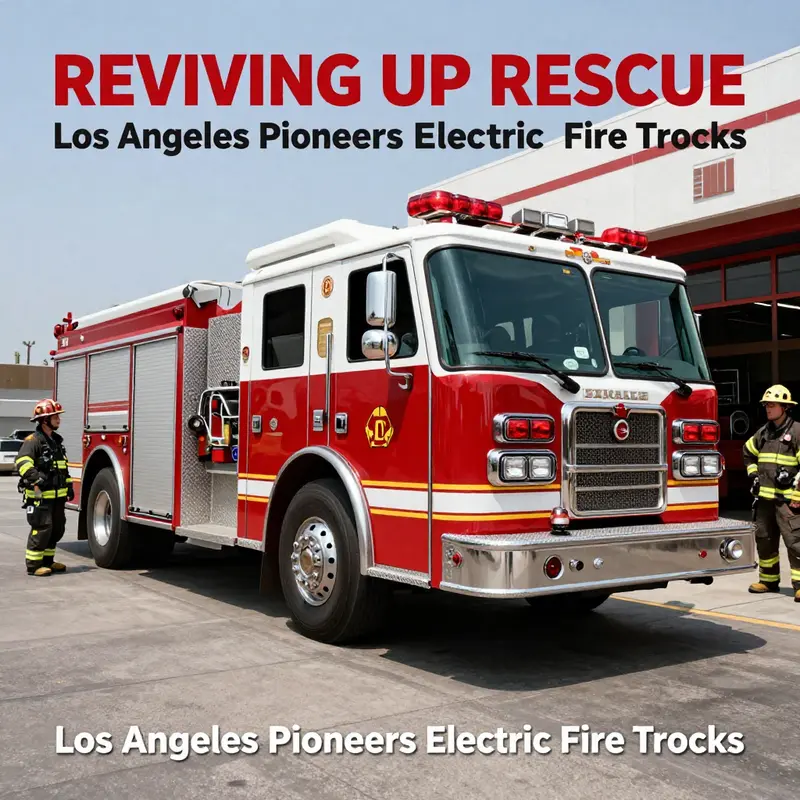
Los Angeles sits at a crossroads where public safety meets climate responsibility, a city regularly tested by wildfires, heat, and dense urban traffic. In that crucible, the Los Angeles Fire Department has embarked on a deliberate experiment: integrating electric propulsion into emergency response. The city has already made headlines by introducing one of North America’s first fully electric fire trucks into service. This is not a vanity project or a one-off showcase; it is a carefully crafted pilot designed to observe how an electric apparatus behaves under the unique pressures of emergency response. The vehicle in question is a purpose-built, all-electric fire truck developed by a European manufacturer known for emergency vehicles. It carries a dual-motor power system capable of delivering close to five hundred horsepower and is powered by a substantial battery pack in the neighborhood of 132 kilowatt-hours. Like any complex safety asset, it does more than move with speed. It must haul essential equipment, support overwatch during critical operations, and remain reliable through long shifts and demanding calls. The design includes regenerative braking to recover energy during normal driving and a diesel range extender to ensure the vehicle can respond even when charging options are stretched or unavailable. These features together promise a quieter, lower-emission footprint for the apparatus while preserving the readiness that commanders expect from a frontline tool in a modern city.
This pilot aligns with a broader shift in emergency services toward greener fleets. The appeal is twofold: reduce exposure to diesel exhaust for firefighters and residents alike, and cut noise and emissions that contribute to a harsher urban environment. Chief leadership within LAFD has highlighted these benefits as central to the project. The quiet operation of the vehicle, especially in densely built neighborhoods and at night, is not merely a convenience. It is a practical improvement that can help minimize the stress and fatigue associated with long shifts, while also enhancing situational awareness for crews and bystanders during incidents. Yet this quiet comes with a responsibility to prove that the vehicle can still perform as demanded by high-stakes emergencies. The pilot is precisely about testing that balance between environmental gains and uncompromised reliability in critical moments.
As of early 2025, the program has progressed to a clear, real-world test: one fully electric fire truck is in operation as part of a formal pilot. Acquisition occurred in May 2022, and the vehicle has since served within the department’s broader operations framework. The mission of this pilot is not just to showcase a new technology. It is to evaluate how electric propulsion stacks up against the realities of firefighting—response times, equipment handling, payload capacity, and the financial and logistical demands of maintaining such a sophisticated asset. The LAFD’s experience offers a template for other urban departments weighing a similar transition. If the pilot proves successful, it can inform decisions about future procurement, training, maintenance, and infrastructure investments that would enable a broader, zero-emission fleet.
The technical characteristics of the electric apparatus matter deeply here. A dual-motor arrangement provides strong performance figure without relying on a single high-stress propulsion point, which can be important in the rough-and-tumble environment of an urban call. The 132 kWh battery pack is substantial enough to support meaningful operation, yet balanced against the weight and space constraints typical of a fire service vehicle. The regenerative braking system helps extend the available energy during routine driving and running operations in a fire station or during preplanning duties. The diesel range extender adds a critical layer of reliability, specifically designed to prevent mission aborts when overnight charging is interrupted or when the vehicle is deployed on longer assignments. Together, these features aim to preserve the readiness that firefighters demand while delivering a step toward a cleaner energy profile for routine daily operations. It is a careful compromise between the immediacy of emergency response and the long-term promise of reduced emissions.
The pilot’s explicit objectives center on three core questions. First, how does an electric fire truck perform in real-world scenarios that include rapid acceleration, precise maneuvering, and the traditional demands of water and payload management? Second, can a zero-emission or near-zero-emission approach be feasible for a city’s broader emergency response ambitions, and what would be the schedule to scale up? Third, what logistical and operational challenges arise from adopting electric technology at scale? These questions anchor the data the department is collecting: reliability under stress, maneuverability in tight streets, payload integrity with firefighting tools and water supply, charging logistics at fire stations, and the long-term maintenance implications that come with high-tech equipment. The answers are not yet simple or uniform across every incident type, but the pilot is designed to generate actionable insights that a department of this size requires.
The challenges to wider adoption, as observed in the early reporting, are real and multifaceted. Range remains a central concern. Fire departments operate on unpredictable timelines that can stretch well beyond the average commute. Calls can be clustered in ways that demand extended readiness, sometimes over a shift that lasts many hours. In an all-electric platform, the energy budget must cover initial response plus on-scene operations, with enough reserve to return to base or to a charging point after a sustained incident. Payload capacity is another factor. Electric powertrains add weight, and firefighting equipment itself is heavy. The question arises whether the vehicle can carry the full complement of gear, hoses, cutting tools, and rescue devices without compromising speed or agility. While the range extender helps mitigate worries about endurance, it is not a substitute for thorough planning around charging and energy management in every scenario.
Charging infrastructure—which sounds straightforward in practice—emerges as a critical enabler or a bottleneck when scaled. Fire stations are optimized for traditional fleets, with established bays, power supply configurations, and maintenance workflows designed around internal combustion engines. Integrating electric trucks means rethinking electrical loads, upgrading transformers or charging stations, and aligning shifting schedules to allow for sufficient charging time without interrupting readiness. This is not merely a technical upgrade; it requires careful coordination with building operations, city energy management, and even local grid capacity during peak demand periods. The pilot therefore becomes a useful laboratory for testing not only the vehicle itself but the ecosystem that must support it. The regenerative braking capability eases some charging demand in normal operation, yet it does not eliminate the need for strategic planning around charging cycles. The diesel range extender remains a crucial backstop that preserves mission readiness when charging resources are stretched by a busy urban environment.
Beyond the hardware and the infrastructure, there is a human dimension to the pilot. Firefighters and station personnel must adapt to new workflows. Training involves more than familiarizing crews with cockpit controls; it encompasses understanding how energy use aligns with incident command decisions, how to manage heat and battery safety in the field, and how to coordinate with emergency medical services when a zero-emission asset is involved in a multi-disciplinary response. The psychological shift—moving from a familiar, diesel-fired workhorse to a high-tech electric vehicle—must be supported with clear protocols, ongoing education, and leadership that communicates both the purpose and the limits of the new technology. In this sense, the LAFD pilot is as much about culture and process as it is about propulsion and battery chemistry.
The broader implications reach into the national conversation about emergency response and climate responsibility. If Los Angeles demonstrates that electric fire trucks can operate effectively in a major urban center, other cities will watch closely. The potential benefits are compelling: reduced noise in neighborhoods, lower diesel emissions in sensitive areas, and a visible demonstration that public safety does not have to be at odds with environmental stewardship. Yet the cautionary notes remain equally important. The path to a zero-emission fleet is likely to be incremental, with pilot programs, careful risk assessment, cost-benefit analyses, and a staged scaling plan. The experiences in Los Angeles will contribute to a growing body of evidence about how to balance the urgency of emergency response with the slow, deliberate process of adopting new energy technologies at scale. In the end, the pilot asks a more fundamental question about the evolving identity of modern fire services: how to stay relentlessly prepared for the worst while becoming cleaner, quieter, and more sustainable in the long run.
For readers who want to explore ongoing updates in a more narrative format, the Fire Truck Space blog offers frequent reflections on frontline experiences, challenges, and innovations in the field. You can follow along at firetruck.space/blog/. This resource provides context for how departments, technicians, and planners think about new technology in the heat of real-world operations. The lived experience of crews—how they adapt to new tools, how maintenance routines change, and how incidents shape decisions—adds nuance to the pilot’s findings and helps readers understand why a single electric unit matters beyond its technical specifications.
Quiet Power on the Front Lines: Inside Los Angeles’ All-Electric Fire Engine and the Future of Urban Firefighting
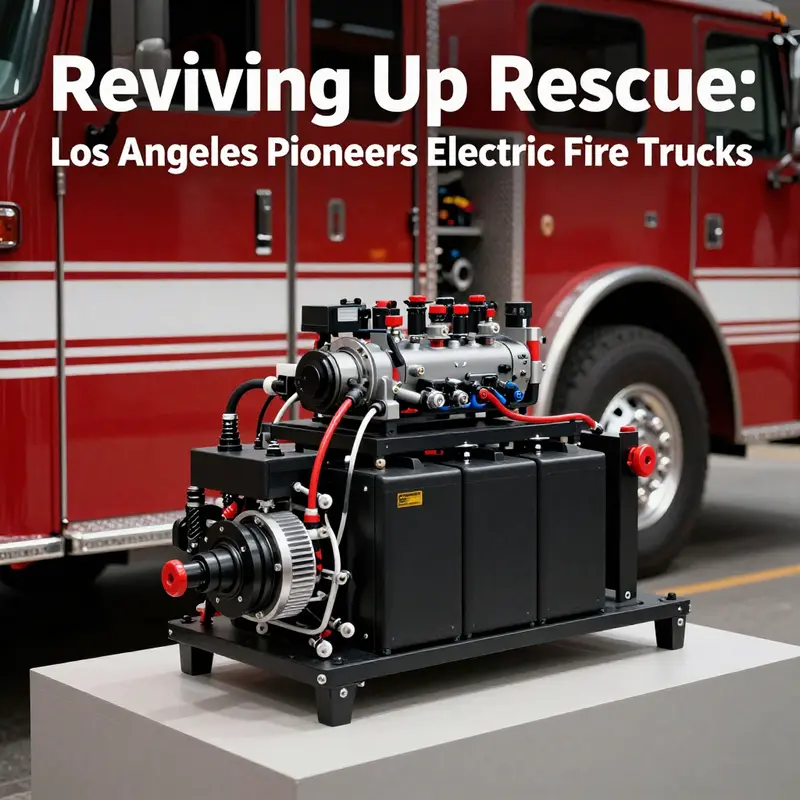
When a city of Los Angeles size and complexity rolls its engines to a fire scene, a hundred small judgments are made in the seconds between dispatch and intervention. The route, the traffic, the hydration of the crew, the gear stowed away in the compartments, the coordination with nearby units. All of these details matter, but in recent years a different kind of consideration has begun to weigh in: the soundscape and the emissions profile of the frontline vehicle itself. Los Angeles has moved decisively in that direction. It has introduced the nation’s first all‑electric fire engine, a milestone that speaks as much to urban policy as it does to firefighting technique. This chapter follows that story through the lens of the city’s streets, the studio floor of its design partners, and the quiet wake left by electric propulsion as it powers life-saving work. It is a story about a single vehicle, yes, but more profoundly about a trajectory—one where the cadence of emergency response can be gentler on neighborhoods without compromising the urgency of rescue.
From the outset, the project was framed as a practical test and a statement. The department sought a vehicle capable of meeting the uphill demands of dense, complex urban landscapes while demonstrating that a public safety fleet could lead in reducing environmental impact. The electric engine that arrived was conceived to satisfy the urgent needs of a city that never truly sleeps. Urban firefighters operate in a world of constant contrasts: they must move quickly, yet their work demands a degree of discretion and quiet that conventional diesel engines rarely offer. They must be robust and dependable, yet prepared to operate in scenarios where traditional refueling is not readily available. They must help protect the air and the hearing of people who live and work around the city, while not compromising the ability to cut through smoke and heat when every second counts. An all‑electric platform promised to address several of these tensions at once, and the city’s leadership framed that promise as both an environmental commitment and a tactical advantage.
The core of the unit is its propulsion system, a configuration that teams two high‑capacity batteries with a powertrain designed for steep urban climbs, rapid acceleration at the scene, and the stamina to sustain initial response operations. Reports about the vehicle describe a dual‑motor arrangement that can deliver substantial, if not blazing, on‑scene performance. In one frame of reference, the engine’s power is described as close to five hundred horsepower, a level of capability that suggests rapid response in situations where decisive movement matters. In another public briefing, the emphasis shifts toward the reliability and environmental benefits of an electric drivetrain: the absence of tailpipe emissions and the reduction in noise are positioned not as luxuries but as operational features that can improve line‑of‑sight communication at a critical moment and lighten the crew’s fatigue over a long shift. Taken together, these descriptions illuminate a central truth: the vehicle is not only about raw speed or blaze suppression. It is about a more humane, more controllable working environment for firefighters, and a more breathable air footprint for the city they protect.
Two technical threads run through the design in parallel. The first is energy storage and delivery. The vehicle’s battery system is described in several sources as comprising two high‑capacity packs whose combined energy delivery places the unit in a robust category for city use. The most explicit figures frame the capacity in terms of energy on board, with common references around a compact but meaningful figure that points toward around a hundred kilowatts of sustained power potential from the battery system. What this translates to in the real world is a platform that can carry out immediate, high‑demand tasks—pump operations, lighting, sirens, and onboard systems—without drawing from a fossil fuel source during the initial minutes of response. The second thread concerns endurance and resilience. The same bodies of information describe a practical operational window of roughly two hours of full battery operation. In dense urban environments, that window covers the typical span of many first‑alarm responses and the initial, critical phases of an incident before a larger fleet—if needed—can be mobilized or additional charging can occur at a station or a staging area. This endurance, it should be noted, is not simply about running time. It also signals a design philosophy: the vehicle must be ready to begin work immediately after arrival, without the complexity of on‑scene refueling, and it must offer enough autonomy to sustain early, decisive actions in neighborhoods where miles of blackout or ladders in smoke could otherwise derail a mission.
The vehicle’s design also emphasizes what does not always show up in performance tables: the quiet of electric propulsion. Fire engines are loud companions on every call, a practical reminder of the physics of combustion and the vibrations of heavy machinery. An electric drive, by contrast, operates with a different acoustic signature. While the crew certainly needs the roar of fans and pumps during operation, the propulsion itself can be comparatively hushed—an attribute that can translate into calmer, clearer communication on arrival and during critical tasks. In residential neighborhoods, where many fire calls unfold near sleeping households or late at night, this quiet dimension is not merely a convenience. It is a tactical variable, reducing the risk of miscommunication and lowering community disruption, a factor that resonates with city leaders who value both rapid response and social harmony.
Yet the path to a fully electric vehicle for public safety is not a single, straight line. Early communications surrounding the program spoke of a broader set of capabilities, sometimes pairing the electric platform with a diesel range extender as a planning option. A diesel range extender can serve as a reliability safeguard for long incidents or multi‑alarm responses where the battery alone might not cover the entire mission. In practice, this introduces a nuanced trade‑off: on one hand, the range extender can preserve mission continuity in extreme scenarios; on the other hand, it reintroduces a fossil fuel element into a vehicle designed to minimize emissions. The most recent, formal technical briefs circulating in public materials emphasize the battery‑centric operation and the all‑electric configuration. They describe a vehicle designed to operate cleanly and quietly on battery power for the essential early stages of response, with the broader fleet ecosystem capable of accommodating additional power needs through planned charging and transfer to stations rather than on‑scene diesel interventions. This shifting emphasis mirrors a broader industry conversation about when and how to balance reliability with decarbonization in critical fleets.
The implications of this shift extend beyond the single vehicle. In urban settings, fleet managers must weigh the needs of a city’s geography, its building density, and its energy infrastructure against the logistical realities of charging, maintenance, and lifecycle costs. An all‑electric engine can reduce ongoing maintenance costs by cutting down on moving parts and engine wear, and the regenerative braking systems that accompany electric drivetrains help recover energy during the stop‑and‑go rhythms of city driving. In practice, this means fewer service intervals for certain components and a predictable energy management profile that can be planned around shift cycles and incidents. The potential benefits ripple out to public health and urban planning as well. Zero tailpipe emissions directly improve air quality along response corridors and near hospitals, schools, and other sensitive neighborhoods. Lower noise during critical mobilizations diminishes community stress and may ease nighttime calls, allowing responders to deliver critical information with less cacophony in the background.
The LA project sits within a wider trend that several major U.S. cities are watching closely. Municipal fleets are beginning to explore electric propulsion not as a novelty but as an operational doctrine—pairing the environmental imperative with the practical realities of urban dispatch. The shift also invites a conversation about charging infrastructure and grid readiness. Fire stations must be able to support high‑demand charging without compromising the readiness of other essential services, and they must do so in ways that align with the city’s sustainability goals. In addition to the engineering and policy dimensions, there is a cultural one. Fire departments, long associated with rugged, diesel‑driven iconography, are rethinking their public image. Electric engines subtly change that image in meaningful ways: they symbolize modernization, resilience, and a future in which life‑saving work can be accomplished with fewer pollutants and less noise. For communities living in the shadows of tall buildings and boulevards crowded with traffic, that intangible shift—the perception of a city that prioritizes quiet, clean technology in its most urgent hours—likely matters just as much as any technical specification.
The technical narrative of this vehicle is, at heart, a story about harmonizing two demanding truths. First, urban emergency response must be instantaneous, robust, and capable of wading into dense, unpredictable environments where every decision can avert tragedy. Second, public safety fleets must also align with broader social commitments to clean air, energy efficiency, and sustainable city living. The all‑electric engine in Los Angeles is a tangible artifact of both commitments. It demonstrates that high performance and environmental stewardship are not mutually exclusive but can be mutually reinforcing. The capability to operate in continuous battery mode for a meaningful window means crews can begin tasks with a power profile that is predictable and controllable. The absence of tailpipe emissions during those initial moments of a response reduces the city’s cumulative exposure to diesel exhaust, a benefit that resonates across the health and climate dimensions of urban governance.
This is not to present the vehicle as a panacea. The practical realities of urban firefighting—terrain, weather, traffic, incidents that require rapid scale‑up of resources—will continue to demand a flexible, multi‑vehicle approach. The electric engine is a powerful addition to the toolbox, but it sits within a broader fleet strategy that will continue to include traditional engines where appropriate, complemented by charging networks, maintenance regimes, and urban planning that supports a more resilient energy ecosystem. The success of Los Angeles’ approach will hinge on careful management of these systems: how quickly units can be recharged after calls, how data from early deployments informs future iterations, and how the public perceives a fleet that can protect life without the familiar growl of a diesel motor. In this sense, the city’s experience is both empirical and aspirational. It chronicles a concrete performance milestone while inviting other departments to imagine how their own streets could adapt to electric propulsion without compromising service levels.
For readers who want to follow the broader arc of electric fire apparatus and its implications for public safety, a closer look at industry discourse and case studies provides a useful map. A dedicated resource hub captures ongoing developments, case studies, and practical perspectives from departments experimenting with these new technologies. This repository is especially valuable for readers seeking to connect the dots between the Los Angeles example and what other municipalities are considering as they plan for the next generation of emergency response fleets. It offers a grounded view of how concept becomes operation, and how operators translate high‑level policy ambitions into the daily discipline of protecting lives and property.
In the end, does Los Angeles have electric fire trucks? The answer is a clear yes, and the detail matters. The city has introduced a pioneering all‑electric engine into its frontline fleet, one built to perform on battery power in the critical early moments of an incident, with the potential for further enhancements as technology and infrastructure mature. It is not merely a demonstration project; it is a functional integration of electric propulsion into the discipline of emergency response. It signals a shift in both how fleets are conceived and how cities think about the lifecycle of a vehicle—from the moment it leaves the station to the final pat on the back after a successful shutdown of a scene. The implications extend beyond the walls of fire stations; they touch the air residents breathe, the noise levels surrounding hospitals and schools, and the long arc of municipal budgeting and energy policy as cities seek to balance readiness with responsibility.
As readers follow this evolution, the practical takeaway remains straightforward. The Los Angeles example shows that electric propulsion can align with core public safety imperatives while advancing environmental and community benefits. The road ahead will require thoughtful investment in charging, maintenance, and data analytics, along with ongoing dialogue about safety standards and operating procedures. The result will likely be a more versatile, resilient fleet, one that preserves the urgency and effectiveness of emergency response while reducing the ecological footprint of protection work. The city’s experience is a beacon for other departments that are weighing similar transitions, offering a blueprint for how to navigate the technical, logistical, and cultural dimensions of bringing electric fire apparatus from prototype to routine practice.
Readers curious to explore more of the evolving landscape of electric fire apparatus and related fleet strategies can find further discussion and analyses in the broader industry conversation. As the community of practice grows, the lessons learned from Los Angeles will inform how departments approach design collaborations, supplier partnerships, and the integration of new technologies into the cadence of urban rescue. For a broader look at how electric fire apparatus are shaping fleets and firefighting practice, see the firetruck.space blog/.
External resource: Los Angeles Debuts Nation’s First All-Electric Fire Engine — https://www.lacity.org/news/los-angeles-debuts-nations-first-all-electric-fire-engine
Quiet Engines, Clean Skies: The Emergence of Electric Fire Trucks in Los Angeles
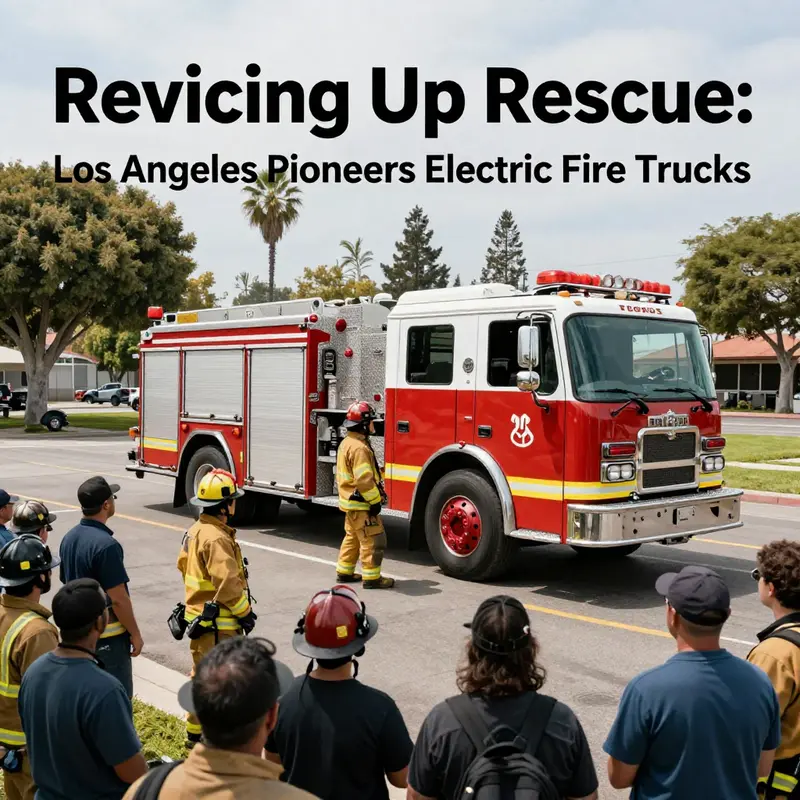
In Los Angeles, a city of dense neighborhoods and rapid transit corridors, the adoption of fully electric fire apparatus marks a practical step toward climate action without compromising life safety. This chapter examines how the first advanced electric fire truck in North America integrates into the city’s emergency response framework. It considers engineering choices, reliability under urban duty cycles, and the broader implications for public health and energy budgeting. \n\nThe vehicle architecture combines electric propulsion with a compact battery pack and a diesel range extender to ensure readiness even on longer missions. regenerative braking, thermal management, and a robust cooling system help the unit perform in high-demand environments. The hybrid approach is not a concession but a deliberate design to balance immediacy with endurance, recognizing that urban incidents can span minutes to hours and require sustained power.\n\nBeyond performance, the environmental benefits matter: fewer tailpipe emissions translate to better air quality in densely populated districts, especially during hot days and peak traffic. The reduced noise footprint supports nighttime operations near hospitals and residential zones, easing the urban soundscape while maintaining rapid response capability. \n\nOperationally, electrification prompts changes in charging infrastructure, maintenance planning, and dispatch workflows. Fire stations may host fast-charging bays, while data-driven scheduling optimizes turnarounds. City leadership weighs upfront procurement costs against long-term maintenance savings and improved fleet reliability. This chapter suggests that, when embedded in a thoughtful system, electric fire trucks can strengthen public safety, support climate objectives, and inspire new approaches to urban resilience.
null
null
Final thoughts
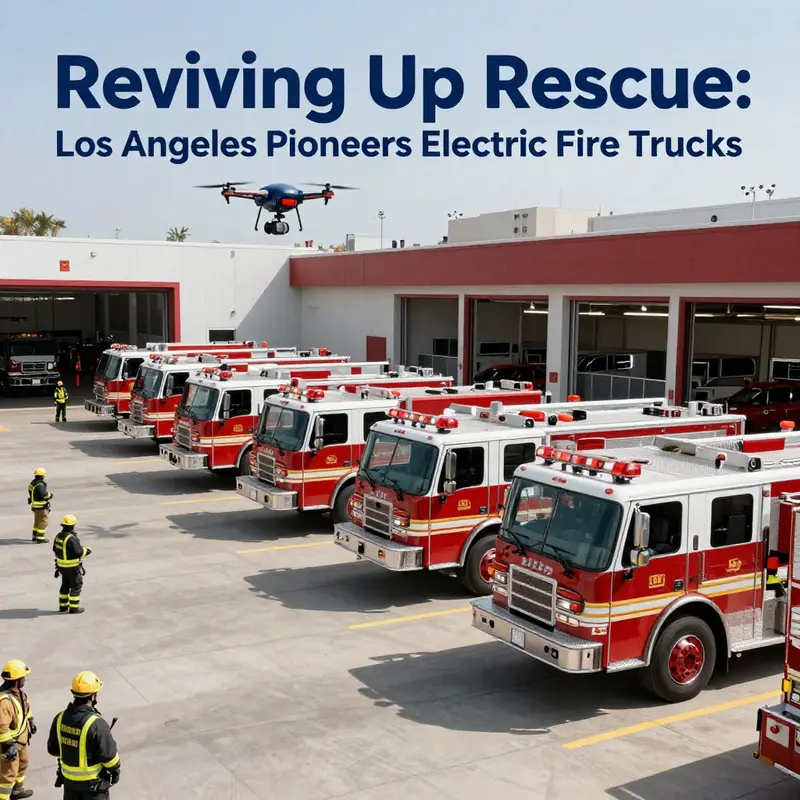
The introduction of electric fire trucks in Los Angeles marks a pivotal moment in the evolution of firefighting. These vehicles not only enhance performance with their powerful dual-motor systems but also represent a significant stride toward sustainability and community engagement. By embracing green technologies, LAFD sets a prime example for other cities, proving that public safety can go hand-in-hand with environmental responsibility. The future looks promising, not just for Los Angeles but for fire departments everywhere as they consider adopting similar technologies. Together, we can envision a future where firefighting continues to evolve, driven by innovation and a commitment to protecting both life and the planet.