
Fire trucks serve as vital lifelines during emergencies, making their design and dimensions integral to efficient response. Of particular interest is their width, which varies significantly depending on the type, model, and regulatory standards. Understanding how wide a fire truck can be not only fascinates enthusiasts and collectors but is also crucial for aspiring firefighters and emergency services professionals. This article delves into the specifics, starting with the standard dimensions of fire trucks, examining variations by type and model, discussing regulatory standards and maximum allowances, exploring implications for urban planning and infrastructure, and culminating in the safety considerations that ensure operational efficiency.
Measuring the Width That Matters: How Fire Truck Dimensions Shape Access and Operation
Why width matters
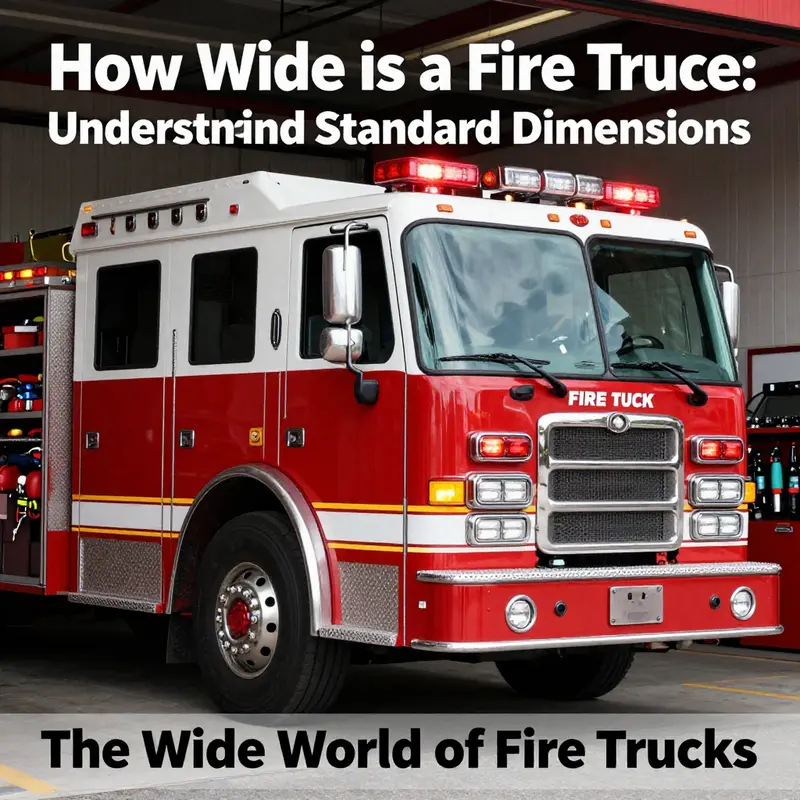
When people ask “how wide is a fire truck?” they are often seeking a single number. The reality is more nuanced. Width defines not only whether an apparatus fits through a gate or down a street, but also how crews deploy equipment, position-side tools, and operate safely at an incident. A few inches can change whether a hose bed sits flush with a curb, whether outriggers clear a parked car, or whether a ladder truck can swing into position without blocking an entire intersection.
Standard front-line fire apparatus typically fall within a narrow band of widths. Most conventional pumper and rescue vehicles measure roughly 96 to 102 inches (about 8 to 8.5 feet). Translated to metric, that sits near 2.4 to 2.6 meters. This range reflects a balance: manufacturers pack water tanks, pumps, hose, and tools into a compact footprint while staying within roadway regulations that limit vehicle widths for safe highway travel.
There are legal and practical caps on width. For public roads, many jurisdictions limit standard vehicles to about 8.5 feet (102 inches). This limit is critical for interoperability—fire trucks must travel to mutual aid calls, navigate highways, and pass through inspection gates. Designers aim to maximize storage and equipment capacity without exceeding those bounds. Where specialized tasks demand larger platforms, the apparatus may grow beyond the standard range, but those vehicles often require permits or special routing when deployed on public roads.
Beyond legality, operational clearances influence the effective width agencies plan for. When a truck is parked at a scene it is not only the body width that matters but also attachments that extend beyond the chassis. Side-mounted toolboxes, mirrors, step rails, and deployed stabilizers add to the footprint. Departments often plan for a minimum operational corridor greater than the truck’s stated width. Many municipalities consider a clear lane of at least 4 meters (about 13.1 feet) necessary to accommodate ingress, egress, and on-scene operations of standard apparatus, especially where equipment must be removed from compartments on the curbside.
Variations by apparatus type
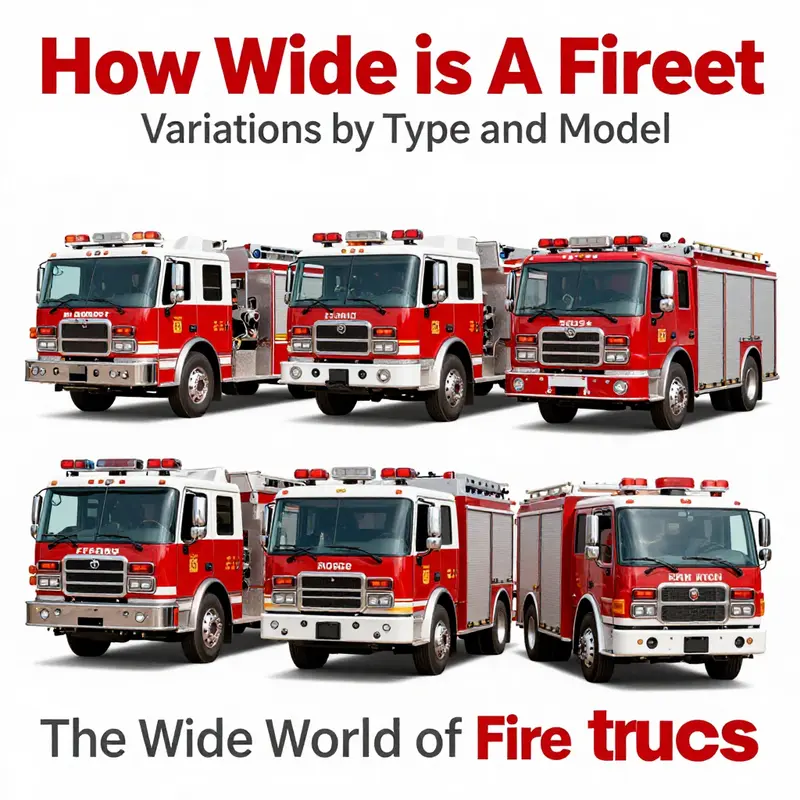
Not all fire trucks are built the same. The typical pumper engine prioritizes a compact width to optimize hose access and maneuverability. Rescue vehicles, carrying extra rescue tools and medical gear, can be slightly wider by design. Aerial ladder trucks and platforms add complexity: while their chassis may conform to roadway width limits, the ladder assembly and turntable require additional clear space during deployment. Heavy rescue units with specialized storage for large tools, or units built for industrial firefighting with expanded pump rooms, can push toward the upper limits of permissible width.
Specialized apparatus for airports or industrial sites sometimes exceed standard road limits entirely. These machines are engineered to meet unique operational needs: wider tracks for stability, broader tanks, or dual-cab arrangements to carry larger crews. These vehicles usually operate within a closed network—airfield roadways, private plant sites, or industrial facilities—where wider lanes and bespoke access points are already in place.
Design trade-offs and equipment layout
Width is a design constraint that informs every decision on an apparatus floor plan. A narrow body forces creative storage solutions: vertical racks, slide-out trays, and compartmentalized shelving. A wider body eases access to heavy equipment and increases usable compartment volume, but it also raises challenges for maneuvering in tight urban grids. Designers must reconcile the desire for on-board capability with the community’s street widths and response area.
Consider pump placement and hose bed arrangement. A wider chassis allows a larger hose bed and easier hose deployment from the curbside without stepping into traffic. Conversely, in dense neighborhoods with narrow streets, a slimmer profile reduces the likelihood of becoming stuck or causing obstructions. Departments that operate in older cities often specify narrower apparatus to match historic street patterns. Agencies serving modern suburbs may favor broader designs that carry more support equipment and longer ladders.
Human factors play a role as well. Crew safety while opening compartments, stepping onto side rails, or operating ground ladders depends on how far the apparatus projects into a working space. Mirrors and cameras reduce the need for wider sightlines, but nothing replaces the physical clearance needed when firefighters shoulder heavy equipment in compromised visibility.
Infrastructure and planning implications
Understanding typical widths drives infrastructure decisions. Fire lanes, access roads, and private development entrances must be designed to accommodate expected apparatus dimensions. Municipal codes often specify minimum lane widths, gate clearances, and setback distances based on the assumed size of emergency vehicles.
When architects and planners design new neighborhoods or commercial sites, the standard narrow-to-medium width range of most apparatus is a baseline. However, relying on a single nominal width invites problems: a parked car, narrow driveway, or temporary construction can reduce clearances below safe margins. That is why many building codes require larger minimum widths—commonly around 4 meters—for primary access routes to ensure vehicles can approach, park, and operate without impediment.
For existing neighborhoods, retrofits may be necessary. On-street parking restrictions, widened curb cuts, and designated fire lanes are common measures. Departments that operate larger specialized units coordinate with public works to map feasible response routes. Some agencies maintain multiple units of different sizes specifically to match access constraints across their response area: a smaller engine for narrow streets, a larger rescue for industrial districts.
Real-world considerations for departments and responders
Procurement decisions reflect the width trade-offs discussed. Departments analyze call types, street geometry, mutual aid agreements, and storage facility dimensions before choosing apparatus sizes. A rural fire service with wide county roads may prioritize equipment capacity over compact width. A dense urban department will weight maneuverability and curbside access more heavily.
Training and familiarization are part of the equation. Operators practice positioning in constrained environments, learning the effective turning radius and how peripheral features affect overall vehicle width. Community outreach and pre-incident planning help crews identify trouble spots: low-hanging branches, tight alleyways, or narrow bridge crossings—all of which influence how an apparatus can be used.
Finally, maintenance facilities and station bays must be sized to fit the chosen fleet. A station built for 8-foot-wide engines will squeeze or completely fail to accommodate a wider rescue unit. Stations often include overhead clearances and door widths designed with the fleet’s maximum dimensions in mind.
Where to check exact dimensions
If you need precise numbers for a particular model or custom configuration, consult the manufacturer product specifications. These pages list detailed measurements, curb-to-curb widths, and any optional equipment that affects the vehicle’s footprint. For agencies planning purchases or infrastructure changes, referencing the official specifications ensures compliance and proper fitment: manufacturer product specifications.
For departments or private owners considering available units, resources listing apparatus for sale can help compare real-world dimensions across used and new options. See a practical marketplace resource for a sense of available sizes and configurations: fire trucks for sale.
Understanding the width of a fire truck is not just about a number. It is about how that number affects access, crew safety, equipment layout, and community planning. Whether you are an engineer designing an apparatus, a planner drawing a street, or a firefighter positioning at a scene, appreciating the dimensional reality helps make better choices in design, procurement, and daily operations.
Measured in Steel: Unraveling Fire Truck Width Across Types and Models
Width is more than a metric on a spec sheet; it governs how a fire department moves, operates, and responds in a world where every inch of space can save minutes and lives. When people ask, how wide is a fire truck, they’re really asking what kind of vehicle is in question, what environment it’s built to operate in, and what balancing act its designers perform between space for gear and space for passage. The answer travels beyond a single number. It travels through urban grids, rural roads, and the elevations of tall buildings, where a few centimeters can mean a blocked doorway or a clear path to a stairwell. In practice, most standard fire apparatus that routinely roll through city streets sit in a narrow but practical band—roughly two and a half meters wide, give or take a few centimeters. The common urban pumper or foam engine is typically around 2.4 to 2.6 meters wide, a range chosen to keep you nimble on tight boulevards and congested intersections while still carrying pumps, tanks, and a crew that can respond with speed. Within that span, a representative example hovers near 2.5 meters, about 8.2 feet across. It’s a width that makes sense in many streets, planters, and parked-car configurations, and it’s precise enough to guide crew chiefs in tactical planning before the siren ever sounds. Yet even within this familiar corridor, the width is not a fixed law but a design choice guided by purpose, geography, and the safety margins required by teams and the public they serve. Some trucks are a touch narrower, others notably wider, and the differences matter in the way a vehicle negotiates a corner, aligns with a curb, or threads a lane line while the pump is primed and the ladder retracted. The distribution of equipment and the shape of the chassis determine this geometry. A compact urban pumper might emphasize a tighter wheelbase and a leaner profile to maximize maneuverability, whereas a rescue vehicle, with its extra hardware for stabilization, might creep toward the higher end of the standard band. In the most simplified terms, width is a constraint solver. It weighs equipment capacity against the need to pass through the ordinary—the same roads and the same intersections that families use to get to work, to schools, to grocery stores—while still delivering the extraordinary when fire, collapse, or hazmat demands demand a rapid, decisive response. The mathematical center of gravity for width appears in the 2.4 to 3.0-meter window that NFPA and other regulatory bodies monitor, with urban norms clustering near the 2.5-meter figure, and specialized vehicles expanding beyond that envelope only when the mission requires it. The regulatory guardrails are clear: in many places, the maximum allowable width for standard fire trucks sits at 3 meters, roughly 9.8 feet. That ceiling makes sense as a universal benchmark, because it aligns with the typical breadth of city lanes, parking corridors, and the ambulatory space needed for width to be navigated safely by a driver and co-pilot while the pump is charging or a hydraulic platform is staged. Yet some specialized fire apparatus are permitted to go beyond that limit, to as much as 4.5 meters (about 14.8 feet) in certain jurisdictions or for particular applications. It’s not that width itself is a fashion choice; it’s a calculated response to differences in mission profiles, maintenance protocols, and the inertia of infrastructure. The urban street environment insists on narrowness because there is no practical margin for improvisation when a city block must be crossed in minutes. The rural fire engine, on the other hand, may borrow a bit more width to support rugged suspension systems, larger water tanks, and the hierarchy of rescue equipment required to traverse uneven terrain, but even there, the road network exerts its own discipline. The rural Type 3 engines may tip toward the upper end of the normal band, staying within transport laws while offering increased stability and resilience for off-road work. When you widen the chassis to accommodate heavier pumps, larger tanks, or more elaborate rescue tools, you inevitably trade some agility for capability. Aerial ladder trucks, the birds of prey of the firefighting fleet, must house extended ladders and raising platforms. Their widths frequently run higher than their urban cousins, commonly around 2.8 to 3.0 meters (9.2 to 9.8 feet). That extra space is essential to house the heavy, articulated components that elevate firefighters to higher floors or roofs. It’s not simply about the ladder; hydraulic lines, stabilization gear, and the base structure of the chassis often push the outer frame wider. The engineering team has to ensure that the cab remains able to accommodate a crew and their PPE in a configuration that preserves visibility and control, all while not overstuffing the vehicle so much that it cannot be steered safely through city corridors or parked in a compact bay. In the quieter, more remote regions, you’ll still find width within reasonable bounds, but you’ll notice a willingness to accept marginally wider vehicles when the trade-off includes safer off-road performance and greater water capacity. Type 3 rural/off-road engines, built to operate far from paved roads, may be modestly wider as a deliberate design choice to support robust suspension systems and increased stability over rough surfaces. Even here, the width remains conservative enough to comply with general road transport limits, because the vehicle must still reach towns and supply points, cross bridges, and maneuver on a variety of routes. The example of a heavy-duty model, such as a Howo 6-ton water fire truck in 4×2 configuration, underscores the point that manufacturers design to a standard width unless the spec calls for off-road or custom features. While exact width data for some of these models isn’t always published, the principle stands: most of these vehicles remain within about 2.6 meters (8.5 feet) unless a specialized purpose dictates otherwise. What emerges from these patterns is a spectrum rather than a single fixed dimension. The width a crew encounters is influenced by engine size, pump capacity, tank volume, and the array of rescue equipment loaded onto the chassis. The width is also a supplier choice, reflecting the manufacturer’s design standards and the regulatory environment in which the product is built. When a department evaluates a new fleet purchase, the decision about width interacts with city planning realities, including the minimum clear width necessary for safe passage not only of the apparatus itself but also of pedestrians and other vehicles that share the road. Fire lanes, for example, are dimensioned to accommodate a vehicle’s outer width plus a margin for mirrors, wheels, and overhang. The typical recommended minimum clear width for an emergency access route sits around four meters (about 13.1 feet), a standard that harmonizes with both safety practices and the practical needs of ambulance and support vehicles that must move in close proximity during operations. In the end, the precise width of any given fire truck should be read from the manufacturer’s technical specifications, since the numbers can vary even among similar models. The discussion above is a map of possibilities rather than a single coordinate. To understand how a specific truck will fit into a city street grid, one must consult the exact measurements and confirm with local permitting and road-use guidelines. For readers who want to explore more about how these vehicles are built and tested, the Fire Truck Blog offers a deeper dive into the evolution of firefighting apparatus and the practical realities of design tradeoffs. See the Fire Truck Blog for related discussions on chassis choices, equipment integration, and real-world deployment challenges. Fire Truck Blog. For formal standards and dimensional requirements, professional readers may refer to the NFPA guidelines, which help codify the allowable widths and the performance criteria for modern fire apparatus. These standards provide the backbone for manufacturers and agencies as they plan fleets, design access routes, and coordinate with urban planning officials to ensure that the fleet can reach every corner of the community with speed and safety. The official standards frame the upper limits, the typical ranges, and the exceptions that vendors and responders must negotiate as they adapt to evolving mission profiles. External resources that inform these discussions can be found in widely recognized safety and standards repositories, such as the National Fire Protection Association’s standards for automotive fire apparatus, which lay out dimensional expectations and safety parameters for vehicles operating in the United States. External resource: NFPA 1917 Standard for Automotive Fire Apparatus. https://www.nfpa.org/codes-and-standards/all-codes-and-standards/list-of-nfpa-codes-and-standards/nfpa-1917
Regulations, Limits, and Real-World Widths: What Governs How Wide a Fire Truck Can Be
Regulations, Limits, and Real-World Widths: What Governs How Wide a Fire Truck Can Be
Understanding how wide a fire truck can be requires more than quoting a single number. Width is where engineering, safety, road law, and operational needs meet. A vehicle that is too wide can’t fit down certain streets, may block traffic, or create hazards during emergency maneuvers. A vehicle that is too narrow may lack necessary equipment or stability. For fire departments, planners, and municipal engineers, the legal and practical maximum widths set the boundaries for design, procurement, and deployment.
At the national and state level, transportation authorities lay down the primary limits. In the United States, federal guidance and most state departments of transportation treat 102 inches—about 8.5 feet or 2.6 meters—as the standard maximum width for vehicles on public roads. This limit applies to most commercial vehicles, and fire apparatus are typically expected to conform. The 102-inch envelope reflects a balance: it allows heavy equipment and enclosed compartments while keeping the vehicle compatible with lane widths, bridges, and roadside clearances.
That standard, however, is not absolute. Fire trucks carry specialized gear: large water tanks, foam systems, outriggers for aerial devices, and wide side compartments. Some models, especially those built for airport rescue, industrial complexes, or heavy urban tasks, are wider than ordinary engines. When the protective or mission-critical equipment pushes a truck beyond the 102-inch standard, departments either seek state-issued exemptions or use permits for oversized loads. Permits allow travel but often come with route restrictions, time-of-day limits, and escort requirements. These constraints shape how and when a wider vehicle can respond.
Beyond federal or state numeric limits, safety and industry standards guide fire apparatus design. The National Fire Protection Association (NFPA) produces technical standards—NFPA 1917 is the relevant standard for modern fire apparatus design and construction. NFPA guidance addresses not only total width but also clearances for deployed equipment, occupant safety, and visibility. NFPA standards help ensure that a wider truck remains safe in operation: designers must account for turning clearance, stability, sightlines from the cab, and the capability to navigate urban obstacles without compromising crew safety.
Regulatory limits also interact with local infrastructure. Urban streets, older neighborhoods, and rural roads vary dramatically. Many municipalities set fire lanes and access ways with a practical minimum width that accommodates both emergency vehicles and civilian traffic. A common planning target is a 4-meter (about 13.1 feet) clear lane for access and maneuvering. That figure is not arbitrary: it gives room for a typical 2.4–2.6 meter-wide apparatus plus space for deployment of side-mounted equipment and room for passing traffic. Planners use this buffer to allow firefighters safe disembarkation, equipment removal, and operation without forcing lanes to be closed entirely.
A range better captures reality than a single number. Most standard pumpers and rescue vehicles fall in the 2.4 to 2.7 meter range (about 7.9 to 8.9 feet). Examples across models show common widths such as 2.47 meters (8.1 feet) for certain foam engines and roughly 2.55 meters (8.4 feet) for some rescue units. These dimensions keep the apparatus compatible with typical roads while providing space for necessary compartments and systems.
Yet, designers sometimes build outside that range. Specialized apparatus—platform aerials, heavy rescue rigs, or airport crash tenders—may push to 3 meters (about 9.8 feet) or more. National regulations commonly cap standard field widths at around 3 meters for certain classes of vehicles, but then allow exceptions. In exceptional cases, particularly for off-road or industrial applications, custom vehicles can approach widths of 4.5 meters (about 14.8 feet). These machines rarely travel general public routes freely; instead they operate within controlled environments or move under escort and permit.
Operational trade-offs drive many width decisions. Wider bodies offer larger compartments, more stability for high-center-of-gravity equipment, and space for built-in systems like foam concentrates or rescue tools. But every added inch increases the challenge of navigating tight turns, passing through narrow corridors, or entering older communities. Departments must weigh these pros and cons when specifying apparatus. A station serving dense urban blocks often prioritizes narrower, more maneuverable rigs. A station covering industrial sites or open highways may accept or require wider rigs with greater equipment capacity.
Legal compliance is not just about daily travel. Roads, bridges, and tunnels have posted limits and structural constraints. Clearances under overhead bridges and power lines may impose unambiguous operational ceilings on width and height. When a vehicle exceeds typical legal widths, agencies run route surveys to identify obstacles, calculate turning radii, and map permissible corridors. This planning reduces surprises during real emergencies and ensures that wide apparatus can actually reach the incidents they are built to handle.
Permits and exemptions form another important layer. Departments that need wider equipment generally work with state transportation agencies to secure oversize/overwidth permits. These permits often require advance notice for movements, may limit hours of travel, and could assign pilot vehicles or escorts. In some cases, apparatus builders collaborate with authorities during vehicle design to minimize the need for permits while meeting mission requirements.
Design standards and legal limits also influence training and station layout. Firefighters must practice positioning and deploying equipment from vehicles of specific widths. Stations are designed with bay sizes that match apparatus dimensions and allow safe ingress and egress. A mismatch between expected width and actual vehicle width can lead to damaged bays, blocked lanes, or unsafe operations at incident scenes.
Finally, staying current matters. Regulations evolve, standards get updated, and vehicle capabilities advance. Departments and fleet managers must consult both transportation authorities and the NFPA standards to ensure compliance. For technical specifications and code development, the NFPA’s documentation and guidance remain essential resources for anyone specifying or operating fire apparatus.
For departments exploring how width impacts procurement and operations, further reading on industry standards is useful. The NFPA’s official page on fire apparatus standards provides detailed technical specifications and context for design decisions: https://www.nfpa.org/Code-Development/Standards/NFPA-1917-Standard-for-Fire-Apparatus. Local planners and fleet managers can also benefit from practical resources and community discussion; for a catalog of industry perspectives and listings relevant to apparatus size and availability, see the firetruck.space blog. This combination—national standards, local infrastructure assessment, and pragmatic fleet planning—defines how wide a fire truck can be and how that width translates into safe, effective emergency response.
Width at the Front Lines: How Fire Truck Dimensions Shape Streets, Access, and Emergency Response
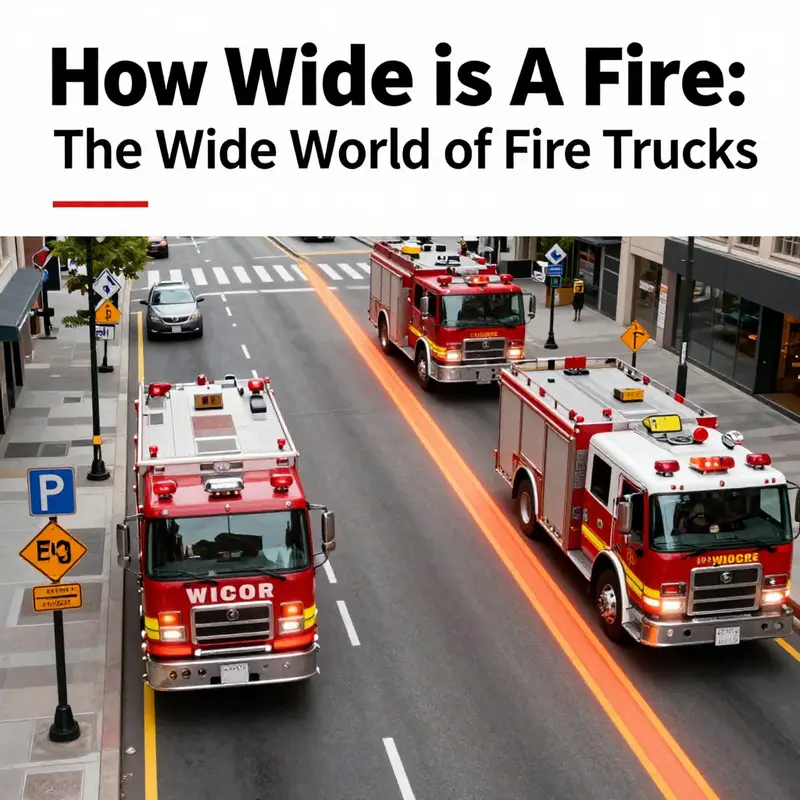
The width of a fire truck is more than a measurement on a specification sheet. It is a living constraint that threads through the design of streets, the rhythm of urban life, and the speed at which help arrives in a crisis. When the siren cuts through the noise of a city, the first mile of response is won or lost not just by horsepower or water pressure, but by the narrowest of thresholds: the width of the vehicle itself. Across the spectrum of fire apparatus used in different settings, the practical footprint matters as much as the pump capacity or the ladder length. In general terms, these vehicles occupy a corridor that starts around 2.4 meters and extends to just under 3 meters in width. That translates to roughly 7.9 to 9.8 feet. Within this broad band, there is meaningful variation. A standard urban engine, built for high-volume deployment in dense neighborhoods, tends toward the wider end of the range, commonly about 2.4 to 2.6 meters wide (roughly 8 to 8.5 feet). Meanwhile, smaller, more agile units designed for tight streets or historic districts may compress to as little as 6 to 7 feet, or about 1.83 to 2.13 meters. These dimensions are not arbitrary; they reflect a balance between the need to house essential equipment and the reality of negotiating streets that were not built with modern fire response in mind. Even the narrower end of the spectrum must align with national safety standards and the structural requirements that govern heavy vehicles, overseen in part by federal and national codes. In practice, that means a floor plan and chassis design that respect both the interior layout necessary for firefighting capabilities and the exterior envelope that interacts with the built environment. The width figures also meet regulatory ceilings: the maximum allowable width for standard fire trucks is typically capped at about 3 meters (roughly 9.8 feet). In specialized instances—usually for unique mission profiles or off-road capabilities—vehicles may exceed this limit, with widths approaching 4.5 meters (about 14.8 feet). Yet even as some vehicles stretch beyond the common envelope, the vast majority of urban response fleets stay within that standard band, a choice that harmonizes with road networks, parking patterns, and mass transit footprints alike. Likewise, the turning and maneuvering required to operate a fire truck safely in a crowded street hinges on width. On city streets, where parked cars, utility poles, and street furniture contend for space, the vehicle’s breadth determines whether a turn can be completed in a single sweep or if a more complex, multi-point maneuver is required. Because the width interacts with wheelbase, tire track, and the vehicle’s overall geometry, drivers must anticipate space constraints well before reaching a destination. As a result, dedicated planning for emergency response routes increasingly foregrounds not just the maximum load a street can bear, but the minimum clearances that allow a vehicle to pass unobstructed. In practical terms, planners and engineers look at a minimum clear width of about 4 meters (roughly 13.1 feet) for critical access lanes. This standard helps ensure that, even in the midst of dense traffic or double-parked vehicles, a response unit can advance with confidence and without the risk of snagging mirrors or sides, a factor that can delay operations or complicate rescue tactics. The width considerations ripple outward into the design of curb lines, parking regulations, and curb cut decisions. A city that aspires to reduce response times often integrates these constraints into zoning rules, street design codes, and retrofit programs. The result is a more predictable corridor for large apparatus, where the geometry of the street supports quick positioning and stable operation under demanding conditions. The national landscape of standards also recognizes the diversity of missions. In addition to width, there are synchronizing requirements for overhead clearances, turning radii, and load distribution that affect how an apparatus can negotiate intersections and underpasses. The interplay between width and clearance is especially visible in urban cores where overhead wires, tree canopies, and building facades line both sides of the street. The NFPA and other regulatory bodies emphasize that fire department access must be maintained with reliable margins for safety and effectiveness. The literature on these standards points toward a holistic approach: width is not a standalone metric but a gateway to safe access, unobstructed egress paths, and the ability to deploy hoses, ladders, and equipment without compromise. In this sense, the problem resembles a planning puzzle where each piece—street width, parking strategy, curb orientation, and sign placement—must cooperate to preserve access. For those charged with city design, this means more than simply acknowledging a number. It requires embedding width-aware considerations into traffic calming, street furniture placement, and seasonal maintenance that can temporarily narrow lanes. The practical realities of operating in different environments also shape how width is treated. In dense urban areas, smaller, more compact units are favored to reduce street clutter and to improve navigability through narrow lanes. In suburban or industrial zones, broader apportionments may be acceptable because there is more room to maneuver and fewer encroachments. Across all contexts, the driving principle remains consistent: width informs access, access drives response times, and response times determine the odds of saving lives and reducing damage. The communication that underpins these decisions is not limited to engineers and planners. Fire responders themselves must navigate real-world constraints during calls, negotiating space between parked vehicles, emergency scene setup, and the rapid fulfillment of critical tasks. This reality underscores a broader lesson: fire truck dimensions are not an abstract statistic but a constraint that must be accounted for in the urban fabric. The conversation around width also intersects with how cities balance competing needs. On one hand, roads must accommodate wide apparatus; on the other, they must serve pedestrians, cyclists, buses, and private vehicles. In some communities, the answer is to adopt targeted design features that maximize safety without sacrificing general mobility. That can include dedicated fire apparatus access roadways and regular infrastructure audits to verify that streets meet the standards set forth by authorities, including the flexibility to accommodate future vehicle evolutions. For those who want to dive deeper into the regulatory framework behind these widths, the NFPA 1710 standards offer a contemporary lens on fire department access and response performance. As planners and fire service leaders grapple with evolving fleets and shifting cityscapes, the guiding principle remains clear: a street is only as effective as its ability to welcome a fire apparatus, align it with the scene, and allow it to operate with precision and speed. This is why width is integrated into the broader discourse on urban resilience and emergency readiness. It is a metric that anchors the lay of the land, determines how scenes are framed for action, and ultimately informs decisions about where and how communities grow. And just as roads must be designed to accommodate the width of today’s engines, they must anticipate the potential for future changes in vehicle families and load demands. The discipline of urban planning, then, becomes a careful negotiation between the static realities of a vehicle’s footprint and the dynamic demands of a city’s life. In this ongoing negotiation, one practical takeaway emerges with particular clarity: ensuring reliable access is the common thread that links street design, safety, and the speed of life-saving response. The engineering of width is not a footnote to emergency services; it is a foundational element of how cities plan for crises and recover from them. For professionals who want to explore connected dimensions, there is a thread of knowledge in the broader conversation about managing complex emergencies and infrastructure challenges. See how these ideas intersect with the ongoing work described in related discussions of overcoming challenges in fire command systems. (Internal link: https://firetruck.space/overcoming-challenges-in-fire-command-systems/) Beyond the numbers, the story of width is a story about modern cities adapting infrastructure to keep pace with the needs of public safety. It is a narrative that invites architects, planners, engineers, and emergency responders to speak a common language: space matters, and every inch of that space can affect whether help arrives in time, how it is deployed, and how communities endure through crisis. External resources provide additional context on the standards that help shape these decisions. For more detail on the regulatory updates that influence how width translates into practice, refer to the NFPA 1710 update. https://www.nfpa.org/Code-Updates/Newsletters/2023/November-2023/What-You-Need-to-Know-about-NFPA-1710
Width on the Line: How Fire Truck Dimensions Shape Safety, Access, and Emergency Response
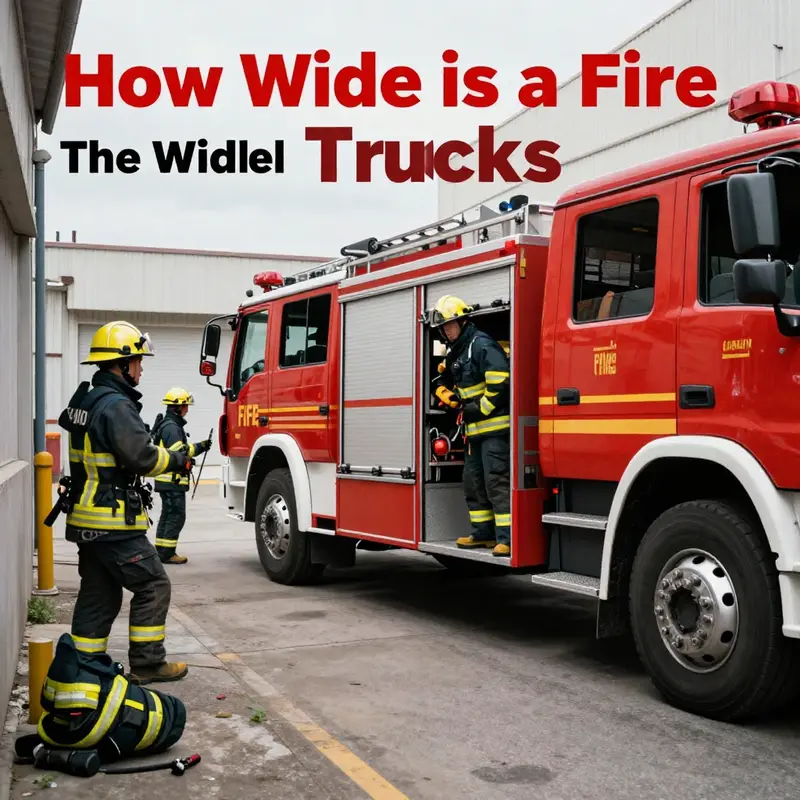
Width is a crucial, often overlooked attribute of fire apparatus that affects safety, access, and operational effectiveness. Typical modern fire trucks fall broadly in the range of about 2.4 to 3.0 meters (roughly 7.9 to 9.8 feet). Within that band, designers balance the need for carrying water, equipment, and crew against the need to fit through narrow streets, historic districts, and tight driveways.
Different apparatus types commonly trend to different widths: pumpers and engines often sit near the center of the range to combine stability and payload; rescue platforms and vehicles with heavy lifting gear may be somewhat wider to accommodate structural reinforcement and outriggers; specialized aerials or heavy wildland units can be wider still to support large booms or ballast. National guidance and many local regulations typically set a practical ceiling near three meters for routine road use, with exceptions available for specialized vehicles where justified.
Operational consequences of width are immediate. A wider vehicle can carry more equipment and provide greater stability, but it increases blind spots, risk of sideswipes, and the chance of being blocked in narrow environs. A narrower vehicle improves access in dense urban grids but may force compromises in tank size, hose capacity, or carried tools. Departments choose widths based on their typical incident profile and the built environment they serve: dense cities often favor narrower configurations, while sprawling suburbs or industrial districts may accept broader platforms for additional capability.
Width also interacts with infrastructure and planning. Fire lanes and access ways are designed with minimum clear widths (commonly cited targets are around four meters or about 13 feet of clear path) to ensure apparatus can stage and deploy equipment. When the roadway or site geometry falls short, incident commanders must adapt with alternative placement, hose lays, or traffic control. Driver training, use of spotters, and modern camera/ sensor systems help crews mitigate risks introduced by larger footprints.
Standards such as those from NFPA provide baselines for vehicle dimensions, clearances, and safe operation. These guidelines help fleet managers, engineers, and departments make informed trade-offs between reach, payload, and maneuverability. Ultimately, there is no single optimal width; the right choice is a context-dependent compromise that aligns vehicle capability with the streets, buildings, and incident types a department most often faces. In practice, careful coordination between apparatus specification, driver training, and urban planning ensures that width supports both safety and timely response.
Final thoughts
The dimensions of fire trucks play a pivotal role in emergency response — not only in their design for functionality but also in their impact on urban planning and safety protocols. By grasping how wide a fire truck is, enthusiasts, aspiring firefighters, and professionals alike can appreciate the complexity and necessity of this critical emergency equipment. Their varying widths, aligned with regulatory standards, directly influence infrastructure requirements, ensuring that our cities are prepared for any emergency that arises. By understanding these nuances, we not only celebrate the engineering behind fire trucks but also reinforce our commitment to effective firefighting and community safety.