
Have you ever wondered why your dog lets out a passionate howl when a fire truck zooms by? This phenomenon, deeply rooted in instinct and communication, offers a captivating glimpse into the world of our furry friends. In this discussion, we will dive into the evolutionary biology that explains dogs’ affinity for howling at fire truck sirens, explore their amazing acute hearing abilities, and gain insights into how this behavior acts as a communication tool. Additionally, we will examine how different dog breeds react to sirens, revealing just how ingrained these responses are in their heritage. This exploration not only satisfies your curiosity but also enriches your understanding of the remarkable bond between dogs, sirens, and their ancestral past.
Echoes in the Urban Wilderness: The Evolutionary Whisper Behind Dogs Howling at Fire Trucks
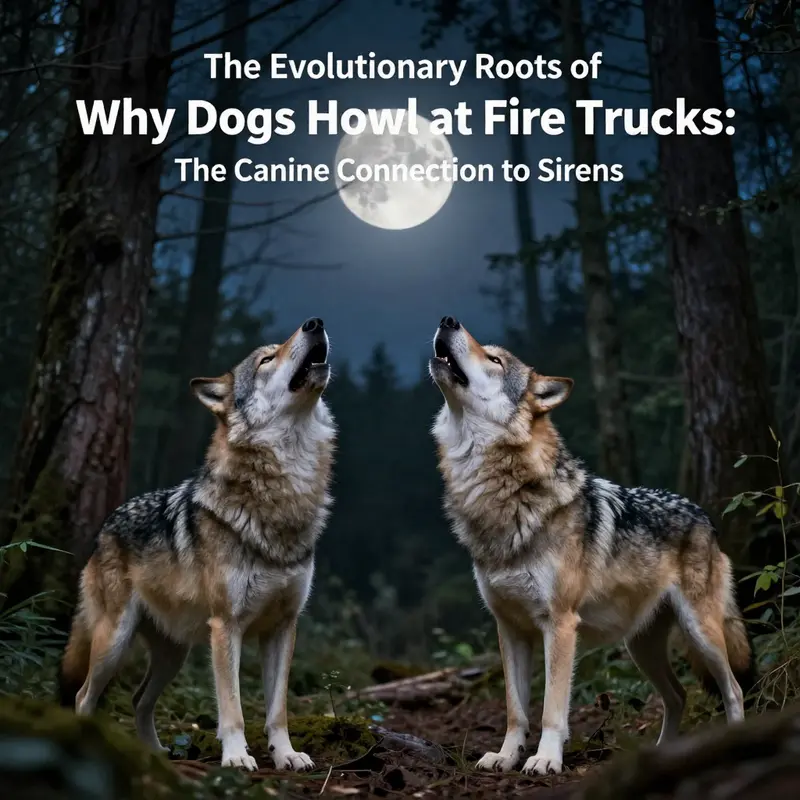
In the glow of urban life, a dog’s howl at a passing fire truck can feel like a door opening onto an ancient forest. The city may teem with neon and sirens, but for many dogs the siren’s wail taps into something older and deeper than modern soundscapes. Dogs hear higher frequencies than humans do, and their perception matters because the siren is a complex auditory signal that can resemble a social call from another dog. This sensitivity helps explain why a howl often rises in response, traveling through rooms and yards as if the dog were a sentry listening for kin. Domestic dogs descend from wolves, and howling was a fundamental tool for contact and cohesion over great distances. The siren’s rising and falling pitch, sharpened by the Doppler effect, can mimic the tonal contour of a distant howl and trigger the instinct to join the chorus. The result is a vocal reply that can feel communal and ancient, even when the scene is a living room chair.
The degree of this response varies. Breeds with strong wolf-like heritage—such as huskies and certain spitz types—tend to howl more readily, while other breeds may respond with curiosity, a bark, or a quiet listening moment. Yet the common thread is a shared sensitivity to high-frequency tones and social meaning mapped onto those tones by neural circuits shaped by evolution. In the modern world, this ancestral toolkit persists as a way to coordinate social life, even if the stage is a city street rather than a forest edge. A siren’s cadence—rising and falling, accelerated by motion—can be perceived as a distant calling. The dog’s brain may interpret the sound as a potential message from a fellow canine and respond with vocal signaling of its own.
Reinforcement matters. If a howl draws attention from a human, even a scolding, the behavior can become self-perpetuating. In households where the howl is noticed, the dog learns that howling can solicit interaction, which strengthens the response over time. The broader lesson is not to punish instinct but to channel it: provide outlets for vocal expression, offer enrichment that engages social energy, and gradually expose the dog to urban soundscapes in controlled ways to build resilience. With patience and a thoughtful routine, owners can help dogs feel secure when sirens pass by and can encourage calmer responses that respect neighbors.
In short, the howl at a fire truck is not a quirky defect but a trace of an ancient communication system that still hums beneath our everyday noises. Recognizing this can transform how caretakers respond—from punitive suppression to compassionate guidance that honors both canine history and modern family life. By pairing predictability with enrichment and social learning, dogs can navigate a world full of loud sounds while preserving the bond with their human pack.
We should avoid giving medical advice; this is informational. If you have concerns about your dog’s behavior, consult a qualified veterinarian or behaviorist.
How Acute Canine Hearing Turns a Fire Truck Siren into a Call to Howl
How Acute Canine Hearing Turns a Fire Truck Siren into a Call to Howl
Dogs live in a world shaped by sound. Their ears are not mere appendages; they are refined instruments honed by evolution to detect and interpret a wide acoustic landscape. When a fire truck’s siren slices through the neighborhood, most humans register a loud warning. Many dogs, however, experience something different: a sound that resembles the long-range vocal signals once used by their wolf ancestors. That resemblance, combined with a vastly broader hearing range and precise ear mechanics, explains why a mechanical wail can prompt an instinctive howl.
A dog’s auditory range extends far beyond our own. Humans generally hear from about 20 Hz up to 20,000 Hz. Dogs, by contrast, detect frequencies roughly from 40 Hz to 60,000 Hz. That extra reach matters. Sirens often contain high-frequency components and rapid tonal sweeps that fall into the upper portions of a dog’s hearing range. These patterns include sudden rises and falls, sustained pure tones, and harmonic overtones. To a dog’s ear, those features can mimic the pitch contours and timing of natural canine howls. While a person perceives a siren as an alert signal, a dog can perceive it as a distant, complex vocalization coming from another animal.
Beyond frequency range, dogs possess anatomical advantages that sharpen their auditory focus. The visible ear flap, or pinna, is controlled by over eighteen muscles. Dogs rotate, tilt, and cup their ears with subtle, deliberate movements. This muscular control acts like a biological parabolic reflector, funneling sound waves toward the ear canal and helping the animal localize a source with remarkable accuracy. Erect-eared breeds gain an additional mechanical edge: their ear shape naturally captures and concentrates high-frequency sounds. When a siren sounds, dogs can often pinpoint its direction and even infer distance, sometimes reacting before the vehicle is visible.
The neural processing behind canine hearing is equally specialized. Sounds perceived as relevant—those that match learned or innate templates—trigger immediate, often involuntary behavioral responses. Howling is one such response. In wolves, howls serve multiple adaptive functions: maintaining contact across territory, coordinating group movement, signaling alarm, and reinforcing social bonds. Domestic dogs retain many of these communicative drives. When a siren’s contours match the acoustic cues of a howl or social call, the dog’s brain can misclassify the mechanical noise as another canine’s vocalization. The result is an automatic vocal reply, not a considered decision.
This phenomenon does not necessarily indicate distress. Many dogs do not show signs of fear when they howl at sirens; instead, they emit a vocalization consistent with social reply. A dog may perk up, lift its head, and raise its nose—postures associated with long-distance vocal interaction. The sound triggers an old behavioral script: hear a distant call, respond to maintain contact. This involuntary loop is why some dogs howling at a distant siren may appear calm yet vocal. Their bodies are executing a program that once helped solitary wolves reunite with pack members across miles of tundra.
Breed and individual differences influence the likelihood and intensity of this reaction. Breeds with pronounced wolf ancestry, such as Siberian Huskies, Alaskan Malamutes, and certain shepherd types, often show a stronger tendency to howl. Their genetic wiring favors wide-ranging vocal exchanges and heightened sensitivity to high-frequency pitch changes. But temperament and experience matter too. A dog exposed frequently to sirens may habituate, learning that the sound does not require a vocal response. Conversely, a dog with limited exposure can remain reactive, each siren sounding novel and worthy of reply.
Environmental context shapes the response as well. Urban canyons created by tall buildings produce echoes and reverberations that alter the perceived acoustic signature of a siren. These reflections can lengthen or modulate the tones, creating layered sounds that more closely resemble natural howls. Nighttime increases the contrast between background noise and a siren, making the signal sharper against a quieter soundscape. A dog awake during these periods may be more likely to interpret the siren as a distant vocalization and join in.
Importantly, the howling response is not purely instinctive; it is sensitive to learning and social reinforcement. If a dog howls and receives attention—praise, laughter, or even being let outside—it may associate the howl with social reward. That reinforcement encourages repetition. Owners who want to reduce howling can use desensitization and counterconditioning techniques: expose the dog to recorded sirens at low volume while offering treats and comfort, then gradually increase volume while maintaining calm rewards. Over time, the siren ceases to be interpreted as a meaningful call, and the vocal response diminishes.
Physical sensitivity also plays a role. High-frequency sounds are not painful for most dogs, but they are salient. Some individuals have more sensitive auditory thresholds or a lower tolerance for unpredictable, sharp noises. When a siren contains piercing overtones, it can trigger a reflexive vocalization as part of an orienting response. That reflex helps the animal quickly gather information about the sound’s source and social relevance. Importantly, a reflexive howl differs from a distress chorus: the dog’s posture is usually alert rather than fearful, and their response is brief and patterned rather than frantic.
Recognizing the acoustic roots of this behavior has practical benefits. For owners, understanding that a siren can sound like a social call demystifies why a calm, well-adjusted pet might join an external chorus. It shifts the interpretation from pathology to ancestry: dogs are tapping into an ancient communication channel when modern machinery emulates ancestral sounds. This perspective also guides humane training approaches. Instead of punishing howling, which can exacerbate anxiety, owners can redirect or desensitize, aligning with the dog’s perceptual world rather than imposing human expectations.
Public safety contexts intersect with this behavior as well. Fire trucks and emergency vehicles rely on sirens to alert people and clear paths. Designers of acoustic warning systems increasingly consider how different species perceive those sounds. Adjusting tone sequences and frequency ranges can preserve human effectiveness while reducing unintended triggers for animals in residential areas. Such thoughtful design can lower stress for companion animals and reduce the likelihood of distractions that might affect working dogs and wildlife.
Finally, the howling response highlights a broader truth: domestication has not erased the deep sensory and social legacies inherited from wild ancestors. Dogs remain listeners trained by evolution to detect, interpret, and respond to distant, meaningful sounds. When a fire truck passes and the siren climbs and falls, some dogs cannot help but answer. They are doing what wolves once did: responding to a call across the miles, reinforcing bonds and marking presence in a world still ruled, in part, by sound.
For readers interested in the scientific studies that probe canine hearing and its behavioral implications, consult the research overview compiled by ScienceDirect on why dogs howl at sirens: https://www.sciencedirect.com/science/article/pii/S000334722500197X. For a practical note on community relations and appreciation for emergency personnel—contexts in which these sounds are most common—see this piece on thanking first responders: https://firetruck.space/thanking-first-responders/
Ancestral Calls in the City: Why Dogs Howl at Fire Trucks
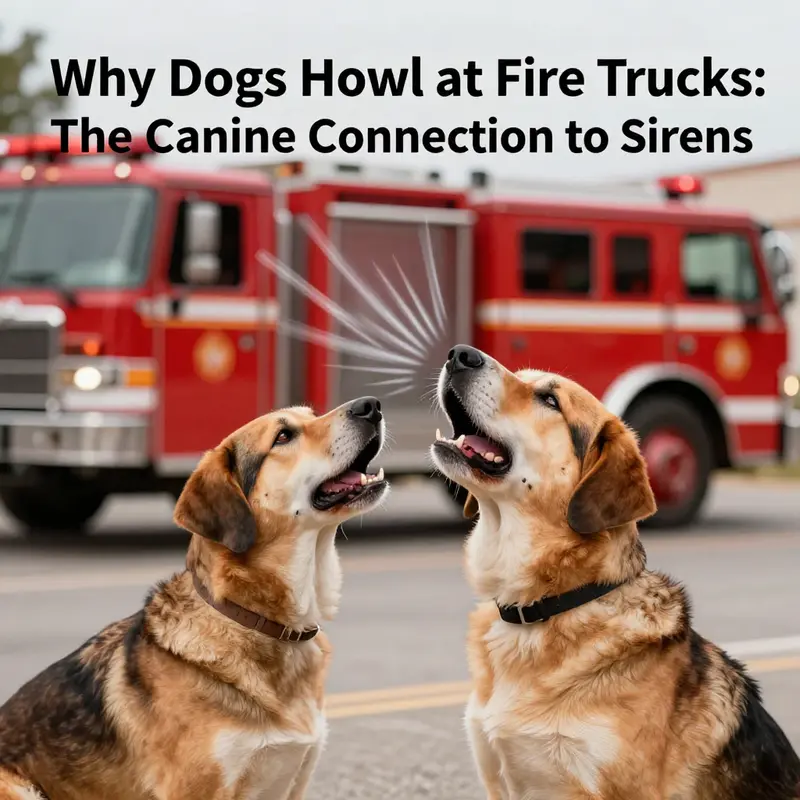
When a fire truck races down your street and the siren begins its long, rising wail, many dog owners have seen the same reaction: a howl that answers the mechanical cry. This response is not random noise or a sign of pain. It is a vivid echo of the canine lineage, a behavioral thread that links the modern household pet to the wolves that once roamed wild landscapes. To understand why dogs howl at fire trucks, we need to follow that thread through evolution, sound perception, and the social instincts that still live in a dog’s brain.
Howling grew from necessity. In the wild, wolves rely on vocal signals to manage social life across vast distances. Visibility can be unreliable in forests, tundras, and night-time conditions. A sustained, modulating howl travels far and carries information: where the pack is, whether a territory is occupied, whether an individual is alone or needs help. Those howls maintain contact, coordinate reunions after hunts, warn intruders, and strengthen social bonds. Domestic dogs inherited this vocal toolkit. Although the pressures of survival changed with domestication, the neural circuitry for responding to and producing long, tonal vocalizations remained.
Siren sounds tap directly into that circuitry. The acoustic profile of a typical siren—sustained, modulating, and often rising and falling in pitch—shares key features with natural howls. Dogs do not interpret a siren as humans do; they don’t categorize it first as mechanical. Instead, their auditory system analyzes the sound’s frequencies and patterns and compares them against the template of familiar vocal cues. From a dog’s perspective, a siren can resemble a distant canine call. The instinctive response is to reply, either to acknowledge the signal, mark presence, or attempt to re-establish contact.
Hearing makes this distinction possible. Humans hear roughly 20 Hz to 20,000 Hz. Dogs detect much higher frequencies, up to about 60,000 Hz. That extended range gives them access to details in a sound that we miss entirely. A siren carries high-frequency harmonics and subtle modulations that are inaudible to us but salient to a dog’s ears. These components can match the tonal qualities of a howl, activating ancient neural pathways linked to social vocalization. In short, the siren contains the acoustic cues that historically meant, “a pack member is calling.”
Not every dog will howl at a fire truck. Breed tendencies, individual temperament, and learned responses all shape whether a dog answers a siren. Breeds closer to their wolf ancestors in temperament and behavior—Siberian Huskies, Alaskan Malamutes, and similar northern breeds—tend to howl more readily because vocal communication plays a larger role in their ancestral social systems. Herding and working breeds, which often monitor and respond to long-distance cues, may also be more vocal. Conversely, many toy and companion breeds show little interest; their genetic and developmental histories emphasize different behaviors.
Age and social experience matter too. Puppies may be more likely to yelp, bark, or remain indifferent as they learn what sounds mean in their environment. Adult dogs with a strong history of vocal play or social calling will often interpret a siren as a communication opportunity. A dog that lives with other dogs and has previously engaged in howling will see the siren as a familiar call to which it must respond. The behavior is not taught in most cases; it is a spontaneous, instinct-driven vocal reaction.
Owners sometimes worry that howling at sirens signals fear or hearing damage. This is usually unfounded. Howling is rarely a direct expression of pain. Dogs that are distressed by loud noise often show additional signs: shaking, hiding, pacing, or attempts to escape the noise. Howling in response to a siren is typically a social or territorial vocalization, not a sign of discomfort. That said, if a dog shows signs of distress or aversion alongside howling, a vet or a behaviorist should evaluate the animal for noise sensitivity or other issues.
Understanding the behavior helps owners respond constructively. If the howling is a nuisance when passing fire trucks create repeated noise, simple training can reduce the frequency of the behavior. Rewarding quiet, redirecting attention before a siren passes, and desensitization techniques can all lower howling without suppressing natural communication tendencies. But for many owners, accepting the howl as an expression of a dog’s inner life can be more meaningful than trying to stop it entirely. It is a reminder that inside a modern pet is an animal shaped to send and receive calls that carried meaning for its ancestors.
There is also a social dimension to the behavior that owners may miss. When a dog howls in response to a siren, it is engaging in a ritual of acknowledgement. In wolf society, answering a howl says, “I hear you, I am here.” It reassures distant pack members and confirms territorial claims. In an urban setting, a dog’s howl might accomplish little beyond signaling to humans and other dogs nearby, but the motivation is the same. The dog is participating in a vocal network, however symbolic that network may be in a city.
The modern soundscape complicates matters. Historically, howls were exchanged among conspecifics—other wolves and later other dogs. In cities, sirens and other mechanical noises occupy that acoustic space. Dogs will treat many long, modulating mechanical sounds as if they were vocal calls. Ambulances, police cars, and even certain musical tones can trigger the same response. Urban living does not erase the instinct; it simply replaces the original sender with an unintended one.
Scientists and clinicians studying canine vocalization emphasize that this behavior is an emergent property of biology and environment. Dr. Karen Becker and Dr. Laura Benson, among others, note that dogs’ evolutionary wiring predisposes them to respond to specific frequency ranges and modulations. A siren, by chance, fits those predispositions. The howl that follows is less a learned habit than an automatic social reply.
For dog owners who want to learn more about the machines that prompt these responses, there are resources that explain the design and purpose of emergency vehicle sirens. A thoughtful introduction to fire vehicle topics can provide context for why those long, varying tones exist and why they are so effective at cutting through urban noise. You can read more on this subject at the fire truck blog.
Ultimately, a dog howling at a fire truck is a small, vivid demonstration of how an ancient communication system persists inside a domestic animal. It is a behavior born of survival needs—keeping contact, coordinating groups, and asserting presence—that now meets the strange acoustics of human society. Recognizing this interplay of evolution, perception, and environment helps owners appreciate their dog’s howl as a natural, meaningful response rather than an odd quirk.
External reference: For the research basis behind these explanations, see the detailed discussion at Dogster: https://www.dogster.com/dog-behavior/why-does-my-dog-howl-at-sirens-instinctual-reasons/
How Breed Heritage Shapes the Way Dogs Answer Fire Truck Sirens
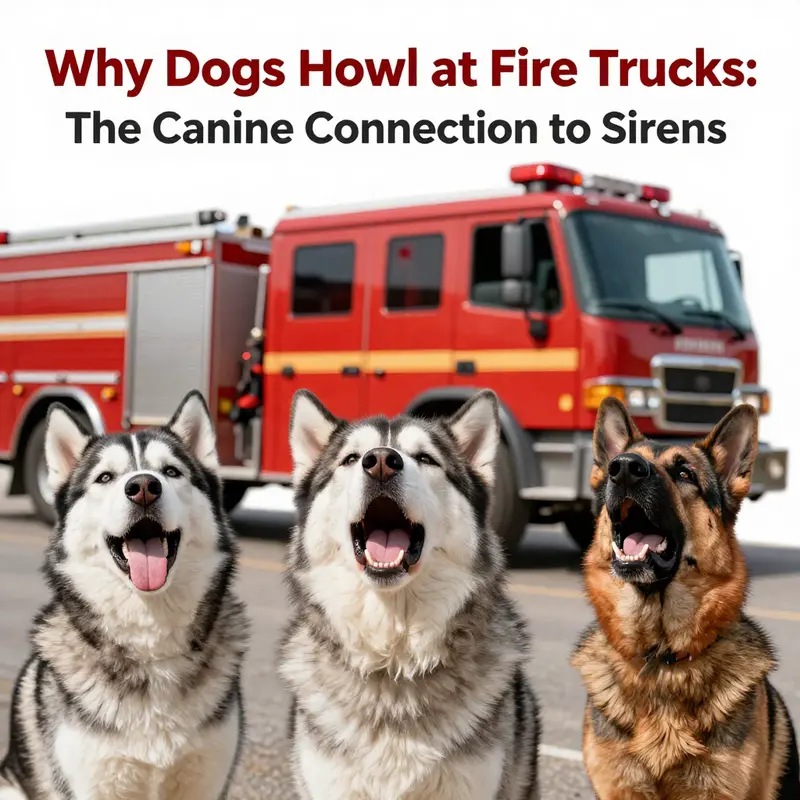
How Breed Heritage Shapes the Way Dogs Answer Fire Truck Sirens
Dogs do not all greet the keening wail of a fire truck siren the same way. Breed history, selective pressures, and individual sensory wiring together shape whether a dog bolts for the window, raises a single plaintive note, or barely reacts at all. At the heart of these differences lies a clear through-line: when a mechanical sound mimics an ancestral signal, breeds with stronger ties to that ancestry are more likely to respond. This chapter traces the biological and behavioral threads that connect specific breed groups to their characteristic reactions to sirens, and explains why some dogs seem compelled to join the chorus while others remain silent.
Northern and Arctic breeds are the poster children for howling responses. Dogs like Siberian Huskies, Alaskan Malamutes, and American Eskimo Dogs descend from lineages that relied on long-distance vocal contact. In open landscapes and harsh climates, sustained howls help pack members locate one another across miles of tundra and mountain. Those evolutionary demands favored neural circuits and vocal apparatus primed for sustained, high-pitched calls. Modern sirens share acoustic features with those ancestral howls: a similar pitch range, a rising-and-falling pattern, and a sustained tonal quality. For northern breeds, that resemblance is enough to activate an automatic response. The siren is not interpreted as machinery but as a social signal calling for an answer.
Auditory sensitivity amplifies this effect. Dogs hear well beyond human limits; many breeds can detect frequencies up to 60,000 Hz. But within that broad range, breed differences matter. Northern breeds frequently exhibit heightened acuity in the frequency bands where typical sirens sit. This means they detect subtle overtones and harmonic shifts that go unnoticed by humans and some other dogs. Those subtle cues can resemble the modulations in a wolf’s howl that convey urgency, distance, or identity. When those tones reach a dog genetically predisposed to interpret them as social vocalizations, the result is often a howl in return.
Working and herding breeds form another group with a noticeable tendency to respond. Herding dogs are tuned to monitor and influence the behavior of other animals, often through vocal signals or attention-getting noises. That constant orientation toward external sound makes them more likely to react to unusual auditory stimuli, including sirens. Their howling may therefore be less about ancestral pack contact and more about social engagement or alerting: a way to say, “Something is happening out there.” Border Collies, Australian Shepherds, and some terriers often show this pattern, though the manifestation can be brief yips instead of long howls.
Size and vocal structure also influence reaction. Larger dogs with deep chests produce resonant, elongated tones and may respond with low, rolling howls, while smaller dogs may emit shorter, higher-pitched baying. But size does not predict the urge to respond as reliably as lineage and temperament. Some diminutive companion breeds remain surprisingly vocal when a siren passes, especially if they are sound-sensitive or strongly bonded to human household rhythms. In many cases, a small dog’s howl is a mimicry of a neighbor dog that began the chorus; social contagion can spread the behavior across breeds.
Temporally, breed-specific tendencies tend to follow a pattern: breeds bred for endurance, group coordination, and remote communication are more likely to answer long, sustained siren tones. Breeds selected for proximity work—lap dogs or breeds refined for close human companionship—may prioritize visual cues and human body language over distant auditory calls. That is not to say companion breeds cannot howl; individual personality and early experience play large roles. A lap dog that grew up in a noisy urban environment with frequent sirens may learn to connect the sound with excitement or attention and respond accordingly.
Genetics and selective breeding left a durable imprint on how dogs use their voices. The same genes that favored coordinated pack vocalizations in the ancestors of sled dogs also appear in their modern breeds, making the howling instinct more accessible. However, domestication did not abolish these instincts; it layered them with new behavioral tendencies shaped by human selection. Breeds cultivated for silence, such as certain scent hounds or watchdogs selected to be discreet, may show suppressed howling. Conversely, breeds historically valued for alarm—those that signaled intruders—can exhibit pronounced vocal responses when a siren signals an unusual event.
Social environment modulates all of these predispositions. When a dog hears a siren and other dogs nearby begin howling, mirror neurons and social learning kick in. Herding and pack-oriented breeds are particularly sensitive to this social dimension. They interpret a howl from a neighbor as a direct call for response, even if the original stimulus was the siren itself. This creates a feedback loop in neighborhoods: one breed starts, and others, regardless of lineage, join in out of social affiliation rather than ancestral imitation.
Age and health further color the picture. Puppies may show curiosity or uncertain vocalizations as they learn the causal links between sounds and events. Older dogs with hearing loss or cognitive decline may not notice sirens or may respond unpredictably. Likewise, dogs with auditory hypersensitivity or anxiety disorders may interpret sirens as overwhelming. It is important to distinguish instinctive howling from distress: many breed-typical howls are communicative rather than symptomatic of pain.
Breeds prized for their exploratory or sentinel roles can turn sirens into meaningful information. A working scent hound that detects an unusual sound might give a short bay to alert handlers. A livestock guardian might vocalize to assert presence. These calls are functionally different from the long-distance howls of northern breeds but can be triggered by the same acoustic stimulus. Thus, breed-specific roles—guarding, herding, hunting, or sledding—shape not only whether a dog responds, but how that response is expressed.
Human training and household culture overlay breed instincts. A family that rewards vocal responses with attention or treats will see more howling across breeds. Conversely, owners who discourage vocalization through training can reduce the behavior even in breeds predisposed to howl. Yet suppression by training does not erase the underlying sensitivity: an unexpected, particularly siren-like noise can still elicit a spontaneous howl despite years of quieting.
Observations from behaviorists support these distinctions. Dogs do not howl at sirens because they are in pain, but because the sound shares communicative features with canine vocalizations. The degree to which the brain treats that stimulus as a legitimate social call depends on breed heritage, hearing sensitivity, and social context. That is why a Siberian Husky may respond vocally to a passing fire truck while a Labrador Retriever, bred for close work with humans and less for long-distance vocal contact, might only lift its head.
Practical implications follow from understanding these breed differences. Owners of breeds prone to howl can channel the behavior constructively: respond with training games that teach an “on cue” vocalization and a quieting command. For dogs that howl out of social contagion, controlled exposure and positive reinforcement for calm behavior can help. For any dog, distinguishing between communicative howling and anxiety-driven vocalization is crucial for welfare.
Breed-based tendencies explain broad patterns, but individual variation remains significant. Genetics sets the stage; life experience, training, and the immediate social environment write the script. When you hear a chorus of neighbor dogs answer a fire truck, what you are often witnessing is a layered conversation across time: ancestral instincts meeting modern soundscapes, amplified or muted by breed history, hearing acuity, and social learning.
For readers interested in how research and reportage converge on this topic, a deeper discussion of how sirens mimic canine vocalizations is available in a comprehensive piece on the subject. That article explores the evolutionary and auditory science behind why dogs answer sirens and complements the breed-focused perspective developed here: https://www.thedodo.com/why-dogs-howl-at-sirens-1953847957
If you want to learn more about the broader cultural role of emergency vehicles and community response—an adjacent topic that touches on why those sounds are so prominent in our neighborhoods—see a reflection on thanking first responders and public awareness that connects human behavior with these auditory cues: thank you to first responders.
Final thoughts
Understanding why dogs howl at fire trucks not only reveals fascinating insights into their instincts but also deepens our bond with them. As enthusiastic fire truck admirers and future firefighters, knowing the connection between these sirens and our canine companions enriches our experiences both on the road and at home. Each howl is a reminder of the underlying instincts inherited from their wolf ancestors, combined with their acute hearing that makes them uniquely responsive to our world. This knowledge transcends mere curiosity, fostering a greater appreciation for our dogs as they communicate with the sounds around them. The next time you hear that familiar wail of a fire truck and catch your dog’s response, you’ll recognize the magnificent history woven into that heartfelt howl.