
Fire trucks are more than just shiny red vehicles; they’re a crucial line of defense against one of humanity’s oldest adversaries: fire. For fire truck enthusiasts, aspiring firefighters, and experienced emergency services professionals alike, the water capacity of fire trucks is a fundamental element of their design and operation. Knowing how much water fire trucks can hold is vital to understanding their effectiveness and the strategies used in firefighting. In this article, we will delve into the specifics of fire truck water capacity, the ingenious design that facilitates this function, and the importance of water storage in combating fires efficiently.
Water on Wheels: How Fire Trucks Carry, Deliver, and Protect Their Lifeblood During a Fire
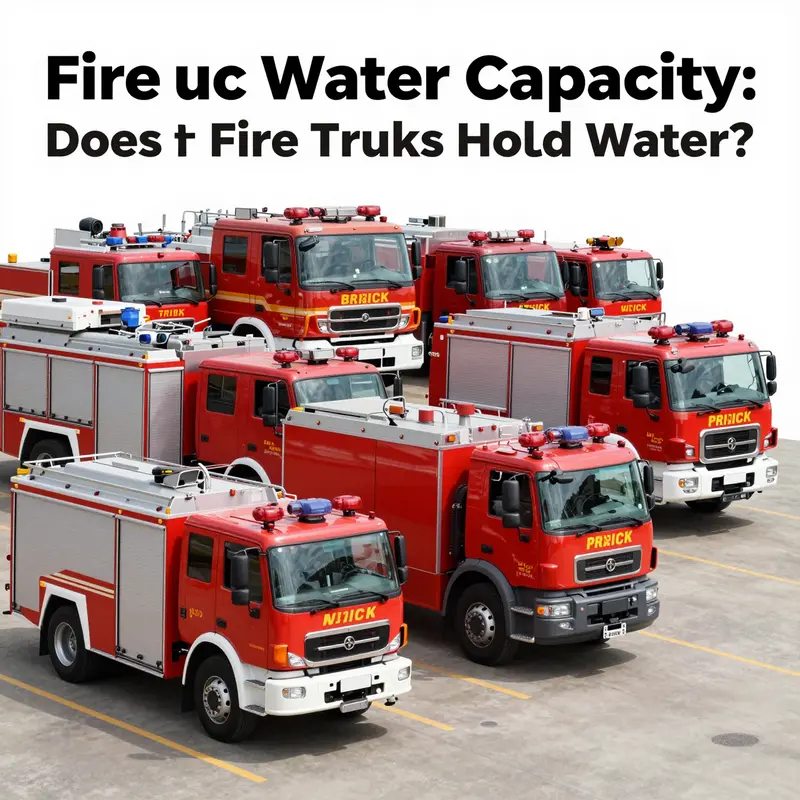
Water is the essential lifeblood of firefighting, and the fire truck is the vessel that keeps that lifeblood ready at a moment’s notice. The onboard water tank is more than a simple reservoir; it is the core of a complex system designed to translate raw volume into controlled, effective fire suppression. When a crew rolls up to a burning scene, the first action is often to deploy water from that tank through a pump and hoses to the nozzle. In many cases, that water comes from the truck itself, arriving at the point of attack before external sources can be connected. This immediate availability is not a luxury; it is a deliberate, engineered capability that shapes how quickly firefighters can begin to suppress a blaze and how intensively they can attack it from the outset. The tank’s presence changes every tactical decision—the approach, the water rate, the placement of personnel, and the sequence of actions that follow as hydrants or other water sources come online. In short, a fire truck’s water tank is the first line of defense, and its capacity often determines the tempo and reach of the initial suppression.
The capacity of onboard water tanks varies widely, reflecting the diverse environments in which fire departments operate. At one end of the spectrum are mini or light-duty units, which carry smaller volumes more suitable for limited-access zones or rapid response. These tanks typically range from about 1,000 liters up to 3,000 liters. In many rural or tight-space contexts, this level of capacity supports rapid knockdown of small to moderate incidents while keeping the vehicle nimble enough to navigate narrow lanes or off-road approaches. Moving up a tier, medium-sized fire trucks commonly feature tanks in the range of roughly 4,000 to 8,000 liters. This capacity supports more sustained attacks in urban or industrial settings, where crews might encounter larger structures or higher fuel loads and still need to manage hose lays and water supply without an immediate return to base or hydrants.
Beyond these middle capacities lie the large and heavy-duty configurations that are designed for prolonged operations and higher-demand environments. Tanks of 10,000 liters or more are common in urban responses and are often paired with robust pumping systems capable of delivering substantial water flow to multiple hose lines simultaneously. Some units in this category can carry 12,000 liters, 15,000 liters, or even up to 20,000 liters depending on the mission profile and the design constraints of the apparatus. These large-capacity configurations are frequently described in the industry as “large supply” or “pumper-tanker” configurations because they prioritize sustaining an attack when the immediate water from hydrants is not yet secured or when the scene involves long approach distances or water-poor environments. In all of these cases, the tank capacity is not merely a number on a spec sheet; it is a strategic option that informs how quickly crews can initiate suppression and how long they can sustain it before external water points take over.
The range of capacities also reflects complementary features inside and around the tank. Modern design often includes compartments for foam concentrate or dry chemical agents, enabling the same vehicle to adapt to fires involving flammable liquids or electrical hazards. Foam, in particular, can augment water’s effectiveness on certain fuels by creating a barrier between fuel and air or by cooling and separating lighter vapors. Even when foam is present, however, water remains the primary element. It is the universal extinguishing agent on a broad spectrum of fire types, and the onboard tank is the reliable reservoir that makes that first critical response possible. The capacity of the tank thus informs not only how much water is available but how much time the crew can buy before external supply gates are opened, whether from pressurized hydrants, static sources like ponds or rivers, or dedicated water shuttle operations that bring more water to the scene.
To translate capacity into action, a fire truck uses a carefully calibrated system that links the tank, the pump, and the hose lines. The pump acts as the heartbeat, taking water from the tank and delivering it at a pressure that the nozzle can manage. The volume inside the tank is valuable, but it becomes truly meaningful only when it can be moved efficiently through the pipeline of the apparatus to the street. Engineers design pumps to handle substantial flows, and the hoses are sized to maintain that flow across distances and around corners. The interplay between tank size and pump capability determines how fast a crew can establish a reliable water stream, how quickly they can advance a line, and how many lines they can operate at once without starving the system of pressure. In practice, this means the bigger the tank, the more water is available for rapid suppression, but that advantage must be balanced against the rules of physics that govern vehicle weight, stability, and maneuverability. A tank filled to its maximum is heavy, and every extra liter adds mass that the chassis, suspension, and tires must support. The design challenge is to maximize usable capacity while keeping the vehicle stable and responsive on unpredictable roads and terrain.
The strategic value of onboard water is clearest when you compare environments. In rural districts with few hydrants or limited water sources, a larger tank can be the decisive factor in the first minutes of a response. It allows firefighters to begin applying water immediately, controlling heat and protecting exposures even before a system is connected to a supply point. In dense urban areas, even with plentiful hydrants, a large tank can shorten the time to the first knockdown and reduce the number of times firefighters must pause to feed a downstream pump or recruit pumper-tower or ladder operations. In industrial settings, specialized trucks with extra capacity and foam or other extinguishing agents can address specific hazards more effectively, extending suppression time and enabling a safer transition to overhaul operations. The capacity is a practical asset in all cases because it shortens the gap between the moment a call is received and the moment water starts to arrest the fire’s growth.
Beyond the raw volume, the layout of the tank and its access points influence how quickly water can be drawn and discharged. A well-designed tank includes fast-fill and fast-dump features, allowing crews to top off or drain the tank efficiently in the heat of the moment. Separate compartments for foam concentrate or other suppressants are designed to minimize cross-contamination and maximize readiness. The integrity of the tank—its seals, valves, and maintenance schedule—matters just as much as the volume it holds. Water in a well-maintained system can be discharged with confidence, while a compromised tank or clog in the intake can slow operations at a critical juncture. This is why regular maintenance, tank cleaning, and careful inspection are part of the routine that keeps a fire truck ready for action.
The decision to choose one capacity over another is rarely about one incident alone. It reflects a department’s broader strategy, funding realities, and the ecology of the communities it serves. A rural department might prioritize a 5,000–8,000 liter range to ensure rapid initial suppression with a vehicle that remains amphibious enough to navigate rough roads. A city department, facing high-rise fires and dense traffic, might lean toward larger tanks paired with sophisticated pumping systems to sustain flows across multiple lines. In regions with frequent water supply challenges, the crew may also buy into a hybrid plan—combine a substantial onboard tank with robust external water sourcing and water shuttle capabilities. All of these decisions share a common thread: the tank is a deliberate investment in the speed and resilience of the first attack, not a mere afterthought that fills space on the chassis.
This emphasis on water capacity also shapes the training, tactics, and even the procurement conversations that fire departments have with manufacturers and fleets. Training drills often simulate different supply conditions—from hydrant-free drafting to hydrant-laden urban setups—to ensure crews can adapt their water strategy to the tank’s size and to the pump’s behavior. Tactics may emphasize quick establishment of a water curtain to control a fire’s growth, followed by a staged approach to advancing lines as the external water supply becomes reliable. When departments discuss upgrades or new acquisitions, the capacity of the onboard tank frequently enters the negotiation as a core parameter, because it directly influences how the unit will perform under stress and how long crews can sustain an attack without compromising maneuverability or safety.
The operational reality of onboard water also feeds into public understanding and expectations. People often wonder if a fire truck can arrive with enough water to handle a major fire, and the answer depends on the incident’s scale and duration. In many cases, the initial strike from the onboard tank is designed to create an immediate density of water that cools the environment and buys precious seconds. As the incident unfolds, the water from hydrants or external sources arrives and supplements the initial effort, allowing firefighters to shift toward a coordinated, multi-point attack. The tank is not the entire solution, but it is the crucial opening move that sets the tempo for the entire response. In this sense, water on wheels embodies a philosophy about firefighting: act swiftly with the resources you have at hand, then synchronize with external support to sustain the effort and bring the situation under control.
For readers who want to explore how market options translate into real-world choices, departments often weigh the availability of different tank sizes, pump configurations, and auxiliary systems. The market offers a spectrum of configurations that can be matched to a department’s needs, budget, and terrain. When evaluating which unit to acquire or replace, the capacity of the onboard water tank serves as a central reference point, guiding decisions about hydraulics, durability, and the ergonomics of access to water and foam systems. It is a reminder that firefighting is as much about intelligent resource management as it is about courage and technique. The volume of water carried in the tank, the speed at which it can be moved, and the resilience of the surrounding infrastructure together define a vehicle’s body as a tool for rapid, effective suppression rather than simply a means of transport.
For those following this evolving topic, the field continues to grow with innovations aimed at improving the way water is stored, moved, and deployed. Engineers experiment with tank materials that resist corrosion, with fittings that reduce friction and leakage, and with smart monitoring systems that track water temperature, pressure, and level in real time. These advancements help ensure that when the call goes out, the first minutes of firefighting are not squandered by inefficiencies in water delivery. While every fire scene presents its own challenges, the fundamental truth remains clear: water capacity is not an incidental feature but a central determinant of a fire truck’s usefulness in the moment when the event begins to unfold.
If you are exploring the topic further or considering purchasing options, you may find it helpful to review the broader market landscape and how different configurations align with varied emergency scenarios. For an overview of available units in the market, you can consult resources that aggregate listings and specifications, which provide a sense of scale, capacity, and fit for different departments. Fire trucks come in many shapes and sizes, but the thread that ties them together is their willingness to deliver water when and where it is needed most, turning volume into impact at the scene. In that sense, the tank’s capacity is more than a number; it is a commitment to rapid response, adaptable strategy, and the steady momentum of the firefighting mission.
Internal link for related market information: Fire Trucks for Sale.
External resource for further reading on water tank capacities and related equipment: https://www.alibaba.com/product-detail/Mini-Fire-Fighting-Truck-with-Water-Tank-and_1600753373347.html?spm=a2700.gallery-1000000000000.0.0.6a1d7b5cKjYqZf
Water on Board: The Hidden Engineering Behind a Fire Truck’s Onboard Water Capacity
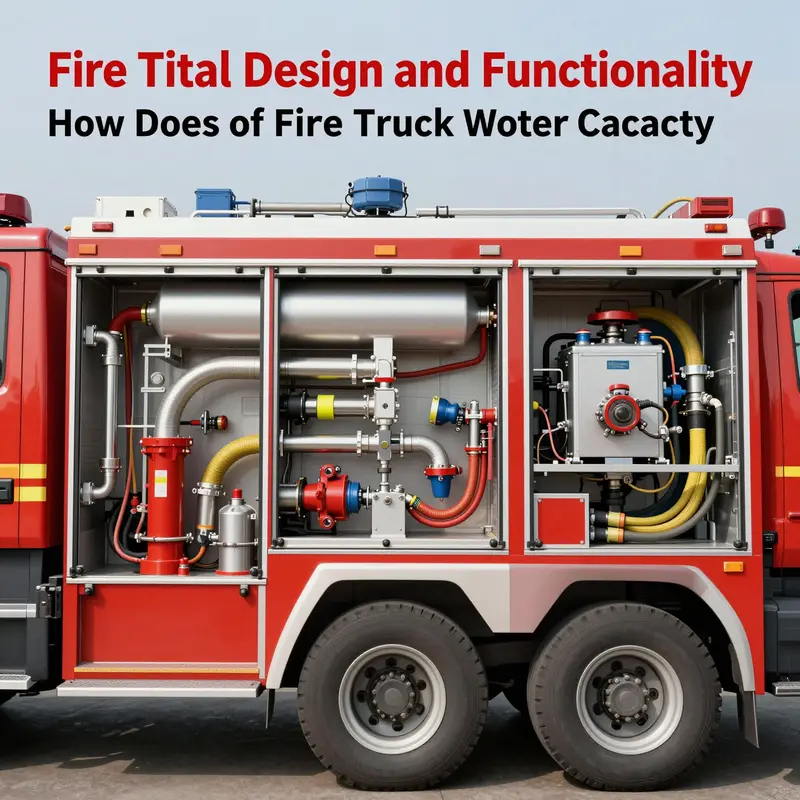
When people think of a fire truck, they picture sirens, rapid rushing, and hoses snapping to life. But the most fundamental question—the one that determines how quickly a crew can begin suppression—is often overlooked: does the vehicle actually hold water, and how does it manage that precious cargo during the run to the scene? The answer is a study in practical engineering. Fire trucks are not merely vessels for carrying a few buckets of water; they are purpose-built systems that balance capacity, stability, pump power, and readiness. The onboard tank is the heart of the machine’s water capability. It must be large enough to give crews a usable head start when hydrants are distant or scarce, yet compact and light enough not to compromise handling, braking, or maneuverability in urban streets or rough terrain. The design philosophy behind water storage in firefighting apparatus has evolved to meet the varied demands of rural districts, city districts, industrial sites, and disaster zones. Every functional detail—from the material of the tank to the placement of baffles—serves a single goal: to ensure water can be held securely, drawn reliably, and delivered under pressure when a life- or property-saving impulse triggers the ignition of action.
The composition of the water-holding tank speaks to a broader engineering truth: the best tanks are sturdy yet careful about weight distribution. Tanks are typically mounted directly on the chassis of the fire engine, a strategic choice that places the water as close to the vehicle’s structural core as possible. This minimizes the risk of imbalance when the vehicle brakes or negotiates a turn at high speed. Materials chosen for these tanks—commonly stainless steel or aluminum—reflect a constant trade-off between strength, corrosion resistance, and weight. Stainless steel offers maximum resistance to rust and a durable surface that can endure the knocks of road debris and the occasional careless refill mishap. Aluminum, lighter and equally resistant to corrosion, reduces the load the engine must haul, which translates into faster acceleration and potentially lower fuel consumption. The selection between these materials depends on climate, terrain, maintenance availability, and the expected scale of operations. In any case, these tanks are engineered to last for decades and to withstand the rigorous vibration and impact typical of pursuing fires across varied environments.
Capacity is where the chapter truly widens its lens. In practice, a fire department’s needs guide tank size, and the range is surprisingly broad. Light-duty or rural-extrication-focused trucks tend to carry between about 500 to 1,000 gallons, roughly 1,900 to 3,800 liters. This range supports quick response and the initial knockdown of flames in areas where water sources may be limited or thinly stretched. On the other end of the spectrum, mid-sized pumper trucks commonly house 1,500 to 2,000 gallons, or about 5,700 to 7,600 liters, giving crews a larger reservoir before they must rely on hydrants or auxiliary water sources. And in urban, industrial, or heavy-duty applications, the tanks grow even larger. Some configurations can reach 25,000 liters or more, with certain heavy-duty platforms designed to deliver extended suppression in complex scenarios. These are not mere numbers; they determine mission profiles, affect dispatch strategies, and influence how quickly a firefighting operation can be sustained without external water delivery. Additionally, many modern trucks incorporate foam concentrate compartments. The ability to mix foam with water affords a broader range of fire suppression capabilities, especially for fuel fires or risky industrial hazards. The integration of foam systems is a testament to how filling capacity and delivery flexibility can be harmonized within a single vehicle, enabling crews to adapt on the fly to a shifting fire scene.
The way water sits in the tank is not just about capacity, but also about stability and control. Internal baffles are common features inside many tanks. These partitions reduce liquid slosh when the vehicle moves, turns, or stops abruptly. Without baffles, a full tank would slosh forward and backward with every acceleration, braking, or cornering. That movement can drastically affect handling, steering response, and even the safety of crew members riding inside the cab. Baffles keep the liquid’s energy in check, helping the vehicle maintain traction and predictability under demanding conditions. The design often includes careful separation between the liquid and structural components, with baffles fashioned to channel movement toward the pump inlet rather than toward the vehicle’s rear or sides. The result is a more controllable ride for the driver and a safer, steadier platform for the firefighting crew as they prepare to deploy water into a scene.
Filling and drainage are the practical plumbing of firefighting. The onboard tank is equipped with fill ports that allow rapid refilling from hydrants, portable pumps, or water tenders. In many configurations, there are multiple fill points to speed up the refilling process while the engine remains ready to deliver water through the pump. Drain valves enable the tank to be emptied when necessary, whether it’s to switch to a different water source, to adjust ballast for a challenging terrain, or to reconfigure the truck for a training exercise. These features may seem routine, yet they are central to how quickly a fire crew can transition from transit to action. The process of refilling and draining is not isolated from the rest of the system; it is integrated with the pump bay controls and the water delivery system, ensuring that the water can be moved from tank to hose with minimal friction or delay.
The water delivery system itself is the engine that converts stored liquid into effective fire suppression. The onboard pump, housed in the pump bay, serves as the transport mechanism from the tank to the scene. The pump draws water from the onboard reservoir and pressurizes it to propel through hoses and handlines toward the flames. This means that even before external water sources are secured, crews have a ready supply that supports the critical initial actions—knocking down the core of the fire, cooling embers, and gaining control of the situation. The pump’s capacity and reliability are closely tied to the tank’s shape, the presence of baffles, and the overall balance of the vehicle. A well-designed pump system can deliver a strong, steady stream of water that works in concert with the tank’s volume to provide sustained suppression. In practical terms, this means that the water stored on board buys precious time and gives firefighters a platform to apply decisive action while additional water sources are secured.
To understand how these elements come together in real-world use, consider the scenario of a rural fire station facing a wildfire with a distant hydrant network and limited auxiliary supply. The onboard tank becomes the lifeline, a lifeforce that can start the job while the crew coordinates with water supply teams. The amount of water on board influences the duration of initial operations, the size of the perimeter that can be defended without external support, and the tempo at which crews can commit resources to the fire. The engineers who design these trucks must account for road gradients, turning radii, braking performance, and load-bearing capacities. They must predict how a full tank will alter the vehicle’s performance on ascending grades or through narrow lanes, ensuring that stability remains within safe margins under a range of atmospheric conditions and road surfaces. Stability is not a minor concern; it is the frame upon which all other firefighting functions rely.
A stochastic element also shapes the onboard water story: the terrain and the climate. In areas where roads twist through crowded neighborhoods or where weather patterns push fires into schools of winds and heat, the weight distribution of the water affects not just the truck’s handling but the operator’s approach to suppression. This is why tank placement and the density of the water column within matter. In some designs, the water is positioned toward the center of the chassis, a strategic choice that helps maintain a lower center of gravity and reduces the risk of rollover during aggressive maneuvers. The same design logic informs the distribution of equipment and the routing of hoses so that the crew can deploy after the pump is primed without wrestling with the vehicle’s balance as it leaves the station.
Foam tanks and their specialized compartments illustrate how tank capacity and versatility can be balanced with cost and maintenance. While water is the primary agent, foam concentrates expand the capability of a fire engine when flammable liquids are involved. The ability to mix foam at the source of the fire, rather than waiting to mix on-site, can dramatically improve suppression performance. The inclusion of foam facilities requires careful integration with the tank and pump design so that the foam concentrate remains stable, does not degrade the water system, and is delivered in a controlled ratio. This layering of options—water capacity, foam, multi-volume supply—reflects a modular approach to firefighting technology. It allows departments to tailor their fleets to the unique challenges they face, from industrial campuses to forested perimeters to dense urban cores.
The broader narrative of holding water on a fire truck is thus not merely about volume. It is about the synergy of materials, geometry, flow management, and human factors. It is about ensuring that the water can be drawn quickly, held securely, and delivered with the precision that a fire scene demands. It is about recognizing that the first moments of suppression often determine the trajectory of the entire operation. When a crew opens the first nozzle and the stream of water arcs toward the flames, it is the cumulative effect of all those design choices—the resilient tank, the balanced weight, the baffles that steady the liquid, the fill ports that enable rapid refilling, and the pump that translates stored water into kinetic force—that becomes the silent yet decisive force behind an effective response. The chapter of a fire truck’s life when it holds water is not a single scene but a continual balancing act, a choreography that unfolds every time the tones sound and the wheels roll toward danger. In that sense, the vehicle’s onboard water capacity is less a static quantity and more a dynamic capability—one that combines chemistry, physics, and logistics to save lives and protect property under pressure.
For readers curious about the materials that underpin this machinery, the topic extends beyond the tank itself to the broader ecosystem of design choices that define a modern fire apparatus. The choice between steel and aluminum, the integration with other equipment, and the emphasis on durability—all contribute to a vehicle that can persist under harsh conditions and still perform when it matters most. If you’d like to explore how steel construction influences the overall architecture of fire-fighting equipment, you can read more about steel fire apparatus, which examines how material selection affects reliability, weight distribution, and long-term maintenance. steel fire apparatus.
In the end, every gallon of water held on a fire truck is a strategic asset. It is a measure of readiness, a buffer against delay, and a driver of tactical choices at a scene. The onboard tank is more than a container; it is a carefully engineered subsystem whose design touches every aspect of firefighting—from the moment the crew receives the alarm to the moment the scene is secured and the hydrants and tenders resume mutual aid. This is the quiet engineering that often goes unseen, yet when a pressure gauge climbs and a stream meets flame, the value of that engineering becomes undeniable. It is the science of keeping water where it matters most: on the move, under control, and ready to fight when seconds count.
External resource: Fire Engine Pump Bay Explained. https://www.tiktok.com/@fireenginefacts/video/7361458528194950404
The Tank Within: How Onboard Water Storage Powers the First Moments of Firefighting

Water is not merely a utility on a fire truck; it is the first line of defense, stored inside the vehicle itself and ready to unleash the moment the engine roars to life at the scene. When firefighters arrive, every second matters, and the onboard water tank is the quickest, most reliable resource they have to begin suppressing a blaze. The concept is simple in theory: carry as much water as possible so the initial attack can commence before external water sources can be rigged, characterized by hoses snaking from hydrants or portable pumps that must be connected and deployed. But the implications of that onboard reservoir are broad and nuanced, shaping the way a fire is fought, how crews are organized at a scene, and the kind of training and maintenance that keep the fleet ready for action. In this sense, water storage is not a backdrop feature; it is a central design principle, one that determines how a truck behaves in the opening minutes of any emergency and how resilient the response remains as conditions evolve.
Across the globe, fire apparatuses are built with different mission profiles in mind, but the logic behind on-board water storage remains universal: water is the most effective extinguishing agent for a wide range of fires, and having a ready supply on board buys essential time. Modern engines typically carry substantial volumes of water—often in the range of five thousand to twelve thousand liters, with variations that reflect local needs, geography, and the scale of anticipated incidents. In smaller or rural departments, tank capacities commonly fall between one thousand and five thousand liters, a practical compromise that enables a nimble vehicle to ferry water into remote areas where hydrants are sparse or non-existent. In mid-sized or general-purpose configurations, a larger tank—around ten thousand to twelve thousand liters—becomes feasible, balancing the need for immediate suppression with the realities of vehicle weight, maneuverability, and fuel economy. And in industrial, urban, or specialized contexts, the figure can rise well beyond ten thousand liters, with some heavy-duty platforms carrying twenty-five thousand liters or more, often paired with foam concentrates to combat flammable liquids as well as ordinary combustibles. This tiered approach mirrors the spectrum of firefighting challenges: rural field blazes, compact city blocks, and large-scale industrial incidents each require a different but equally essential degree of onboard water availability. The presence of foam concentrate compartments in some models further expands the toolbox, allowing trained crews to blend water with specialized agents for particular fuel types, a capability that broadens the truck’s effectiveness beyond simple water application.
To understand why onboard water matters so deeply, consider the opening moments of a typical incident. The first attack is rarely a perfect, hydrant-fed operation. Hydrants may be damaged, blocked, or simply too far away to be pressed into service before the fire grows. A truck’s water tank is the spark that keeps a critical attack alive in those early minutes. It enables firefighters to initiate cooling of hot surfaces, protect nearby structures from radiant heat, and, crucially, begin driving the fire back toward its origin. The tank’s capacity determines how long water can be directed at the seat of the blaze before external supply becomes the primary source. The broader emphasis on immediate response is why many departments place such importance on the initial volume of water on board and why the process of replenishment is planned as part of the return- to-station cycle rather than the on-scene refueling itself. The practical effect is a system that buys time, stabilizes the scene, and reduces the risk of rapid escalation—often the difference between a contained incident and a full-blown conflagration.
The water stored in these tanks proves useful beyond direct extinguishment. Fire crews often deploy it to create defensive lines around a structure, to wash down debris that might reignite, or to cool the exterior of adjacent buildings to prevent collapse or spreading heat. In regions where hydrants are scarce or intermittently reliable, the onboard reservoir becomes the primary water source, enabling suppression goals to be pursued even when external connections are delayed. In such contexts, the water’s role expands from a single-application tool to a flexible resource that supports a broader suppression strategy, including hazard mitigation and scene safety management. It is not unusual for the same water to fulfill multiple tasks in a single operation, converting volume into strategic advantage and enabling responders to adapt quickly as conditions shift.
A critical, often overlooked dimension of onboard water is the decision-making surrounding how much tank water remains on board after the incident. The rule of thumb in dense urban settings with ample hydrants tends to be conservative: crews connect to external water as soon as possible and use only a fraction of their onboard supply. The tank becomes a contingency buffer rather than a primary source, and the vehicle is replenished on return to the station. A well-known line reflects this practical reality: “If you’re using a hydrant, you probably won’t touch your tank water.” In rural or isolated environments, where hydrants may be unavailable or unreliable, the tank is the chief resource. Here, decisions are more fluid and context-driven, guided by percentages of tank content, the fire’s behavior, and the pace at which water can be brought to the scene by additional units or mobile pumps.
There are compelling reasons to drain the tank under certain circumstances. If the water becomes contaminated by dirt, debris, or chemicals, continuing to circulate it can corrode the system, clog lines, and compromise pump performance. In such cases, full or partial drainage is a prudent measure to protect the firefighting apparatus from damage and to safeguard the integrity of the pump and plumbing downstream. These decisions are not taken lightly; they reflect a disciplined approach to equipment care that values long-term readiness over short-term tactical gains. Bodies of incident data and field reports remind us that even small lapses in maintenance or routine checks can have outsized consequences. A widely cited example from a field incident in Japan underscored how a routine check could falter and leave a truck without water for a field fire, allowing a small blaze to grow out of control. The lesson was stark: a fire truck without water is, in practical terms, a tool without purpose. The observation captured the sentiment of many responders who describe the water tank as the vehicle’s heartbeat—its absence magnifies every delay and intensifies risk. In that sense, water storage is not a luxury; it is a lifeline that anchors a truck’s ability to perform from the moment the siren first wails.
The technical realities of onboard storage shape the vehicle’s design in several ways. Tank construction, the choice of material, and how water is circulated through the pump all influence reliability and maintenance requirements. While many readers will assume that steel is the obvious choice for durability, the broader conversation about tank longevity touches on a spectrum of engineering considerations—from corrosion resistance and seal integrity to the ease of cleaning and the prevention of sediment buildup. For a more detailed perspective on how tank design relates to the vehicle’s overall robustness, see steel-fire-apparatus. This broader lens helps connect how a tank’s size interacts with other systems on the platform, such as the pump, the hose complement, and the ladder complement, to create a cohesive tool that remains ready for diverse firefighting challenges. Inside the cab, driver and crew must be trained to monitor tank levels, operate the pump in concert with the water supply, and interpret the evolving demands of a scene so that water is allocated where it is most needed, without wasting precious resources.
The range of tank capacities in use today tells a story of regional priorities and the geography firefighters routinely face. In rural regions, where water sources may be few and far between, the ability to haul and deploy water quickly reduces the need to make a perfect connection to a hydrant before any action begins. In more densely developed areas, the emphasis shifts toward rapid deployment to multiple points of attack, and the onboard tank serves as a bridge to the hydrant system rather than a sole source. Meanwhile, in industrial settings or specialized missions, the combination of high water volume with foam concentrates or other extinguishing agents creates a formidable platform for confronting fires that burn at greater intensity or involve hazardous materials. The common thread across these configurations is a shared objective: to compress the time from arrival to first-effective suppression and to minimize the risk of escalation by delivering water immediately, while also maintaining flexibility to draw from external sources as the incident dictates.
Beyond capacity and chemistry, the human element remains central. The crew must operate the pump, select the appropriate discharge patterns, and coordinate with other units—engine, ladder, and rescue—to maintain a coherent, effective attack. The onboard reservoir’s size can influence tactics in subtle ways, such as how many lines can be laid, how quickly they can be advanced, and how much water can be pooled in the early defensive posture around a structure. These choices ripple through the scene, affecting decisions about evacuation zones, fire watch responsibilities, and the sequencing of additional resources. The water tank is thus not a passive container but a dynamic variable that interacts with crew training, command decisions, and the evolving geometry of the fire ground. In this sense, onboard water storage embodies a design philosophy: create a resilient, ready source that can be leveraged immediately, while preserving the flexibility to supplement that supply with hydrants, draft operations, or mobile pumping solutions as needed.
The topic intersects with a broader conversation about how different regions design fleets to meet diverse terrain and budget constraints. In developing contexts, for instance, the emphasis may be on modular, cost-effective solutions that still deliver robust water delivery capabilities. In wealthier markets, the focus can shift toward higher tank volumes and more sophisticated suppression tools, reflecting a broader spectrum of risk and accountability. Across all these scenarios, the central principle remains intact: water stored on the vehicle accelerates suppression, protects lives, and buys critical time for other response actions. The narrative of onboard water storage thus informs not only technical specifications but also the culture of firefighting—emphasizing readiness, prudence, and the disciplined stewardship of a truck’s most essential resource.
As the chapter closes, consider the quiet, practical truth that threads through every heart-pounding moment on the fireground: water on wheels makes the difference between a small, manageable incident and a dangerous, spreading blaze. It is the engine’s companion in the opening minutes, a portable reservoir that translates discipline into action. The onboard tank embodies a straightforward but powerful philosophy: the best firefighting begins with having water ready when the siren sounds, and the discipline to manage that resource wisely thereafter. In a world where every second counts, the tank within remains a symbol of strategic foresight—an engineered promise that when the call comes, help can flow immediately, and the number of lives saved, as well as structures protected, begins with water—stored, ready, and on board.
External reference: For further reading on the critical role of onboard water storage in fire trucks, see https://www.fireengineering.com/fire-trucks-water-storage/ .
Final thoughts
Understanding the water capacity of fire trucks is crucial not just for fire truck enthusiasts and collectors, but also for aspiring firefighters and seasoned emergency services professionals. The design and functionality of these vehicles, coupled with the critical importance of their water storage capabilities, define the effectiveness of fire response strategies. With every fire truck carrying thousands of liters of water, they are equipped to tackle flames quickly and efficiently, showcasing the ingenuity and purpose behind their engineering.