
Fire trucks are more than just brightly colored vehicles; they are lifelines in emergencies, equipped to tackle blazes at a moment’s notice. A crucial aspect of their design is the onboard water supply that empowers firefighters to act swiftly and decisively. As we journey through the intricacies of fire truck functionality, we’ll delve into the significance of water in fire suppression, explore various water carrying capacities, and analyze how these vital tools adapt to different environments and situations. Each section reveals the layers of strategy behind fire truck operations, proving that water isn’t just a resource; it’s a game-changer in fire safety.
Carrying Water on the Move: How Onboard Tanks Shape Firefighting Strategy
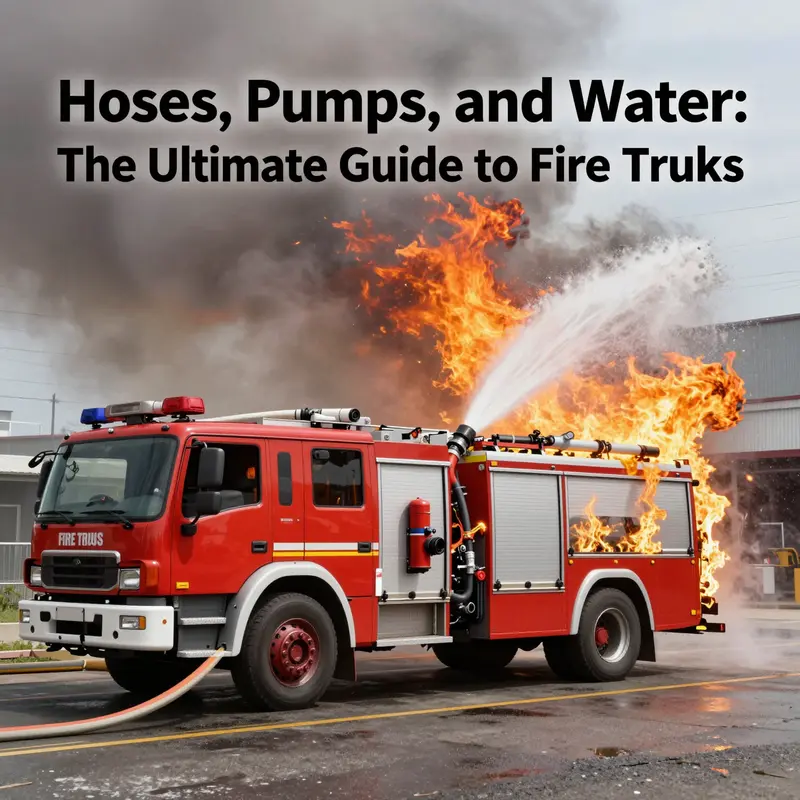
When firefighters arrive at a blaze, one of the first questions on the scene is practical and immediate: is there water to fight the fire right now? The answer, in most cases, hinges on a simple but crucial element of the apparatus that leads the response: an onboard water tank. Fire trucks designed to carry water while they travel to a call are not a luxury; they are a deliberate, tactical choice that changes every moment of a firefighting operation. Across many departments and regions, these vehicles are built with water tanks that range widely in capacity, from compact 250 gallons to robust 1,000 gallons or more, depending on the vehicle’s class and role. Those numbers are not just statistics; they map directly to how quickly flames can be met with a first surge of cooling, how long a pump can sustain a stream without a hydrant connection, and how adaptable a team can be in environments where external water sources are scarce or delayed. The onboard reservoir is the first line of defense in a chain that must hold together from the moment the first engine and crew reach the building, and it represents a design philosophy: bring the water to the fire, not merely seek water near it. That philosophy is especially meaningful when hydrants are sparse, damaged, or inaccessible. In rural districts, on stretches where water mains run thin, or in disaster scenarios where water infrastructure is compromised, the mere presence of water on the vehicle can alter decisions about attack lines, entry points, and the tempo of suppression. The core function of the water tank is not to replace a hydrant but to empower a rapid, initial offensive that buys time for further water supply to arrive. In this way, the onboard tank becomes a mobility of resources, a moving reservoir that converts a road into a platform for action. The design of these tanks—how they are shaped, how they weight the chassis, and how they integrate with pumps, hoses, and filtration—speaks to a broader mission: to ensure that the first critical minutes after ignition are not squandered while search, assessment, or external supply chains stumble into place. The immediate ability to suppress, cool, and contain is what often distinguishes a controlled ignition from a spreading catastrophe, and the tank’s capacity is a direct lever on that control. The equipment that accompanies the water on board—hoses, nozzles, varying pressures, and a reliable pump—transforms the stored liquid into a reliable hammer against heat. The pump, in particular, serves as the mechanism that translates static water into kinetic suppression, pushing it through lines with sufficient pressure to drive through flames and into the heart of burning materials. This is where the tank’s value multiplies: the water must reach the nozzle in steady, pressurized form, and that requires careful coordination between the tank’s capacity, the pump’s performance, and the operator’s understanding of the fire’s dynamics. The synergy between tank and pump is not merely technical; it is operational. It dictates when a crew advances a line, how they escalate or de-escalate their engagement with the blaze, and how they balance the need to protect firefighters from radiant heat with the imperative to deliver cooling water to hot surfaces. Every firefighting scenario presents a unique calculus of risk and opportunity, and the onboard water supply is a central variable in that calculus. The simplest formulation—water in, flames out—hides a layer of complexity. Direct fire suppression is the most straightforward objective: pressurize the water through hoses and apply it directly to the flames. Yet direct suppression is only one facet of the water’s mission. Water is also a powerful cooling agent, lowering the temperature of hot structural surfaces, reducing the likelihood of flashover, and creating safer conditions for crews as they advance or retreat. In many structures, cooling hot assemblies is as crucial as knocking down visible flames, because radiant heat and embers can rekindle and threaten both occupants and responders. Then there are defensive applications, where water is used from a safer distance to prevent fire from breaching additional compartments or to protect exposures adjacent to the primary fire. The onboard tank, therefore, acts as a portable buffer, enabling a defensive posture when an aggressive interior attack would be too dangerous or impractical. Beyond the immediate scene, onboard water carries a strategic function: it sustains a supply chain. Water tankers often serve as mobile sources that replenish other engines that have exhausted their own tanks, especially in remote locales or during extensive incidents. This replenishment is not merely a convenience; it is a force multiplier. It allows a multi-vehicle response to maintain pressure along multiple attack lines, supporting operations across a large footprint, whether in a rural fire, a wildfire, or a complex urban conflagration. In this sense, the tank is a hub of resilience, connecting the needs of one unit to the capabilities of many. Modern advancements have expanded the role of onboard water beyond the simple storage and discharge model. Some newer designs incorporate filtration and treatment capabilities that enable draw from rivers, streams, or lakes and render such water usable for firefighting. Think of a mobile water processing unit that can tap a natural source, treat the water to an acceptable quality, and pump it into the system with minimal delay. This evolution blurs the boundaries between a conventional fire engine and a field water supply facility. As these capabilities mature, they open avenues for response in environments once considered water-scarce or infrastructure-limited. Innovations in hose design and materials further augment the effectiveness of onboard water. Higher-pressure hoses, more durable couplings, and enhanced lining performance reduce the friction losses that sap pressure and complicate handling over long distances. These improvements translate into shorter attack times and more reliable delivery, even when operators must move quickly through cluttered spaces or across uneven terrain. The practical implications of such advances are substantial. In urban settings, a compact but high-capacity tank can be paired with a robust pump to deliver sustained flows through long or complex hose layouts. In rural settings, a larger tank, combined with a mobile pump and a reliable supply chain from other units, can maintain a distributed, multi-point attack long enough to protect critical structures and allow for containment. The 2025 update cycle for fire apparatus has underscored the significance of onboard water as not simply a stopgap measure but a core tactical capability. Departments increasingly view water-carrying capacity as a determinant of a unit’s readiness and versatility. A vehicle that can initiate suppression immediately reduces the risk of escalation while other assets arrive. This immediacy is especially impactful when a building’s design, contents, and conditions create a volatile blend of heat and hazards. It is easy to underestimate how much coordination hinges on that first rush of water. The crew’s ability to manage water in motion—regulating pressure, directing streams, and coordinating with other teams—requires practice, discipline, and a shared mental model of the incident. It also requires awareness of the broader incident command. Water supply is not an isolated function; it intertwines with dispatch decisions, hydrant mapping, and the arrival sequence of other engines and aerial apparatus. When water is available on arrival, command can chart a more deliberate strategy, knowing that suppression can begin while external water supply is being established. Conversely, if the onboard tank is considered secondary in the planning, there is a risk of underpreparing the scene for what may come next. In this sense, the onboard water tank is also a signal about an agency’s operational philosophy: it tells responders and the public that the department prioritizes rapid, sustained action and believes in the power of close-quarters suppression as a means to protect life and property. The design choices behind these tanks reflect weight considerations, balance, and safety. Carrying substantial water adds weight and affects handling, so engineers must balance volume with vehicle dynamics, ensuring that the center of gravity remains secure and that braking, steering, and acceleration remain predictable under load. Tanks must also integrate with foam systems or other additives when needed, with careful attention paid to compatibility, cleanliness, and maintenance. Fire apparatus designers are not simply building a bigger tank; they are shaping a toolkit that must function in a wide array of conditions—from congested city streets to uneven rural lanes and from dense, high-rise structures to sprawling wildlands. The practical experience of firefighters on the ground reinforces the point: the onboard water is a lifeline that changes choices about entry, exposure, and the pace of the operation. Individually, a full tank can be a powerful asset; collectively, a fleet of tanks forms a networked response, where every unit’s water capacity complements the others. In the end, the statement that fire trucks carry water on them is not a slogan but a core element of firefighting reality. It explains why departments invest in the right balance of tank size, pump capacity, hose configurations, and support equipment. It explains why some responders view fleet composition through the lens of water supply as much as through the lens of speed or reach. And it helps illuminate why, even as hydrants remain essential in many municipalities, the onboard reservoir preserves the agility of the first attack when time is the most dangerous ally of heat. For those exploring fleet options and the ongoing evolution of firefighting technology, the discussion of onboard water is not a sidebar but a key chapter in understanding how modern fire response is designed to meet real-world constraints with practical, scalable solutions. If readers want a broader view of how this concept fits into the wider landscape of equipment choices, many departments consider their options in Fire Trucks for Sale to balance upfront costs with long-term readiness. This procurement angle reflects a larger truth: water on the move is as much about planning as it is about cylinders and hoses. External resources offer deeper technical ground on this topic, mapping how water-tanker concepts have evolved and why they matter for contemporary practice. For a more technical examination, see the detailed discussion in the external resource: https://www.fireengineering.com/2025/12/03/water-tanker-fire-trucks-how-they-work-and-why-they-matter/.
Carrying Water to the Front Lines: The Real Math Behind Fire Trucks’ Onboard Tanks
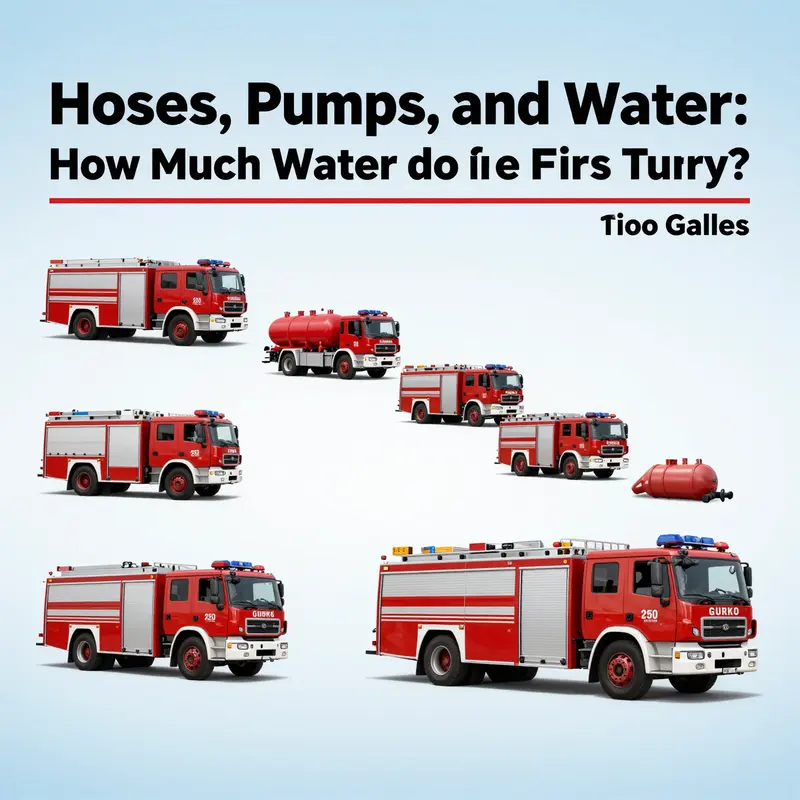
When people ask whether fire trucks carry water, the simplest answer is yes. But the real story runs deeper than a single number or a single tank. Fire apparatus are built around water as a primary tool, and their onboard storage is not a luxury but a necessity. The onboard water acts as an immediate source that enables initial suppression while crews connect to hydrants or draft from other sources. In practical terms, the onboard tank is a starting reservoir that shapes how quickly a first line can be stretched and how long it can be maintained before external supply arrives.
Two main families carry water aboard. Pumper engines, common in urban and suburban settings, typically hold roughly 500 to 1,000 gallons (about 1,900 to 3,800 liters). This size preserves weight and maneuverability while delivering a robust stream through a built-in pump. Water tenders, or tankers, are designed to move larger volumes to hydrant-scarce scenes. They commonly carry 1,500 to 2,500 gallons (about 5,700 to 9,500 liters), with some rural configurations exceeding 3,000 gallons (more than 11,350 liters). The choice between these roles reflects a department’s geography and response philosophy.
The math behind onboard water is cadence and capacity, not a single figure. A well-tuned relay can keep water flowing from pump to nozzle even as engines shuttle between a source and the scene. Pump curves, hose layouts, and preconnected lines determine how much water can be delivered at the nozzle, at what distance, and with what pressure. Vehicle design must balance payload, maneuverability, and speed, so that water on board supports immediate action without compromising safety.
In practice, water on board changes strategy: in hydrant-rich areas, pumpers provide a quick-start reserve while hydrants are pressurized; in hydrant-poor districts, tankers become critical lifelines, sustaining a longer attack through relay operations. The end result is a flexible system that keeps a fire under control while external supply catches up. This is why firefighting fleets often pair pumpers and tankers, and why the exact capacities matter less than how they enable a coordinated, reliable response.
Liquid Readiness: How Onboard Water Shapes Rapid Fire Suppression Across Land and Sea
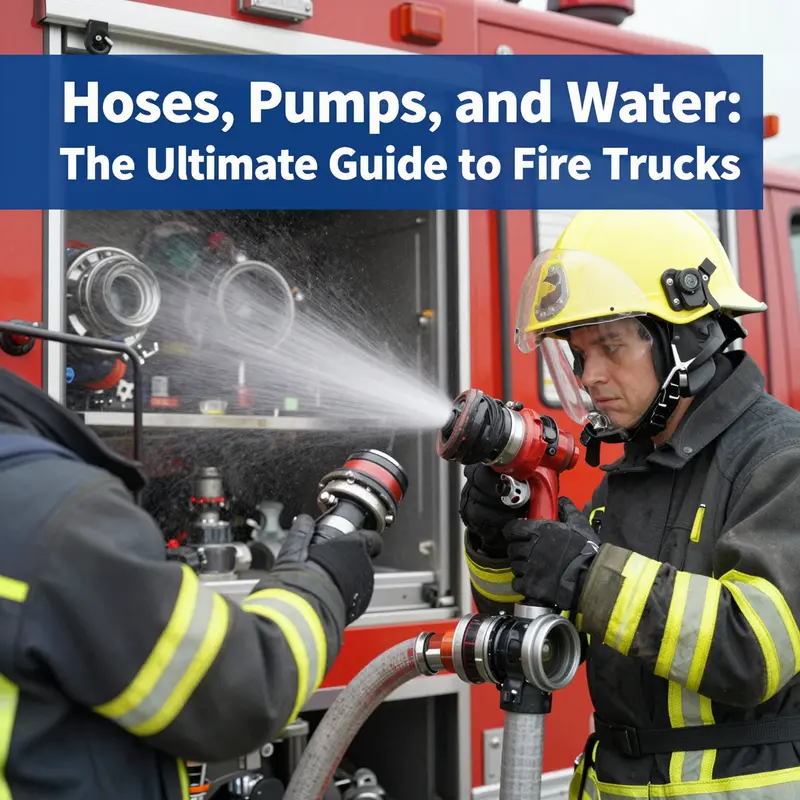
Water is not merely a resource for firefighting; it is the immediate tool that translates training into action the moment a siren cuts through the air. The question of whether fire trucks carry water has become, in practice, a question about the architecture of readiness. Onboard water tanks are the backbone of that readiness, enabling responders to initiate attacks within seconds of arrival and to stabilize a scene while additional resources move into place. Across urban streets, rural byways, and the rolling decks of ships and offshore platforms, the principle remains the same: supply begins where the incident begins. The research landscape underscores a simple truth with far-reaching consequences—water on the vehicle is not just about quantity, but about the fidelity of delivery, the reliability of the system, and the seamless integration of water as a tactical asset with the broader firefighting strategy.
In many conventional fire apparatus designs, onboard water is stored in tanks that vary widely in capacity, typically from a couple of hundred to around a thousand gallons. This range is not arbitrary. It reflects a balance between the weight and space constraints of the chassis, the desired reach of the initial attack, and the environments in which the vehicle is expected to operate. A 500-gallon figure frequently emerges as a practical middle ground for mixed urban-rural deployments and for many maritime configurations, where space is at a premium and the tempo of a response must be maintained even as scenes unfold beyond hydrant networks. The capacity is not intended to supply the entire firefighting operation for hours on end. Rather, it buys firefighters the critical minutes necessary to begin cooling and containment, to prevent fire growth, and to set up the more robust water supply that arriving engines and tactical units will deliver.
The mechanics of getting water from tank to flame front matter as much as the quantity carried. The heart of the onboard system is the pump, which, depending on the design, may be a powered, positive-displacement device that can sustain high pressure in tight spaces or a larger, more robust unit that favors volume delivery for initial knockdown. Positive-displacement pumps, in particular, are noted for their ability to maintain steady pressure regardless of flow rate. This makes them well suited for compact ships, cruise liners, offshore platforms, and other environments where space is constrained but the need for prompt, reliable water flow is not. In a high-stakes moment, stable pressure translates into predictable streams that reach the fire with enough force to begin cooling and knockdown while operators configure streams, nozzles, and relay operations with incoming units.
The significance of onboard water grows even more when we consider specialized contexts such as marine and offshore firefighting. In these environments, rapid response can decide between containment and catastrophe. A well-designed onboard water system functions as a first line of defense, enabling crews to establish a stable perimeter, protect critical assets, and sustain suppression efforts until shore-based or larger-capacity water sources can be engaged. In some maritime configurations, the onboard supply acts as a bridge—an immediate, trusted source of water that buys time for the rest of the fleet’s resources to come to bear. The capacity to initiate an assault on a small incipient fire within minutes, rather than tens of minutes, is a decisive factor in preserving cargo, lives, and the environment.
The science of delivery matters as much as the science of storage. The selection of a water delivery system depends on the particular operating theater. In many marine settings, engineers design systems to deliver consistent performance under demanding conditions. This reliability is crucial because a shipboard fire can escalate with frightening speed if control measures are delayed. The airstream, the spray pattern, and the elevation of the water stream influence how heat is absorbed and how rapidly the water cools a fuel surface. When a platform or vessel faces a fire involving volatile liquids, water alone loses some efficacy. Foam-based suppression becomes essential in those cases because foam concentrates form a floating blanket that smothers the fuel while cooling the surface. Yet even foam solutions rely on a robust onboard water supply to mix, propel, and sustain the foam delivery. In short, onboard water remains a fundamental prerequisite for any effective foam system or multi-agent suppression strategy.
The dual realities of water and foam illuminate a broader truth about modern firefighting: readiness is not simply about having water, but about having a versatile, robust, and well-integrated water infrastructure. A dedicated onboard water source, when paired with an adaptable pump system, offers a consistent backbone for initial attack, relay operations, and the dynamic reallocation of water resources as an incident evolves. In rural settings or areas with sparse hydrants, the onboard tank becomes the primary water source, anchoring the operation while engine companies build a larger water flow through drafting, hydrant connections, or onboard relays. In dense urban environments, onboard water supports a rapid knockdown as a prelude to a coordinated attack that leverages hydrants and additional apparatus. The overarching aim is to minimize the time between arrival and suppression, and onboard water is the most tangible lever for achieving that aim.
As the chapter progresses beyond the mechanics of tanks and pumps, it becomes clear that the technology surrounding onboard water is not isolated from broader command and control philosophies. Firefighting does not occur in a vacuum; it unfolds within a system of incident management, risk assessment, and strategic decision-making. The ability to deploy water quickly interacts with crew positioning, radio discipline, and the assessment of fuel sources and structural stabilities. A well-coordinated response relies on a shared mental model among incoming units and the initial responding crew. Water, in this sense, becomes a negotiator on the scene—the tangible measure of readiness that signals to all participants that the incident has a coherent, actionable plan and that suppression, rescue, and medical priorities can advance in tandem.
To illustrate this integrated approach, consider the way a typical response sequence unfolds on a vessel or offshore platform. As soon as the alarm rings, onboard water supplies are checked and primed. A quick, high-pressure output may be established to attack the fire’s heart, reducing radiant heat and preventing flame spread to adjacent compartments. The initial attack is not an isolated act; it is the spark that triggers a cascade of relay operations: additional fire pumps come online, supply lines are secured, and foam systems may be introduced to handle hydrocarbon fuels. The water network must be resilient to the platform’s motion and to the unique vulnerabilities of enclosed spaces. In such environments, even a modest onboard tank can be a lifeline, allowing crews to maintain pressure, sustain a knockdown, and create the critical conditions needed for orderly rescue and evacuation efforts if required.
A core insight from the broader body of research is that onboard water is most effective when coupled with a forward-looking hardware and training ecosystem. This includes not only the physical tank and pump but also the commissioning, maintenance, and testing routines that ensure reliability in real emergencies. Regular testing, leak prevention, and calibration of pumps and valves reduce the risk of a failure at a moment when every second counts. This reliability is inseparable from the personnel who operate the system. Firefighters must understand the characteristics of their onboard water supply, including its capacity, the pressure profiles of their pumps, the flow rates of various nozzle configurations, and how to communicate with incoming units about available water and current needs. When crews train to operate as a cohesive unit, water becomes a language they share—an accessible, practical tool rather than a buried, complex piece of equipment.
The need for versatility in water management also points toward integrated suppression strategies. Water provides cooling, which slows structural degradation and reduces the likelihood of flashover. Foam adds a protective layer for hydrocarbon fires, diminishing the risk of reignition and enabling safer rescue operations in areas where people may be trapped or where the fuel load is particularly volatile. These approaches are not mutually exclusive; they are complementary components of a tailored response plan that recognizes the environmental specifics of each incident. In this sense, onboard water is not a standalone capability but a critical enabler of a broader suppression architecture that includes ignition control, occupancy protection, and post-fire management.
The evolution of onboard water systems reflects a broader trend in firefighting toward smarter, more context-aware equipment. The capacity to respond rapidly is now matched by the capacity to sustain the response with intelligent water management, efficient pump technology, and adaptable suppression formulations. In the maritime context, where space is limited and conditions can shift rapidly, that adaptability is especially valuable. It allows responders to switch from immediate knockdown to longer-term control without sacrificing safety or precision. In land-based operations, the same principle applies: a well-primed onboard water supply reduces heat exposure for firefighters, supports more efficient hose deployment, and creates a more manageable scene as additional units and resources converge.
As we reflect on the role of onboard water in the broader story of firefighting technology, a simple, almost elemental truth emerges. Water is the medium through which strategy becomes action. The tank on the truck, the pump’s rhythm, the nozzle’s reach, and the foam’s blanket all translate intent into measurable suppression. The research underscores that the most effective systems balance water capacity with the reliability of delivery, a robust connection to external water sources when available, and compatibility with foam and other agents when necessary. In short, onboard water is not a single feature but a system trait—a vital facet of a firefighting fleet’s readiness, adaptability, and resilience.
To connect this dimension of readiness with practical takeaways, consider how a department or fleet might evaluate its own onboard water capacity. First, examine the balancing act between tank size and vehicle weight, noting how occasional increases in capacity can yield meaningful gains in initial attack efficiency without sacrificing maneuverability. Second, assess the pump architecture for reliability under pressure, including the ability to sustain high-flow rates during relay operations. Third, ensure that water delivery aligns with broader suppression strategies, including foam compatibility for hydrocarbon fires when required. Finally, invest in training that reinforces the practical use of onboard water as a central piece of incident management, not a separate or siloed capability. In maritime settings, this means rehearsing the sequence of water attack, foam application, and relay coordination within a marine incident command framework that recognizes the unique demands of vessels and offshore platforms. Within these practices lies the steady confidence that water on the truck is not merely a feature, but a foundational element of modern firefighting efficacy.
If readers wish to explore more about how onboard water systems are designed for marine and offshore scenarios, a detailed industry overview is available from a leading source that examines benefits and applications of onboard firefighting systems. This resource highlights the criticality of a reliable onboard water supply, the role of specialized pumps, and the integration with foam-based suppression where appropriate. For practitioners and policymakers aiming to translate these insights into safer, more capable fleets, the chapter’s synthesis of water capacity, delivery reliability, and suppression strategy offers a clear roadmap: invest in onboard water as a first order of readiness, and build the rest of the firefighting architecture around that dependable core.
To learn more about the technical and operational aspects of onboard firefighting systems, see the external resource at the end of this chapter: https://www.desmi.com/en/industries/offshore-and-marine/fire-fighting-systems. And for additional perspectives on how steel and other durable components fit into modern fire apparatus design, you can explore a relevant overview of the field through industry content such as steel fire apparatus which can provide broader context for the chassis, tank, and pump configurations that make onboard water feasible in a wide range of environments.
Water on Wheels: How Onboard Capacities Shape Firefighting Across Urban Streets and Remote Frontiers

Water is not merely a resource in firefighting; it is a foundational tool that travels with the vehicle, influencing response time, tactic, and coordination. The question of whether fire trucks carry water on board reflects a landscape of design choices, terrain, and evolving doctrine. In urban settings hydrants and mains redefine the role of onboard tanks, while rural areas, wildland zones, and wildfire-prone regions rely on larger tanks that can serve as a lifeline when hydrants are scarce. Fire apparatus are not uniform; water quantity, delivery speed, and on-the-fly refilling shape suppression, rescue, and protection strategies. This chapter threads together the physics of water delivery, chassis and tank configurations, and the crew realities when water demands outpace external sources.
Three primary types anchor onboard water: water tenders, pumpers, and aerials. Water tenders carry substantial quantities to the scene and shuttle water to other units; their tanks are built for efficiency and rough terrain, with typical capacities ranging from about 1,500 to 3,000 gallons, and some configurations larger. They function as water shuttle systems bridging gaps where hydrants do not exist or are distant. They are not usually the fastest to deploy water at high pressure, but their volume is critical for sustained operations. The decision to use a water tender reflects a landscape of limited water sources, off-road needs, and long-duration firefighting.
Pumper trucks epitomize rapid water delivery in urban and suburban settings. Onboard water is smaller, commonly around 500 to 1,000 gallons, but the emphasis is on immediate high-pressure delivery through hoses and nozzles. A pumper can initiate a direct attack while hydrants supply additional water. In dense built environments the pumper’s speed can confine a fire quickly, buying time for larger-scale resources to arrive. In practice, a modern incident often features a frontline pumper working in tandem with a water tender or other units that provide replenishment, sustaining the fight as the fire grows.
Aerial trucks occupy a different niche. They typically carry modest onboard water—often a few hundred gallons—to support initial suppression during ladder or platform operations. The strength of an aerial lies in reach, elevation, and the ability to apply water from positions not reachable at ground level. The onboard water is a valuable, but secondary, element to the vehicle’s hydraulic reach and rescue capability. In many operations, aerials amplify the effect of water delivered from the ground by providing angles and access that would be difficult otherwise.
Across all types, modern fleets increasingly feature high-pressure pumps, foam systems, and other enhancements that expand water’s effectiveness. Foam soluble systems mix concentrate with water, extend cooling and vapor suppression, and help manage challenging incidents involving fuels. Some builds integrate cannons, reels, and automated means to project water at varying distances and angles, increasing options for a single crew. The trend toward multi-functional units—pumping, foam, and off-road mobility—reflects a move toward flexible, resilient responses that can adapt to a changing incident profile. The exact mix of onboard water and related equipment varies by region, but the core principle remains: water delivery is integrated with mobility, pump capability, and on-scene logistics to sustain suppression while protecting civilians and property.
The practical implications extend beyond the cab. In rural areas a large onboard tank can lengthen the window to begin suppression before a hydrant is located. Water tenders can operate near distant sources and begin the battle while crews search for additional supply. In urban neighborhoods hydrants reduce onboard needs, enabling rapid knockdown with replenishment from other units for extended operations. The platform choice aligns with terrain, road networks, and structure density, and it also informs how quickly a department can mobilize and deploy multiple units.
As fleets evolve, a common pattern is a mix of moderate onboard water for immediate action plus the ability to shuttle larger volumes from external sources or tenders when incidents extend in time and distance. Procurement choices and current market options reflect a balance of budget, capacity, and terrain, emphasizing environments fit for the mission rather than a single-fire scenario. Environmental and logistical realities also shape water strategy: drought considerations and water-use restrictions can motivate on-site water management to protect local resources, while rugged terrain emphasizes off-road capability and extended operation time.
From production to maintenance, onboard water systems demand attention: tanks must resist corrosion and be cleaned regularly; pumps require robust seals and cooling; foam integrations demand careful calibration so foam mixes correctly. Training centers on not only water quantity but nozzle selection, spray patterns, and response timing. The most effective outcomes arise when water strategy is woven into pre-fire planning, drills, and on-scene decision-making. Readers exploring current fleets can ground these ideas in real-world options, considering how water capacity, refilling logistics, and platform versatility influence the department’s approach to incident management. The evolving landscape signals a future where fleets combine large-volume shuttle capabilities with rapid, high-pressure delivery, supported by foam, rescue tools, and off-road mobility. Water on wheels remains a core enabler of a capable, adaptive, and resilient firefighting response across diverse theaters of operation.
For practitioners, aligning equipment choices with local needs, investing in training that integrates water strategy with tactical execution, and staying attuned to new configurations will keep communities safer as fire teams respond to the unknown with readiness and resolve.
Final thoughts
Understanding how fire trucks carry and utilize water is vital for appreciating their role in emergency response. The ability to access a significant water supply on-site not only expedites the firefighting process but also enhances overall public safety. Whether tackling wildfires in remote areas or addressing urban blazes, the varying capacities of fire trucks determine their effectiveness across different scenarios. Equip yourself with this knowledge, and you’ll gain a deeper respect for the critical tools available to first responders in protecting lives and property from the devastation of fire.