
Community Appreciation for First Responders
Introduction
In today’s fast-paced world, it is easy to overlook the sacrifices made by first responders—firefighters, EMTs, and police officers. These individuals are our first line of defense in emergencies, offering critical services during life-threatening situations. Their roles extend beyond immediate rescue missions; they embody bravery and resilience in the face of adversity.
Importance of Showing Gratitude
- Recognize Dedication: Acknowledging their commitment fosters a strong community bond.
- Acknowledgment of Humanity: Appreciation, whether through simple gestures or large community events, acknowledges their humanity and the challenges they face behind the uniform.
- Inspiring Action: By promoting gratitude, we can inspire others to join in recognizing these everyday heroes who protect our lives and well-being.
11 Actionable Ways to Show Gratitude to First Responders
Expressing appreciation can take various forms. Here are eleven practical ways for the community to show gratitude:
- Host a Community Appreciation Event
Organize gatherings, such as barbecues or lunches at local fire stations or police departments. This provides an opportunity for community members to personally thank first responders and give tokens of appreciation. - Volunteer Your Time
Engage in community programs that promote fire safety, CPR training, or neighborhood watch initiatives. This strengthens community ties and supports first responders. - Send Personalized Thank-You Notes
Encourage children and community groups to write handwritten thank-you cards to local first responders. Delivering these notes can uplift spirits and convey genuine gratitude. - Provide Meals or Refreshments
Deliver home-cooked meals or snacks during long shifts. Such gestures demonstrate care and appreciation for the demanding work of first responders. - Offer Discounts or Services
Local businesses can provide discounts or complimentary services to first responders as tangible recognition of their service. - Public Recognition on Social Media
Use platforms like Facebook and Instagram to share appreciation for first responders with hashtags like #ThankYouFirstResponder, highlighting positive stories and events. - Participate in or Support Charity Events
Join or sponsor events like charity runs to raise funds for first responder causes, showing solidarity and financial support. - Make Appreciation Visible
Display signs, flags, or murals in public spaces to symbolize community gratitude. Schools and businesses can showcase artwork celebrating first responders. - Create Care Packages
Assemble care packages with snacks, toiletries, and encouraging notes to deliver during shifts. - Organize Mental Health Days
Support initiatives addressing the mental health needs of first responders, providing resources focused on their well-being. - Encourage Educational Scholarships
Establish scholarships for the families of first responders, allowing their children to pursue education while honoring their parents’ sacrifices.
These actions promote a culture of appreciation and let first responders know how valued they are.
Testimonials from the Community
Emily R., a grateful mother
“Last summer, a fire broke out next door, and the firefighters arrived within minutes. They not only fought the flames but helped us stay calm while we waited to see if our home was safe. We owe them so much, and I will forever be thankful for their quick response.”
James T., a community member
“During a particularly challenging winter, my elderly neighbor fell ill, and the EMTs came to help. Their compassion ensured he was comfortable before leaving. Gratitude can’t replace proper funding, but it can help them know their work matters. I proudly display a ‘Thank You’ poster in my window to show my support.”
Sara N., a small business owner
“When my shop caught fire, the local firefighters not only extinguished the flames but also helped salvage what was left. Their dedication was incredible. I have organized community lunches to express our thanks. It’s crucial to show these heroes they are valued!”
Table Comparing Community Appreciation Events for First Responders
| Type of Event | Participants | Potential Impact |
|---|---|---|
| Community Barbecue | Local residents, first responders | Strengthens community bonds through casual interaction |
| Charity Runs | Runners, community members, sponsors | Raises funds for first responders’ needs while promoting health and fitness |
| Thank-You Card Campaign | School children, local groups | Uplifts spirits of first responders and enhances community involvement |
| Police/Fire Department Open House | Families, local community | Builds trust and provides education on emergency services |
| Mental Wellness Workshops | First responders, mental health professionals | Addresses mental health challenges faced by first responders |
| Service Discounts | Local businesses, first responders | Offers financial relief, appreciating their service |
| Public Recognition Events | Community leaders, first responders | Creates awareness and appreciation in the community |
National First Responders Day: Honoring Our Heroes
Celebrated annually on October 28, National First Responders Day is dedicated to recognizing the heroic acts of firefighters, EMTs, and police officers. This day reminds us of their critical role in protecting communities and saving lives, often at great personal risk.
Communities can celebrate meaningfully through various initiatives:
- Appreciation Events: Organize local events, such as picnics or parades, to personally thank first responders.
- Student Involvement: Encourage students to create handmade cards or banners expressing gratitude for local heroes.
- Business Support: Local businesses can provide discounts or free meals as gestures of appreciation.
- Educational Components: Incorporate workshops on emergency preparedness to foster respect and understanding within the community.
By engaging in these activities, communities celebrate National First Responders Day and reinforce our essential support for those who dedicate their lives to our safety.
Conclusion
Consistent recognition of first responders is vital for building a supportive community. By expressing gratitude through small acts—such as thank-you notes or community events—we help ensure that these dedicated individuals feel valued. They put their lives on the line daily and deal with high-stress situations few can imagine.
As stated, “Gratitude can’t replace funding or proper staffing, but it can go a long way toward letting responders know their work matters.” This statement emphasizes the importance of a holistic approach to supporting first responders. We must advocate for funding while fostering a community that recognizes their sacrifices. Through this combination of action and appreciation, we can honor those who protect and serve us, strengthening the bonds between first responders and the communities they safeguard.
Statistics on Community Support for First Responders
Recent trends indicate a significant increase in community support for first responders:
- Donation Trends: Community giving days have surged, growing from 1 event in 2009 to 71 events in 2022, with total funds raised increasing from $6 million to $282 million.
- Volunteer Participation: 63.8% of employees at organizations with less than 1,000 staff engaged in volunteer activities, fostering community involvement.
- Community Engagement: The pandemic prompted a 55% increase in community event participation due to virtual options.
- Youth Involvement: Programs engaging youth saw a 40% uptick in participation due to social media strategies.
- Support Programs: Organizations like the First Responders Children’s Foundation bridge gaps, building relationships and encouraging engagements that inspire trust and respect.
These statistics highlight the importance of community support for first responders and showcase evolving methods communities are adopting to show appreciation. By cultivating a culture of gratitude, communities ensure that first responders’ efforts are acknowledged and appreciated, strengthening the bonds that keep us safe.
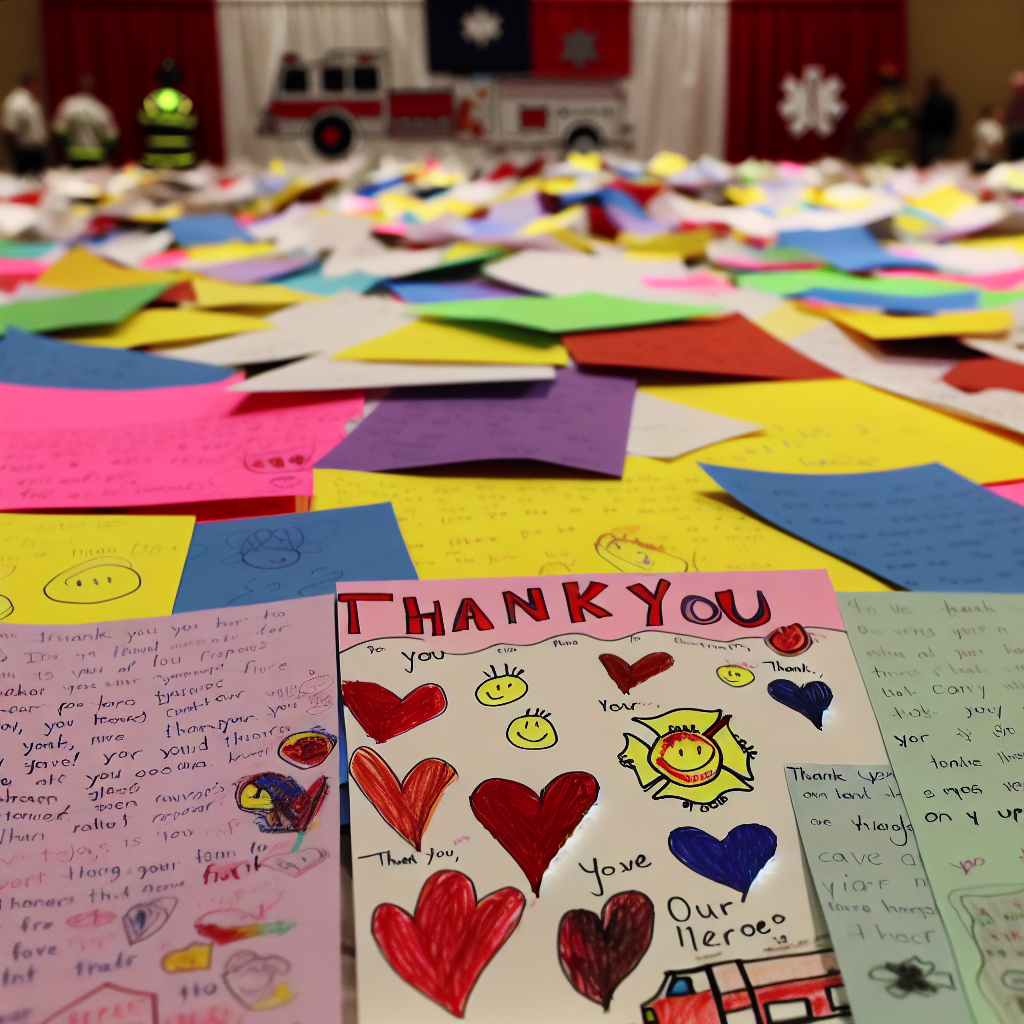
Handwritten notes from children expressing gratitude to first responders.

First responders engaging with the community showcasing teamwork and service.
11 Actionable Ways to Show Gratitude to First Responders
Expressing appreciation for first responders can take various forms, ranging from heartfelt gestures to community initiatives. Here are eleven practical ways for the community to show gratitude:
- Host a Community Appreciation Event: Organize a gathering, such as a barbecue or lunch at local fire stations or police departments. This provides an opportunity for community members to thank first responders personally and give tokens of appreciation.
- Volunteer Your Time: Engage in community programs that promote fire safety, CPR training, or neighborhood watch initiatives. Volunteering helps support first responders and strengthens community ties.
- Send Personalized Thank-You Notes: Encourage children and community groups to write handwritten thank-you cards to local first responders. These can be delivered to their stations to uplift spirits and show gratitude.
- Provide Meals or Refreshments: Deliver home-cooked meals or snacks to first responders during long shifts or emergencies. Such gestures demonstrate care and appreciation for their demanding work.
- Offer Discounts or Services: Local businesses can show support by offering discounts or complimentary services to first responders, providing them with tangible recognition for their service.
- Public Recognition on Social Media: Use platforms like Facebook and Instagram to share appreciation for first responders by using hashtags like #ThankYouFirstResponder. Highlight positive stories and events related to their service.
- Participate in or Support Charity Events: Join or sponsor events like charity runs or memorial rides that raise funds for first responder causes, showing solidarity and financial support.
- Make Appreciation Visible: Display signs, flags, or murals in public spaces to symbolize community gratitude. Schools and businesses can participate by showcasing artwork celebrating first responders.
- Create Care Packages: Assemble care packages containing snacks, toiletries, and encouraging notes to deliver to first responders during routine shifts.
- Organize Mental Health Days: Support initiatives that recognize the mental health needs of first responders, providing resources and events focused on their well-being.
- Encourage Educational Scholarships: Establish scholarships for the families of first responders, allowing children of these heroes to pursue their education while honoring their parents’ sacrifices.
These actions foster a culture of appreciation, helping first responders know how valued they are in our communities. As we come together to express gratitude, we not only honor their service but also build stronger community connections.
Testimonials from the Community
-
Emily R., a grateful mother:
“Last summer, a fire broke out next door, and the firefighters arrived within minutes. They not only fought the flames but helped us stay calm while we waited to see if our home was safe. Showing appreciation isn’t about grand gestures — it’s about consistent recognition that the people answering 911 calls are human beings. We owe them so much, and I will forever be thankful for their quick response.”
-
James T., a community member:
“During a particularly challenging winter, my elderly neighbor fell ill, and the EMTs came to help. They were so compassionate and attentive, ensuring he was comfortable before leaving. It was a true testament to their character. Gratitude can’t replace proper funding or staffing, but it can help them know their work matters. Today, I proudly display a ‘Thank You’ poster in my window to show my support.”
-
Sara N., a small business owner:
“I remember when my shop caught fire. The local firefighters not only extinguished the flames but also helped me salvage what was left. Their dedication was incredible. Since then, I have organized community lunches to express our thanks. It’s crucial to show these heroes they are valued, and such gestures can uplift their spirits on challenging days!”
Table Comparing Community Appreciation Events for First Responders
| Type of Event | Participants | Potential Impact |
|---|---|---|
| Community Barbecue | Local residents, first responders | Strengthens community bonds through casual interaction |
| Charity Runs | Runners, community members, sponsors | Raises funds for first responders’ needs while promoting health and fitness |
| Thank-You Card Campaign | School children, local groups | Uplifts spirits of first responders and enhances community involvement |
| Police/Fire Department Open House | Families, local community | Provides a platform for education on emergency services and builds trust |
| Mental Wellness Workshops | First responders, mental health professionals | Addresses mental health challenges faced by first responders |
| Service Discounts | Local businesses, first responders | Offers financial relief to first responders, appreciating their service |
| Public Recognition Events | Community leaders, first responders | Creates awareness and appreciation of first responders in the community |
National First Responders Day: Honoring Our Heroes
National First Responders Day, celebrated annually on October 28, is a special occasion dedicated to recognizing the heroic acts of first responders, including firefighters, EMTs, and police officers. This day serves as a reminder of their crucial role in protecting communities and saving lives, often at great personal risk. According to data, over 1.1 million firefighters and more than 800,000 law enforcement officers serve across the United States, responding to emergencies and ensuring public safety.
Communities can celebrate National First Responders Day meaningfully through various initiatives. Organizing local events such as appreciation picnics, parades, or open houses at fire and police stations allows residents to meet and thank their local heroes personally. Encouraging students to create handmade cards or banners expressing gratitude can uplift the spirits of first responders and strengthen community ties. Additionally, local businesses can support this day by providing discounts or free meals to first responders as a gesture of appreciation.
Incorporating educational elements, such as workshops on emergency preparedness, can also foster respect and understanding within the community. By engaging in such activities, communities not only celebrate National First Responders Day but also reinforce the essential support system and spirit of gratitude that is vital for these everyday heroes who dedicate their lives to our safety.
In conclusion, consistent recognition of our first responders is not just a nice gesture; it is a vital aspect of building a supportive community. By expressing gratitude through small acts of appreciation, like thank-you notes or community events, we help ensure that these dedicated individuals feel valued and supported. They put their lives on the line daily, dealing with high-stress situations that most of us cannot imagine.
“Gratitude can’t replace funding or proper staffing, but it can go a long way toward letting responders know their work matters.”
This statement encapsulates the need for a holistic approach to supporting first responders. We must advocate for proper funding while simultaneously fostering a community that recognizes their sacrifices. It is through this combination of action and appreciation that we can truly honor the commitment of those who protect and serve us, strengthening the bonds between first responders and the communities they safeguard.
Statistics on Community Support for First Responders
Recent trends indicate a significant increase in community support for first responders, demonstrated by various statistics related to donations, community events, and engagement initiatives.
Donation Trends:
Community foundations have seen a monumental rise in giving days, growing from just 1 event in 2009 to 71 events in 2022, with total funds raised skyrocketing from $6 million to an impressive $282 million. This reflects a growing commitment among community members to financially support their local heroes and highlights the effectiveness of organized giving initiatives.
Volunteer Participation:
A staggering 63.8% of employees at organizations with less than 1,000 staff members engaged in volunteer activities, suggesting that smaller businesses are effectively fostering community involvement. The integration of giving and volunteering programs has proven to be successful, with companies seeing a participant increase of up to 16.8% in cultures promoting both.
Community Engagement through Virtual Platforms:
The pandemic has also transformed community outreach, with organizations reporting a 55% increase in participation in community events after introducing virtual options. This shift underscores the growing importance of digital engagement in promoting community support and connection.
Youth Involvement:
Programs designed to involve youth have experienced a 40% uptick in participation due to the incorporation of social media strategies. Engaging younger generations fosters a long-term commitment to community service and support for first responders.
Support Programs:
Organizations like the First Responders Children’s Foundation are pivotal in bridging the gap between first responders and their communities. They provide grants aimed at building relationships and encouraging engagements that inspire trust and respect for our first responders.
These statistics not only emphasize the importance of community support for first responders but also highlight evolving methods that communities are adopting to show appreciation and foster lasting connections with these dedicated individuals.
By contributing to a culture of gratitude, communities not only recognize the sacrifices of first responders but also ensure their efforts are acknowledged and appreciated, strengthening the bonds that keep us all safe.
Community Appreciation for First Responders
Introduction
In today’s fast-paced world, it is easy to overlook the sacrifices made by first responders—firefighters, EMTs, and police officers. These individuals are our first line of defense in emergencies, offering critical services during life-threatening situations. Their roles extend beyond immediate rescue missions; they embody bravery and resilience in the face of adversity.
Expressing gratitude for first responders is essential to recognize their dedication and foster strong community bonds. Appreciation, whether through simple gestures or large community events, acknowledges their humanity and the challenges they face behind the uniform. By promoting gratitude, we can inspire others to join in recognizing these everyday heroes who tirelessly protect our lives and well-being.
11 Actionable Ways to Show Gratitude to First Responders
Expressing appreciation can take various forms. Here are eleven practical ways for the community to show gratitude:
- Host a Community Appreciation Event
Organize gatherings, such as barbecues or lunches at local fire stations or police departments. This provides an opportunity for community members to personally thank first responders and give tokens of appreciation. - Volunteer Your Time
Engage in community programs that promote fire safety, CPR training, or neighborhood watch initiatives. This strengthens community ties and supports first responders. - Send Personalized Thank-You Notes
Encourage children and community groups to write handwritten thank-you cards to local first responders. Delivering these notes can uplift spirits and convey genuine gratitude. - Provide Meals or Refreshments
Deliver home-cooked meals or snacks during long shifts. Such gestures demonstrate care and appreciation for the demanding work of first responders. - Offer Discounts or Services
Local businesses can provide discounts or complimentary services to first responders as tangible recognition of their service. - Public Recognition on Social Media
Use platforms like Facebook and Instagram to share appreciation for first responders with hashtags like #ThankYouFirstResponder, highlighting positive stories and events. - Participate in or Support Charity Events
Join or sponsor events like charity runs to raise funds for first responder causes, showing solidarity and financial support. - Make Appreciation Visible
Display signs, flags, or murals in public spaces to symbolize community gratitude. Schools and businesses can showcase artwork celebrating first responders. - Create Care Packages
Assemble care packages with snacks, toiletries, and encouraging notes to deliver during shifts. - Organize Mental Health Days
Support initiatives addressing the mental health needs of first responders, providing resources focused on their well-being. - Encourage Educational Scholarships
Establish scholarships for the families of first responders, allowing their children to pursue education while honoring their parents’ sacrifices.
These actions promote a culture of appreciation and let first responders know how valued they are.
Testimonials from the Community
Emily R., a grateful mother
“Last summer, a fire broke out next door, and the firefighters arrived within minutes. They not only fought the flames but helped us stay calm while we waited to see if our home was safe. We owe them so much, and I will forever be thankful for their quick response.”
James T., a community member
“During a particularly challenging winter, my elderly neighbor fell ill, and the EMTs came to help. Their compassion ensured he was comfortable before leaving. Gratitude can’t replace proper funding, but it can help them know their work matters. I proudly display a ‘Thank You’ poster in my window to show my support.”
Sara N., a small business owner
“When my shop caught fire, the local firefighters not only extinguished the flames but also helped salvage what was left. Their dedication was incredible. I have organized community lunches to express our thanks. It’s crucial to show these heroes they are valued!”
Table Comparing Community Appreciation Events for First Responders
| Type of Event | Participants | Potential Impact |
|---|---|---|
| Community Barbecue | Local residents, first responders | Strengthens community bonds through casual interaction |
| Charity Runs | Runners, community members, sponsors | Raises funds for first responders’ needs while promoting health and fitness |
| Thank-You Card Campaign | School children, local groups | Uplifts spirits of first responders and enhances community involvement |
| Police/Fire Department Open House | Families, local community | Builds trust and provides education on emergency services |
| Mental Wellness Workshops | First responders, mental health professionals | Addressees mental health challenges faced by first responders |
| Service Discounts | Local businesses, first responders | Offers financial relief, appreciating their service |
| Public Recognition Events | Community leaders, first responders | Creates awareness and appreciation in the community |
National First Responders Day: Honoring Our Heroes
Celebrated annually on October 28, National First Responders Day is dedicated to recognizing the heroic acts of firefighters, EMTs, and police officers. This day reminds us of their critical role in protecting communities and saving lives, often at great personal risk.
Communities can celebrate meaningfully through various initiatives:
- Appreciation Events: Organize local events, such as picnics or parades, to personally thank first responders.
- Student Involvement: Encourage students to create handmade cards or banners expressing gratitude for local heroes.
- Business Support: Local businesses can provide discounts or free meals as gestures of appreciation.
- Educational Components: Incorporate workshops on emergency preparedness to foster respect and understanding within the community.
By engaging in these activities, communities celebrate National First Responders Day and reinforce our essential support for those who dedicate their lives to our safety.
Conclusion
Consistent recognition of first responders is vital for building a supportive community. By expressing gratitude through small acts—such as thank-you notes or community events—we help ensure that these dedicated individuals feel valued. They put their lives on the line daily and deal with high-stress situations few can imagine.
As stated, “Gratitude can’t replace funding or proper staffing, but it can go a long way toward letting responders know their work matters.” This statement emphasizes the importance of a holistic approach to supporting first responders. We must advocate for funding while fostering a community that recognizes their sacrifices. Through this combination of action and appreciation, we can honor those who protect and serve us, strengthening the bonds between first responders and the communities they safeguard.
Statistics on Community Support for First Responders
Recent trends indicate a significant increase in community support for first responders:
- Donation Trends: Community giving days have surged, growing from 1 event in 2009 to 71 events in 2022, with total funds raised increasing from $6 million to $282 million.
- Volunteer Participation: 63.8% of employees at organizations with less than 1,000 staff engaged in volunteer activities, fostering community involvement.
- Community Engagement: The pandemic prompted a 55% increase in community event participation due to virtual options.
- Youth Involvement: Programs engaging youth saw a 40% uptick in participation due to social media strategies.
- Support Programs: Organizations like the First Responders Children’s Foundation bridge gaps, building relationships and encouraging engagements that inspire trust and respect.
These statistics highlight the importance of community support for first responders and showcase evolving methods communities are adopting to show appreciation. By cultivating a culture of gratitude, communities ensure that first responders’ efforts are acknowledged and appreciated, strengthening the bonds that keep us safe.
Handwritten notes from children expressing gratitude to first responders.
First responders engaging with the community showcasing teamwork and service.
11 Actionable Ways to Show Gratitude to First Responders
Expressing appreciation for first responders can take various forms, ranging from heartfelt gestures to community initiatives. Here are eleven practical ways for the community to show gratitude:
- Host a Community Appreciation Event: Organize a gathering, such as a barbecue or lunch at local fire stations or police departments. This provides an opportunity for community members to thank first responders personally and give tokens of appreciation.
- Volunteer Your Time: Engage in community programs that promote fire safety, CPR training, or neighborhood watch initiatives. Volunteering helps support first responders and strengthens community ties.
- Send Personalized Thank-You Notes: Encourage children and community groups to write handwritten thank-you cards to local first responders. These can be delivered to their stations to uplift spirits and show gratitude.
- Provide Meals or Refreshments: Deliver home-cooked meals or snacks to first responders during long shifts or emergencies. Such gestures demonstrate care and appreciation for their demanding work in emergency services.
- Offer Discounts or Services: Local businesses can show community appreciation by offering discounts or complimentary services to first responders, providing them with tangible recognition for their service.
- Public Recognition on Social Media: Use platforms like Facebook and Instagram to share appreciation for first responders by using hashtags like #ThankYouFirstResponder. Highlight positive stories and events related to their service.
- Participate in or Support Charity Events: Join or sponsor events like charity runs or memorial rides that raise funds for first responder causes and foster a culture of support for their critical work.
- Make Appreciation Visible: Display signs, flags, or murals in public spaces to symbolize community gratitude. Schools and businesses can participate by showcasing artwork celebrating first responders.
- Create Care Packages: Assemble care packages containing snacks, toiletries, and encouraging notes to deliver to first responders during routine shifts.
- Organize Mental Health Days: Support initiatives that recognize the mental health needs of first responders, providing resources and events focused on their well-being.
- Encourage Educational Scholarships: Establish scholarships for the families of first responders, allowing children of these heroes to pursue their education while honoring their parents’ sacrifices in the line of duty.
These actions foster a culture of appreciation within the community and let first responders know how valued they are in our society.
Statistics on Community Support for First Responders
Recent trends indicate a significant increase in community support for first responders, demonstrated by various statistics related to donations, community events, and engagement initiatives influenced by public passion for emergency services.
Donation Trends: Community foundations have seen a monumental rise in giving days, growing from just 1 event in 2009 to 71 events in 2022, with total funds raised skyrocketing from $6 million to an impressive $282 million. This reflects a growing commitment among community members to financially support their local heroes and highlights the effectiveness of organized giving initiatives.
Volunteer Participation: A staggering 63.8% of employees at organizations with less than 1,000 staff members engaged in volunteer activities, suggesting that smaller businesses are effectively fostering community involvement. The integration of giving and volunteering programs has proven to be successful, with companies seeing a participant increase of up to 16.8% in cultures promoting both.
Community Engagement through Virtual Platforms: The pandemic has also transformed community outreach, with organizations reporting a 55% increase in participation in community events after introducing virtual options. This shift underscores the growing importance of digital engagement in promoting community support and connection.
Youth Involvement: Programs designed to involve youth have experienced a 40% uptick in participation due to the incorporation of social media strategies. Engaging younger generations fosters a long-term commitment to community service and support for first responders and their mental health.
Support Programs: Organizations like the First Responders Children’s Foundation are pivotal in bridging the gap between first responders and their communities. They provide grants aimed at building relationships and encouraging engagements that inspire trust and respect for our first responders and their constant dedication to public safety.
These statistics not only emphasize the importance of community support for first responders but also highlight evolving methods that communities are adopting to show appreciation and foster lasting connections with these dedicated individuals. By contributing to a culture of gratitude, communities not only recognize the sacrifices of first responders but also ensure their efforts are acknowledged and appreciated, strengthening the bonds that keep us all safe.
Testimonials from the Community
-
Maria L., a nurse who witnessed a rescue:
“I was on my way to work when I saw a car accident. The police arrived promptly and secured the scene while the EMTs tended to the injured. Their professionalism and swift action saved a life that day. I have since shared my story with friends and encouraged them to support our local first responders, as they are truly the unsung heroes of our society.”
-
Kevin S., a firefighter’s family member:
“Growing up as the child of a firefighter, I saw firsthand the toll the job can take on my parent. Every time the alarm went off, there was that moment of uncertainty. One day, I decided to bake cookies and bring them to the fire station as a surprise. The guys loved it, and that small gesture led to a tradition of celebrating their hard work. It’s important to show them that we notice their sacrifices, even in little ways!”
-
Linda M., a teacher:
“As a teacher, I tried to incorporate appreciation for first responders into my curriculum. My class wrote letters to police officers, thanking them for keeping our community safe. The officers responded with a visit, and the kids were thrilled! Witnessing that connection made me realize the impact we can have by fostering relationships between our youth and those who serve us daily.”
These narratives illustrate the human side of first responders and the profound impact they have on the community. By sharing stories, we not only honor their dedication but also inspire others to take action in showing their support. As we collectively acknowledge the hard work and sacrifices made by these individuals, we reinforce the community spirit that binds us together as a society.
🚓💖 Thank you, first responders! #ThankYouFirstResponder