
Introduction
Motorcycle fairings cover a bike’s internals and shape its aerodynamics. Replacement panels are usually made from ABS plastic or fiberglass, and the two behave differently both on the road and on the workbench. This comparison covers how each is made, how well it fits, what happens in a drop, and what a repair costs, so you can pick the material that matches your bike and how you ride.
The two are produced in different ways. ABS fairings are injection-molded thermoplastic: pellets are heated until they flow, then pressed into a steel mold. Every panel comes out with a consistent factory finish and some built-in flex. Fiberglass fairings are laid up by hand from resin and glass cloth, producing a rigid shell that can be shaped and repaired in a small shop.
That difference shows up in panel fit and in how each material fails. It also decides who gets the most out of each option: daily riders, track riders, and the shops that repair their bikes.
What Are ABS Motorcycle Fairings?
ABS stands for acrylonitrile butadiene styrene, a tough engineering plastic that has become the default material for replacement bodywork on modern sportbikes. Manufacturers heat ABS pellets until they flow, then inject the melt into a steel mold shaped like the fairing. The panel leaves the tool finished, with its curves, mounting tabs, and panel gaps formed in a single pass.
The injection process does most of the work here. Because every part comes from the same mold, dimensions stay consistent from unit to unit, so panels line up the way the factory intended. Shops like these OEM-style fairings because they bolt on without the trimming, drilling, and sanding that fiberglass usually demands.
ABS also has a practical set of properties. It flexes under impact instead of shattering, which helps when a bike tips over in a parking lot. It is light, keeps its molded shape, and can be tinted or factory-painted to match original color codes. Once the tooling is paid for, the per-unit cost drops quickly at volume, which is why ABS sets usually sell for less than comparable fiberglass.
- Flexible and impact resistant – bends and absorbs shock instead of cracking on minor drops
- Lightweight and shape-consistent – molded geometry keeps fitment uniform across every panel
- Factory color options – available pre-painted or color-matched to OEM codes
- Cost-efficient at volume – low per-unit production cost once the mold is made
ABS is the material that turned affordable, ready-to-bolt-on bodywork from a specialty item into the norm.
What Are Fiberglass Motorcycle Fairings?
Fiberglass motorcycle fairings – commonly known as FRP fairings (fiberglass-reinforced plastic) – are built from layers of glass-fiber mat bonded together with liquid resin. The resin cures into a hard composite shell, while the embedded glass fibers supply the tensile strength. Most panels are produced either by hand-laying resin and fiber into a mold or by vacuum infusion, where suction pulls resin evenly through the fibers for a tighter, more consistent laminate. That hands-on construction is why many riders simply call them hand-laid fairings.
The result feels substantial. Because the material builds up in layers, fiberglass fairings tend to be rigid and structurally strong, resisting flex under wind load and shrugging off impacts that would crack thinner plastic covers.
The main traits of fiberglass fairings:
- High rigidity and strong structural integrity
- Thicker, heavier panels than plastic alternatives
- Usually require paint and bodywork after production
- Excellent repairability – cracks and breaks can be sanded, re-glassed, and refinished
The trade-offs are weight and finish. Layered strength adds mass, and the surface usually arrives unfinished, so fiberglass parts generally need primer, sanding, and paint before they look showroom-ready. The upside is repairability: a plastic section that cracks often stays cracked, while a damaged fiberglass panel can be rebuilt with fresh resin and cloth and blended back into shape by a competent body shop.
That mix of toughness, customization, and rebuildability is why track riders, custom builders, and restoration enthusiasts still choose fiberglass over its lighter molded rivals.
The table below summarizes the main differences across the traits that matter most to riders, enthusiasts, and repair shops.
ABS vs Fiberglass Fairings: Side-by-Side Comparison
| Attribute | ABS | Fiberglass |
|---|---|---|
| Material Type | Molded thermoplastic polymer | Layered glass-fiber-reinforced resin |
| Weight | Lighter | Heavier |
| Flexibility | Flexible, flexes on impact | Rigid, minimal flex |
| Impact Behavior | Bends and often pops back into shape | Cracks, chips, or shatters |
| Repair Ease | Moderate; needs heat or plastic welding | Easier to patch with resin and cloth |
| Finish and Paint | Accepts paint well, light prep needed | Gelcoat surface; paint needed for color match |
| Fit Accuracy | Precise and consistent from molds | Varies; more trimming and gap work |
| Production Cost | Lower, mass-produced | Higher, labor-intensive |
| Best Suited For | Budget builds, daily riders, drop-prone bikes | Show bikes, custom builds, top-tier finish |
ABS wins on cost, weight, and everyday resilience, while fiberglass takes the prize for show-quality finish and straightforward repair. Your final choice comes down to how you ride and how you want your bike to look after a drop.
How Each Material Handles a Drop
How a fairing behaves in a drop depends on how its material stores and releases energy. ABS and fiberglass both protect the bike, but they fail in different ways when a panel meets asphalt.
ABS is a thermoplastic. When a panel takes a hit, the plastic flexes, spreads the load across its surface, and springs partly back into shape. That flexibility gives ABS good impact resistance at low and moderate speeds. After a typical tip-over, an ABS panel usually shows scuffs, scratches, or a slight bend rather than a break, and a bent panel can often be pushed back into place or sanded and repainted.
Fiberglass is a rigid composite of glass strands in resin. It resists deformation, so it holds its shape under a load that would flex ABS. That stiffness has a cost: instead of bending, the material can reach its limit and fracture. On hard contact, fiberglass tends to shatter, spider-crack outward from the impact point, or delaminate where the layers separate.
Low-Speed Tip-Overs vs. Higher-Speed Drops
A low-speed tip-over, such as a bike falling in a driveway, usually produces light damage. ABS scuffs and may flex without breaking. Fiberglass may chip the gel coat or leave minor cracks near a mount.
A higher-speed drop changes the picture. The added energy drives ABS toward cracking at stress points and mounting tabs. Fiberglass, being rigid, shows more brittle failure: shatter, star-shaped cracks, or delamination across a wider area.
The differences show up clearly in a fairing drop test, and they matter to any shop inspecting cracked fairings after a spill.
How Damage Typically Appears
| Material | Common Damage | Repair Outlook |
|---|---|---|
| ABS | Scuffs, bends, stress cracks at tabs | Often repairable with heat, filler, paint |
| Fiberglass | Shatter, spider-cracks, delamination | Repairable but labor-intensive, layers rebuilt |
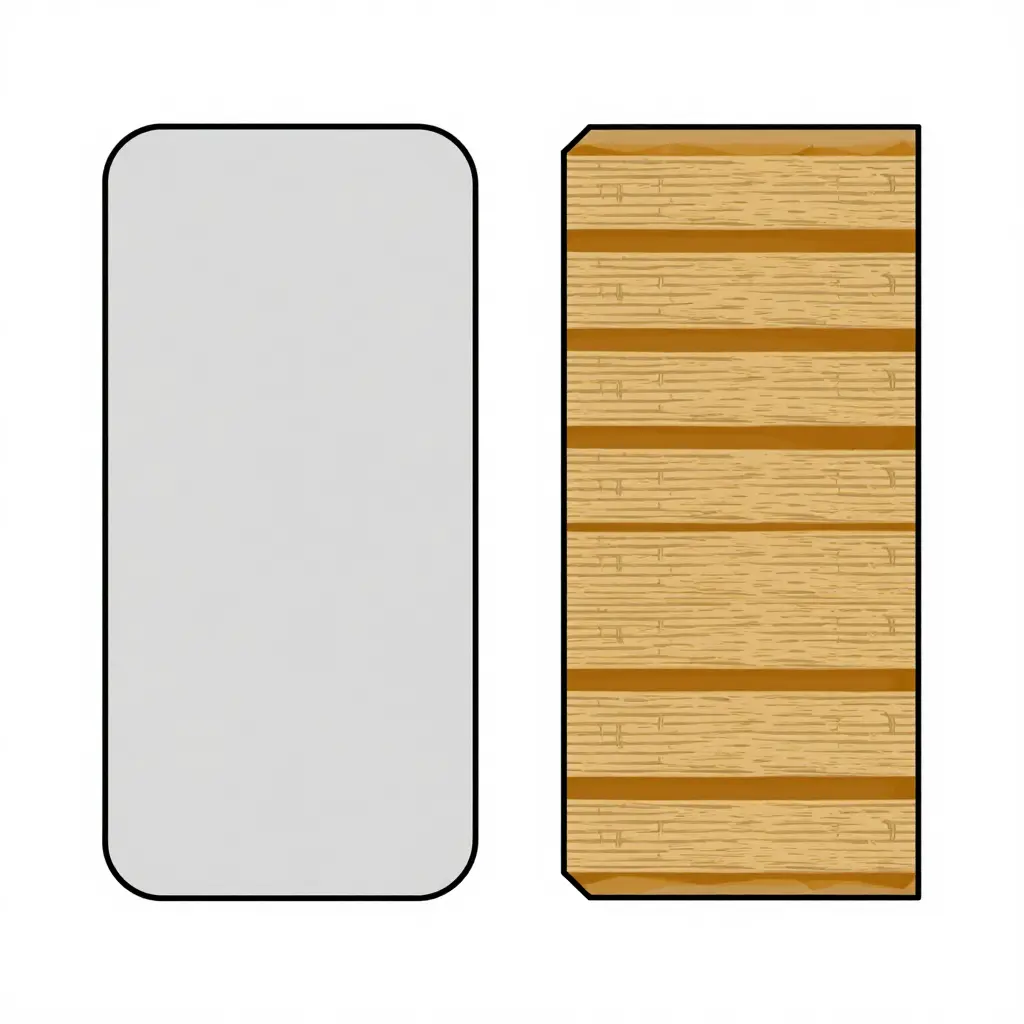
ABS takes impact by flexing, so it scuffs or bends first. Fiberglass resists deformation but can shatter, crack, or delaminate once the force is strong enough. The practical point is to match the material to the conditions you actually ride in.
Which Material Fits Better?
Fit is not really about the material label. It is about tooling and molding accuracy. Two fairings made from the same resin can fit completely differently if one came out of a worn mold and the other out of a fresh, well-machined one.
ABS injection-molded panels are shot into a steel mold under high pressure, so every panel that comes out is essentially a clone of the last one. That repeatability gives you consistent, tight panel gaps and mounting points that land where the factory intended. For genuine fairing fitment, it is the standard to beat.
Fiberglass panels are laid up by hand inside a mold. How well they fit depends on the quality of that mold and on how much finishing work the builder did afterward. Reproduction glass often arrives close, but not perfect. Expect to trim edges, slot a hole, or shim a bracket to get it sitting right.
Mounting Points and Bolt-Hole Alignment
Good bolt-on fairings should line up with the stock tabs and frame bosses without drama. On ABS, bolt holes usually drop straight in. On fiberglass, holes are often pre-drilled slightly off, and you may need to open them up so nothing binds or cracks when you torque them down.
Panel Gaps and Flex Under Heat
Fairing panel alignment lives and dies by the gaps. ABS holds a stable shape and keeps those gaps even. Fiberglass can shift if the layup was thin or uneven, and both materials flex when the engine heats the plastics, though thin glass tends to move more.
Drilling Requirements
ABS rarely needs drilling. Fiberglass frequently does, so measure twice, tape the surface, and use a sharp bit to avoid spider cracks.
Practical takeaway: if you want a predictable, quick install, molded ABS wins. If you are chasing a custom shape, fiberglass can get there, but budget time for fitting.
Material Performance: ABS vs Fiberglass, Scored Head to Head
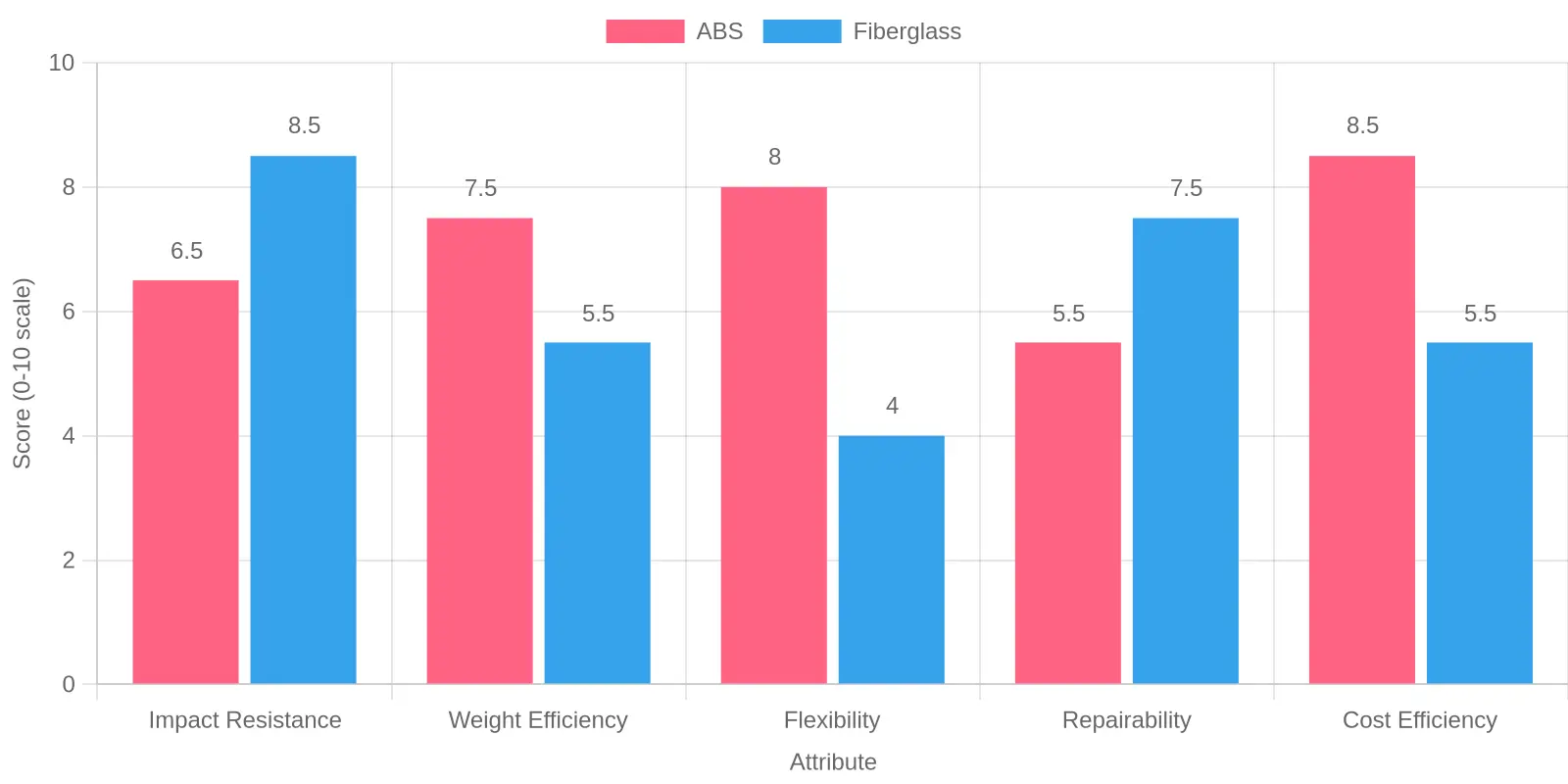
The table and chart below score each material on a 1-10 scale, where 10 means “best-in-class winner” and 1 means “we’d rather not.” The numbers back up the fit and durability points above.
The Underlying Data
Here are the exact values behind the chart, so you can judge the trade-offs yourself:
| Attribute | ABS | Fiberglass |
|---|---|---|
| Impact Resistance | 6.5 | 8.5 |
| Weight Efficiency | 7.5 | 5.5 |
| Flexibility | 8.0 | 4.0 |
| Repairability | 5.5 | 7.5 |
| Cost Efficiency | 8.5 | 5.5 |
What the Bars Tell You
Fiberglass takes Impact Resistance (8.5) and Repairability (7.5). Its rigid structure explains the first score, and the second comes from the fact that a competent shop can lay fresh mat and resin over a crack instead of replacing the whole panel. ABS counters on everyday practicality: it sweeps Flexibility (8.0), Weight Efficiency (7.5), and Cost Efficiency (8.5), meaning it bends under stress instead of shattering, keeps the front end lighter, and hits a friendlier price point when you need a quick replacement.
Those scores pull in opposite directions when a bike goes down. Fiberglass resists deformation; ABS absorbs it. Which one you want depends on whether you are protecting against a parking-lot tip-over or a hard hit at speed.
Viewed from ownership rather than a spec sheet, fiberglass rewards you on the hardest hits but asks more money and skill on the back end, while ABS rewards you on fit, weight, and budget. For plenty of riders, especially those who care about clean panel gaps and shrug-off-the-parking-lot-tip-over durability rather than track-level impact, ABS quietly wins the overall value column. Match the material to how you actually ride, and you’ll spend less time in the garage and more time on the road.

Quick visual decision path: start on the left and follow the arrows through the rectangular decision nodes until they split into two outcomes, pointing you toward ABS or fiberglass based on your priorities (impact tolerance versus easy repair and finish).
Repair and Maintenance After a Drop
Both materials can be repaired, but they demand different approaches on the workbench. Here is how each one behaves.
Repairing ABS
ABS is a thermoplastic, which makes it genuinely forgiving. A shop can plastic-weld a crack using a hot-air welder and matching filler rod, heat-form a warped panel back into shape, or patch smaller splits with a reinforced epoxy. ABS also takes repaint well, so a skilled painter can blend a repaired crack until it disappears. A typical fairing repair like this runs 1 to 3 hours, usually $80-$300 per panel, and sits comfortably within the reach of a confident DIYer. The catch is that a badly shattered ABS panel can only be welded so many times before it loses rigidity.
Repairing Fiberglass
Fiberglass is a thermoset composite, so it rarely “melts” back together. Instead, a technician sands the damaged area back to bare material, re-lays fiberglass mat with fresh resin, then blocks and repaints the cured patch to blend with the surrounding gelcoat or paint. A proper cracked fairing fix here is more labor-intensive, often 3 to 8 hours, and typically costs $150-$600. The upside is strength: a well-laid fiberglass repair is often structurally sound, sometimes stronger than the original panel.
Time, Cost, and Skill at a Glance
| Factor | ABS | Fiberglass |
|---|---|---|
| Typical time | 1-3 hours | 3-8 hours |
| Typical cost | $80-$300 | $150-$600 |
| Skill level | Beginner to intermediate | Intermediate to advanced |
| Repaint blending | Excellent | Excellent after sanding |
| Best use case | Cracks, minor warping | Structural cracks, large holes |
Which Material Do Shops Prefer?
For structural damage, most repair shops lean toward fiberglass. Because the material can be built up layer by layer with mat and resin, a technician can restore real load-bearing strength rather than just closing a gap. ABS gets the nod for cosmetic cracks and quick turnarounds, while fiberglass wins when a bracket, mount, or large section has taken a hard hit.
Maintenance Tips That Save You Money
- Wash and inspect fairings after every drop or slide, and address small cracks before they spread.
- Keep an eye on mounting tabs and bolt holes, which crack first.
- Store the bike out of direct sun to slow UV degradation.
- Match your repair method to the damage: quick patch for ABS, full re-lay for fiberglass.
Fix it early, keep it clean, and even a hard drop turns into a weekend project instead of a new set of plastics.
Frequently Asked Questions About ABS vs Fiberglass Fairings
Are ABS fairings as strong as fiberglass?
ABS fairings are strong in terms of impact resistance and flexibility, but they are not as rigid as fiberglass. Fiberglass has higher tensile strength and stiffness because of its woven glass fibers and cured resin matrix. In any comparison of ABS vs fiberglass fairings, fiberglass usually wins on pure structural strength, while ABS wins on flexing without cracking.
Which material survives a drop better?
ABS plastic tends to survive a low-speed drop or tip-over better than fiberglass. It flexes on impact and often springs back into shape, where fiberglass is rigid and can crack, splinter, or shatter. At higher speeds both materials can fail, but ABS generally bends where fiberglass breaks.
Which is cheaper to replace?
ABS fairings are usually cheaper to replace because they are mass-produced through injection molding. A single damaged ABS panel can often be swapped out for less money than repairing fiberglass. Fiberglass repairs require sanding, new resin, and repainting, which adds labor cost.
Do fiberglass fairings need painting?
Most fiberglass fairings arrive as bare gelcoat or unfinished panels and need primer and paint to match your bike. The raw gelcoat protects the fiber but rarely matches OEM colors. ABS fairings are typically sold pre-painted, so they are ready to bolt on.
Will aftermarket fairings fit my OEM mounting points?
Most quality aftermarket fairings are designed to fit OEM mounting points, but fitment varies by brand and model. Inexpensive kits may need drilling, trimming, or shimming to line up correctly. Always confirm the kit is listed for your exact year and model before buying.
Which material is better for track use?
Fiberglass is generally better for track use because it is stiffer and easier to repair in a pit garage, and many racing organizations require fiberglass or similar composites for safety. ABS is more common on street bikes, where durability and low cost matter more. Fiberglass carries a weight penalty, which is why some racers still weigh the trade-off.
The Bottom Line: Which Fairing Fits and Survives Best
After weighing fit, durability, and cost, the ABS vs fiberglass motorcycle fairings debate comes down to what you actually need from your bike.
ABS fairings win on convenience. They flex into place with less fuss, tolerate minor drops and vibrations without spider-cracking, and cost noticeably less upfront. For most riders, that forgiving fit and reasonable drop tolerance is the reassurance they want.
Fiberglass is the other kind of answer. It feels rigid and solid, holds crisp panel gaps, and can be repaired and refinished again and again. That strength comes with trade-offs: extra weight, more sanding and painting, and a higher price tag.
Who Should Choose What
- Daily street riders: Go with ABS. The easier fit, lower cost, and ability to shrug off small parking-lot drops make it the sensible everyday choice.
- Track and racing riders: Choose fiberglass. The rigidity and repairability matter more than a little extra weight when you are chasing consistent performance and rebuilding after a slide.
- Repair shops handling frequent damage: Keep fiberglass on hand for customers who want lasting, refinishable panels, but stock ABS for fast, budget-friendly turnarounds.
Practical Takeaway
Street riders should buy ABS for easy fit and low cost, while track riders and shops dealing with repeated damage should invest in fiberglass for its rigidity and repairability.
Sourcing Fairings That Fit and Last
Choosing the right material – whether ABS or fiberglass – only solves part of the problem. Even the best plastic or composite won’t sit flush or survive a drop if it comes from a supplier who cuts corners. Where you source your fairing matters as much as what it’s made of.
This is where model coverage and consistency come in. A supplier who understands hundreds of bike models knows the small differences in mounting points, tab angles, and panel gaps that decide whether a fairing fits like factory or fights you the whole way. Miss those details and you’re left drilling extra holes, chasing rattles, or watching cracks appear after the first slow tip-over.
That’s the case summitfairings.com makes for itself. The shop carries over 3,000 styles across almost all motorcycle models, so the odds are strong that your exact bike is covered. It also claims buyers pay 10-40% less than prices on other sites and that any question receives an answer within six hours.
Support like that is worth seeking out. A fairing supplier earns trust the same way a steel fire apparatus does – through consistent work over years, not one good sale. If you already compare options carefully, the way people study fire trucks for sale before committing, you’ll appreciate a catalogue that shows its coverage up front.
Pick the right material, then pick the right supplier. Get both right and your fairing will fit, last, and cost less.