
Fire trucks are the frontline heroes of emergency response, equipped to battle blazes and save lives. But have you ever wondered how many gallons of water and foam they actually hold? This exploration dives into the different types of fire trucks and their distinct capacities, catering to the needs of aspiring firefighters, fire truck enthusiasts, and seasoned professionals alike. From small urban units to heavy-duty firefighting machines, we’ll uncover the specifics of water and foam capacities. Next, we’ll assess how these capacities are tailored for specialized uses, followed by a look into the standards and regulations set by NFPA that govern these vehicles. Together, this journey aims to enlighten firefighting aficionados about the essential figures that can make or break an emergency response.
Gallon by Gallon: The Real-World Capacity of Fire Trucks and What It Enables
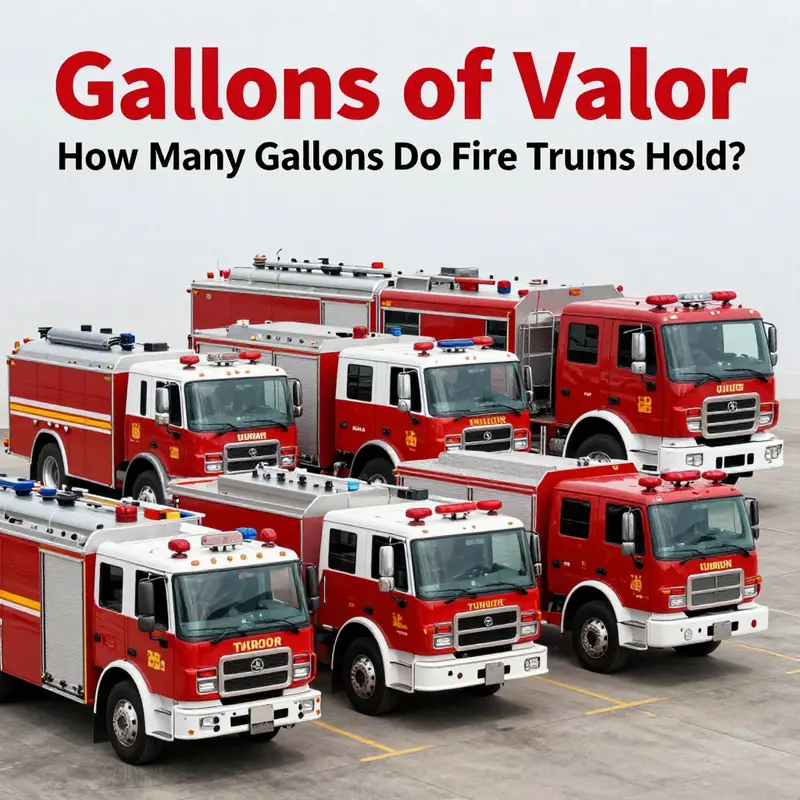
When a fire alarm sounds, every moment and every gallon counts. The water a fire truck can carry is more than a mere figure on a spec sheet; it is a gauge of risk, a limit on how long crews can work without refilling, and a driver of tactics that determine whether a structure survives a blaze or succumbs to it. The trajectory from a hydrant to a center of flame to a successful knockdown hinges on capacity. Across fire departments and across terrain, the gallons aboard a truck shape not only the immediate action at a fire scene but the broader choreography of a response, from rapid initial attack to long-duration operations on the edge of a remote wildfire or during a high-rise rescue where access is everything. To understand how many gallons fire trucks hold is to glimpse how departments tailor their fleets to the landscapes they protect, the materials they confront, and the timescales of the incidents they routinely face. It is also to appreciate why a single number, be it 150 gallons or 4,000, rarely tells the whole story of a vehicle’s power on the ground.
The most visible variation in capacity arises from the mission for which a vehicle is built. Urban environments favor mobility, quick access, and close water sources, often translating into fleets that prioritize pump capacity and reasonable onboard storage. Rural and wildland settings demand endurance and distance, which pushes a higher onboard volume and sometimes the inclusion of tanker configurations designed to shuttle water from distant sources to the scene. High-rise hazard zones require reach and access as much as water; hence aerial ladder units frequently carry smaller tanks, since their utility lies as much in elevation and rescue as in sustained water delivery. In this sense, capacity is not simply about how many gallons a truck can hold, but how those gallons are deployed in the choreography of firefighting.
Among the broad categories responders rely on, pumper or engine trucks sit at the core of most urban and suburban departments. These workhorses combine a pump and a sizeable onboard reservoir, with the tank size typically falling in the hundreds to low thousands of gallons. The standard range for onboard water tanks on many pumpers is roughly 500 to 1,000 gallons, a capacity that supports direct attack from a hydrant or a nearby water source while enabling rapid deployment of water through the pump lines. Some larger pumpers push the envelope toward 1,500 gallons, expanding the initial attack envelope and buying more time before refilling is required. The draw here is clear: enough water to begin an aggressive, uninterrupted knockdown while firefighters establish a more stable supply through hydrants, portable tanks, or a system of feed lines from a larger source. That balance—moderate onboard capacity paired with high pump capacity—defines a typical urban response profile and explains why many municipalities standardize around tiered fleets rather than one-size-fits-all giants.
Aerial ladder trucks—those stately machines with long, extending booms and rescue platforms—present a different calculus. Their chief value is access: reach, elevation, and the ability to operate at height while maintaining firefighter safety and victim extrication. Their onboard water tanks are usually smaller, commonly in the range of 250 to 500 gallons. This does not imply a deficiency; rather, it reflects an operational emphasis: the ladder acts as the platform for rescue and exposure control, while water delivery is accomplished through a combination of external supply, remote monitors, and, when necessary, the vehicle’s own pump. In practical terms, an aerial unit can deliver water efficiently to the upper floors of a high-rise or through a window at a greater distance, then pivot to support the crew with a reliable stream while additional water is brought in from hydrants or from a tanker shuttle. The limited onboard volume is offset by access to external sources and by the mobility and reach the aerial structure provides.
Tanker or water-hauler trucks tell a different, rugged story. In rural areas where hydrants are sparse or non-existent, fire departments rely on these giants to carry hundreds or thousands of gallons toward the scene, with the expectation that they will shuttle water to the fire ground from distant sources. Capacity ranges widely—but a common span is 1,000 to 3,000 gallons, and in specialized cases it can exceed that, sometimes reaching or surpassing 5,000 gallons. The practical effect is a longer window of uninterrupted attack before refilling becomes essential, a scenario that changes the tempo of the response. Refill operations along a road, a field, or a staging area become a critical element of strategy, with crew members tasked not only with fire suppression but with the logistics of water management: where the next load will come from, how many trucks are needed to maintain a steady stream, and how to sequence pumps to maximize nozzle pressure and reach. Tankers thus anchor the network of water supply in remote terrain, ensuring that even far from hydrants, steady progress toward containment remains possible.
In the specialized domain of foam-attack or foam-assisted suppression, the story of capacity becomes a two-track narrative. These trucks carry both water and foam concentrate, a combination that dramatically boosts suppression effectiveness for fires involving fuels or chemicals. The onboard water capacities for these units commonly sit in the 500 to 1,000 gallon range, mirroring pumper configurations in many cases, but the defining feature is the integrated foam system and the ability to proportion foam into the water stream. The presence of foam concentrate means that a smaller water tank can be leveraged more effectively against certain kinds of fires, extending the reach and impact of each gallon through chemical action that creates a better blanket on the fuel surface. This is not simply a matter of adding more water; it is about optimizing the chemistry and delivery rate to maximize suppression while minimizing the need for continuous refilling. The practical upshot is a fleet capable of facing complex, high-risk environments with a versatile toolkit, where capacity remains a foundational constant even as the tactics become more nuanced.
Beyond these core categories, there are rescue and combination units designed to respond to incidents with multiple hazards. These multi-purpose vehicles may carry modest water tanks, often around 250 to 500 gallons, but they bring a suite of tools for extrication, hazardous materials control, and rapid victim access. The value of these vehicles is not primarily measured in gallons on board but in the breadth of capabilities they bring to a single mission, enabling responders to switch from water-based suppression to rescue operations without waiting for a separate unit to arrive. The interplay of limited water and robust tools creates a mode of operation in which the team moves fluidly between suppressive actions and lifesaving interventions, with capacity serving as the backbone to a broader, more flexible response framework.
To appreciate how these numbers translate in real-world terms, it helps to connect them to the scenarios that fleet planners and firefighters confront daily. In a compact urban block with ready hydrants and dense occupancy, a pumper may deliver a rapid initial flow from its onboard tank, likely around the midpoint of the typical range. The objective is to reach a position where water supply remains steady while the hydrant system, a secondary critical resource, is reinforced by a series of connect-and-dump tactics and the inevitable refill cycles that will occur as soon as the truck team can access a nearby station or a siphon inlet. In a rural setting, the same pumper might be working more closely with a tanker shuttle, turning the wheels of a coordinated transfer operation to sustain a longer attack. Here the onboard capacity matters as the first leg of a journey toward a larger supply network, with multiple units feeding a water path across the distance to the blaze.
Foam-attack units illustrate another dimension of capacity in context. When a fuels-fire or chemical hazard is present, the water-to-foam ratio becomes a critical parameter that engineers and crews monitor constantly. The foam system extends the effectiveness of each gallon by reducing flammable vapor and creating a more stable surface on which the fire can be cooled and suppressed. In practice, this means a fairly modest water tank can become a potent tool when paired with the right foam concentrate and precise metering. The result is a fleet that can address high-risk incidents with a leaner water load while maintaining strong suppression capability, a balance that contributes to safer operations and shorter exposure times for responders and occupants alike.
Another layer of complexity in capacity emerges when we consider the numbers in liters or the global variations in how water is stored and deployed. A common international conversion shows that 1,000 gallons roughly equal 3,785 liters, a figure that helps readers translate local fleet specifications across regions. When a quoted capacity shifts from gallons to liters, the same principle holds: the larger the onboard supply, the longer crews can sustain a sustained attack before demanding a refill. Yet even this metric should be read in conjunction with pump performance. A 1,000-gallon tank paired with a pump capable of delivering several hundred gallons per minute provides a different operational tempo than a larger tank with a more modest pump. The ratio of water on board to water delivered per minute is the heartbeat of a fire engine’s effectiveness, and it is this equation that drivers and incident commanders watch as they decide how to deploy resources, create attack lines, and allocate personnel across the scene. In practice, capacities are not a single hinge point; they are one axis of a multidimensional performance profile that includes pump power, hose layout, nozzle selection, and the available external water sources that ultimately sustain the operation.
What this means for the reader who is trying to gauge how many gallons a fire truck holds is to look beyond the headline figure and into the mission profile the vehicle embodies. A pumper’s 800-gallon onboard tank is not interchangeable with a tanker’s 3,000 gallons, just as an aerial unit’s 400 gallons is not designed to meet the same demands as a dedicated water shuttle. The numbers exist to support strategy: where will the attack originate, what sources are accessible, how long will the operation last, and how quickly can the team move from suppression to containment and rescue? In that light, the capacity of fire trucks is a practical language spoken by the engine company and the command staff, translated into tactics that save lives and protect property in a theater that is constantly evolving with weather, topography, occupancy, and fuel loads.
To ground these reflections in concrete figures drawn from recent analyses, consider the range summarized by standard references. Pumper trucks typically offer onboard water capacities from about five to ten hundred gallons, with some models stretching to as much as 1,500 gallons for longer initial attacks. Aerial ladder trucks, valued for reach more than volume, usually carry 250 to 500 gallons onboard. Tankers provide the maximum onboard volumes in rural and remote contexts, commonly 1,000 to 3,000 gallons, while larger or specialized configurations can exceed that range under particular design constraints. Foam-attack units generally mirror pumper capacities in water storage but pair them with foam concentrate that enables more effective suppression for certain fuels and chemicals. Rescue and combination units, balancing tools with water, often hover in the range of 250 to 500 gallons with a strong emphasis on the non-water capabilities that define their role. While these numbers offer a guide, the reality of any given fleet will reflect local priorities, geography, and incident history, a calculus that keeps a community prepared for both the inevitable flame and the unexpected crisis.
The implications for readers who are considering how many gallons a fire apparatus should carry are clear. Departments facing dense urban grids may prioritize reliable access to hydrants, rapid deployment, and a pump with strong GPM alongside an onboard tank that supports immediate attack. Rural departments may emphasize tanker capacity and shuttle operations, ensuring water can move between distant sources and the scene without lengthy interruptions. In high-risk environments such as high-rise districts or chemical plants, the blend of capacity with specialized systems—foam, hazardous materials tools, and rescue equipment—defines the overall resilience of the firefighting response. Fleet decisions are thus about balancing many needs, with water capacity as a central, but not solitary, pillar of efficiency and safety.
For readers who want to explore how fleets translate these numbers into current options, a practical path is to examine the broader landscape of available apparatus. While the specific configurations vary by region and department, the underlying logic remains consistent: match water supply with anticipated demand, ensure reliable water delivery through pumping and external supply, and pair the capacity with a toolkit that enables crews to handle high-risk scenarios without compromising safety. Those decisions are not made in isolation; they are informed by past incidents, response times, geography, and the logistics of recurring missions. They also reflect a nuanced understanding that capacity is a moving target, shaped by evolving tactics, fuel loads, environmental conditions, and the continuing push toward more versatile, safer, and more effective firefighting systems.
As you continue exploring this topic, you may find it helpful to compare how different departments design their fleets to reflect local realities. A practical way to engage with this is to explore fleet pages and current listings that illustrate how capacity is balanced with other features, such as pump capacities, hose layouts, and modular rescue tools. For readers curious about available fleet options, the fire trucks for sale pages can provide context on how capacities are implemented across real-world configurations. These pages illuminate how a department might scale up or down its onboard water supply to match its typical call profiles, all while maintaining the agility needed to operate in fast-changing conditions. This is not just about purchasing; it is about building a resilient response fabric that can adapt to the demands of a city street, a country road, or a remote hillside.
The conversation about gallons also intersects with global standards and the ongoing evolution of firefighting engineering. While the practical numbers above describe common ranges, designers and researchers continually refine how capacity, weight, pump performance, and access points align with safety regulations and best practices. The goal is to ensure that every delivered gallon is deployable with maximum effectiveness, that crews can sustain operations long enough to protect vulnerable occupants, and that the system remains under control even as a scene evolves from rapid suppression to containment and overhaul. The result is a dynamic, data-informed approach to capacity that respects both the physics of water flow and the human factors at the heart of every incident. In this light, gallons are more than a statistic; they are a measure of preparedness, coordination, and the courage to press forward when the clock is ticking.
For further reading that situates these practical numbers within a broader framework of firefighting design and standards, consider consulting external resources that summarize design considerations and operational guidelines. Fire Engineering offers a comprehensive overview that complements the figures discussed here, situating capacity within the wider context of fire department operations and engineering principles. This broader perspective helps readers appreciate why a given capacity number matters, how it interacts with pumps, hose lines, and external water supply, and how modern apparatus are engineered to maximize performance while prioritizing safety and efficiency on every mission.
In sum, the question of how many gallons fire trucks hold cannot be answered with a single universal figure. It hinges on the role the vehicle plays, the environment in which it operates, and the tactical approach that responders must adopt. The numbers—from a few hundred gallons to several thousand—reflect a spectrum of design choices aimed at delivering water where it is needed most, when it is needed most. They reveal a profession that is both deeply practical and relentlessly adaptive, one that treats water not as a simple commodity but as a critical resource that, when managed wisely, saves lives, protects homes, and preserves communities across a mosaic of landscapes. If you carry this understanding into field conversations, you will recognize that every department’s fleet is a carefully engineered compromise: the balance of gallons, pumps, hoses, foam systems, and rescue tools that together form a capable, cohesive response machine.
External reference: https://www.fireengineering.com/
Tank Ecology and Terrain: How Gallons Shape Specialized Firefighting Across Wildland, Industrial, and Rural Missions
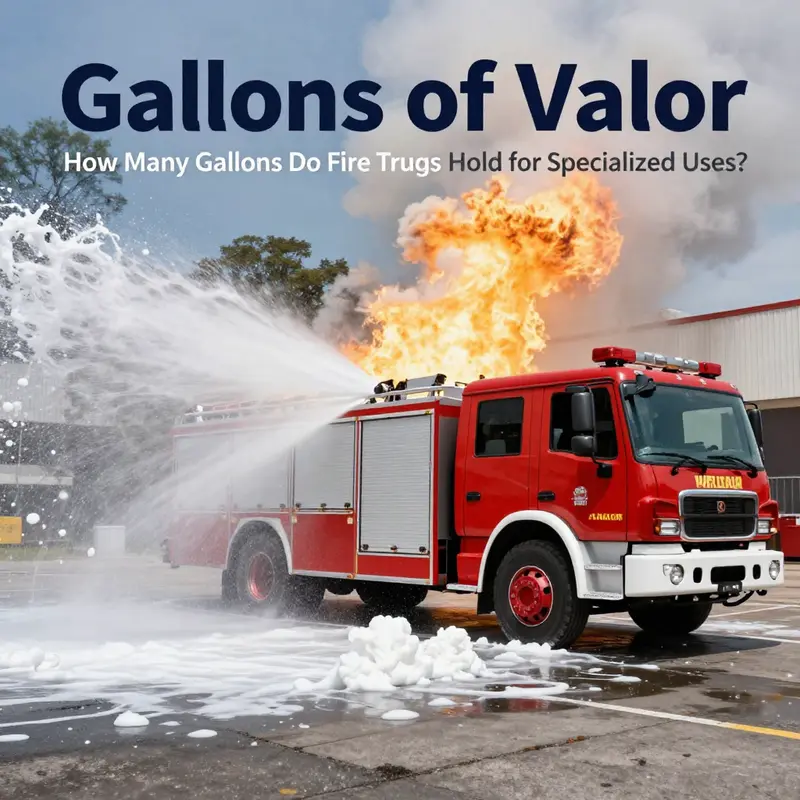
The question of how many gallons a fire truck holds goes beyond simple capacity. In the world of specialized fire suppression, gallons become a strategic resource. They define how long a unit can operate between refills, how far it can push into rugged terrain, and how quickly it can establish a reliable water presence in environments where hydrants are scarce or nonexistent. The broader topic of water and foam capacity in fire apparatus is not just about raw numbers. It is about the tactical implications of those numbers—how they enable steadier progress through difficult terrain, how they support multi-agent suppression strategies, and how they align with the specific demands of industrial settings, wildland interfaces, and remote communities. When we examine specialized uses, the scale of the tank is only one dimension of a larger system that must balance weight, fuel consumption, maneuverability, pump performance, and the logistics of refilling in sometimes unforgiving landscapes. In that sense, the gallons carried are the visible tip of a much larger iceberg of design and operational thinking.
Wildland and wildland-urban interface operations illuminate one end of the spectrum. In these theaters, fire teams often pair large water tanks with shuttle operations. A vehicle designed for rural or WUI zones typically carries a water tank that enables it to move between natural water sources—ponds, streams, even portable dew collects—while refilling pumper units that carry the brunt of extinguishing power. Tanks in this category commonly range from about a thousand to three thousand gallons, depending on the vehicle’s base design and its role within the larger fleet. The philosophy is clear: a big, rugged tank reduces the frequency with which the crew must abandon the line to rejoin a water source, a critical advantage in environments where roads are rough, access is limited, and the fire line advances with a stubborn pace. These are not high-pressure urban pumpers built to slam water through a nozzle far above street level. They are purpose-built to ferry steady streams of water to a line, provide sustained cooling, and allow crew chiefs to orchestrate shuttle refilling without losing momentum. In some configurations, foam concentrates and additional agents are stored in dedicated compartments or integrated into the tank, smoothing transitions between water supply and targeted suppression tasks. The exact blend depends on the anticipated fuels and the design philosophy of the department or the industrial operation that will rely on the vehicle.
Industrial settings, by contrast, demand very different scales of water and foam delivery. Large industrial sites like refineries or chemical plants may employ specialized fire engines with significantly larger capacities—capabilities measured not merely in gallons but in gallons per minute and integrated foam or dry chemical systems. A representative industrial-style engine can approach three thousand gallons in water capacity, often combined with a substantial foam supply. In practice, engineers configure these machines to deliver a rapid surge of water to suppress heavy flames while deploying foam in appropriate ratios to blanket hydrocarbon fuels and other hazards. The foam component matters as much as the water; in industrial contexts, dedicated foam tanks are common, sometimes with tens of thousands of liters of foam concentrate available in optimized storage. The selection of foam concentrate, the proportioning system, and the tank’s volume all shape how an industrial unit behaves during a complex incident. The capacity to alternate between water and foam without lengthy halts is the heartbeat of these configurations, allowing responders to sustain attack and cooling while keeping ignition risks in check.
Rugged off-road engines used in rural or remote locations broaden the picture again. When fire teams operate far from hydrants, the ability to carry large volumes becomes an operational imperative, but so does the ability to move over rough terrain without compromising essential systems. Large, off-road units emphasize suspension, driveline durability, tank protection, and reliability under vibration. They frequently feature tanks that exceed the typical rural pumper capacity and are engineered to withstand sustained bumpy travel. In some designs, the water tank is complemented by a separate foam tank, sometimes with capacities that rival urban units in terms of total volume. It is not unusual for such vehicles to be configured to shuttle between natural water sources and refilling points, maintaining a steady supply as crews push a line toward a hot edge or move heavy fluids to the most congested part of the incident. The key difference here is terrain and endurance. The drivers and operators must contend with soft ground, steep grades, and the fatigue of long stroke times. The best of these machines pair a respectable tank with dependable pumps and efficient mechanicals, so the workload stays manageable even when the terrain seems intent on slowing momentum down.
Across these specialized domains, the idea of “tank size” blends with another crucial dimension: how a truck interacts with its pump. A vehicle’s pump capacity—whether measured in gallons per minute or liters per minute—must harmonize with tank size to deliver the intended effect. A large tank on a marginal pump can become a liability if the crew exhausts water faster than the system can supply. Conversely, a robust pump on a small tank can force rapid refill cycles that interrupt suppression work. The design philosophy evolves from the expected mission profile. In wildland work, the priority often leans toward endurance and the ability to refuel efficiently in the field. In industrial contexts, the priority shifts toward rapid application and precise foam delivery to suppress hazardous liquids. In rural equipment, the balance is between the capability to reach water sources and the capacity to deliver sustained flows over uneven ground. Each scenario has a different formula for the optimal ratio of tank volume to pump output, and the best fleets reflect a careful choreography of these factors rather than a single universal standard.
Foam, as a distinct suppression agent, adds another layer of complexity. Foam concentrates are not interchangeable with water; their effectiveness depends on the correct mixing ratios, the type of foam, and the underlying fuels involved. A dedicated foam tank, sometimes part of a hybrid water-foam system, creates a multi-agent approach that can dramatically alter the pace of suppression. In many specialized units, foam is stored in a separate compartment with an integrated metering system, allowing responders to deploy foam precisely where it is needed. For some industrial applications, the foam portion can be substantial enough to rival the water volume, particularly when the hazard involves hydrocarbon fuels that require multi-layered cooling, vapor suppression, and a blanket that prevents reignition. A truck rushing toward a refinery fire with a 3,000-gallon water tank and a 1,000-gallon foam tank operates very differently from a standard urban pumper that depends primarily on water to bring a fire under control. This dual capacity changes tactics, enabling a range of attack modes: direct cooling of the surface, injection of foam to disrupt the fuel layer, and the gradual filling of extinguishing tanks that can be moved to keep up with the fire as it migrates through a facility.
The heterogeneity of specialized fleets also reflects a broader logistical philosophy: it is better to deploy a fleet of purpose-built machines than to rely on a single multipurpose unit for every task. Some crews may use smaller, nimble trucks for initial attack, with larger, high-capacity units arriving later to deliver the sustained flow or to supplement foam delivery. In many cases, a dedicated foam truck sits alongside the water tender and the standard pumpers, forming a triad of capabilities that can be deployed in sequence or in parallel, depending on the incident’s demands. The tactical value of such arrangements becomes clear only when responders can coordinate actions without waiting for a different truck to reposition or refill. The planning that precedes a response—station placement, mutual aid agreements, and fuel and foam logistics—assumes a certain distribution of tank volumes across the fleet. That distribution, in turn, is shaped by the anticipated terrain, the available water sources, and the typical duration of operations in a given region. In short, the gallons carried by specialized fire trucks are a reflection of the terrain they are built to conquer and the kinds of fires they are built to fight.
For readers seeking a broader perspective on how fleets tailor their vehicles to diverse environments, there is a useful line of thought in the field about developing-country solutions. The challenge often centers on delivering effective, cost-conscious options that still meet stringent safety and performance standards. This approach recognizes that the perfect unit for every locale does not exist; instead, a portfolio of vehicles—each with a clear specialty and a defined range of capacities—can deliver the most reliable protection across varied landscapes. The idea is not to standardize on a single configuration but to assemble a flexible toolkit where each element plays a precise role in a larger suppression strategy. The emphasis is on compatibility, resilience, and the ability to scale response through a balanced mix of tank volumes, pump capabilities, and agent delivery systems. This mindset complements the increasing interest in modular, customizable fire apparatus designed to address specific regional hazards, whether in dense urban cores, sprawling rural frontiers, or industrial ecosystems that demand rapid, multi-agent suppression. The practical takeaway is that specialized capacities matter, but they matter most when they are integrated into a coherent operational framework that teams can trust under pressure.
This broader conversation circles back to the core question with greater nuance: how many gallons should a specialized fire truck hold? The answer is not a single figure but a spectrum shaped by mission, geography, and the interaction of water, foam, and suppression tactics. A rural wildland engine may prioritize higher tank volumes to reduce refills on long stretches of roadless terrain, while an industrial engine might lean toward larger foam stores to cope with hazardous liquids. A lean urban WUI setup may optimize for a lighter chassis with enough water to buy time until a hydrant can be reached or a shuttle corridor can be established. In all cases, the tank is a critical enabler of a well-coordinated response. It is the physical embodiment of a strategic assumption: that the incident will demand sustained application of both water and foam, that water access will be intermittent, and that the response will unfold in stages, with different teams contributing distinct capabilities as the fire evolves.
The numbers in any given specification sheet tell only part of the story. They are anchors around which fleet managers, chiefs, and engineers design operational workflows. The real value lies in how those anchors support the crew’s ability to deploy, sustain, and adapt. The shift toward large, specialized tanks is not about inflating capacities for their own sake; it is about enabling consistent, predictable performance in environments where every minute of delay can amplify damage or endanger lives. In the field, the difference between a 1,000- and a 3,000-gallon tank can translate into hours of saved time in shuttle operations or hours of uninterrupted foam application to suppress a hydrocarbon fire. It can also determine whether a crew can stand its ground against a long, spreading burn or must retreat to a lower-risk position while a larger apparatus links up with another water source. These are not abstract tradeoffs but real operational decisions that define the outcome of each incident.
For readers who want to explore the practical design implications of these capacities, the literature on specialized firefighting vehicles emphasizes the importance of context-aware configurations. A vision for a modern, resilient fleet involves addressing terrain constraints, water access, and multi-agent suppression needs. It also means recognizing the value of coordination between heavy, foam-capable units and more agile, water-limited platform trucks. The result is a fleet that can balance endurance with reach, supply with demand, and sophistication with reliability. In that sense, gallons are not merely a static resource; they are a dynamic enabler of strategy, enabling responders to translate training into action with fewer interruptions and greater precision.
Within this framework, a notable idea is the potential for cross-pollination between regional practice and global development priorities. The same challenges that spur a rural department to adopt a high-volume shuttle model also encourage the adoption of modular, cost-effective designs that can be adapted to other regions with similar constraints. The concept of customized firefighting vehicles for developing countries reflects a practical path forward: it recognizes that different communities need different tools, and it asks what combination of capacity, weight, and modularity will deliver the most reliable protection across diverse terrains and budgets. The conversation shifts from “What is the maximum tank size?” to “What is the most effective mix of capacities for the communities we serve, given their water networks, their response times, and their typical fuel costs?” The answer will continue to evolve as new materials, new foam chemistries, and new logistical models emerge, but the guiding principle remains constant: the appropriate gallons are the gallons that fit the mission, not the other way around.
As a practical takeaway for readers examining these questions, consider the following: the capacity you select should be anchored in the incident profile you expect most often in your service area. If you anticipate long shuttle runs across rough terrain with limited hydrants, favor tanks in the three- to four-thousand-gallon range, with a proven refill plan and reliable off-road capabilities. If you are protecting a large facility with heavy hydrocarbon loads, pair your water volume with a substantial foam reserve and a precise dosing system that can deliver consistent blanket coverage. If you operate in a small community with occasional wildland interfaces, a flexible mix that includes at least one high-volume trail-tender and one foam-equipped engine can dramatically extend your suppression envelope without overburdening your budget. The university of practice grows out of real-world testing, training, and continuous refinement of these configurations on drill grounds and in live incidents alike.
For practitioners and policymakers alike, the broader lesson is synthesis. It is not enough to catalog the gallons carried by different classes of trucks; one must understand how those numbers translate into operational capability in the field. That requires a systems view that accounts for pump capacity, hose layout, refilling logistics, travel times, and the coordination that threads together multiple units during an incident. It also requires an openness to redesigned fleets, modular components, and adaptable foam strategies that align with evolving risks. The specialized uses described here illustrate a spectrum of capacities, each chosen to maximize effectiveness in a defined context. They remind us that fire protection is not a single solution but a portfolio that grows more capable when its parts are designed to work together under pressure. In the chapters that follow, we will see how these capacities interact with command structures, communications, and resource management, and how they shape the choreography of modern firefighting across precincts, regions, and nations.
This broader perspective intersects with ongoing discussions about resource allocation, training, and international collaboration. The pursuit of effective specialized solutions invites a balance between cost and capability, ensuring that communities gain access to robust response options without sacrificing safety or reliability. The goal remains clear: to empower responders to respond faster, operate longer, and suppress fires more effectively, no matter where they occur. The gallons carried by specialized fire trucks, then, are more than a statistic. They are a tangible measure of a strategic posture—a way to translate risk into resilience and complexity into capability. It is this translation that drives the design choices, the procurement debates, and the field decisions that ultimately determine the success of a firefighting operation. And as the landscape of threats evolves—from wildfires to industrial hazards to remote-community fires—the capacity to tailor gallons to mission will continue to be a central pillar of modern firefighting practice.
For readers seeking a broader perspective on how these approaches translate into real-world planning and procurement strategies, the field offers extensive resources on customized and mission-specific fleet design. In particular, a detailed exploration of developing-country perspectives highlights how fleets can be sized and configured to meet diverse fire-rescue challenges while remaining cost-effective and adaptable to changing conditions. This line of inquiry reinforces the sense that there is no one-size-fits-all answer to the gallons question; instead, there is a spectrum of viable configurations, each optimized for its own context, and a shared emphasis on reliability, resilience, and mission-focused performance. To situate these considerations within a broader technical discourse, practitioners can consult the technical literature that examines rear-hand-drive configurations and related system designs, which illuminate how engineers balance capacity, pressure, and filtration with the realities of road access and terrain. The ongoing dialogue between field experience and engineering insight continues to shape how departments decide on tank sizes, foam inventories, and multi-agency coordination strategies.
An essential takeaway is that the right figure for gallons holds symbolic weight as well. It signals a department’s readiness to engage a complex emergency with discipline and sufficiency. It implies a plan for sustainment in the field, a network of refilling sources, and a confident capability to deploy foam and water together in service of a safe outcome. As responders across regions adapt to evolving risks, the conversation about gallons in specialized contexts will remain central. It is a reminder that the most effective firefighting is built not on a single heroic act but on a carefully engineered balance of equipment, tactics, and logistics that reproduces reliability in the face of uncertainty.
To connect this discussion with practical pathways, consider how the idea of specialized, mission-driven fleets translates into procurement and training programs. Departments can use these insights to structure their equipment replacement plans, reflect on their water shuttle strategies, and design foam-application protocols that maximize safety and efficiency. Training becomes a critical bridge between the theoretical capacities of trucks and their real-world performance. Drills that simulate extended shutdowns between water sources, foam-dense attack lines, and high-pressure pump operations help teams internalize the rhythms of a long, complex incident. Only by rehearsing the realities of field conditions can crews exercise the confidence needed to exploit the full potential of a carefully chosen mix of gallons across their fleet.
For those who wish to explore this topic further, a broader reference framework for specialized, high-capacity firefighting vehicles highlights how design choices are driven by terrain, hazard profiles, and the practical constraints of different regions. In this vein, the conversation about gallons becomes part of a larger strategic map—one that charts how communities build resilience through tailored equipment, informed by evidence from drills, incidents, and evolving best practices. The journey from tank size to tactical execution is continuous, shaped by new materials, better foam technologies, and improved logistics. As the landscape of fire risk shifts, so too will the configurations that fire services rely on to keep people and properties safe. In that sense, gallons are not merely a stat to memorize; they are a signal of what professionals believe their teams can achieve when equipped, trained, and supported to operate with precision under pressure.
For readers seeking deeper, more technical context on rear-hand-drive configurations and related system designs, the field offers a useful resource that unpacks the practical implications of these choices and their impact on performance in real-world scenarios. https://www.fireengineering.com/technical-guide-to-rhd-fire-truck/
Within this broader framework, the chapter’s exploration of gallons in specialized uses becomes part of a larger narrative about how fire protection adapts to place, risk, and resources. And it points toward a future where fleets can be tuned with even greater precision to meet the demands of growing urbanization, expanding industrial complexes, and the unpredictable geography of wildfire risk. The chapters ahead will continue this thread, examining how command, coordination, and communications systems intersect with equipment design to maximize the impact of every gallon carried and every drop of foam deployed. Meanwhile, the practical implication for today remains clear: when you assess a specialized fleet, you are assessing a carefully constructed answer to the unique challenges of a place, a hazard, and a community. That thoughtful arrangement of gallons—matched to mission—defines not only the capacity to fight fire but the very ethos of modern firefighting in diverse environments.
For further reading on the evolution of customized and mission-specific firefighting vehicles, see the broader discussion on comprehensive customized firefighting vehicles for developing countries meeting diverse fire rescue challenges with cost-effective solutions. Comprehensive customized firefighting vehicles for developing countries meeting diverse fire rescue challenges with cost-effective solutions.
Water, Tanks, and Tactics: How NFPA Standards Shape Fire Truck Gallonage in Practice
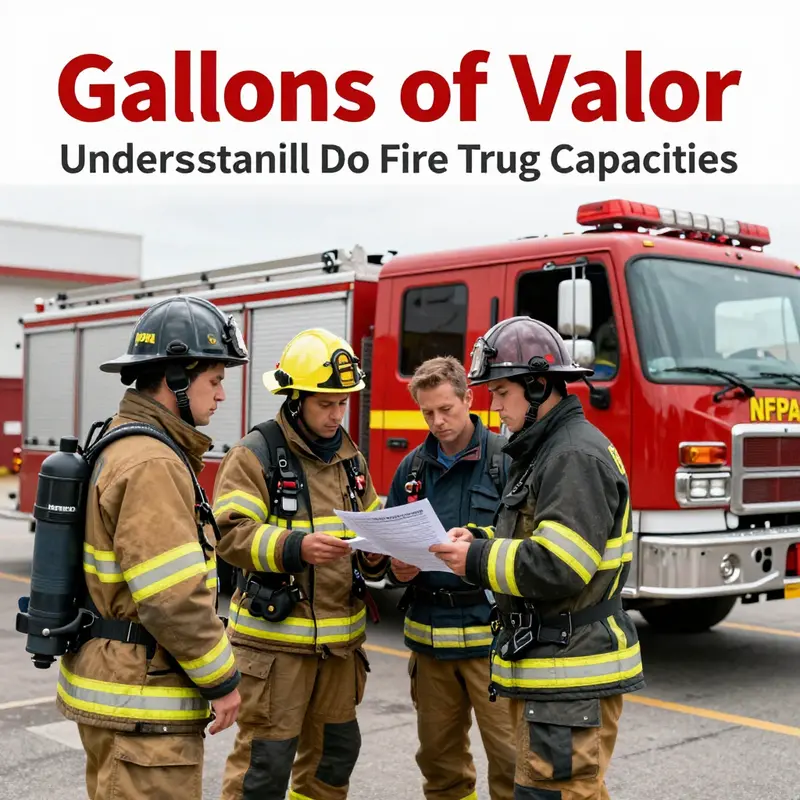
The question of how many gallons a fire truck can hold is not answered by a single number. In practice, tank size is part of a department’s water strategy and the realities of its water supply. NFPA 1901 provides performance-based standards and guidelines, not a universal gallon requirement. As a result, municipal pumpers may carry roughly 500 to 1,000 gallons, while rural engines or water tenders may carry more, and specialized units may exceed several thousand gallons when foam or other agents are involved. NFPA standards emphasize compatibility and performance, leaving tank size to be chosen according to local conditions such as hydrant density, climate, terrain, and mutual aid plans. This means that gallons on one truck are best understood as part of an integrated system rather than a single figure. In many departments, frontline pumpers aim for a balance between pump capacity and on-board water, while tankers and shuttle operations ensure sustained supply where hydrants are scarce. Readers should refer to the current edition of NFPA 1901 for exact requirements, but the core principle remains: tank size is a design decision aligned with water strategy and incident demands, not a fixed universal target.
Final thoughts
In the world of firefighting, understanding how many gallons fire trucks hold is more than just trivia; it can be crucial for effective emergency response. From the nimble urban Type 1 trucks to specialized foam units, each configuration offers unique advantages tailored to different scenarios. Professional firefighters and enthusiasts alike should recognize the significance of water and foam capacities, both as a functional measure of capability and a marker of compliance with essential safety regulations. This ongoing evolution in fire truck technology not only enhances firefighting efficiency but also plays a pivotal role in safeguarding communities. As you continue your journey in this vital field, remember: knowledge is power—and understanding the capacities of your firefighting apparatus is a key part of that.