
The sound of a fire truck is more than just a loud noise; it is a critical communication tool that alerts citizens and clears the way during emergencies. Those passionate about fire trucks, aspiring firefighters, and seasoned emergency responders appreciate the unique auditory signals that fire trucks produce. In this article, we will explore the various siren variations, the environmental impact of these sounds, their role in emergency response, and the technology that helps create them. Understanding these elements will deepen your appreciation for the work these trucks do and their importance in our communities.
The Soundtrack of Urgency: Understanding Fire Truck Siren Variations

Because a fire truck exists to interrupt the ordinary flow of daily life, its sound is engineered to carry through noise, traffic, and distance. The siren is not just a noise; it is a carefully crafted signal designed to command attention, orient people in motion, and help save lives. The modern fire engine operates with a small orchestra of auditory tools—the electric siren, the mechanical siren, and the air horn—each contributing its own timbre, range, and cadence. Taken together, they form a layered soundscape that can be heard across neighborhoods, down busy avenues, and into the far corners of a city at night. The effect is not simply loudness; it is clarity, speed, and a sense of urgency that tells listeners something critical is happening and that they must respond to clear the way.
The most recognizable instrument in this auditory ensemble is the electric siren. It is the high-pitched, oscillating wail that many people associate with emergencies. The familiar pattern—often described as a rising and falling pitch, a “wha-oo-wha-oo” or “whoop-whoop”—is designed to cut through background sounds like traffic, construction, and weather. The rising tones grab attention as the vehicle approaches, and the falling tones signal that it is passing by. This wail is not arbitrary. It exists because humans respond to dynamic changes in pitch more readily than to a steady noise. The electric siren’s alternating pitch acts like a beacon that moves in space, a sonic arrow that travels toward oncoming ears and then away from them, steering crowds and vehicles toward the safest path.
Alongside the electric device, many fire apparatuses carry a mechanical siren, sometimes described as a twin or an air siren. The mechanical siren uses a rotating vane system to generate a deep, pulsating roar. Unlike the lighter, higher-pitched electric wail, the mechanical siren produces a sound that carries with a weighty punch across longer distances, especially in street canyons where buildings can reflect and amplify its force. The mechanical siren’s cadence tends to be more imperceptible to fatigue in certain environments because its pattern can be more abrupt, more insistent, and more penetrating when traffic is dense or when the ambient noise rises unpredictably. The duality between electric and mechanical sirens is not an either–or choice but a deliberate combination that broadens the range over which the vehicle can communicate its approach. In some operations, the mechanical siren can give nearby pedestrians and drivers a different sensory cue—one that feels closer to a rolling drum than to a flute-like wail—while the electric siren preserves the ability to reach farther distances.
A third sonic element, though often reserved for close proximity or special circumstances, is the air horn. A powerful compressed-air device that blasts with a deep, low-frequency resonance, the air horn’s impact is immediate and visceral when a fire truck is nearby or maneuvering through dense traffic. The low-frequency blast can be particularly effective at cutting through the rumble of engines and city sounds, where higher tones may be muffled or overwhelmed. The air horn is not meant to be the primary signal at a great distance; it excels rather in close quarters where drivers and pedestrians are near enough to feel the weight of a solid bass note traveling through the air. By layering the air horn with the electric and mechanical sirens, the crew ensures that the vehicle’s presence is unmistakable in both open spaces and tight corridors alike.
The specific combination of these three systems—the electric siren, the mechanical siren, and the air horn—varies widely across departments and situations. No single department uses the exact same pattern or cadence in every scenario. The choice of which siren pattern to deploy, and when to switch from one to another, is guided by training, local ordinance, and the acoustical realities of the environment. In some cities, the electric siren remains the default, with its high-pitched tones providing the most consistent alert across varied traffic conditions. In others, the mechanical siren may take precedence in situations where the need to puncture deep, distant noise is paramount, such as in areas with heavy street noise or dense building canyons. The air horn may be reserved for near-field communications, to warn vehicles that are almost in the same space as the engine or to alert pedestrians who are about to step into a path that the apparatus intends to occupy.
This variability is not a sign of inconsistency but a recognition that sound travels differently in different places. An electric wail that cuts through a broad urban street may be less effective in a tunnel, where reverberation and echoes can blur the cadence. A deep mechanical roar may be powerful on an open highway, yet too subtle when surrounded by the roar of wind, traffic, and construction in a canyon-like street. The blend of patterns and intensities allows firefighters to tailor their audible footprint to the moment. In practice, responders modulate the tempo and emphasis of the siren pattern to optimize attention—quick bursts to seize the first glimpse of oncoming drivers, longer, steadier wails to secure a lane through a congested intersection, or abrupt pulses when immediate clearance is necessary. The sound thus becomes a form of situational awareness conveyed through air—a sonic language that tells bystanders how to move and where to look.
All of this auditory design is also paired with how the sound is captured and perceived by people outside the vehicle. Sirens are recorded in stereo to simulate the Doppler effect that occurs as the truck approaches, passes, and recedes. The pitch shifts that listeners hear are not merely a trick of the ear; they reflect physical realities. As the engine nears, the listener perceives a rising pitch, then a falling pitch as the truck moves away. That Doppler shift helps the brain gauge distance and speed, which in turn informs how quickly a person must react. The richness of stereo recording—coaxing the listener to sense left-right movement and proximity—adds another layer of realism, helping to approximate the three-dimensional reality of a siren blaring through a street full of pedestrians and vehicles. In teaching materials and public demonstrations, these sonic cues are sometimes reproduced with careful attention to stereo imaging to convey what it feels like to be on the inside of the emergency response or standing at the curb a few yards away from the advancing machine.
For those who want to study or enjoy authentic examples, there are accessible resources that present a range of siren types and patterns. Royalty-free sound effects libraries offer clip after clip of electric wail, yelping, pulsed rhythms, and air horn blasts. These samples provide a useful way to hear the contrasts between patterns and to understand how each element contributes to overall signal effectiveness. The goal of such resources is not simply entertainment. They serve as practical references for educators, drivers, and urban planners who design traffic systems around emergency response times. In the broader discussion of sound design, these audio examples illustrate how the modern fire truck’s auditory signature depends on more than mere volume. It hinges on cadence, timbre, directionality, and context—how the sound travels through streets, past storefronts, and into the quiet of a late-night residential block.
Beyond theory and demonstration, the siren system has real-world implications for safety and behavior. Drivers who hear the electric wail may instinctively scan mirrors and move to the shoulder, understanding that a vehicle is asserting the right of way. Pedestrians may pause, identify the source, and choose whether to cross or stay put. In some neighborhoods, residents learn to recognize particular patterns that a local department uses in routine operations, turning a soundscape into a familiar cue that something urgent is unfolding. The human response to sirens is shaped by prior experience, exposure to emergency vehicles, and the observed behavior of others around them. The goal of these sounds is not to startle but to prompt appropriate action—an instinctive, rapid, cooperative response that helps prevent accidents and accelerates life-saving activity.
An important part of understanding fire truck sounds is acknowledging how audiences access them in the digital age. People increasingly encounter siren recordings in online videos, educational clips, and audio libraries. Short demonstrations can illustrate the distinct vibes of a wailing electric siren versus a robust mechanical roar, and they can reveal how different environments alter the perception of volume and clarity. The public may also encounter curated playlists or royalty-free collections that expose listeners to the breadth of siren timbres and patterns, allowing for a deeper appreciation of why these sounds exist in the world. The auditory vocabulary of fire trucks—the yawing arcs of electric sirens, the throbbing pulse of mechanical devices, the bass-driven accent of air horns—forms a small but telling chapter in the larger story of urban soundscapes and public safety.
The practical upshot of all this is that the fire truck’s sound is a tool, deliberately designed and contextually deployed. It is not a single note but a dynamic mix tuned to the place and moment. It is a language of urgency that is learned through experience, training, and repeated exposure. It is a reminder that sound, in this realm, can save lives by shaping behavior as surely as flashing lights or the sight of a uniformed crew. The soundscape of an approaching fire engine is thus a form of public-facing action: a call to attention, a direction to move, a signal that time is of the essence and that everyone nearby shares the obligation to create a safe path that allows the crew to do their work unimpeded.
For readers interested in exploring these ideas further, the broader conversation about fire vehicles and their operations often returns to a core point: variety within unity. A department may rely on a familiar electric wail while reserving the mechanical siren for streets where its deeper tone can travel further, all while keeping the air horn in reserve for the tight, immediate moments when a precise, loud cue is needed. This layered approach ensures that the vehicle can communicate effectively in a city of noise and chaos, where sound must travel around corners, through car windows, and across crosswalks without losing its bite. The concept extends beyond police or ambulance sirens, tapping into a universal principle: effective warning signals must be robust, flexible, and adaptable to the acoustical landscape in which they operate. The fire truck’s siren design embodies that principle in a way that is both technically informed and intuitively understood by the public, a rare combination in a city that relies on speed, coordination, and mutual trust during emergencies.
From an educational perspective, the chapter of fire truck acoustics invites listeners to consider not only what the sounds are but how they function in real-time scenarios. The electric siren’s wail-profiles, the mechanical siren’s drum-like pulses, and the air horn’s low-frequency cadence each bring a different edge to the vehicle’s audible identity. When used together, they form a composite signal that remains legible even as the sound field becomes crowded with other noises—sirens from other responders, traffic alerts, weather, and the random hum of a busy street. The endgame is clear: a well-designed auditory system that helps clear lanes of travel quickly, minimizes risk to bystanders, and accelerates the movement of first responders toward the scene. This is the sonic backbone of modern emergency response, a carefully orchestrated blend of technology, psychology, and urban physics.
For those who want to hear these concepts enacted, there are practical ways to experience and compare the sounds. Public demonstrations and sound demonstrations broadcast through educational channels often feature side-by-side comparisons of the electric siren, the mechanical siren, and the air horn. These demonstrations provide a tangible sense of how each element performs at different distances and in different environments. There is also value in examining how sound interacts with the built environment—how glass, concrete, and traffic patterns influence the way a siren is perceived. Researchers and public safety officials use these insights to optimize routing, warning dissemination, and even the placement of sirens on new apparatuses. In this sense, the acoustics of a fire truck become a component of urban planning, a recognition that sound is as much a spatial tool as a temporal one.
To connect these ideas to ongoing community engagement, consider engaging with resources that discuss fire vehicles and emergency response in a broader context. For readers who want to explore more about the topic and how communities interact with fire services, a continually updated hub such as a Fire Truck Blog can offer perspectives, case studies, and updates on equipment, policies, and public education. Fire Truck Blog provides a place to read about real-world experiences, shared practices, and the evolving soundscape of emergency response, helping to bridge technical understanding with everyday life. This page serves as a reminder that the sonic footprint of a fire engine is not isolated within the cab; it reverberates through neighborhoods, schools, and workplaces, shaping how people respond when seconds count.
In sum, the sound of a fire truck is a carefully engineered instrument built from multiple components designed to perform in a variety of settings. The electric siren offers a sharp, high-pitched alert that travels well over open space and urban clutter alike. The mechanical siren adds depth and sustained presence with a pulsating roar that can reach far into the distance. The air horn provides a blunt, close-range accent when immediate, physical clearance is essential. The patterns, cadences, and cadences’ transitions are not arbitrary; they are the result of an acoustical calculus aimed at maximizing safety and efficiency in emergency response. The stereo recording of these sounds, the Doppler cues, and the contextual training that teaches people how to react to them all contribute to a robust system that is both scientifically informed and emotionally resonant. This is the soundscape of urgency—a sonic language of protection crafted to move people, vehicles, and machinery in a shared effort to respond faster, safer, and more effectively when lives hang in the balance.
External resource for auditory demonstrations and deeper exploration of fire hydrant and fire truck sounds can be found at the following: https://www.youtube.com/watch?v=5KJv9qX2wR0. For ongoing education and community discussion about fire vehicles and their operations, readers can also explore the Fire Truck Blog and related content linked above.
Sirens in the Soundscape: How Fire Truck Alarms Shape Cities, Health, and Wildlife
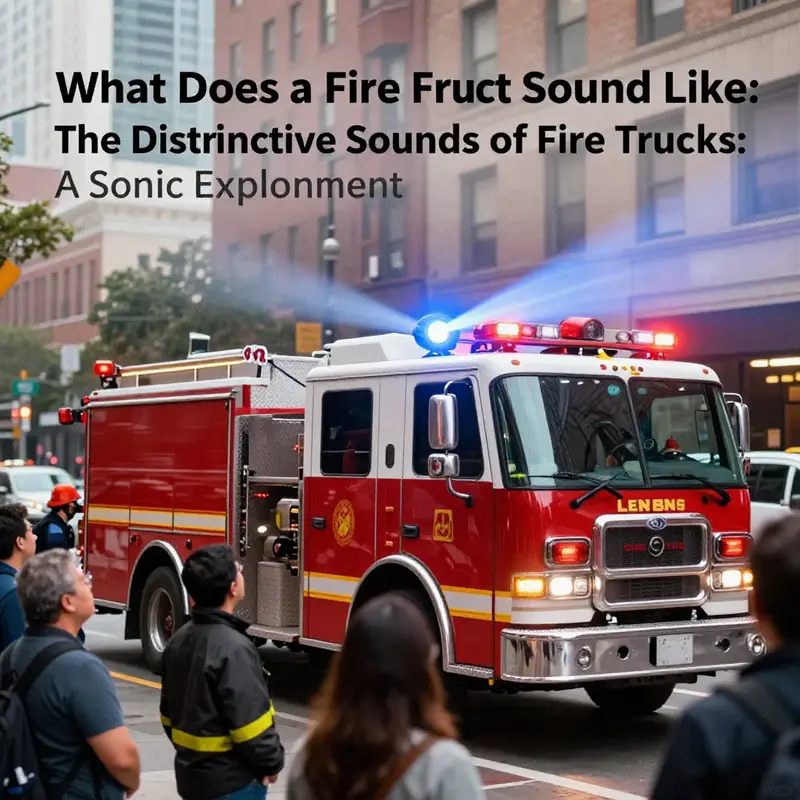
A fire truck’s siren is engineered to be unmistakable. It must pierce through traffic, radios, and urban bustle to create immediate awareness. That design imperative, however, sits inside a wider acoustic landscape. When a siren wails down a city street, it does more than clear a path. It reshapes the surrounding soundscape for people and animals, sometimes in ways that matter for health, behavior, and habitat.
Sirens are loud by necessity. Their primary goal is to be heard quickly and recognized as urgent. Common siren tones—a long rising and falling wail, a rapid yelp, and a deep air-horn blast—are chosen because they cut through typical background noise. They use high and mid frequencies for clarity, occasionally complemented by low-frequency blasts for physical presence when the vehicle is nearby. Those design choices produce sound pressure levels that can exceed 120 decibels at close range. At those intensities, the siren is effective at moving traffic and capturing attention. But the same intensity becomes an environmental stressor when repeated across neighborhoods and time.
The environmental effects of sirens operate on several interconnected levels. At the most direct level, high-decibel events contribute to urban noise pollution. Cities are already acoustically loaded by traffic, construction, and voices. Emergency sirens add punctuated peaks that raise average sound levels and increase the number of potentially harmful exposures. For residents who live or work near busy corridors, repeated siren exposure can mean frequent interruptions. Those interruptions are not trivial: even brief spikes in noise interrupt cognitive tasks, heighten stress responses, and fragment sleep. Sleep fragmentation occurs when sound events are loud enough or timed with light sleep cycles. Waking up multiple times during a night, even if for short periods, degrades sleep quality. Over weeks and months, this pattern contributes to mood changes and impaired daytime functioning.
Hearing health is another obvious concern. While a single passing siren is unlikely to cause permanent hearing loss at typical viewing distances, repeated close exposures—such as living near a fire station or a frequent emergency route—can increase cumulative risk. The ear’s delicate hair cells respond to extreme pressure and sustained loudness with damage that accrues over time. Public health agencies generally advise limiting exposure to sounds above 85 decibels. Sirens routinely exceed that threshold, so context and duration matter.
Beyond measurable hearing damage, sirens provoke physiological responses. Sudden loud noises trigger the body’s startle reflex and sympathetic nervous system. Heart rate and blood pressure can spike briefly. In people with cardiovascular vulnerabilities, these acute changes may be clinically relevant. Recurrent noise-triggered stress also elevates baseline cortisol levels in some individuals, which ties into broader health outcomes like increased anxiety and metabolic effects. Children, older adults, and those with pre-existing health conditions are particularly susceptible to these impacts.
The social and behavioral consequences of sirens deserve attention too. Noise that interrupts daily life erodes perceived neighborhood livability. For caregivers who work from home, frequent sirens create a disruptive backdrop for concentration. For businesses, especially those relying on phone-based work or studios, the acoustic interruptions have real economic costs. In some cases, residents adapt by closing windows, using sound masking, or moving activities to different rooms. These coping strategies can reduce comfort but also alter how people use their homes and public spaces.
Animals respond strongly to sirens as well. Wild and urban wildlife interpret sudden loud noises as potential threats. Birds may flush from perches, abandoning nests temporarily. Mammals alter movement patterns and feeding schedules. In fragmented urban habitats, repeated disturbance can push animals to less optimal areas, increasing competition and stress. Pets, especially dogs, react instinctively. High-frequency oscillating tones, like yelps and wails, overlap with the frequencies that trigger howling and anxious behaviors in canines. Those reactions are not merely anecdotal; they reflect evolutionary sensitivity to certain acoustic cues. For guidance on dogs’ responses to sirens and practical training tips, see this resource: https://www.akc.org/expert-advice/health/dog-howls-at-sirens/.
The necessity of sirens complicates any attempt to minimize their impact. They are crucial for saving lives and protecting property. When a fire truck arrives on time, the siren has done its job. The challenge lies in balancing response effectiveness with community well-being. That balance requires both technological innovation and operational discretion.
Technological paths toward mitigation focus on targeting and control. Directional audio systems can focus sound beams toward the street and the people who need to hear them, reducing spillover into adjacent areas. These systems use arrays of speakers to shape and aim sound, much like a flashlight narrows a beam. When implemented properly, directional alerts reduce unnecessary auditory exposure for nearby residents. Another approach uses smart siren modulation—dynamically changing patterns, sequence, and amplitude depending on speed, proximity, and traffic conditions. At low speeds near intersections, a less intense, more localized tone can still be effective. When a vehicle approaches an open highway or bridges, the full-range siren may be needed. Integrating real-time GPS and traffic-sensing systems can allow sirens to adapt automatically.
Engineers are also exploring non-auditory complements. Enhanced visual signaling—flashing lights with high visibility—can reduce dependence on sound in some contexts. In areas where sound pollution is a major concern, combining visual alerts with gentle audio cues can maintain safety while lowering overall noise. Nonetheless, visual systems have limits: visibility is poor in dense fog, around blind corners, or when line of sight is obstructed. So any reduction in auditory signaling must preserve clear and reliable ways to warn drivers and pedestrians.
Operational strategies are equally important. Routing decisions can limit siren exposure across densely populated zones. When feasible, responders can select routes that minimize travel through quiet residential streets, especially during night hours. Dispatch protocols that require sirens for only the most time-critical segments also reduce exposure. Training for drivers and crews can emphasize judicious use. Some fire departments practice “virtual siren discipline,” limiting continuous siren use once intersections are cleared and vehicles are moving through controlled lanes. These policies preserve urgency where needed and reduce noisy passages through neighborhoods.
Policy and planning matter too. Urban planners can incorporate acoustic considerations into zoning, emergency access design, and the siting of fire stations. Placing stations near main arteries rather than in dense residential cores reduces frequent early morning departures through quiet neighborhoods. Noise assessments during route planning can identify hotspots where siren exposure is disproportionately high, informing targeted mitigation.
Community engagement helps bridge operational needs and public concerns. Residents understand the life-saving role of emergency services, and many support thoughtful measures to lower unnecessary noise. Transparent communication about why sirens are used, when they are essential, and what the department is doing to reduce impact builds trust. Departments that pair outreach with evidence—measured decibel levels, route alternatives, and pilot programs—tend to find community partners for innovation. Saying “we recognize your concerns” and offering concrete steps helps keep public safety and quality of life aligned. For an example of recognizing responders’ importance while addressing community impacts, see this piece on thanking first responders: https://firetruck.space/thanking-first-responders/.
Monitoring and measurement underpin long-term management. Municipalities can deploy acoustic sensors to map siren exposure and correlate it with traffic patterns and emergency frequency. Those data inform targeted technology investments and operational changes. They also support regulatory frameworks that set acceptable exposure limits and response expectations. Policymakers must weigh the risks of over-regulating emergency signaling against the public health costs of chronic noise.
Innovation will continue to narrow the trade-off between audibility and disturbance. Improvements in speaker technology, signal processing, and vehicle-to-vehicle communication promise new ways to alert only the people who need to react. For example, integrated vehicle communication systems could notify nearby drivers digitally, reducing the reliance on loud external sirens in certain contexts. Widespread adoption of these systems will take time and coordination, but they offer a clear path forward.
Ultimately, the siren’s role in our cities is both functional and symbolic. It signals urgency and community support. It demands space on congested roads and quick reflexes from drivers. It highlights the tension between immediate safety needs and long-term acoustic health. Managing that tension is not a single technical fix. It is a layered approach combining better siren design, smarter operations, targeted routing, public engagement, and regulatory oversight.
As cities grow denser, the stakes of that management rise. Every siren call that reaches a life in danger will always be worth the sound. At the same time, minimizing unnecessary acoustic harm requires attention and investment. By integrating new technologies and refined practices, emergency services can preserve the siren’s life-saving function while protecting the urban soundscape, the health of residents, and the well-being of local wildlife. For practitioners, planners, and residents, the goal is clear: keep the alert unmistakable, and keep the disturbance limited to what is essential.
Sirens in the City: The Anatomy of a Fire Truck’s Call for Attention
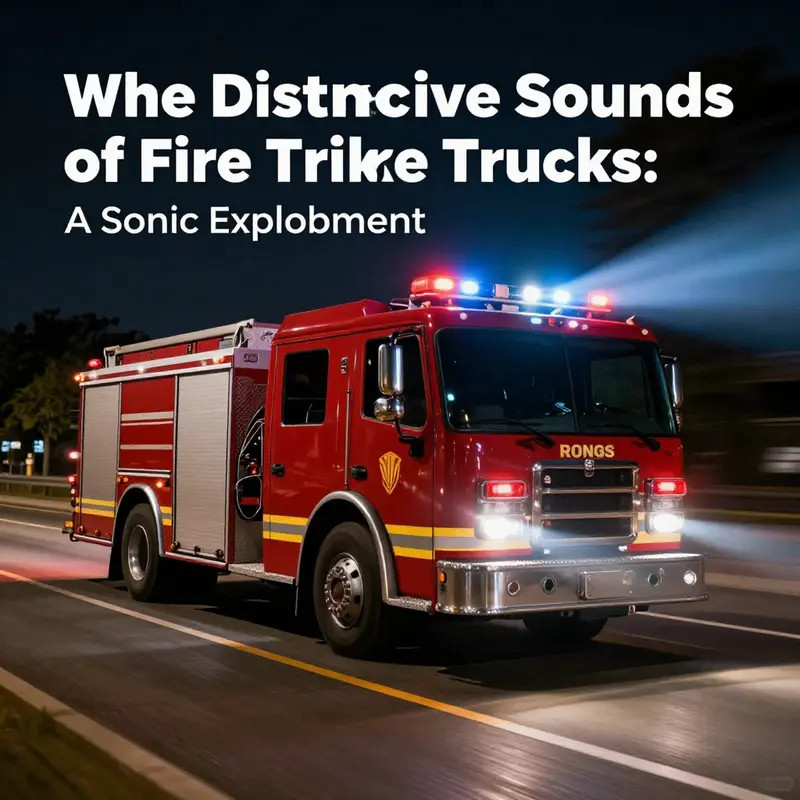
In the city a fire truck siren is a designed signal. It must grab attention while sustaining safety for all road users. The core element is a rising and falling pitch that travels quickly through traffic. In many cases the audible range is between 800 and 1200 hertz, a portion of the spectrum where the human ear remains highly sensitive. The pattern may vary by region and vehicle type, from hi lo cadences to longer whoops, but the goal remains the same: make a loud and distinct signal that can be understood before the vehicle comes into view.\n\nThe pattern of the siren works together with listeners expectations about motion. The rise and fall create a sense of approaching speed and direction, and in modern systems a stereo or Doppler playback can help convey spatial information. People learn to move to the side and make space, while drivers reduce speed and scan the road ahead. Animals may react to the high pitch as well, a cross species cue that signals danger and the need to respond. The overall effect is a carefully engineered balance between alerting urgency and maintaining comfort for a busy urban soundscape.\n\nBeyond the sound itself, studies of siren use show how local rules, street layouts, and traffic density shape the choice of cadence. Regions with narrow streets may favor rapid hi lo patterns, while open highways may use longer tones that carry farther. Fire crews also adapt to the environment by selecting presets that maximize listenability without creating excessive noise for nearby residents. The result is not a single universal tone but a family of signals that lets a city speak the same language of urgency in many places.
What a Fire Truck Sounds Like: The Technology Behind an Urgent Siren
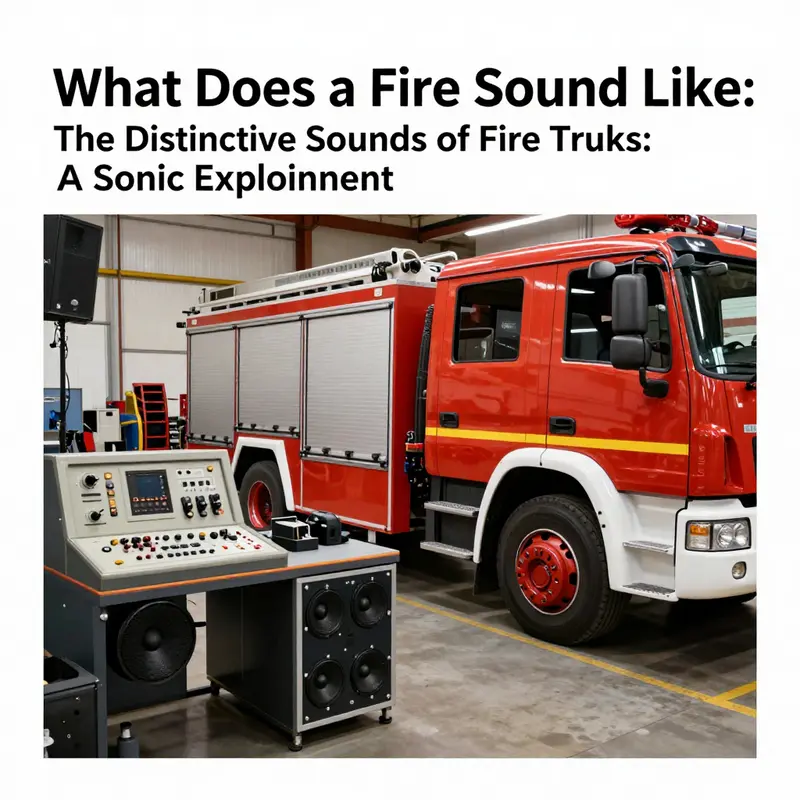
Listen closely to the city and you will hear a sound that travels faster than footsteps and lights up the night with urgency. The fire truck siren is not merely a loud warning; it is a carefully engineered signal designed to cut through engine noise, street chatter, and urban acoustics. Its signature wail, a high pitched arc that rises and falls, is familiar to almost everyone, yet few pause to consider how that sound is crafted. The most recognizable element of this sonic signature is the wail pattern, a rising and falling cadence often described in everyday talk as a wha-oo-wha-oo. It is a rhythmic call that signals danger and command, and it operates on a fundamental principle: conveyance of clear information under pressure. But behind that recognizable cry lies a world of choices, technologies, and design decisions that determine exactly how the siren travels from the truck’s horn to the ear on a busy boulevard.
The siren is designed to be more than loud. It is designed to be legible in a landscape of competing noises, from the rumble of traffic to the hum of elevated trains and the echo of glass canyons formed by skyscrapers. To achieve this legibility, engineers have long curated a family of patterns. The wail is the archetype, with its slow oscillation in pitch that makes it easy for the brain to latch onto as the vehicle approaches. The yelp, by contrast, provides a rapid, offbeat urgency that can punctuate a moment of decision for pedestrians and drivers alike. The pierce introduces a sharper, more aggressive edge, a tone that can feel almost tactile as if it is pressing on the ears. And the airhorn blast, deep and decisive, remains a blunt instrument you can hear at close range or through a crowd. In practice, crews switch among these patterns based on what the street demands: the traffic density, the proximity to pedestrians, and the architectural geometry of the route they must navigate.
This functional diversity is not a relic of old machinery but a living technology. On many newer rigs, electronic tone generators sit at the heart of the siren system. These devices generate precise frequencies and orchestrate them into patterns with remarkable speed and accuracy. They can cycle through a library of tones and sequences at the touch of a switch, or even in response to real time inputs from other systems on the vehicle. The shift from purely mechanical or compressed air systems to electronic ones represents a major leap in control. Electronic sirens offer a wider range of timbres, a quicker tempo for pattern changes, and a level of consistency that is harder to achieve with purely mechanical devices. They also enable subtle refinements, such as smoothing transitions between patterns or selecting a particular pattern to optimize intelligibility in a busy intersection or a narrow alleyway.
The physical side of the siren is no less important than the electrical brain behind it. Most fire trucks carry multiple loudspeakers arranged around the vehicle to create an enveloping field of sound. The goal is 360-degree coverage, so the siren can be heard from all directions, whether the truck is moving toward or away from a listener. The placement and the number of drivers in the horn system influence how the sound projects through the environment. The acoustic designers pay attention to the bandwidth of each speaker, the way harmonics reinforce the fundamental tone, and whether a little extra bass helps the sound retain its weight as it bounces off brick, glass, and metal. But loudness alone will not guarantee effectiveness. The clarity of the signal—the rhythm, the timing, the shape of the waveform—matters just as much as its amplitude. The aim is to make the siren legible in the cacophony of a city street, so that people can quickly interpret the warning and act.
The siren is also a product of design around human perception. Psychoacoustics—the study of how people hear and interpret sound—plays a central role in shaping what listeners experience. Engineers consider how hearing filters frequencies, what sounds tend to pop out of a noisy background, and how the brain associates rising pitch with approaching danger. They study how the ear perceives rapid changes in pitch and tempo, and how background reverberation from streets, buildings, and vehicles alters the comfortable listening sweet spot. The result is a tuned signal that remains recognizable even as the environment changes. A siren that sounds perfect in a laboratory might lose its edge on a windy street with nearby construction, so designers test patterns under a spectrum of real-world conditions and calibrate them accordingly. In this way, the siren becomes not just a single noise but a flexible communication tool that adapts to context while preserving its core cues.
Recording and reproduction add another layer to the equation. When people hear sirens in media—on the radio, in a film, or in a video game—the audio is often a carefully engineered facsimile of the real thing. Sirens are recorded in stereo to simulate the effect of a vehicle passing by, a technique that creates a Doppler sense of movement: the pitch seems to rise as the truck approaches and fall as it recedes. In high-fidelity environments, engineers even build multi-channel or 3D audio captures to convey the sanctuary of the vehicle’s interior as well as the city’s exterior. For storytellers and educators, authentic samples matter. They provide a concrete reference for how the sound behaves when traffic, pedestrians, and urban acoustics interact with a moving siren. Platforms that host royalty-free sound effects offer reliable access to a range of fire truck siren recordings, giving learners and creators a practical way to study this sonic phenomenon without needing to be near an active emergency scene.
The technical ecosystem surrounding sirens demonstrates how sound, space, and technology cohere into a single critical signal. The siren is not just about the tone but about timing, dynamics, and orchestration. A digital controller might be integrated with other emergency signaling modules on the vehicle, coordinating with warning lights, dispatch data, and even voice-activated commands in some newer models. The dashboard becomes a command center where the operator can choose a pattern, adjust the volume, and tailor the sonic signature for a particular scenario. In this sense, the siren is part of a larger nervous system for the apparatus, one that communicates urgency not only through sound but through a coordinated choreography of lights, movement, and dispatch information. The technology is designed for reliability and speed, with safeguards to prevent distortion at high power levels, to maintain pattern integrity across different weather conditions, and to ensure that the siren remains intelligible for people with various hearing abilities.
A story about the fire truck’s sound is also a story about the urban soundscape. The wail meets the city with a particular set of acoustic challenges: the echoing canyons of tall buildings can create constructive or destructive interference, the wind can blur high frequencies, and the close quarters of crowded streets can amplify or muffle certain harmonics. Sound designers and engineers respond with careful placement of speakers, judicious tuning of frequency content, and strategic pattern changes. In some environments, a pattern with a smoother, longer envelope may cut through more effectively, while in others a tighter, more staccato sequence might communicate urgency more clearly. These choices are pragmatic, rooted in the lived experience of drivers, pedestrians, and residents who encounter the siren in different corners of a city each day. The result is a versatile signaling system that respects public safety while acknowledging the diverse auditory realities of modern urban life.
For those who wish to hear authentic samples and understand the difference between patterns, royalty-free libraries offer accessible options. A standard reference set might include a classic wail and a rapid yelp, along with an extended pierce time and a deep airhorn blast for proximity alerts. These samples provide a practical way to study how the timbre shifts as sound travels through air, reflects off façades, and reaches the listener from different angles. Students of acoustics or media production can compare the relative intelligibility of patterns at various distances, noting how a listener’s perception shifts with the speed of the vehicle and the geometry of the street. Such exercises turn abstract theory into a tangible, audible experience and reveal why the siren is designed to function as a street language all its own.
For readers who want a concise primer and ongoing updates, see the Fire Truck Blog. Fire Truck Blog. This internal resource provides field perspectives, equipment considerations, and community voices that illuminate how signaling tools are deployed in real departments and incidents. The blog becomes a living counterpart to the technical explanations here, offering case studies, anecdotal lessons, and discussions about the evolving expectations of the public and the role of signage in life saving operations. If you are curious about how design choices translate into practical outcomes on the ground, this link serves as a bridge between theory and practice, connecting the engineering narratives with everyday street life.
The sonic signature of a fire truck thus embodies a synthesis of engineering, perception, and context. It is a reminder that sound is not just an artifact of machines but a social instrument that shapes behavior, speeds responses, and can foster a shared sense of safety. The siren’s story speaks to a broad audience: the engineers who design it, the drivers who operate it, the pedestrians who yield to it, and the students who listen and learn from it. It is a story about how technology translates a critical message into something the human nervous system can recognize and respond to in time. And because sound travels differently in every layer of the city, designers continually refine the siren to preserve its core meaning while accommodating new architectural forms, evolving vehicle platforms, and changing public expectations.
For those seeking to listen and compare, there is a simple, practical path. Explore royalty-free sound archives that host fire truck siren recordings and compare how the timbre and rhythm shift across patterns and distances. The Parisian siren example is often cited for its distinct urban character, while the standard wail demonstrates how a timeless rhythm remains legible in most street environments. These auditory references help demystify why certain patterns work better in some settings and not in others, and they illuminate how a single instrument can assume many personalities depending on context. The journey from the street to the studio is thus a journey through perception, engineering, and culture, all expressed through a single, urgent noise that marks time, space, and action.
Annotated exploration of the modern siren also reminds us that this sound is part of a broader ecosystem of emergency signaling. Modern fire apparatus must integrate audible signals with visual cues and data-driven dispatch, forming a coherent, responsive system that supports safety without overwhelming the public. The digital control surfaces of contemporary vehicles enable precise management of pitch, volume, and pattern. They permit rapid adaptation to a changing urban soundscape while preserving the core message that help is on the way. In this sense, the siren is not a relic but a living component of an intelligent, mission-driven fleet. Its sound is a promise of assistance, a call to action, and a cue that the city is tuned to respond to danger with speed, clarity, and coordinated care.
If you want to hear the sounds in a practical, hands-on way, you can search for fire truck siren samples on public sound libraries or listen to a Parisian example to hear how urban context shapes the character of the warning. The siren, at its core, is a musical instrument of necessity. It must project, endure, and adapt. And it does so with a blend of engineering precision and human-centered design that ensures the message is heard and understood wherever the road leads. For authentic audio samples and further reading, you can explore royalty-free archives—their catalogs include a range of files suitable for education, media, and creative projects. External resources like Pixabay offer a practical way to access these sounds and to experience firsthand how the siren’s form evolves across contexts. https://pixabay.com/sounds/search/fire%20truck%20siren/
External resource note: For authentic audio samples and further reading, Pixabay hosts royalty-free fire truck siren recordings that can be used for education, media, and creative projects. https://pixabay.com/sounds/search/fire%20truck%20siren/
Final thoughts
The distinct sounds of fire trucks are a blend of tradition and technology, designed for functionality and safety. Each siren variation serves a purpose, alerting individuals to the imminent presence of emergency responders. As fire truck enthusiasts, aspiring firefighters, or emergency service professionals, understanding these sounds elevates your connection to the firefighting community. By appreciating the sonic landscape that surrounds fire trucks, you gain insight into their critical role in saving lives and protecting property.