
With their towering ladders and blaring sirens, red fire trucks are an unforgettable sight on our streets. These extraordinary vehicles, designed predominantly for firefighting and rescue operations, embody a legacy interwoven with history, technology, and cultural significance. As we delve into the evolution of red fire trucks through the chapters ahead, we will uncover their historical emergence, the cutting-edge technology they now utilize, their enduring symbolism in society, and the modern visibility challenges they face. For firetruck enthusiasts, aspiring firefighters, and emergency service professionals alike, the journey into this iconic symbol of emergency response will reveal not just a vehicle, but a testament to innovation and bravery in the face of adversity.
The Red Engine of Response: A Historical and Cultural Chronicle of Fire Trucks
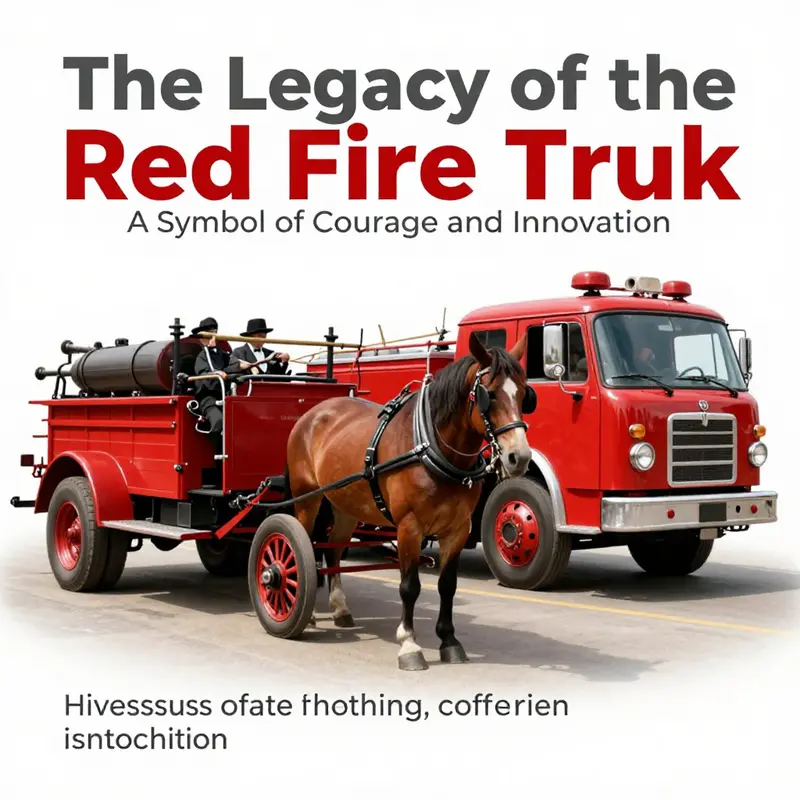
A red fire truck is more than a coated chassis and a bundle of ladders; it is a mobile emblem of urgency, service, and communal memory. Its color carries a story that threads through workshop benches, parade grounds, and crowded city streets. The origins of that vivid pigment lie in a layered mix of practicality and pride. In the 19th century, volunteer fire brigades operated under harsh resource constraints. Paint was not merely a coating but a statement of capability. Red emerged as an economical option, a pigment readily available and durable on rugged metal surfaces. Yet cost alone did not seal its fate. As towns jostled for status in a crowded civic landscape, red became a symbolic badge of courage, valor, and distinction. Fire companies painted their apparatus in red not only to protect them from the elements but to declare their readiness and to cultivate a shared identity among volunteers who faced danger together. In those early years, color and competition intertwined, giving each department a visual signature that could reach beyond the fire halls and into the neighborhoods they served. The red machine thus did double duty: it was both a tool for fighting fires and a banner for communal pride.\n\nAs the century progressed and motorized apparatus began to supplant horse drawn equipment, the visual roadscape transformed. The iconic Model T, which dominated early mass production, became a default on roads where a single color could influence driving behavior and public perception. Black was the norm for these celebrated chassis, a practical consequence of factory conventions and supply chains. Yet fire departments chose red not only for visibility but because the color had already earned a reputation as a signal of action. The decision to paint fire apparatus red endured, even as cities grew denser and traffic grew more chaotic. A century later, observers still recognized a red fire truck long before it halted, a reflex built from decades of training, drills, and real emergencies. The evolution of the red fire truck thus tracks a broader arc of technology, urban change, and the ways a color can become a cultural artifact.\n\nThe psychology of color plays a decisive, though contested, role in this history. Red lands first in the brain as a cue for danger, urgency, and alarm. It grabs attention quickly, stimulating arousal and a rapid decision loop that is essential when seconds count. From a perceptual standpoint, red light has a relatively long wavelength, which, in clear air, carries farther than many other hues. That distance advantage translates to earlier recognition by drivers and pedestrians who must share crowded roads with emergency vehicles. In fog, rain, or smoke, however, the claim of red as the most visible color is more nuanced. Modern human factors research highlights that lime-yellow and fluorescent greens can outperform red in certain adverse conditions, offering higher conspicuity in low light and inclement weather. Despite this, red remains deeply embedded as a symbol of swift response and civic protection. The public still associates red with action, bravery, and the urgency of rescue, and this association does not simply fade with new data on visibility. It persists because it connects on a cognitive and emotional level, turning a fire truck into a moving beacon that communities instantly recognize and trust.\n\nThat symbolic power interacts with the practical realities of fleet design and maintenance. A red body does not act alone; it sits within a complex system of equipment, protocols, and signage crafted for efficiency. The fire truck is a modular tool, carrying pumps, hoses, ladders, and rescue gear that must perform under the relentless pressure of a live incident. The color of the vehicle, while aesthetically striking, also signals a standardized identity that helps coordinate large teams across disparate agencies. When many units converge on a scene, the unmistakable red frame acts as a focal point for coordination, a visual anchor that guides strategy, communications, and crowd management. Yet color alone cannot guarantee safety. It works best in concert with reflective materials, contrasting trim, and high-contrast markings that enhance legibility at night and in adverse weather. In this integrated approach, the enduring appeal of red is not a stubborn holdover from the past but a carefully considered element of a broader visibility strategy.\n\nThe cultural script surrounding red fire apparatus runs deeper than visibility and speed. In many communities, the red fire truck is a cultural icon that signifies public safety, resilience, and the willingness of neighbors to help one another in crisis. This symbolism persists even as modern departments invest in advanced technology and data-driven incident command systems. The color embodies a narrative of service that runs through training drills, commemorations, and the everyday rituals of firefighting culture. It is a visual shorthand that communicates to civilians and firefighters alike that help is arriving, that the scene is under control, and that the team behind the red doors is prepared to act with courage. That emotional resonance matters because it shapes public trust. When a city sees a red fire truck approaching with sirens and lights, the response is not only logistical but communal. People instinctively yield the right of way, pull back from the curb, and offer assistance where possible. In this sense, red becomes a social contract as well as a color choice.\n\nEven as the color endures, the conversation about visibility continues to evolve. Fire departments and researchers weigh the tradeoffs between tradition and safety in a landscape of evolving infrastructure, street designs, and vehicle technology. Some fleets experiment with color schemes or adopt additional high-visibility features to complement the red base. The outcome is not a simple replacement of red but an expansion of the toolbox for rapid recognition and safe operation. The discussion also reflects a broader shift in emergency response strategies, where rapid deployment, cross-agency coordination, and data-informed risk assessment guide decisions that extend beyond the paint on a vehicle. In this sense, the red fire truck remains a central thread in a larger tapestry that includes command systems, interagency cooperation, and community engagement. The chapter of red is not closed; it continues to adapt while preserving its core meanings.\n\nWithin this evolving context, the red fire truck also faces the practical realities of modern street life. Urban environments demand vehicles that command attention while blending with traffic safety goals. The color red, with its cultural significance, brings with it expectations about professionalism, readiness, and authority. Yet the science of visibility suggests that a single color cannot be the sole solution to all visibility challenges. Departments increasingly layer red with reflective tape, illuminated decals, and smart lighting strategies to maximize conspicuity across conditions. In short, red acts as a baseline—a deep, recognizable signal that helps a vehicle carve a path through bustle and danger alike. The rest is a sophisticated complement of design, optics, and operational discipline that ensures the truck is not only seen but understood as a moving tool for survival.\n\nReaders may recall that the color story of fire trucks carries echoes of a time when color was as much a badge as a tool. For those curious about more of the color science and historical perspectives, a deeper dive is available in the Fire Truck Blog, where historical threads and contemporary debates about color, visibility, and safety are explored in accessible detail. You can explore that discussion here: Fire Truck Blog. As the chapter of tradition continues, the thread linking past to present remains visible in every red chassis that rolls toward a blaze, every ladder that extends toward a window, and every crew that steps off with precision born of practice and pride. The red engine, with its rich heritage, invites readers to consider not only how we see emergency vehicles but how we value the communities they serve and the people who respond when danger calls.\n\nExternal references can enrich this understanding for readers seeking a wider frame. For a deeper dive into the color science behind fire trucks and the debates around red versus other high-visibility hues, see the external resource on color and emergency vehicle visibility. https://www.scienceabc.com/innovation/why-are-fire-trucks-red.html
Under the Hood: The Technology That Powers a Red Fire Truck
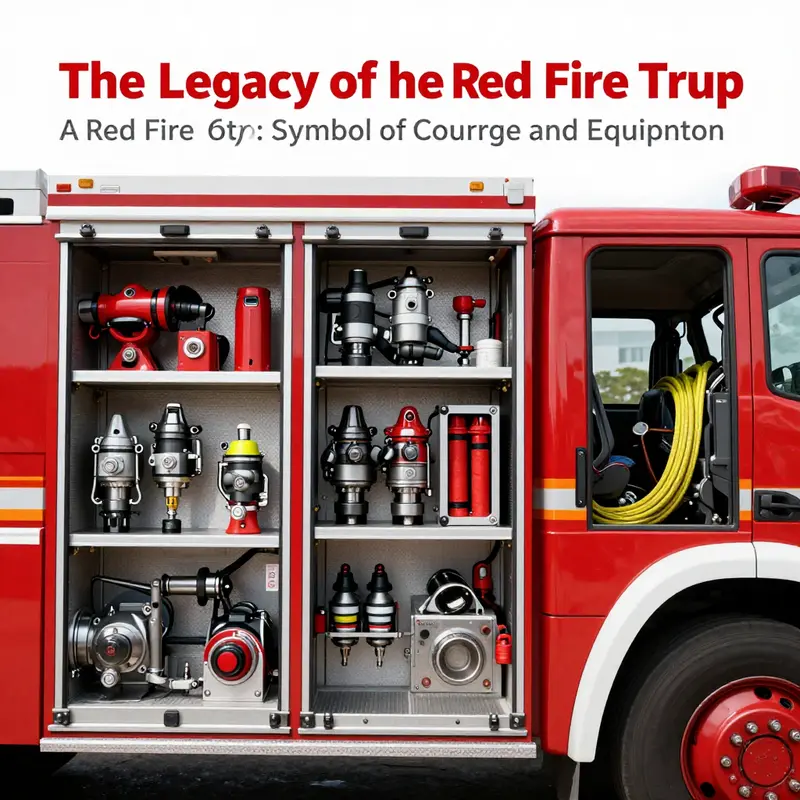
Pumps, Ladders and Smart Systems: How a Red Fire Truck Works as a Mobile Firefighting Platform
A red fire truck is more than a recognizable symbol; it is a complex mobile system engineered to project force, sustain operations, and protect crews. The visible elements—hose reels, ladders, compartments—are supported by layers of mechanical, electronic, and human-centered technology. Together they turn a heavy chassis into a flexible tool capable of fighting structure fires, supporting rescues, and operating in remote wildland-urban interface zones.
At the heart of many responses sits the pumper truck. Its pump is the literal muscle of the vehicle. Modern pumps can intake water from hydrants, surface sources, or onboard tanks and deliver pressurized streams through hose lines. Today’s pump systems include computerized monitoring and control. Displays show real-time flow rates, pressures, foam proportions, and engine load. That information helps an operator maintain safe nozzle pressures and avoid cavitation or overheating. Microprocessor-controlled valves let crews balance attack lines and supply lines automatically. These systems reduce manual calculation and let firefighters focus on tactics instead of constant meter checks.
Pumper trucks are configured to match operational needs. Urban departments favor large pump capacities and high-pressure output for multiple handlines and aerial devices. Rural units often trade pump size for larger water tanks and enhanced off-road capability. In the wildland-urban interface, the configuration changes again: greater water reserve, skid units, and integrated foam systems that improve suppression when hydrants are absent. The modular design approach allows departments to adapt a base chassis with tool sets and tank sizes for specific terrain and budget constraints.
Aerial trucks introduce another technical axis. Modern aerials are engineered for reach, stability, and payload control. Telescoping booms and multi-section ladders extend firefighters and water streams to upper floors. Hydraulics and sensors monitor articulation angles, load, and chassis tilt. Stabilizing outriggers extend and automatically level the truck to provide a safe working platform. Some units feature extendable platforms that carry multiple crew members and a waterway. Water cannons mounted on booms can deliver continuous, high-capacity streams from a distance. That capability keeps firefighters away from immediate dangers like flashover or collapse while still applying effective suppression.
Thermal imaging cameras (TICs) are now standard tools integrated into many systems on a fire truck. These cameras help crews find hot spots, locate victims through smoke, and check for fire extension behind walls. When tied into the vehicle’s display networks, images can be streamed to the incident commander in the cab or to portable devices carried by team leaders. This shared visual awareness speeds decision-making and reduces risk.
Communications technology is a structural element of modern apparatus design. Secure radio systems with multiple channels allow simultaneous tactical and command-level communications. Dedicated data links support GPS location sharing, mapping overlays, and live telemetry from pumps and aerial devices. Many trucks now carry ruggedized tablets and mobile terminals that grant access to building pre-plans, hydrant maps, and hazardous materials databases. When radio congestion or interoperability challenges arise, incident commanders rely on integrated systems to unify voice and data across agencies. For departments refining command workflows, resources on overcoming common control and communication problems are useful; see this internal discussion on overcoming challenges in fire command systems for operational context.
Safety technology extends beyond sensors and radios. Modern cab and crew compartments are designed to protect occupants during transit and operations. Crashworthiness, airbag systems, and secure seating with SCBA-friendly restraints reduce vulnerability during high-speed responses. Ambient lighting and reflective striping on compartments increase visibility on-scene. Scene lighting systems—LED towers and floodlights—are integrated into the body to illuminate work areas without relying on portable lights. Control panels for these systems are placed within reach and clear of primary controls so that one operator can manage scene illumination while another drives.
Onboard diagnostics play a major role in reliability. Electronic control units monitor engine health, pump performance, transmission status, and electrical loads. Telemetry can be transmitted back to fleet maintenance teams to flag emerging issues. Predictive maintenance driven by telemetry reduces unscheduled downtime and prevents failures during critical calls. Many departments have moved from calendar-based inspections to condition-based strategies supported by these diagnostics.
Tool storage and deployment systems reflect careful ergonomic and operational thinking. Pull-out trays, powered lifts, and labeled compartments reduce the time and physical effort required to access hydraulic rescue tools, saws, and medical kits. For extrication, battery-powered rescue tools complement hydraulic systems with increased portability. Compartments often include mounting points and power inverters so tools can be charged or used without running separate generators.
Medical capability is increasingly prioritized. Many pumpers now carry advanced life support equipment and refrigerated compartments for medications and blood products. Modular interior layouts allow a truck to double as a rapid response medical platform when needed. The ability to mix firefighting and medical roles in one platform increases flexibility and shortens response times for critical patient care.
The integration of assistive computing is emerging as another layer of capability. Some rigs incorporate decision-support systems that model fire spread, water supply sustainability, or structural collapse risk. These tools synthesize sensor data—thermal imaging, weather inputs, and building data—into visual overlays for incident commanders. While they do not replace experience, they act as an aid during complex incidents. Adoption is gradual, and training must accompany any new technology to ensure teams use these tools effectively without over-relying on them.
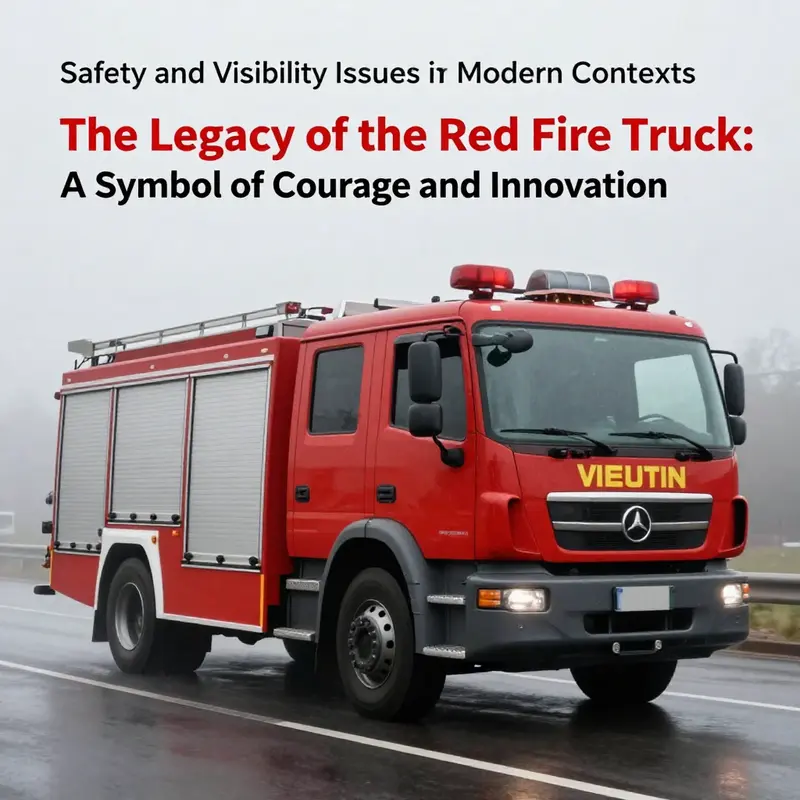
Visibility has always influenced vehicle design. The red color carries strong cultural meaning and immediate recognition. Yet human-factors research shows that alternate colors improve conspicuity under certain conditions. Lime-yellow or high-visibility green out-perform red in low light and adverse weather. Some departments now apply high-visibility striping and retroreflective materials to red apparatus, combining tradition with evidence-based enhancements. Decisions about paint and markings balance local culture, public expectations, and safety data.
Resilience and customization are core design principles. Many manufacturers and departments collaborate to tailor apparatus to mission sets. Structural choices—steel frames versus aluminum bodies, compartment layouts, and pump capacities—are selected based on lifecycle expectations and maintenance capacities. Customization may include specialized winches, foam systems, or integrated rehabilitation units for long-duration incidents. This approach enables departments in varied environments to field rigs that meet operational and fiscal realities.
Training is inseparable from the technology itself. Advanced systems increase capability but add complexity. Pump operators must understand electronic control logic and the physical limits of pumps and hoses. Aerial operators need proficiency with stabilizing systems and load calculators. Communications and decision-support tools demand discipline in information sharing. Regular, scenario-based training ensures that technology complements tactics rather than complicates them.
Finally, interoperability is a guiding design choice. Fire apparatus are built to work with neighboring jurisdictions. Standardized fittings, radio protocols, and mutual aid configurations prevent delays when multiple agencies converge. Interoperability extends to maintenance and lifecycle support too; common parts and service networks reduce total ownership costs and make fleet coordination feasible.
The red fire truck remains a potent symbol, but its capability rests on networks of pumps, ladders, sensors, and software. That ecosystem boosts effectiveness while protecting crews and communities. As departments balance tradition, visibility science, and technical innovation, the apparatus continues to evolve in ways that keep the public safe and the mission sustainable.
For a deeper, technical look at grades, specifications, and applications that inform these design choices, see this technical guide: https://www.fireengine.com/technical-guide-rhd-fire-truck-specifications/.
Red by Legend: The Public Spectacle and Cultural Icon of the Fire Truck
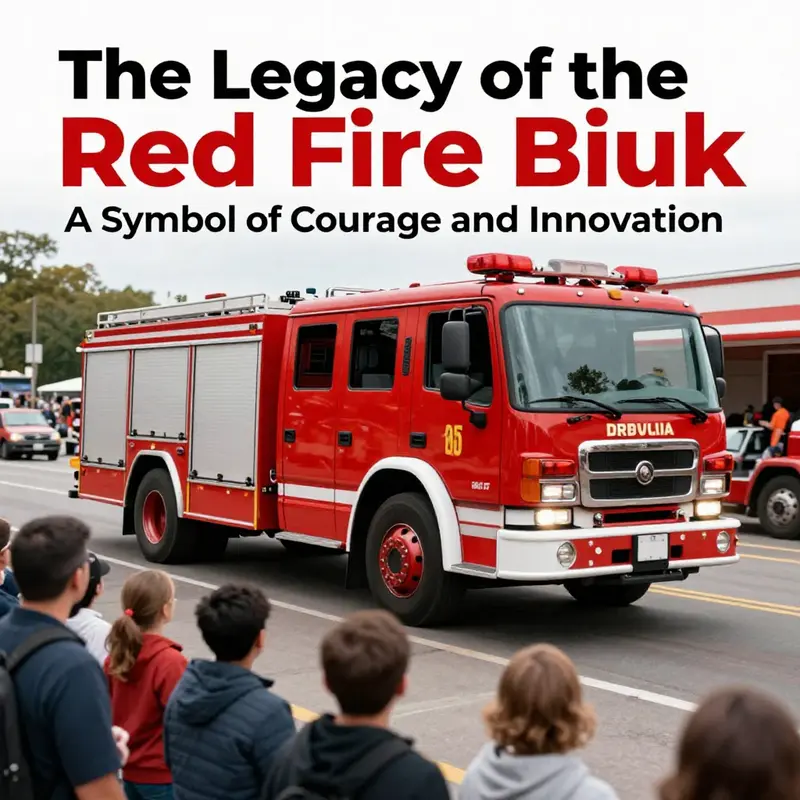
When people hear the siren and see a gleaming red silhouette surge through the streets, a familiar scene unfolds in the imagination: a red fire truck arriving as if the color itself were a signal flare, announcing help, courage, and coordinated action. The vehicle is more than metal, hoses, and ladders; it is a carefully crafted public myth made real through color, motion, and the practiced choreography of a voting public that has learned to recognize not just a vehicle but a social ceremony. Across a century, the red fire truck has become a badge of emergency response, a moving emblem that carries stories of towns past and present. Its visual boldness invites both awe and trust, inviting communities to see their own ideals reflected in steel, chrome, and enamel. The color, in this sense, functions as a social technology, a shared cue that signals readiness, sacrifice, and rescue before any tools are deployed or any words are spoken. And because sight is the first channel through which danger is anticipated and safety is restored, color matters in both perception and memory, shaping how swiftly people react and how long they remember the moment when help arrives.
The historical roots of the red fire truck sit at a crossroads of practicality, ceremony, and identity. In the early days of motorized fire apparatus, as horse-drawn engines gave way to engines churning with petroleum and power, departments in the United States and beyond chose red for reasons both strategic and symbolic. Red was expensive and vivid, projecting prestige and signaling a town’s willingness to invest in a service that could transform a volatile moment into safety. In parades and community events, red painted a department as a theater of competence and civic pride, a visual ritual that invited spectators to cheer for the team that would save their homes and shops. In that era, color choices doubled as messages about capability and commitment, a language spoken not with words but with hue and gloss. The practice of painting fire apparatus red was thus about more than visibility in a crowd; it was about visibility as a public promise: we are here, we are ready, we are prepared to act.
In the decades that followed, the public narrative of the red fire truck hardened into an icon. The striking contrast between red emergency vehicles and the matte black of almost every other car on the road—from the Model T era onward—became a cultural shorthand. The red fire truck appeared as a counterpoint to the ubiquity of black automobiles, a beacon that families could recognize instantly. This visual dichotomy helped embed the image of the fire truck in the collective memory of communities. The legend about Henry Ford’s black Model T—often invoked to explain why red trucks stood out against a sea of black—took root in popular culture, even if historians debate its factual primacy. Regardless of whether the legend holds water, the narrative persists in classrooms, museums, and firehouse lore because it captures a truth about the way color can crystallize identity: red is memorable, red signals urgency, and red places a symbol in the bloodstream of public memory.
Today’s discussions about color and safety add nuance to that story, even as the iconic status of the red fire truck endures. Modern research in human factors and traffic safety has shown that lime-yellow and fluorescent green variants can be more visible across a range of adverse conditions, including fog, rain, and low light. The evidence suggests that visibility, at least in strict terms of conspicuity, can be optimized with colors that reflect more light in many settings. Yet the enduring image of the red fire truck remains robust because visibility is only part of the equation. The symbol matters just as much, and perhaps more in certain contexts, because color touches emotion, memory, and cultural meaning. Red communicates urgency and bravery in a way that few other hues can replicate. It is simultaneously a promise and a memory valve, reminding communities of both danger averted and the human effort that makes that relief possible. In public discourse, that color-coded ritual translates into trust: when a red engine appears, people pause, yield, and prepare to witness a moment of coordinated action.
This cultural resonance is reinforced by the way red is woven into the broader theater of public service. Stories shared in town archives, school visits, and museum exhibits repeatedly return to the color as an anchor for a larger narrative about community resilience. Children point to red fire trucks with wonder; adults recall volunteering at hardware fundraisers or supporting departments during carnivals that celebrate civic service. The red vehicle thus becomes a vessel for memory, a rolling testimony to the labor of firefighters that extends beyond the scene of a blaze. Within this frame, the red fire truck also functions as a bridge between generations, a familiar object that conveys continuity as cities evolve. In moments of crisis, its color becomes a common language, a shorthand that transcends language barriers and speaks directly to shared values: readiness, courage, and a commitment to protecting neighbors.
There is also a moral dimension to the persistence of red that survives the shift toward evidence-based color optimization. The emotional resonance of red—its associations with bravery, danger, and urgency—serves as a stabilizing force in the social contract that surrounds emergency services. Communities come to expect that a red engine will appear not just to douse a flame but to symbolize a lifeline extended by strangers who are trained to risk their safety for others. That symbolism has a practical edge, too: the emotional charge of red can accelerate public cooperation, whether that means clearing a path, guiding bystanders, or trusting a responder who speaks little but whose presence says more than words could. Even as researchers remind us that color choice can affect detection under certain conditions, the red fire truck retains its ceremonial power because it has become a ritual object—an artifact of public memory as much as a tool of intervention.
The tension between safety science and public symbolism is not a contradiction but a reminder that the fire service operates in a space where engineering, ethics, history, and community culture intersect. Color is both a design decision and a narrative device. It shapes and is shaped by the calls that arrive at a department, the way residents respond to an alarm, and the stories that circulate in schools, churches, and city halls. In this sense, the red fire truck is less a single object than a living tradition that travels from firehouse to street corner, from old photographs to modern dashboards. It is a portable, color-saturated memory that can adapt to new technologies, new materials, and new safety modalities while preserving the core meaning that has made it a national, even global, emblem of emergency service.
For readers who want to explore the lore and the evolving conversation around a fire engine’s appearance, the Fire Truck Blog offers layered stories about color, history, and practice. This ongoing dialogue helps connect the dots between the historical choices that shaped today’s fleets and the contemporary research that nudges departments toward new possibilities. The story of red is not a static legend but a dynamic narrative that invites communities to reflect on how symbols shape actions, how memories influence perception, and how a public institution can retain its identity even as science speaks a different language of visibility. In the end, the red fire truck remains a bright thread in the fabric of civic life, a reminder that color is never merely decoration; it is a medium through which communities tell themselves who they are and what they are willing to do when danger calls.
If you’d like to follow this thread further, you can read more at the Fire Truck Blog. By examining how color, tradition, and technology together shape emergency response, readers gain a fuller sense of why a red vehicle continues to ride at the heart of public perception. And as new materials, coatings, and reflective technologies emerge, the conversation will continue to evolve—perhaps widening the palette while preserving the emblem that history has painted in crimson. The red fire truck, after all, is more than a vehicle; it is a public ritual, a moving symbol of protection, and a kept promise to every street it travels.
External resource: https://www.usfa.fema.gov
null
null
Final thoughts
The journey through the history, technology, perception, and safety of the red fire truck reveals its profound impact on firefighting and emergency services. This vehicle is more than just transportation; it symbolizes the courage, innovation, and dedication of those who serve. As we move forward into an era where visibility and safety continue to evolve, the legacy of the red fire truck remains an inspiring testament to the heroic work of firefighters worldwide. Whether perched high in a truck, bravely combating flames, or symbolically present in our minds, red fire trucks will always embody a commitment to saving lives and protecting communities.