
In the thrilling universe of Grand Theft Auto V, fire trucks are not only a crucial part of the role-playing experience but also a must-have for aspiring firefighters and vehicle collectors. Whether you’re looking to showcase your fire truck in San Andreas or engage in heroic firefighting adventures with friends, knowing where to find this iconic vehicle is essential. This guide will walk you through the key locations of fire stations across Los Santos, how to call emergency services for a quick fire truck delivery, and mission-related access points that will enhance your gameplay. Let’s dive into the fiery details and ensure you never miss a chance to seize this flashy, life-saving vehicle!
Tracking the Engine: Navigating Los Santos’ Fire Station Network to Find the Fire Truck in GTA 5
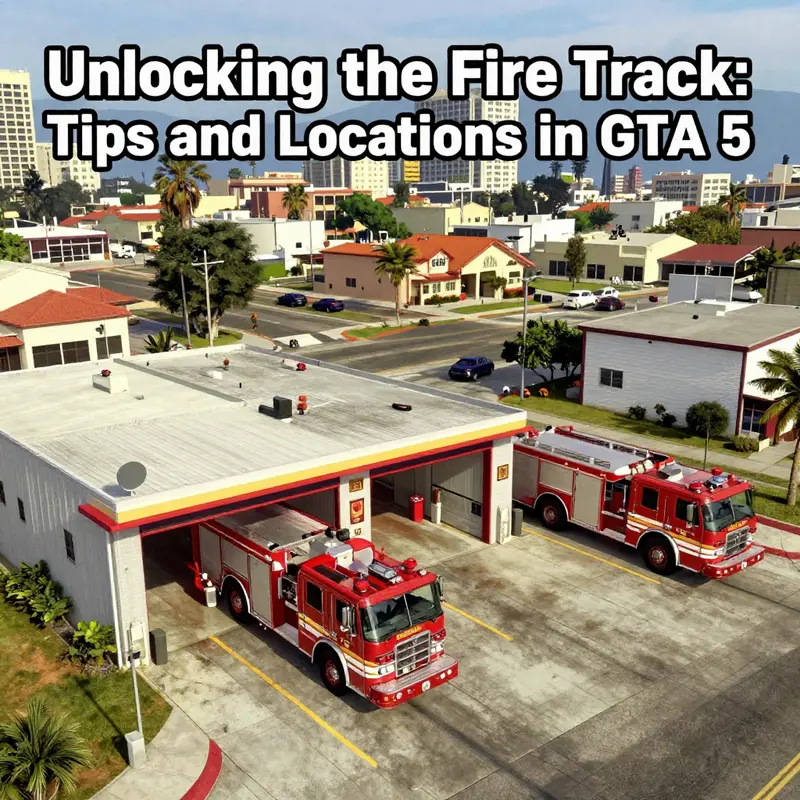
Every grand chase in GTA 5 seems to hinge on the moment a fast, rugged vehicle roars into view, and nothing embodies that thrill quite like the fire truck. The engine’s roar, the siren’s wail, and the rippling motion of the wheels as the truck tears through traffic—these moments are more than cinematic; they are functional milestones that unlock new avenues for missions, exploration, and chaos alike. Yet to summon or steal a fire truck with confidence, you first need to understand the spine of the city’s emergency fleet: the fire station network. Los Santos and Blaine County host a spread of fire stations in a way that mirrors a living map of the region’s geography, from glossy hills and urban cores to dusty deserts and quiet coastal towns. The practical upshot is simple but powerful: the more you know where to look, the faster you can get behind the wheel of a fire truck, clear a path through a challenge, or stage a dramatic pick-up for a mission. This chapter flows through that network in a seamless careening arc, showing you where the trucks reside, how they’re parked, and what you can do once you spot them. It’s not just about picking a truck up; it’s about reading the map, timing your approach, and knowing when a trip to a distant station makes the most sense for your current objective.
The map in GTA 5 is a mosaic, and the fire stations are its embers—quiet, steady landmarks you can rely on when you need the vehicle fast. The classic entry points are the fire stations themselves, which are marked on the GPS as Fire Department or Fire Station. When you’re cruising the boulevards of Los Santos, a quick glance at the map can reveal clusters of bays and garages where fire trucks rest. In several stations, trucks sit outside, their gleaming exteriors catching the sun and inviting a quick theft or a calculated approach to the garrison doors. In others, the trucks are tucked away inside the garage, the doors rolling up with a sigh of mechanical steel as you time your entry for the moment when the building’s activity dips and an unobserved exit becomes possible. The practical tip is to scout visually as you approach; if you see a bay door open or a truck aligned near the street, you may be in luck, but you should also be mindful of the crew inside and the potential for alarms that can complicate your escape.
The core network in the detailed landscape expands well beyond a handful of central stations. The Los Santos Fire Department oversees a variety of outposts, and Blaine County stretches that reach with equal tenacity. At the heart of the city, the downtown core houses the main hub in Downtown Vinewood, a station whose coordinates place it in a bustling intersection of Elgin Avenue and Hawick Avenue. This is the station that feels like the backbone of the city’s fire response—centrally located, highly accessible, and typically a reliable source of a fire truck for early-game needs. The route to this hub is often a straightforward ascent through the urban grid, rising from the traffic and neon into the practical quiet of a large bay where trucks are visibly ready for duty. The presence of a truck here offers a quick, decisive option if you’re just starting out and want immediate access without straying far from your current mission area.
Moving outward from the central hub, the Davis Station in the Davis neighborhood presents another reliable option. Located at the intersection of Carson Avenue and Macdonald Street, this station sits in a district that blends residential life with commercial bustle. It’s not as high-profile as the downtown node, but its proximity to the northern wards of Los Santos makes it an ideal staging ground for excursions into the heart of the city’s more varied terrain. The trucks here are usually parked outside during daylight hours and tucked away beyond the ignition routines of the station’s crew. If you’re chasing a route that threads through residential blocks or you’re crossing into the northern industrial zones, the Davis Station is a natural waypoint where you can plan to intercept a truck with minimal detours.
In the western angle of the city lies the El Burro Heights Station, set at the crossing of El Rancho Boulevard and Capital Boulevard. El Burro Heights is the kind of area that balances suburbia with a hint of rugged coastal reach, a place where a truck’s size can feel in harmony with the architecture of sprawling homes and the broad avenues that connect them. The El Burro Heights station has a practical, if not glamorous, footprint: a bay that sometimes hosts the city’s more readily accessible vehicles, and a garage presence that can make the act of obtaining a truck fairly straightforward, especially if you’re coming from the western stretches or planning a route that skirts the coastline.
The network is not limited to city limits. The Los Santos International Airport Fire Station, positioned on New Empire Way near the airport, underscores a specialized tier of emergency response. Here you encounter a fire truck built for aircraft incidents, a vehicle that is both militarily efficient in airfield operations and surprisingly versatile on adjacent runways and adjacent tarmacs. If you find yourself in a mission that drifts toward aviation, the airport station is a natural waypoint, and the vehicle stationed here becomes a valuable asset for quick takeoffs or for tasks where ground speed matters as much as size and power. The airport station’s location also makes it a practical anchor for players who enjoy moving between the city core and the outer rings of Blaine County, where airfields and desert roads invite new angles of entry into a given objective.
To the north, the Paleto Bay Fire Station sits at the intersection of Great Ocean Highway and Duluoz Avenue. Paleto Bay is a quiet, rural town that feels removed from the chaos of the urban core, offering a calmer environment in which to plot a safe escape through less congested routes. The fire trucks here reflect the community-scale approach of Paleto Bay, a reminder that the fire department is a flexible system, capable of delivering a truck into rural or suburban settings with equal efficiency. The distance from the city can be a challenge if you need a truck fast, but the payoff is a less crowded highway and a straighter shot to your objective, whether you’re chasing a mission in the industrial pockets of Blaine County or simply testing a new route through the countryside.
In the arid stretches of the map lies Sandy Shores, with its Fire Station at the junction of Alhambra Drive and Mountain View Drive. The desert town is a different kind of waypoint, one where heat, open road, and a sense of isolation push you toward longer drives to claim a vehicle. The Sandy Shores station becomes an indispensable anchor for players who enjoy exploring the southern reaches of the map, particularly when a mission or a spontaneous drive wants to push you through the rolling dunes or toward the water’s edge. The truck here can be a reliable companion on long desert runs, a practical choice when you want to keep a distinctive, powerful vehicle within reach while tracking a path through the basalt and scrub of the landscape.
To the far west, the Grapeseed Fire Station sits at the intersection of Joad Lane and Grapeseed Main Street, tucked into a rural Blaine County setting. This is a station that feels almost pastoral, where the air is clearer and the roads are less crowded. Grapeseed offers a different rhythm for a fire truck hunt: calm, measured approaches, and a sense of space that makes escapes more forgiving if you’re experimenting with new routes or unusual driving lines. The Grapeseed station is a reminder that the firefighting fleet is a distributed system, designed to respond to needs across a broad expanse rather than to centralize power in one urban hub.
But the map is not without its caveats. Some stations exist within boundaries that require the player to enter the facility to access certain trucks. In other words, you may find trucks parked inside the garage, protected by the station’s architecture and the staff’s daily routines. A quick entry into the building can expose a truck you wouldn’t have been able to reach from the curb, but it also increases risk: you’ll need to exit with speed and stealth, because the station’s crew could quickly react to a theft. The balance is part of the game’s dynamic tension—the more you know where the trucks are, the better you can plan your extraction without drawing a heavy police response. And this interplay between visibility and concealment is part of what makes hunting a fire truck in GTA 5 feel like a living puzzle rather than a simple fetch mission.
The network includes a notable outlier in Fort Zancudo, the military base whose fire station sits inside a restricted zone. Access to this station is not straightforward: entering Fort Zancudo triggers a police response and brings a heightened risk of pursuit. This is not a casual detour; it’s a calculated risk that can pay off if you’re ready to outpace law enforcement or to leverage the terrain, but it’s a path that demands careful planning. In contrast to the more accessible civilian stations, Fort Zancudo embodies a player choice about risk and reward, about testing the boundaries of the game’s open-world rules, and about how far you’re willing to push the line in pursuit of a powerful vehicle.
For players who prefer a gentler, more exploratory approach, the Paleto Bay and Grapeseed stations offer a slower pace with rewarding clarity. The Paleto Bay route invites you to enjoy the north’s quiet roads, the way a long, straight highway can become a perfect stage for a controlled, exhilarating exit. Grapeseed, meanwhile, allows you to drift along winding county lanes, reading the map for lines that lead into the station’s bay and out again with a truck in tow. The common thread across all these stations is that none of them exist in isolation. They form a lattice that allows you to traverse Los Santos and Blaine County in search of a vehicle that fits your current plan, whether that plan centers on a high-adrenaline chase, a mission that requires a large, armored transport, or simply the joy of piloting a powerful, earthbound engine through a world that rewards daring driving and precise timing.
Accessing a fire truck from a station is never just about grabbing a vehicle. It’s about reading the space—the locations of bays, the presence of road-blocking fences, the cadence of station personnel, and the nearby traffic that can either obstruct or facilitate your exit. It’s about timing your approach so that you can depart with the truck and merge into traffic with a minimal chance of triggering alarms that would alert pursuing officers. If you’re planning to liberate a truck from a station, a few practical steps can make a big difference. First, approach with a plan for a quick ascent into the vehicle, ensuring you have a clear path to the exit after you’re inside. Second, watch for internal security patterns any time you edge toward a garage door. Finally, always keep an escape route in mind, whether that route climbs through a side street, uses a tunnel, or leverages the long corridors of a nearby park to throw pursuers off your tail.
If you’re not inclined to raid a station, you can also summon a fire truck using the game’s emergency services. Dialing 911 from your in-game phone triggers a response that typically places a truck at your location within 30 to 60 seconds. The system works even in the countryside or in the mountains, giving you a quick option if you want to avoid the risk of a direct station raid. When the truck arrives, you need only approach it quickly and press the action button to jump in. This makes the 911 method a reliable fallback when you want to maintain the element of surprise or when you want to avoid drawing attention from station staff or nearby officers who might be suspicious of a sudden theft. It’s also a reminder that the emergency services interface within GTA 5 is not merely a cosmetic detail; it’s a functional tool designed to create dynamic gameplay moments that can pivot the outcome of a chase or a mission. The caveat here is the potential for police attention if your theft is preceded by other criminal activity. The game’s law-enforcement system responds to crime, so planning is essential if you want to exploit the 911 route without turning your escapade into a multi-vehicle pursuit.
Beyond the immediate thrill of using a fire truck, the station network also intersects with mission content that can bring the vehicle into your hands as part of a larger objective. Some missions, including those tied to the online facet of GTA, feature a requirement to drive a fire truck to a specific location, such as a garment factory or another designated site. In these scenarios, the truck is less about improvisation and more about integration: you’ll be given access to the vehicle as part of the sequence, and the truck’s presence becomes a tool for completing the objective. In practice, this dynamic means you don’t always need to plan a heist; sometimes you simply follow the mission’s script and let the game place the truck at your disposal. The balance between free exploration and mission-led access is part of what makes the fire truck mechanic a durable and engaging facet of GTA 5’s open world. It invites you to imagine creative routes, alternate paths, and unconventional solutions to the challenges that appear on your map.
As you travel through this network, a practical reality remains central: the city rewards curiosity, mobility, and speed. If you’re aiming to craft a sequence in which a fire truck becomes a critical player in your plan, you’ll likely want to combine the maps’ knowledge with a moment’s timing. For instance, you can head toward Downtown Vinewood for the main hub’s robust accessibility and then pivot to one of the outer stations as your route requires. You might take a longer, scenic loop through Paleto Bay or Grapeseed to pick up a truck that’s better suited to a long highway sprint or to an extended desert run. The geography matters, and the fire truck’s power—its size, its speed, its heft on the road—translates the map into a set piece you can stage at will. The more you understand the network, the more opportunities you have to choreograph sequences in which the vehicle becomes a central character in your story, rather than a mere tool you happen to stumble upon.
Finally, it’s worth noting the practical constraints and the game’s occasional quirks. Some trucks parked at stations may be easier to access during certain times of day or under particular weather conditions, and some bays will be more or less accessible depending on how active the station is at the moment. The best approach is to treat the process as a patrol itself: glide through the city’s arteries, watch the bays, note where trucks sit, and time your approach so you can exit with speed and precision. The thrill of the chase lies not just in seizing a vehicle but in orchestrating a plan that takes advantage of the station’s layout, the road network, and the world’s ever-changing dynamics. In this way, finding a fire truck in GTA 5 becomes less a simple act of theft and more an exercise in map-reading, risk assessment, and cinematic timing.
For readers who want a quick point of reference while exploring these options, consider this one-stop reminder: the city’s fire stations, with their diverse locations, form a practical ladder to the vehicle you seek. Whether you favor the central hub for speed and reliability, the suburban outposts for strategic coverage, or the desert and rural stations for longer, open-road experiences, each location offers a distinct flavor of access and a unique vantage point from which to orchestrate your next in-game move. And if you ever want to broaden your knowledge about real-world context or related fuel of interest, you can explore related discussions at dedicated resources that cover the broader world of fire apparatus and emergency response equipment. As you weave through this network, you’ll find that the fire truck is not just a vehicle; it is a moving emblem of preparedness, response, and the raw power of a well-tuned engine propelling you through the map’s most memorable moments. The journey between stations, the timing of a 911 dispatch, and the satisfaction of a clean escape all converge to define what it means to track the engine across Los Santos and Blaine County.
If you’re curious to connect this virtual exploration with real-world parallels, you can explore a related resource that offers broader context about fire apparatus and related equipment: fire-trucks-for-sale. This link keeps the focus on the broader landscape of emergency response vehicles while staying mindful of the game’s internal logic and design choices. fire-trucks-for-sale
External resource: For authoritative game-specific guidance and official maps, see the GTA 5 section of Rockstar Games’ official site. https://www.rockstargames.com/gta5
Summoning the Fire Truck in GTA 5: How to Call Emergency Services and Use the Vehicle
Summoning the Fire Truck in GTA 5: How to Call Emergency Services and Use the Vehicle
Knowing how to get a fire truck quickly in GTA 5 gives you access to a large, sturdy vehicle that stands out visually. The easiest and most reliable method uses the in-game cellphone and emergency services. This chapter walks through that process. It also explains what to expect when the fire truck arrives. You will learn practical tips for stealing, driving, and making the most of the vehicle in both single-player and multiplayer contexts.
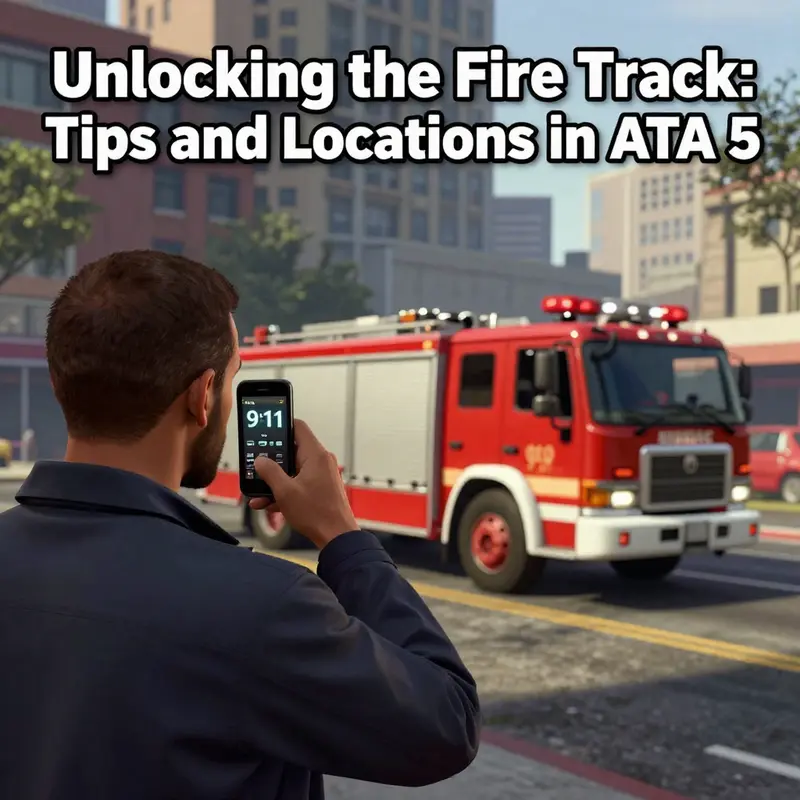
Open your phone, dial 911, and choose the Fire Department. The menu is simple. After you request help, wait about thirty to sixty seconds. The response time depends on your location and traffic. In built-up areas, a fire truck usually appears faster. In remote zones, it may arrive later or on a nearby road.
When the truck reaches you, it will pull up and pause. The driver and crew behave like regular emergency-personnel NPCs. They will step out to assess the situation or move away from the vehicle. This moment gives you the best chance to take the vehicle without a fight. Approach quickly and hit the action key to get in. If an NPC blocks your path, a brief push or a quick melee will clear the way. You can then drive off immediately.
Calling 911 does not automatically draw police attention. The act of requesting a fire truck is treated as a neutral emergency call. Only crimes you commit afterward may trigger law enforcement. That makes this method perfect for grabbing a heavy vehicle without risking an instant wanted level. It offers a clean, low-risk approach to obtaining the truck.
Why use a fire truck? Its size and build make it useful in many situations. It is resistant to small-arms fire, and it can be driven into crowds and light barricades. It also makes a strong visual statement when you need to clear civilians or stage a quick escape route. Roleplayers and players seeking a distinctive ride appreciate the fire truck for its look and heft. Keep in mind the vehicle is primarily cosmetic. It lacks any player-controlled water cannon or specialized firefighting controls.
If the fire truck does not appear, try a few simple fixes. Move a short distance away and then call again. Change your character or enter a building and wait. The game occasionally fails to spawn the truck near dense scenery or narrow streets. Moving to a wider road often solves the issue. If the truck is locked inside a station, you may need to go inside the building. Some fire stations keep vehicles behind garage doors or inside bays. Entering the station often triggers the crew to come out. Once they do, the truck becomes accessible.
This approach works reliably in single-player. Multiplayer servers may behave differently. In some Online sessions, emergency services are disabled or delayed. If you cannot summon a fire truck in Online, try joining a different session or switching to passive mode before calling. Server settings and mission contexts can prevent vehicle spawns. When playing alone in free roam, dialing 911 remains the fastest method.
Expect subtle differences depending on your location. In the city, fire trucks tend to arrive from the nearest station. In suburban or rural areas, they travel from farther away. The truck will seek the nearest practical road. If your position sits on a pedestrian-only path, the truck will stop on the nearest vehicle-friendly road. This can matter if you are perched on a roof, bridge, or cliffside. Position yourself on a street or a large parking area for the best results.
If a fire truck parks against traffic or in an awkward spot, do not panic. The engine can be loud and slow to accelerate. Use the horn or light touch of the accelerator and steer gently. The truck handles like a heavy vehicle. Sharp turns produce understeer and slow response. Brake earlier than you would in a sports car. Colliding with light obstacles can cause loss of control. Practice in quiet areas until you feel comfortable with the truck’s handling.
Stealing the truck without attracting attention requires good timing. Let the crew dismount and move away. If you shoot at them, you will create chaos. That could bring police or cause the truck to explode. Instead, wait for the crew to leave the vehicle. Then climb into the driver’s seat and drive off. If the crew resists or AGGRESSIVE NPCS are nearby, be ready to accelerate quickly. The driver NPC may try to stop you if you approach while the vehicle is occupied.
Certain missions or scripted events already place you in a fire truck. These moments will teach you how the vehicle behaves under mission constraints. You may be asked to move a truck to a particular site. Those missions typically provide a safe window to practice driving. If the game places a fire truck behind locked doors during a mission, simply follow the mission markers. The mission environment usually opens the route to the vehicle.
A few more advanced tips will save time. If your goal is simply to have a fire truck for show and photos, call 911 in a quiet neighborhood. Wait for the truck to idly sit in the road. Then take photos or explore creative angles without interference. If you want the truck to block traffic, position it perpendicular to a narrow street. The large frame effectively stops cars and slows pursuers. Use this tactic in both single-player and Online escapes.
If you plan to use the truck as a getaway vehicle, be mindful of its weaknesses. It is slow. Pursuing helicopters and fast cars can easily catch up. Do not expect it to outrun police. The truck’s strength is in disrupting ground traffic and absorbing hits. If you want to keep the truck long-term, note that standard garages do not reliably save emergency vehicles. They may despawn if you leave the area. Do not rely on the fire truck for permanent storage unless you use game modifications.
When navigating narrow alleys or steep inclines, watch the truck’s clearance. It can wedge between tight obstacles. If it gets stuck, reverse and try a gentler route. Heavy vehicles sometimes flip when they hit high curbs. Use slow, steady steering to avoid flipping. If the truck tips, quickly exit and push it upright if possible. Otherwise, leave it and call another one.
There are occasional visual or spawn quirks to expect. Sometimes the truck’s ladder appears misaligned. Occasionally doors fail to open, or the driver NPC becomes stuck. These are minor in-game glitches. Reloading the save or moving a short distance and calling again generally corrects them. If a truck spawns inside a garage but is unreachable, exploring the station interior often triggers NPC movement. That can free the vehicle.
Using the fire truck for creative purposes is common. Players use it to create dramatic scenes, block roads during stunts, or add authenticity to roleplay scenarios. Because it looks official, the truck can be an excellent prop during improvised events. Its sheer presence changes the dynamic of a street scene. Use that to your advantage when organizing multiplayer meetups or machinima.
If you want to experiment with modifications, remember that standard game features limit customization. The truck cannot be upgraded like sports cars at most shops. Its basic paint jobs are fixed, and modifications to its engine or armor are limited. This restriction makes it less viable as a high-performance vehicle. However, its default durability and size make it worthwhile in many situations nonetheless.
Another practical detail concerns the fire truck crew. If the truck is called to extinguish a fire, the crew will act as if they are on an emergency. They may deploy hoses, move equipment, or stand around the blaze. These actions are scripted and temporary. They do not provide player-controlled firefighting tools. Do not expect to reliably put out fires with the truck. The crew’s actions are mainly for immersion.
For players who want a predictable spawn, visiting a fire station remains the most dependable option. There are several stations across the city. If one station does not have an available vehicle, try another location. Fire stations near wealthy neighborhoods and busy beach districts often keep trucks visible outside. In some cases, however, the trucks are parked inside garages. You will need to enter the building.
When you steal a truck from a station, you may encounter security or NPC resistance. Approach carefully. Use stealth or swift movement to avoid starting a conflict. If you draw weapons, you risk attracting police. This eliminates the advantage of a quiet 911 call.
If you prefer an even more discreet method, lure a crew member away from the truck. A brief confrontation at a distance can cause the driver to exit. When they step away, the vehicle becomes easier to claim. Again, avoid escalating the situation into a firefight.
Game updates and community patches can modify spawn behavior. If you notice inconsistent results after an update, check community guides or official patch notes. These often explain changes to emergency service spawns. When in doubt, experiment with different areas and times of day. Traffic conditions and world events can affect spawn timing.
Finally, remember that the fire truck is a versatile tool for creative gameplay. Use it to block highways during a stunt, create realistic roleplay scenes, or simply enjoy driving a unique vehicle. Call 911 to get the truck quickly and without risk. Be ready when the vehicle arrives, and avoid needless violence. With a little preparation, you can add the fire truck to your collection of memorable in-game experiences.
For additional step-by-step details and visual references, see the official IGN guide: https://www.ign.com/wikis/gta-5/Firetruck
For more general articles and resources about fire apparatus and related topics, check the firetruck.space blog: https://firetruck.space/blog/
From Impound to On-Demand Fire Engine: Accessing the GTA V Fire Truck Through the Pre-Heist Mission
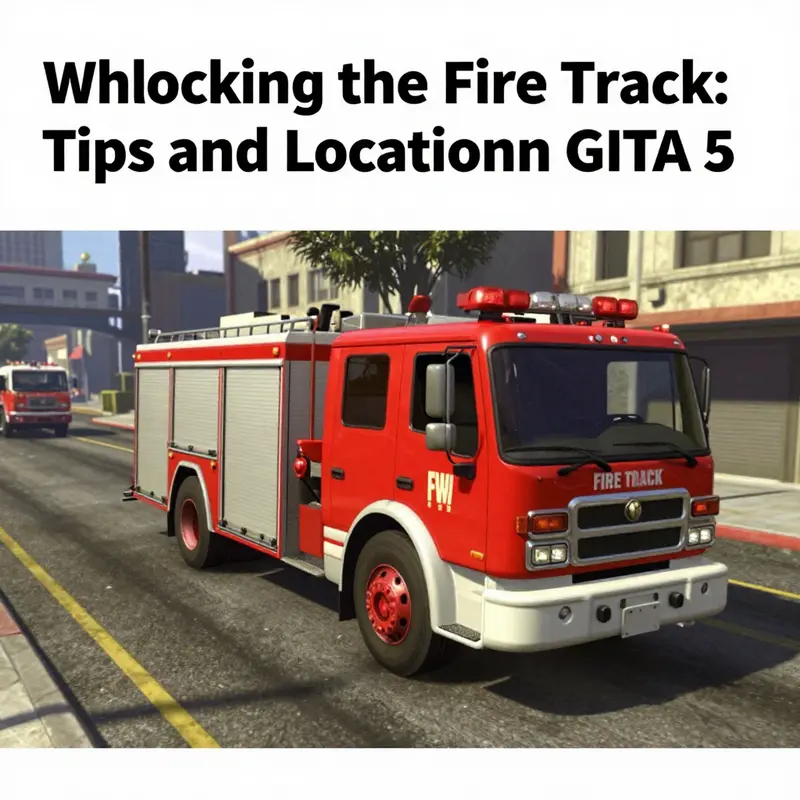
Players seeking the fire truck in GTA V have three reliable paths: visit one of the city’s fire stations (Rockford Hills, Vice Point, East Los Santos) and take a parked truck; call 911 to summon a fire engine that you can seize on arrival; or complete an early pre‑Heist mission that unlocks the fire truck as a permanent personal vehicle. Station-based access is location-driven and dependable; 911 summons are quick and situational; the mission-based route ties ownership to story progression and guarantees permanent access. Practical tips: use the map to locate stations, choose a clear area when summoning emergency services so the truck can arrive and you can board it, and prepare for stealth, timing, and pursuit when attempting the mission or impound sequence. Community guides provide exact coordinates and step-by-step walkthroughs if you want medal- or achievement-level precision. Each route reflects GTA V’s design—geography, improvisation, and narrative reward—and your choice depends on whether you need immediate utility or a permanently unlocked asset.
Final thoughts
Finding a fire truck in GTA 5 is a thrilling endeavor that enhances your gaming experience, offering players a chance to engage in firefighting adventures and showcase a prized vehicle. From the bustling fire stations of Los Santos to the urgent call for emergency support and exciting mission opportunities, there are multiple avenues to access this beloved truck. So gear up, hit the streets, and make firefighting history in the vibrant world of Grand Theft Auto V. Stay vigilant and enjoy this iconic ride!