
Fire fighting is an intense profession—one that thrives on reliable equipment and preparedness. Among the key components that make this possible is the fuel that powers fire trucks, which can be critical during emergencies. Whether it’s filling up at standard commercial stations or relying on mobile fuel units in times of crisis, understanding where and how fire trucks get their fuel is essential. This article delves into the ins and outs of fueling fire trucks, covering everything from the common fueling stations to the innovative mobile units that ensure firefighting operations can continue without a hitch. By the end, you’ll appreciate the role of fueling in efficiently managing fire emergencies and supporting our heroic first responders.
Refueling the Front Line: Where Fire Trucks Refill Fuel at Stations, Depots, and On-Site Solutions
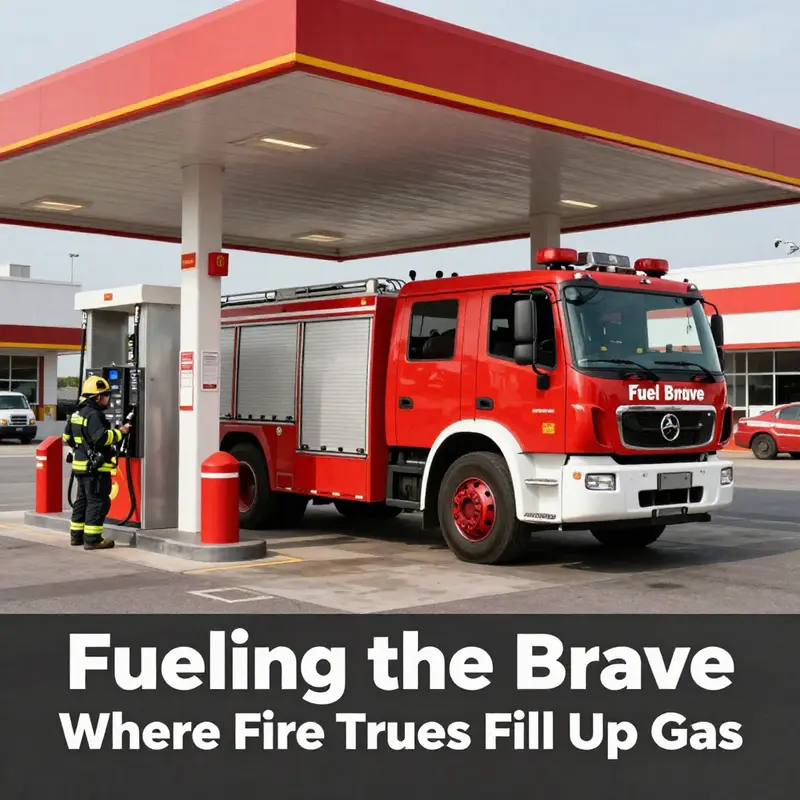
Refueling the front line of public safety is about more than delivering fuel. It is a careful choreography of speed, reliability, and safety that keeps engines ready when every second counts. Fire trucks, like other heavy emergency vehicles, rely on a steady, uninterrupted supply of fuel to power pumps, lights, hydraulics, and communication gear. The question of where they fill up—at standard public stations, at dedicated depots, or through on-site fueling at fire stations—reveals a landscape shaped by volume requirements, risk management, and the realities of dispatch operations. In most urban and suburban settings, the default is to draw from the same commercial fuel network used by the general public. Yet the reality in fire services is more nuanced: there are facilities tailored to the needs of large fleets, and there are contingency solutions designed for emergencies when normal routes to fuel become compromised. This chapter weaves those threads into a single, continuous narrative about how refueling happens in practice, what standards govern it, and why the process matters to readiness and safety.
At the core of fueling practice is a practical equivalence with automotive refueling, tempered by the realities of heavy machinery and the high stakes of emergencies. Diesel is the lifeblood for most frontline fire apparatus in many parts of the world, given the torque requirements, engine longevity, and the duty cycles of pumps and aerial devices. Public gas stations and the commercial networks that serve ordinary motorists can, with appropriate arrangements, provide the volumes and the service needed by fire fleets. These stations are familiar, widely distributed, and capable of handling the large, frequent fills that a busy department requires. The advantage is obvious: a broad geographic footprint means fewer miles spent chasing fuel, less downtime between calls, and easier replenishment during day-to-day operations. For departments that operate across a large metro region or an extensive county, access to multiple conventional fueling points means that an engine can refuel closer to the incident site or the maintenance corridor, minimizing idle time and preserving the readiness window for a shift’s next call.”””
To be sure, there is more to the fueling story than simple fuel availability. Large departments often establish and maintain dedicated fuel depots or municipal fueling stations that are engineered to handle higher throughput and the unique needs of fire vehicles. These on-site or nearby facilities may feature bulk storage tanks, automated dispensing systems, and dedicated fueling lanes designed to remove bottlenecks from the incident response cycle. A fire department might invest in an on-site fuel storage and dispensing system—an arrangement that resembles a specialized, station-scale fuel pump setup—so crews can top off between calls without leaving the facility. The advantage of such on-site capacity is clear: reduced travel time to outside stations, tighter control over inventory, and the ability to choreograph refueling with routine maintenance and pressure checks on the fleet. Because accessibility to fuel is a strategic asset, departments often negotiate with local providers or operate these systems under municipal oversight, ensuring reliability even during peak demand or adverse weather.
Safety and standards sit at the core of every fueling decision. The absence of fuel on the fire ground does not remove risk; it shifts it. The same hazards that govern gasoline and diesel handling in civilian contexts apply with even greater seriousness when a fleet operates around a dozen or more heavy vehicles with large storage tanks. This is why fueling infrastructure is aligned with established safety frameworks. Two prominent benchmarks influence the way fuel is stored and dispensed for fire services: NFPA 30, the Flammable and Combustible Liquids Code, and the broader fuel quality and handling context provided by ISO 17259. NFPA 30 covers storage cabinets, venting, grounding, spill prevention, ventilation, and the readiness of fire suppression equipment in fuel areas. ISO 17259 specifies fuel quality parameters to ensure that engines and pumps operate smoothly under emergency loads. Together, these standards create a framework in which a fire department can refuel with confidence that the process does not introduce unacceptable risk to personnel, the community, or the apparatus itself.
The on-site fueling model often appears as a well-integrated component of a fire station’s architecture. Tanks may be underground or above ground, and dispensing systems are typically tied to a dedicated electrical grounding network. Spill containment features and dedicated fire-rated zones are common, and emergency shutoffs are a standard feature of modern systems. In the best setups, fueling occurs in a controlled sequence that minimizes contact with people and other equipment, with pre- and post-checks that verify valve positions, nozzle pressures, and hose integrity. The procedural discipline mirrors automotive fueling but adds layers of redundancy, given the critical mission of the fleet. Catch basins, secondary containment, and ventilation are not mere add-ons; they are essential safety components that prevent fuel from migrating and creating a hazard in a busy station environment.
Of course, not every department can or should build and maintain its own full-scale fueling depot. Budget constraints, land use constraints, and municipal risk considerations shape the decision matrix. In some districts, the most sensible arrangement is a hybrid one: a mix of high-availability public stations within a reasonable radius, supported by a limited on-site capability for rapid top-offs and maintenance cycles. In this hybrid approach, the department still adheres to the same general safety rules, but the logistics are tuned to the realities of a given region. The goal remains constant: keep the fleet moving and ready without sacrificing safety or reliability. The result is a fueling ecosystem that feels invisible to the public but that operates with a quiet precision behind every call for service.
A crucial finding from practice is that fueling is not simply about delivering fuel; it is about preserving readiness across a hierarchy of needs. The dispatch pattern matters as much as the pump nozzle. If a station is frequently congested, replenishment times can ripple through the entire response sequence. When a department anticipates high call volume or special events that draw resources, it may stage fuel delivery or pre-position supplies to circumvent potential delays. Fuel inventories are tracked with the same seriousness as spare parts or critical maintenance supplies. Inventory turns are monitored, and restocking decisions take into account the anticipated use for the coming days and the seasonal changes in demand. In rural or mountainous regions, where distance between depots and stations can be substantial, the calculus expands to include travel time, weather, and the risk of fuel scarcity. In those contexts, a few well-placed depots or mobile fill units can mean the difference between a vehicle returning to service promptly or waiting out a backlog.
Mobile fueling units add another layer to the narrative. When emergencies unfold in remote areas or during a large incident that seizes a region, mobile fill capacity becomes a critical hedge. These units are designed to deliver fuel directly to the scene or en route to the next assignment, reducing the need for the apparatus to depart the incident footprint for refueling. They provide flexibility and rapid deployment, which can be a decisive advantage during a critical phase of a response. The trade-offs include considerations of security, tracking, and coordination. Mobile units are powerful tools, but their deployment must be integrated with the overarching risk management plan and local regulatory expectations. In practice, this can mean temporary mobilization of mobile fueling resources at a defined staging area, with strict access controls, incident command coordination, and continuous communications with the fueling operators to prevent confusion and misallocation of scarce resources.
All of these configurations—public stations, on-site depots, and mobile fill units—reveal a shared philosophy: safety, reliability, and speed are not conflicting goals but mutually reinforcing pillars of an effective refueling program. The equipment used in refueling reflects this balance. Robust diesel pumps, properly rated hoses and nozzles, and grounding cables are standard. Spill kits and absorbent materials are strategically positioned so that a spill can be contained immediately. Fire suppression equipment is available and visible, not as a nuisance but as a critical precaution. Training for drivers, fueling attendants, and station personnel is ongoing, with drills designed to simulate the high-pressure conditions of a real incident. The aim is not only to prevent accidents but also to ensure that any incident caused by fueling—however unlikely—can be managed quickly and transparently.
Another layer to the discussion is the way fueling infrastructure blends with the broader ecosystem of fleet maintenance and safety compliance. Fueling is scheduled alongside preventive maintenance, tire checks, and engine science—areas where the stakes are high because a failure in any single component can compromise an emergency operation. The coordination extends to the facilities management teams that oversee fueling spaces, the procurement offices negotiating fuel contracts, and the safety officers who audit the entire operation. In well-run departments, fueling is a routine task that is invisible to most firefighters and constituents, but it is indispensable to the unit’s ability to respond. It becomes part of a disciplined culture that treats every day as an operational rehearsal for the moment when engines must roar to life and carry crews to the scene with the confidence that their fuel system will perform when it matters most.
For readers who want to explore related discussions or case studies, a wealth of practical perspectives exists in the broader fire service dialogue. The Firetruck.Space blog offers articles that delve into equipment, operations, and safety practices. It can provide additional context about how fueling interfaces with other core functions of the fire service, from apparatus design to command systems. Firefighters, fleet managers, and training officers can benefit from examining real-world examples, even as they continue to adhere to established standards and local regulations. Firetruck.Space blog
In sum, the question of where fire trucks fill up—whether at standard stations, at dedicated depots, or through on-site and mobile solutions—encapsulates a practical fusion of logistics, safety, and readiness. The absence of a single universal model does not indicate chaos; it signals adaptability. The fueling ecosystem is shaped by the region’s geography, the size of the fleet, and the operational tempo of the department. It is powered by a shared discipline that values clean handling, robust safety practices, and a relentless focus on keeping engines ready. Amid these dynamics, the standards—NFPA 30 for safe storage and handling, ISO 17259 for fuel quality—provide the guardrails that ensure every drop of fuel is delivered without sacrificing the safety of responders or the public. As technologies evolve, as fleets grow in complexity, and as the demands of service become more intense, the fueling strategy of today will continue to adapt. Yet the core aim remains constant: to get fuel to the machine that carries the mission forward, quickly, safely, and reliably.
External resource: For official guidance on safe handling and storage of flammable and combustible liquids, see NFPA 30 at https://www.nfpa.org/codes-and-standards/fuel-storage-standards/nfpa-30
Fuel on the Front Lines: Where Fire Trucks Refill Fuel When Time and Terrain Demand Rapid, Reliable Replenishment
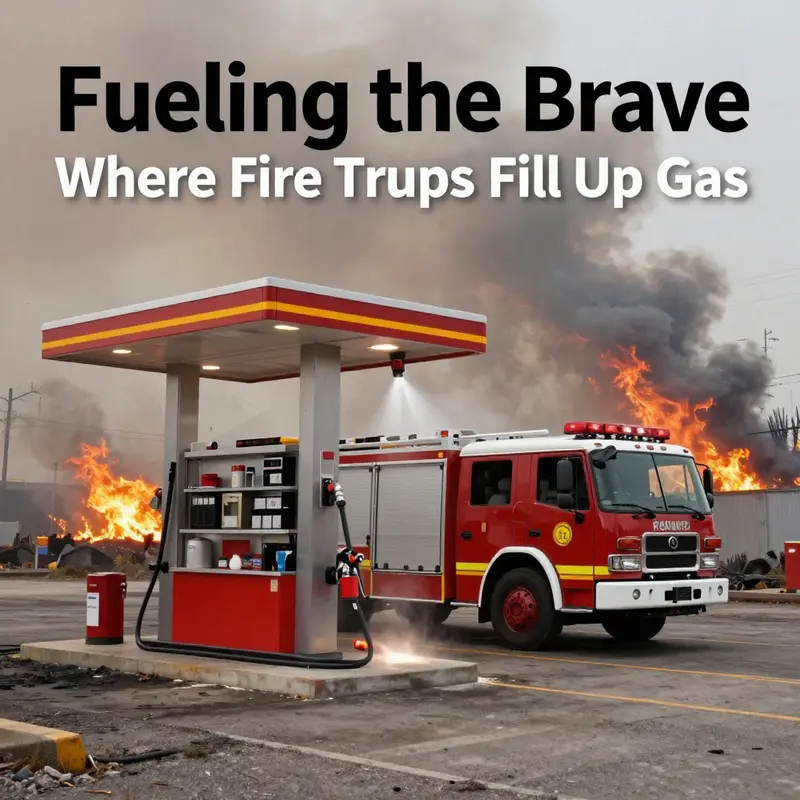
Fuel on the front lines of emergency response is a subtle, rarely celebrated backbone of firefighting. When sirens slice the air and doors swing open to unleash a flood of apparatus and personnel, every gun-metal engine and ladder truck moves with precision not just because of its pumps and valves, but because its fuel balance is steady, predictable, and ready to sustain hours of action. Fire trucks do not simply arrive at a gas station and refill like the average commuter. Their refueling is a carefully choreographed sequence that blends standard practice with adaptive field logistics, a blend that shifts depending on the moment, the place, and the scale of the crisis. In the everyday rhythm of urban life, fueling occurs at established fuel stations that can accommodate large commercial tanks and the heavy equipment that keeps the fleet ready for service. These stations, evenly distributed across cities, towns, and industrial zones, offer the familiar grid of diesel or gasoline pumps, wide aisles for maneuvering massive apparatus, and safety protocols designed for demand spikes and high-volume fueling. The tanks in a fire truck are substantial, carrying many hundreds of gallons, and the fueling process must respect that heft. Operators work through a routine that minimizes exposure, ensures accurate accounting, and preserves the condition of valves, meters, and hoses. What looks like a routine stop is in fact a critical node in a longer chain of readiness, a node that keeps pumps primed and nozzles flowing in service of time-sensitive priorities.
Yet the reality of emergency response is that fixed fueling infrastructure is not always accessible or reliable when it matters most. Natural disasters, large-scale fires in dense urban areas, or incidents that disrupt transportation networks can overwhelm or damage traditional fueling points. In those moments, the fleet must adapt. Here mobile fuel stations rise from the periphery of logistics into the foreground of field operations. These units, purpose-built or adapted for rapid deployment, can be towed or wheeled directly to a scene or to a staging area near the command post. They function as a portable backbone for refueling operations, delivering diesel or other fuels directly to the apparatus as it sits in a depot, a roadside extension of a firehouse, or a remote battlefield of hazard and need. The extraordinary value of mobile fuel stations lies not in novelty but in resilience: their ability to transcend the geography that otherwise constrains a response, their capacity to stay with the incident, and their speed in bringing fuel supplies where fixed stations may not reach quickly enough.
The decision to rely on mobile fueling is not taken lightly. Standards and safety considerations guide every choice, from the design of the dispensing equipment to the monitoring of fuel quality and containment measures. In many agencies, the mobile units are equipped with independent safety features that address both the field risks and the logistics of operating near active firefighting scenes. The phrase mobile fuel station, while evocative, belies the complexity of the operation: it is a compact fuel facility that travels to the point of need, with pumps calibrated for field use, with fuel storage designed for robustness against the elements, and with control systems that guard against spills, vapors, and static discharge. The tension between flexibility and security is never far from conscious decision-making. On one hand, flexibility enables rapid deployment and direct support to ongoing operations; on the other, security and safety are non-negotiable in the presence of highly flammable liquids, demanding weather, and the unpredictable dynamics of an emergency site.
The practicalities of where a fire department refuels are shaped by a mix of geography, incident type, and operational doctrine. If a neighborhood station lies within reach and its fueling infrastructure is intact, the unit may pull up to the familiar forecourt and proceed with standard procedures. The fueling crew follows a disciplined workflow: grounding to dissipate static electricity, a careful connection of hoses and nozzles to prevent leaks, precise measurement to ensure the tank does not overfill, and an accounting step that reconciles fuel going in with fuel used for that shift or incident. In larger departments, the fueling history is tracked across a transportable fueling log that accompanies the apparatus through the incident, ensuring accountability while also enabling rapid handoffs between shifts and crews. In many cases, fuel is not simply a personal responsibility of the operator but a shared logistical concern, coordinated with dispatch, with the fueling supervisor, and with the incident command structure that governs the scene. The chain of custody for fuel — who dispenses it, where it goes, and how much remains — matters as much as how quickly the nozzle is opened.
The scene of crisis often dictates the method. In urban canyons where street geometry is tight and the risk of collateral damage is high, a mobile fueling unit may be deployed to a secure edge of the incident, or a temporary depot may be established at a safe distance from the most active flame zones. The mobile unit’s design emphasizes rapid setup and close proximity to the apparatus. It can service several engines in sequence, reloading its own supply or docking with a larger regional fuel network that is prioritized for emergency use. In rural or disaster-affected landscapes, field fueling becomes a lifeline that keeps emergency operations from stalling. A mobile dispenser can be moved to a location with the clearest access to transport routes, a simple objective in terrain where every mile of travel translates into seconds saved in reaching a fiery objective. The ability to move the fueling point to the footholds of where the action is unfolding reduces what would otherwise be costly downtimes caused by the distance between a firehouse and the immediate needs of the incident. These are not mere conveniences; they are lifelines that support sustained operations when every minute compounds the risk and the stakes.
As with any specialized equipment, the technical standards behind mobile gas filling stations matter. They are designed to operate in environments that test ordinary equipment: dusty yards, rain-lashed tarmacs, uneven ground, and the constant rhythm of urgent activity. The safety architecture includes leak containment measures, flame arrestors, vapor recovery considerations, and procedures that minimize the risk of ignition near fueling operations. A robust mobile unit balances speed with security, enabling a predictable refueling cadence while still offering the flexibility to adapt to shifting conditions. It is this balance that has earned mobile fueling a practical place within the spectrum of emergency logistics. When fixed stations are compromised, a well-placed mobile unit can become a secondary backbone that prevents a bottleneck in supply and preserves the tempo of response. The capacity to deliver fuel on-site reduces the need for extended exposure to hazard while still ensuring that the apparatus can stay in service for longer stretches of time.
Fueling during emergencies also involves cross-functional coordination. The incident command system, the logistics unit, and the fueling team must operate in tandem. The dispatcher gauges the fuel demand across the fleet, anticipating how long operations may last and how many engines will need resupply within a given window. The fueling supervisor, aware of the careful stewardship of fuel resources, schedules replenishments with attention to the safety margins required by the incident’s scale. This coordination matters just as much as the physical act of pumping. If a large fire scene stretches for hours, continuous on-scene fueling with mobile support becomes essential to prevent trucks from running dry during critical offensive or defensive actions. In these moments, the field becomes a moving diagram of supply routes and refueling points — a fabric of decisions woven through radios, signals, and routine checks that keep the engines running and the water in the lines.
All of this occurs within a culture that values safety above speed. The field is potential ground for hazardous scenarios: static electricity, incompatible fuels, misaligned hoses, or improper bonding. Fuel handling requires attention to the basics: grounding the vehicle so static discharge cannot ignite vapors, ensuring that hoses and connectors are compatible and secure, and verifying that the nozzle and pump settings align with the vehicle’s intake. The emphasis on safety translates into training that happens as part of ongoing readiness drills, not as a stand-alone exercise. Firefighters train to recognize signs of fuel degradation or contamination, to test lines under pressure before connecting the apparatus, and to substitute with care when weather or terrain introduces new risk factors. In this sense, refueling is not a casual pause in the operation but an extension of the same discipline that governs pump operations, ladder safety, and crew accountability. The goal remains simple and demanding: to keep every engine fueled and every line primed for action, so that when the call comes, the response is swift, coordinated, and relentless.
There is also a broader sense in which refueling reveals the character of a fire service and its relationship to the communities it protects. Stations that rely primarily on fixed fuel points reflect a strategy built on predictable network access and routine scheduling. In areas with dense urban infrastructure, the density of stations helps sustain the fleet with minimal disruption. In regions where redundancy matters, mobile fueling augments this network, offering a hedge against outages and enabling a more robust response, especially during large-scale emergencies that overwhelm conventional supply channels. The choice between fixed and mobile fueling is not a simple debate about preferences; it is a reflection of risk management, geography, budget constraints, and the evolving demands of modern firefighting. Agencies that adopt a hybrid approach—maintaining steady access to traditional stations while keeping a fleet of mobile units ready for deployment—tend to demonstrate higher resilience. The field benefits from redundancy, but it also benefits from the discipline of stewardship that keeps those resources aligned with the operational picture rather than chasing the crisis across the map.
In the broader conversation about how fire services maintain readiness, the topic of refueling intersects with other logistical concerns: how trucks are stationed at the firehouse, how crews rotate, how the fleet’s maintenance schedule aligns with fuel use, and how fuel management integrates with other essential services. The fueling process does not exist in a vacuum; it is part of the larger ecosystem that includes equipment care, supply chain management, and the continual training that keeps responders prepared for the unexpected. The balance of field flexibility and organizational control is a dynamic equilibrium: it requires foresight about potential incidents, a clear set of procedures for both stationary and mobile fueling, and a culture that treats fuel as a critical resource worthy of careful stewardship. When conditions permit, fueling at a standard station offers the reliability and consistency that come with scale. When conditions demand speed and reach, mobile fueling offers a practical, scalable alternative that helps to close the gap between demand and supply on the ground.
For readers interested in further nuances of mobile refueling and its role in emergency logistics, practical discussions and technical explorations are available in detailed resources that examine standards, properties, and real-world applications. In particular, the concept of a mobile gas filling solution as a field unit highlights how rapidly such systems can be deployed and how they address the realities of hard-to-reach locations or damaged infrastructure. These guides underscore the importance of reliability in the face of adversity and remind us that the question of where fire trucks fill up gas is not a singular inquiry but a window into the broader architecture of modern emergency response. As communities grow and climate-related hazards become more complex, the interplay between fixed facilities and mobile support will likely deepen, reinforcing the need for integrated planning that keeps the fleet ready, regardless of where the incident unfolds. To learn more about the technical standards and practical applications of mobile gas filling stations, readers can explore industry resources that detail deployment strategies, safety features, and field-tested workflows, which illuminate how these mobile solutions fit into the larger mosaic of public safety.
In the end, the question of where fire trucks fill up gas is answered not by a single location but by a system that blends permanence with flexibility. It is a system designed to keep pace with the unpredictable tempo of emergency response, a system that recognizes fuel as a vital and finite resource, and a system that ensures that when the call comes, the fleet is ready to roll with fuel in the tanks and resolve in the drivers’ hands. The chapters of this logistics story may look different from station to station and incident to incident, but the throughline remains constant: fuel is not an afterthought but a defining element of how fire services protect life and property. The ability to keep pumps primed, to sustain the tempo of responses, and to deliver fuel where it matters most — that is the enduring craft of fueling the front lines.
For readers who want to see this dynamic discussed within a broader discourse on firefighting logistics and field readiness, the Fire Truck Space blog offers ongoing perspectives on how departments adapt equipment, training, and supply chains to meet diverse challenges on the ground. It provides a useful context for understanding how refueling fits into a larger system of readiness, crisis management, and community protection.
External reference for deeper technical insight: Mobile Gas Filling Station Explained: Technical Standards, Properties, and Practical Applications, which outlines the specifications and practical considerations for mobile fueling units and related safety measures. https://www.gasfiling.com/mobility/gas-filling-station-technical-standards
Refueling for Duty: Navigating Where Fire Trucks Fill Up in a Hybrid and Electric Era
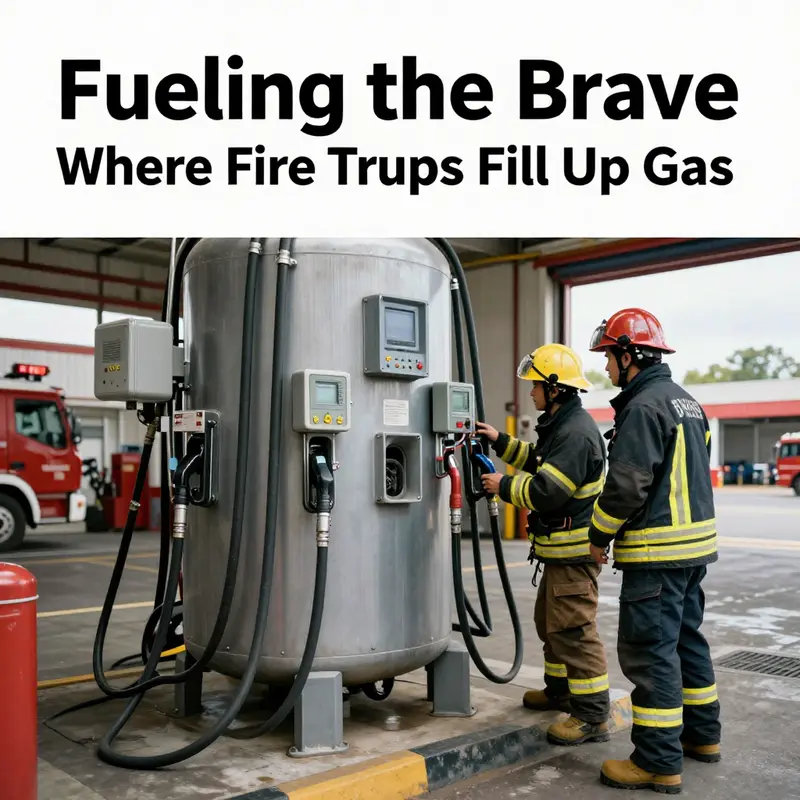
Fuel is the quiet prerequisite of every high-stakes response. When a siren cuts through the night, the firefighter behind the wheel is not just steering a machine but ensuring the engine that powers pumps, extinguishing tools, and lights remains ready to respond. In the long arc from station to incident, fueling is both a practical routine and a strategic consideration. For most engines, the path to refill begins at the familiar, if oversized, canopies of standard commercial fuel stations. These sites host the heavy tanks and armored dispensers that can swallow diesel or gasoline at volumes that match the demands of a full fire apparatus fleet. The logistics are straightforward in principle: crews plan for refueling between calls or during planned downtime, synchronize it with shift schedules, and rely on the same grid of stations that service private and municipal fleets alike. The simplicity of this workflow belies the precision that underpins it. Large fuel tanks at stations are purpose-built to handle the sustained, often high-flow demands of emergency services. Metering systems, pressure regulation, and safety interlocks are calibrated to minimize the risk of spills, leaks, or misfueling. Even in normal times, the fueling act is a choreography—one that must accommodate quick turnarounds, weather, terrain, and the unpredictable cadence of an incident response. In practice, the routine remains dependable because it is anchored to infrastructure designed for heavy, continuous use. Yet fueling is evolving, not as an isolated change but as part of a broader transformation in how firefighting fleets generate, manage, and deploy power on the job.
In urgent circumstances or in locations where fixed fueling stops are scarce, mobile fueling units play a critical role. These on-site refuelers, built to deliver fuel directly to apparatus in the field, provide a flexible solution for temporary operations, off-road deployments, or remote incidents where access to a traditional pump might be compromised or impractical. The ability to bring fuel to the vehicle reduces downtime and preserves the momentum of a response, a factor that matters immensely when every second counts. Still, mobile fueling comes with trade-offs. The efficiency of the operation depends on the reliability of the unit, the safety protocols deployed, and the availability of secure, safeguarded storage near the point of use. The literature notes that mobile filling stations often offer rapid deployment and flexibility, but may be perceived as less secure than containerized solutions in certain settings. Taken together, these fueling modalities reflect a practical diversity: fleets rely on fixed, high-capacity stations for routine operations while maintaining mobile options to ensure readiness in the face of disruption or unusual geography.
Against this practical backdrop, the introduction of hybrid and alternative-fuel technologies is reshaping the entire fueling equation. The modern fire department is increasingly experimenting with propulsion systems that blend traditional diesel with electric power, a shift driven by both cost considerations and environmental responsibility. Hybrids promise a meaningful reduction in fuel consumption and emissions without sacrificing the proven reliability of diesel propulsion for high-demand operations. A 2025 study highlighted in industry analyses suggests that hybrid fire trucks can cut operating costs by as much as half and reduce CO2 emissions by as much as seventy percent in certain duty cycles. While these figures will vary with duty profile and terrain, the direction is clear: the fuel landscape for fire apparatus is moving toward efficiency gains that ripple through every aspect of operations, from maintenance scheduling to fueling logistics.
To understand why hybrids matter so much to fueling, it helps to look at the specific technologies that enable efficiency on the road. Regenerative braking, a feature common to hybrid powertrains, captures energy that would otherwise dissipate as heat during deceleration and feeds it back into the battery pack. While this energy recovery is not a substitute for pulling fuel from a pump, it reduces the total energy demand placed on the internal combustion engine during typical shifts. Similarly, optimized engine use—where the vehicle operates on electric power during cruising, idling, or low-demand phases—reduces both fuel consumption and emissions. In practice, this means that the same vehicle can spend more time in a energy-saving mode rather than running the diesel engine at full tilt while it is idling on a scene or cruising across town.
The fueling infrastructure surrounding these hybrid systems is evolving in tandem with the vehicles themselves. Some fire departments are investing in dedicated charging stations that are integrated directly into existing fire station facilities. These charging ecosystems are designed with the station’s unique needs in mind: space for multiple high-capacity charging outlets, secure access during all hours, power management systems that prevent electrical overloads, and ample safety features that align with the demanding environment of a fire facility. Overnight charging becomes a core capability, turning the station into a hub not only for vehicle maintenance but for continuous readiness. The result is a more predictable and efficient cycle of use: the vehicle returns from a call, is connected to a charging regime that aligns with its duty cycle, and emerges ready for the next assignment while the station staff attends to preventative maintenance and inspection regimes.
Complementing charging capacity, smart fuel management systems are beginning to permeate fleet operations. These systems monitor fuel consumption in real time, track refueling events, and produce actionable insights about which shifts, routes, or incident types yield the greatest fuel draw. The benefits are twofold. On one hand, real-time monitoring helps fleet managers optimize refueling schedules to minimize downtime and ensure that emergency vehicles are always ready when called. On the other hand, data analytics can identify inefficiencies—such as extended idling, suboptimal routing, or excessive use of high-load pumps—that can be addressed through training, policy adjustments, or infrastructure changes. In essence, the pump becomes a data node in a broader system for operational readiness. As fleets begin to operate with a hybrid blend of propulsion, these digital tools are not merely ancillary; they become integral to decisions about where and how fueling occurs.
Yet fueling is not limited to hybrids. The broader arc of technological exploration includes fully electric fire trucks and, as a longer-term possibility, hydrogen fuel cell-powered vehicles. Fully electric configurations promise each vehicle its own dedicated charging routine, potentially with faster charging capabilities and fewer moving parts than a traditional diesel engine. The environmental payoff—lower overall emissions at the point of operation—aligns with public expectations and municipal sustainability goals. The challenges, however, are nontrivial. Fully electric trucks demand robust, ubiquitous charging infrastructure that can deliver high-energy throughput rapidly enough to sustain peak response times. In practice, this means not only more charging stations within fire precincts but also robust grid support and smart load management so that charging at night does not strain local power supplies during the day. The economics of charging hardware, battery life, maintenance of power electronics, and the lifecycle costs of batteries are active areas of study as departments weigh the transition from diesel to electric propulsion.
Hydrogen fuel cells represent another avenue of exploration, one that depends on the development of a reliable fueling network for hydrogen. Hydrogen systems offer compelling benefits in terms of energy density and rapid replenishment, but they hinge on the availability of appropriate fueling stations and safe handling protocols. The current trajectory toward hydrogen relies on coordinated planning with energy providers and municipalities to create an accessible, safe, and scalable hydrogen infrastructure. In the near term, many departments view hydrogen as a strategic option for the future, to be pursued in parallel with hybrid and electric initiatives rather than as a wholesale replacement for existing fuel modalities. The central point is that fueling strategy for fire apparatus in this era is becoming increasingly modular. Departments can mix and match propulsion architectures and charging or fueling modalities to suit climate, geography, mission profile, and budget constraints, while maintaining readiness through consistent, well-managed fueling practices.
The practical implications of these shifts are substantial. The most immediate is the need to rethink where and how refueling and charging occur. Fixed refueling at traditional stations remains a staple for routine operations, but the ability to maintain continuous readiness hinges on a more resilient network of charging and fueling options. In remote or disaster-affected areas, mobile fueling can bridge gaps, but its use must be carefully coordinated with safety protocols and logistical planning. The overarching theme is resilience: a fleet that can draw power from multiple sources, adapt to varying conditions, and sustain high performance without sacrificing speed to the scene. This is not merely a technical evolution; it is a redefinition of how a fire department allocates time, energy, and space to fueling as a core element of readiness.
The integration of these technologies into station life also shapes the daily rhythms of crews. When a hybrid truck returns from a call, it may spend a portion of the day in electric or low-load mode, conserving diesel for high-demand segments like pump operations, heavy lifting, or rapid acceleration at an incident. The station’s charging infrastructure then becomes a metronome for the fleet: the timing of charging cycles, the sequencing of vehicles across outlets, and the duration of each session all influence how quickly a unit can be redeployed. In a system where every minute in the bay translates to greater mission readiness, these charging schedules acquire strategic importance. The smart management tools mentioned earlier play a vital role here, converting raw fuel and energy data into actionable plans that reduce downtime and maximize uptime. When a department understands its energy profile with clarity, it can design a fueling regime that keeps more engines in service and fewer idling at the curb.
The evolution also reframes the knowledge and skills required at the station level. Technicians must be versed not only in traditional mechanical maintenance but also in battery systems, high-voltage safety, charging hardware, and energy management software. Training programs expand to cover the nuances of plug-in hybrids, electric propulsion logic, regenerative energy flows, and the fault modes unique to electric and hydrogen powertrains. This broader skill set complements the discipline of fuel logistics—curricula for fueling, charging, and energy monitoring become as essential as the pump models and hoses that firefighters know by heart. In the end, fueling literacy evolves into a core competency for modern firefighting, one that ensures a team can keep pace with technology while preserving safety, speed, and reliability on every operation.
From a planning perspective, the infrastructure question is inseparable from the mission profile of a department. Urban centers with dense call volumes may prioritize rapid, high-throughput refueling and charging within the precinct’s footprint. Rural or remote departments may lean more heavily on mobile fueling options and resilient battery storage strategies that extend range between charges. Large regional fleets might pursue a hybrid approach that balances diesel reserves for peak demand while leveraging electric propulsion for routine patrols and non-emergency movements. Across these scenarios, the unifying objective is clear: fuel and energy management must align with the department’s operational tempo, its geographic realities, and its financial constraints. As technologies mature, the cost calculus will continue to tilt toward configurations that reduce total operating costs while preserving or enhancing mission readiness. The evidence accumulated in recent studies suggests that the advantages of hybrids, efficiency gains from regenerative and optimized engine use, and investments in charging and smart management systems all feed into a common outcome: a fleet that can respond quickly, reliably, and with a lighter environmental footprint.
For readers seeking further context on how departments navigate the practicalities of these evolving fueling solutions, a useful companion resource sits at the Fire Truck Blog. It offers perspectives on hardware choices, infrastructure planning, and the everyday decisions that accompany a shift toward hybrid and electric propulsion. You can explore more at: Fire Truck Blog.
As fueling strategies continue to adapt, the chapter on these transformations remains tightly bound to the broader question of readiness. The coming years will likely reveal a path in which fueling and charging are less about a single moment of refueling and more about a continuous, data-informed cycle that feeds the fire service’s mission. Stations will become power hubs that support a mixed fleet, mobile units will fill only the gaps where fixed infrastructure cannot reach, and digital systems will turn fuel and energy data into real-time decisions about crew allocation, maintenance, and response times. The pace of change will test traditional workflows, but it will also unlock new possibilities for faster, cleaner, and more dependable service.
For a deeper dive into the efficiency implications of hybrid fire trucks, readers may consult the Hybrid Fire Trucks Study, which provides a rigorous assessment of fuel use, emissions, and cost considerations across duty cycles. External resource: https://www.sciencedirect.com/science/article/pii/S187770532500026X
Final thoughts
Understanding where fire trucks fill up gas is not just about the logistics of fueling—it’s about ensuring that our first responders are always prepared for action. Whether through standard commercial stations or during critical moments with mobile fuel units, the importance of reliable and efficient fueling practices stands out. As technology evolves, so too will our methods, further enhancing the readiness and capability of these vital units that serve the community. Keeping fire trucks fueled and operational is a teamwork effort that ensures that help is always just a moment away.