
Fire trucks are a sight to behold, embodying power and safety as they race through our streets to combat emergencies. But have you ever pondered how much they actually weigh? The weight of a fire truck can vary tremendously, reflecting its size, configuration, and intended use. This article will uncover the fascinating details behind the numbers, diving into the different weight classes, the impact of size and design, and how essential equipment contributes to overall heft. Each chapter will reveal key insights for fire truck enthusiasts, aspiring firefighters, and emergency professionals alike, enabling you to appreciate not just their structure but the crucial role they play in protecting lives and property.
Carrying the Burden of Readiness: A Deeper Look at Fire Truck Weight Classes
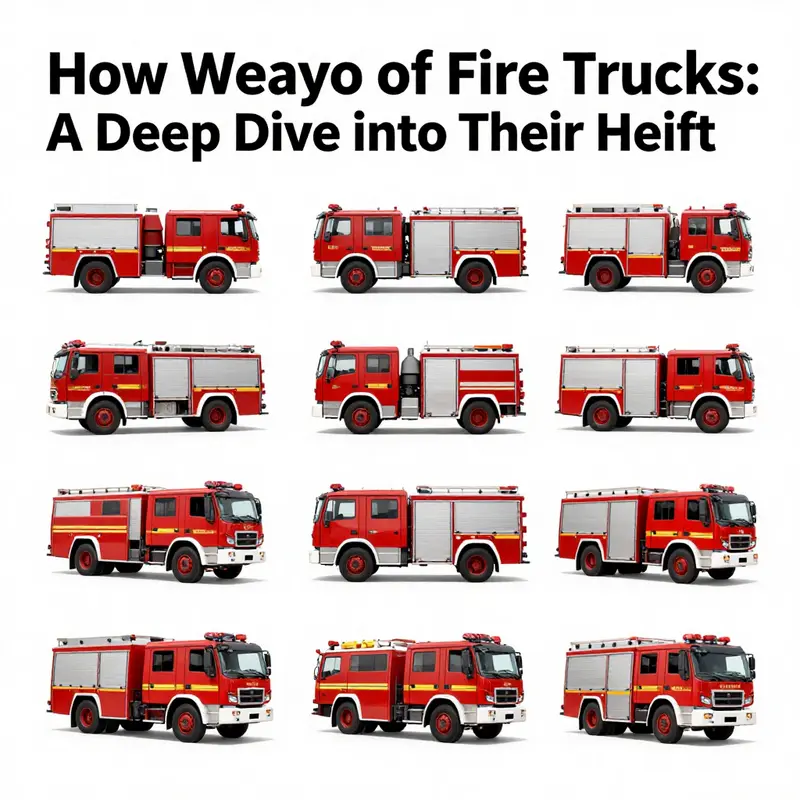
Weight is more than a static number on a spec sheet. In firefighting, it is a live constraint that shapes how quickly a truck can respond, how safely it can operate, and what terrain it can conquer. The weight of a fire apparatus varies widely, spanning roughly from 10,000 to 25,000 kilograms, or about 22,000 to 55,000 pounds. Those figures sound straightforward, but they summarize a spectrum built from purpose, design, and the demanding realities of firefighting. Lighter, more agile models are favored for confined streets and rapid initial attack. Heavier configurations, loaded with water, foam, tools, and specialized equipment, are chosen when reach, volume, and personnel support are necessary for the long haul. The weight distribution you see on a single chassis reflects a careful balance: enough mass to carry water and gear, but not so much that handling, braking, and compliance with road limits are compromised. This balance is at the core of why there is no single “fire truck weight” number; instead there are weight classes that map to roles, environments, and operational philosophies.
Among the most frequently cited ranges, a typical pumpers’ weight sits between 15,000 and 30,000 pounds, roughly 7 to 14 metric tons. That cadre includes the chassis, the water tank, hoses, a pump, and the core set of firefighting equipment needed for initial containment and support operations. The water tank itself is a major contributor to mass, commonly holding between 500 and 1,000 gallons. When water is on board, every gallon weighs about 8.34 pounds, and that translates quickly into a substantial overall load. The payload—the equipment and crew the truck carries beyond its own weight—nudges the total further upward, and the exact figure depends on the mission profile of the department and the intended usage of the vehicle. In practical terms, a pumper’s weight is a measure of how much water can be deployed in a given moment, and how many tools can be stowed for a rapid, on-scene response.
Ladder trucks, which carry extendable aerial devices or platforms, illustrate how much weight can shift when specific capabilities are added. They are heavier on average, commonly ranging from about 25,000 to 40,000 pounds, or 11 to 18 metric tons. The ladders and platforms themselves contribute a few thousand pounds, but so do the additional stabilizing systems, the extended reach apparatus, and the extra equipment that such units carry to support elevated rescues and high-access operations. The performance burden of this extra mass is not just in acceleration. It shows up in braking distances, in tire and suspension design, and in the need for robust transmission and chassis systems that can sustain operations while on display in urban landscapes or on challenging backroads.
Rescue trucks occupy a lighter end of the spectrum, often weighing in the 10,000 to 20,000 pounds range, or about 4.5 to 9 metric tons. They tend to be optimized for extrication, confined-space work, and technical rescue duties. Because their mission does not revolve around carrying large volumes of water, they typically forego massive water tanks in favor of tools, stabilization equipment, cutting and spreading gear, and specialized rescue devices. The lighter mass enables quicker maneuvers in tight spaces and rapid deployment in situations where space is a premium, underscoring how weight class is not just a matter of capacity but of mission fit.
The wildland specialty adds another dimension. Wildland fire engines are designed for off-road terrain, with four-wheel-drive configurations and water capacities tailored to brush and ground-fire scenarios. They generally fall in the 12,000 to 25,000 pounds range, roughly 5.5 to 11.5 metric tons. The emphasis here is a blend of mobility and fuel efficiency, with a lighter chassis and rugged tires that can traverse uneven surfaces while still delivering a steady stream of water to the fire’s perimeter. The goal is to maintain traction and maneuverability in remote areas where pavement either does not exist or becomes a hazard when heavy machinery moves across it.
Beyond these core classes, specialized units can push the scale upward. Foam responders and airport rescue and firefighting (ARFF) vehicles, which may carry large quantities of foam concentrate and other high-impact equipment, can exceed 40,000 pounds, or more than 18 metric tons. The logic is straightforward: more extreme environments demand larger tanks, more robust stabilization and pump systems, and an expanded suite of tools designed to handle catastrophic scenarios. Each additional capability adds mass, and weighs against the vehicle’s agility and the regulatory limits of road transport.
What these numbers illuminate is a simple truth: weight is inseparable from purpose. A fire department’s fleet is an array of instruments tuned to different tasks. The pump, the ladder, the rescue toolset, the foam capacity, and even the off-road capability all contribute to a weight budget that must be managed with care. The practical consequence is that weight influences every aspect of a truck’s performance. A heavier unit requires more power to accelerate, longer stopping distances, and more powerful tires and suspensions to absorb the stresses of on-road and off-road operation. It also demands disciplined logistics when routing across city streets, bridges, and weight-restricted routes. Departments will often plan the distribution of their biggest and heaviest assets away from corridors with tight weight limits, balancing the need for reach against the realities of the road network they serve.
The weight of a fire truck is not simply a product of yellow paint and chrome. It is a reflection of the design philosophy behind the apparatus. The chassis, the body, and the tank to some extent dictate a base mass, but the presence of water, foam concentrate, and specialty tools quickly pushes the scale. Water is the most obvious contributor; even modest changes in tank size produce measurable shifts in performance margins. A 1,000-gallon water tank, for instance, can swing the total weight by several thousand pounds once you factor in the pump, plumbing, fittings, and ballast. When you also add a second function—foam network, or a larger rescue toolkit—the weight curve rises further. The number tells a story about how the vehicle is expected to behave in the field. A truck designed for urban response, with compact corridors and frequent stopping, will weigh differently from one built for rural wildland mercy or for high-risk industrial settings where heavy foam and specialized equipment are the norm.
All these considerations—weight class, water capacity, equipment load, and mission profile—interlock with the rules of the road. The gross vehicle weight rating, or GVWR, and the axle load distribution determine where a given vehicle can travel legally and safely. A heavy aerial platform must be anchored on a chassis that can deliver the necessary stability and braking performance. The suspension system must withstand repeated cycles of raising and lowering a heavy arm, while tires must be rated for the loads they carry under dynamic conditions. In urban districts where bridges and overpasses impose weight limits, the department must weigh the tradeoffs between immediate reach and the practical realities of routing a vehicle through the city. In some cases, departments operate more than one configuration to ensure they can respond promptly in different environments, content to deploy a lighter, more agile unit for initial attack while another, heavier unit handles sustained operations and access to upper floors or remote locations.
The question of weight also touches design choices. The body and chassis form a kind of partnership: stronger materials may increase durability and safety, but added mass can erode the very agility that makes a fast response possible. In this chapter the focus is not on promoting any single model or brand, but on understanding how weight classes map to service needs. A versatile fleet builds resilience through diversity. A department may rely on a balance of pumper engines for initial attack, ladders for elevated access, rescue units for complex extrication, wildland engines for rugged terrain, and a few specialized trucks with large foam or ARFF capabilities. Each class carries its own weight signature, and together they form a comprehensive response system. The decisions behind those weights are driven by a constant calculation: how long can we keep a line flowing of water, how widely can we reach, and how safely can our crew maneuver from the station to the scene and back again under the stress of an evolving incident. This calculus is not abstract; it translates into training priorities, maintenance budgets, and the everyday logistics of fire service readiness.
For readers seeking a deeper dive into how construction and materials influence weight, the topic extends beyond capacity. The choice between steel or composite bodies, the distribution of ballast, and the structural design all shape the final mass and how it behaves during operation. A thoughtful exploration of steel fire apparatus, for instance, sheds light on how body construction can impact durability and weight distribution in ways that matter on both the highway and the fire ground. You can explore a detailed discussion of steel fire apparatus here: steel fire apparatus.
Ultimately, the weight classes of fire trucks reflect a discipline that blends physics with service philosophy. Departments calibrate their fleets to defend lives and property, balancing speed with reach, payload with maneuverability, and safety with capability. The numbers—10,000 to 25,000 kilograms for most frontline vehicles, and beyond for specialized units—are guideposts, not dogma. They anchor the conversation about how heavy a fire truck is and why that heaviness matters. The road ahead for any fire service is to align its weight budget with its mission profile, ensuring that every asset can perform when it is most needed and that the burden of readiness never outweighs the goal of a rapid, reliable response.
External resource: https://www.nfpa.org/Standards-and-Research/Standards/Code-and-standards-list/2026-NFPA-1917-Standard-for-Commercial-Passenger-Vehicles-Used-in-Fire-Protection-Operations
The Hidden Mass of Firefighting: Reading a Fire Truck’s Weight From Size, Tank, and Configuration

Weight is not the first thing many people notice about a fire truck, yet it governs almost every moment of its mission. Mass shapes how quickly the vehicle can accelerate to reach a blaze, how decisively it can brake on a wet road, and how stable it remains when a ladder or platform extends high above the street. It also determines how much water, foam, and rescue gear a crew can bring to the scene without compromising control. In firefighting, a machine’s weight is not a static number. It is the tangible expression of its intended role: the balance between capacity for water and foam, the reach of the tool lineup, and the resilience of the chassis and suspension under load. To understand how heavy a fire truck is, one must look at size, configuration, and the purpose behind each design choice, because every liter of water and every extra tool added to the rig shifts the entire equation of mass, handling, and performance.
Size sets the outer limits of what is possible. A compact, light‑duty model built for municipal pumping and rapid rescue sits toward the lower end of the spectrum. In practical terms, this class can weigh roughly four to five and a half metric tons when empty, and it rises quickly when loaded with water and equipment. Translating that to pounds, we’re often talking about a starting point near 9,000 to 12,000 pounds for the bare chassis and cab before water tanks and rescue gear are added. The key truth here is that the tank itself is where mass starts to grow in earnest. Water weighs about one kilogram per liter, so filling a ten‑thousand‑liter tank adds about ten metric tons to the vehicle’s weight. When a crew, hoses, pumps, and foam systems are included, the total mass climbs further still.
Larger, heavier‑duty apparatuses push this dynamic even more dramatically. A 6×4 drivetrain, designed to carry greater payloads and to operate with more traction on uneven surfaces or in off‑road conditions, can deliver substantial gains in capacity but at the cost of added weight. With bigger water and foam tanks—often in the range of ten thousand to sixteen thousand liters—fully loaded weights can easily surpass twenty metric tons and approach twenty‑five metric tons in extreme cases. It is not unusual for these heavy rigs to feature rooftop monitors, aerial ladders or platforms, advanced rescue tools, and heavy pumping systems, all of which contribute to the mass and, more importantly, to a different set of performance characteristics. The same chassis that provides a firm platform for rescue work may become less agile in city streets as ballast grows, yet it gains a steadier stability when operating at height or when the ladder is extended to reach a rooftop window.
A closer look at representative configurations helps illuminate the spectrum without getting lost in brand names. A 4×2 water tanker, common in municipal fleets, tends to weigh around six metric tons when configured for service, and a crewed load can push the gross weight well past that figure if a significant amount of water is carried. This class emphasizes agility and quick response, with a modest footprint that serves tight streets and smaller stations well. In contrast, a larger 6×4 model with a foam/water combination tank commands far more mass. The presence of a larger chassis, supported by a heavier drive axle, and the inclusion of a bigger water reservoir can drive the vehicle’s weight upward by several tons compared with the smaller end of the spectrum. When fully equipped for sustained firefighting and complex rescue operations, such a unit may be the heaviest you will see on a municipal ramp, carrying a payload that makes the difference between a rapid knockdown and a drawn‑out fight to contain a blaze.
Tank capacity is the most obvious lever affecting weight, but it is not the only one. The water tank is not simply a container; it is a critical system that must be engineered to withstand high pressures, maintain structural integrity, and integrate with foam lines, monitors, and pumping gear. Ten thousand liters of water weigh ten metric tons; sixteen thousand liters bring an additional six metric tons into the mix. Even before adding the chemical foams, dry tools, medical kits, and PPE, that is a meaningful swing in mass. Foam and dry chemical concentrates provide a smaller but still meaningful contribution to weight, especially when carried in substantial quantities for diverse fighting conditions. The pumping unit itself, designed to move water at high pressures, has its own mass, ranging from compact to extensive, depending on capacity and redundancy. In all cases, the pumping system’s mass blends with the water, foam, and equipment to arrive at the vehicle’s total loaded weight.
Chassis design influences weight distribution just as much as total mass. A 4×2 chassis, while lighter, typically relies on its two driven axles to distribute weight effectively for urban driving. A 6×4 chassis, with three axles and often a more robust suspension, can place more weight toward the rear when heavily loaded, which has implications for steering feel, brake balance, and tire wear. Aerial ladder platforms, knuckle cranes, and other rescue tools further complicate the mass equation. When these elements are included, the vehicle’s center of gravity rises, and the engineers must compensate with reinforced frames and carefully tuned suspension to maintain stability. The result is a machine designed for a precise mission profile rather than a single universal duty. The same considerations that enable a truck to ascend a building with a long ladder can also limit how quickly it can stop or how sharply it can turn when fully loaded.
Beyond the physics of mass, safety standards and certifications add another layer to weight. Structural integrity, crashworthiness, and compliance with global testing regimes require robust construction, increased material thickness in critical areas, and more complex safety systems. These upgrades deliver resilience on the fireground but can also contribute to the cumulative weight. The mass therefore becomes a byproduct of a tempered design philosophy: build enough strength to carry heavy loads safely, while integrating advanced pumping and rescue capabilities without sacrificing essential handling. In practice, this means the heaviest rigs are those built to maximize water capacity and rescue potential for challenging scenes, such as multi‑organization operations or large industrial facilities where longer response times and tougher conditions heighten the need for robust mass and power.
The practical implications of weight extend to every driving decision on the way to an incident. Heavier rigs require longer braking distances, greater stopping power, and more careful management of speed through urban corridors. They demand precise weight distribution to avoid overloading front or rear axles, which can affect tire wear and suspension fatigue. They also constrain bridge crossings, underpasses, and summer heat performance where engine cooling and tire grip are critical. Fire departments plan around these realities. They weigh the benefits of enhanced water capacity and toolsets against the imperative to maneuver quickly and safely in congested streets. The best designs balance the urgency of firefighting with the discipline of road travel, creating a platform that can both reach a scene promptly and perform at the needed height, reach, or water output without compromising control.
For anyone evaluating options or simply curious about how these machines come together, it helps to examine real‑world comparisons without tying yourself to a single model. If you’re curious about current offerings and how they map onto the weight concepts described here, you can explore a range of listings at fire-trucks-for-sale. The catalog approach is practical because it shows how different departments balance weight, volume, and capability across a spectrum that includes compact, mid‑range, and heavy‑duty configurations. Each listing is a reminder that the weight of a fire truck is not a single figure but a dynamic payload, tuned to the mission and the environment in which the vehicle operates.
This discussion would be incomplete without acknowledging that the precise numbers vary by design, configuration, and the equipment load chosen for a given fleet. A small, 4×2 water tanker may sit around six tons when fully equipped, while a larger 6×4 foam/water tanker with a big reservoir and a full rescue toolkit can surpass twenty tons when loaded for duty. The most capable units, equipped for specialized responses and elevated operations, become among the heaviest in service. Yet those heavier machines still fulfill a core principle: mass is a tool, not a burden. Properly engineered weight ensures the apparatus can deliver water, deploy a ladder, and operate pumps with reliability, even in demanding or unpredictable fireground conditions. The trade‑offs are borne by the design team, who must marry strength and capacity with agility and safety so that the machine serves the crew as an extension of their own body—capable, controllable, and ready for action.
External references provide additional context on how manufacturers balance these weights in real production environments. For a broad sense of variability and to examine specific tank capacities alongside overall mass, see external industry resources: https://www.alibaba.com/product-detail/Sinotruck-HOWO-Heavy-Duty-Left-Hand-Drive_1600002792898.html
null

null
How Heavy Is a Fire Truck? A Close Look at Weight, Capacity, and Safety
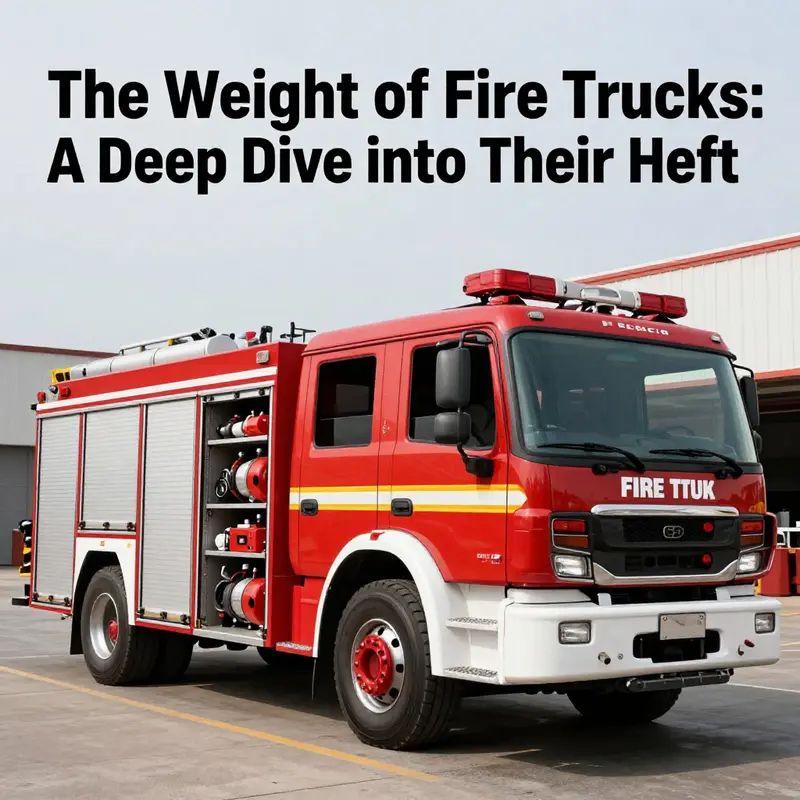
Fire trucks are engineered around a single practical question: how heavy should they be to deliver water and tools quickly while staying safe on the road? Weight varies with size, mission, and equipment, and it matters for performance, handling, and maintenance. At the light end, compact pumpers may weigh around ten to twelve tons by themselves. When loaded with water, foam, hoses, pumps, ladders, rescue tools, and crew, the mass climbs into the mid-teens and can reach twenty-five tons for large multi-axle rigs. In pounds this is roughly twenty-two thousand to fifty-five thousand when fully equipped. The dominant factor is water capacity: water adds about one kilogram per liter, so a 10,000-liter tank adds about ten metric tons when full. Foam tanks and other gear push weight higher. Heavier frames and multiple axles help distribute gravity and preserve braking and steering under heavy payloads. The distinction between curb weight and GVWR matters because it defines how much payload can be carried safely and how the vehicle behaves under acceleration, cornering, and braking. For fleets, weight informs fuel strategy, tire choices, brake systems, route planning, and maintenance budgets. In practice, lighter urban units provide nimbleness but carry less water, while heavier regional or industrial rigs trade some maneuverability for larger water and foam capacity. Both classes are built with safety margins, reliability, and structural integrity to keep responders on the road under demanding use. Real-world comparisons and supplier specs illustrate how these weights translate into purchase decisions and daily operations.
The Weight of Fire Engines: Real-World Specs, Variations, and What Each Pound Means in the Field
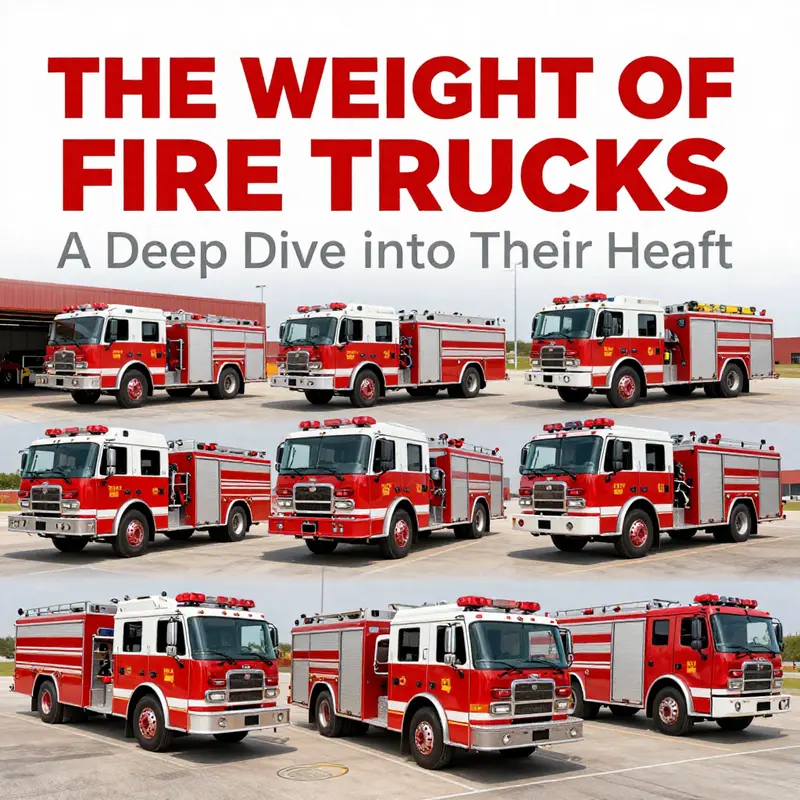
Mass is more than a number on a scale when you’re talking about fire engines. It is the quiet factor behind a vehicle’s stability, its ability to carry water, foam, and gear, and its capacity to respond quickly and safely in front of a raging blaze. The weight of a fire engine is not a single fixed value. Instead, it shifts with the design, the intended missions, and the level of equipment it carries at a given moment. You can think of weight as a spectrum that begins with light-duty urban pumpers and stretches to large tankers and foam/water carriers built to sustain water supply over long distances or challenging terrains. In practice, a truck’s mass is determined by its chassis configuration, the size of its water or foam tanks, the extent of its onboard equipment, and the number of crew members it carries. When you put all of those elements together, the result is a wide range that highlights how fire apparatus are specialized for different roles while needing to meet road and safety requirements at the same time.
For context, most fire engines fall somewhere between about 10,000 kilograms and 25,000 kilograms, which translates to roughly 10 to 25 metric tons. In real-world terms, that range reflects the diversity of configurations seen on the street: compact, urban-type units versus heavy-duty rigs designed for major incidents or long water shuttle operations. Within that broad spectrum, specific configurations illustrate how the weight scales with purpose. A lighter, 4×2 or 6×2 class pumper, designed for rapid response and easier maneuvering in tight city streets, tends to start at around 10,000 to 13,000 kilograms in curb weight, meaning the vehicle itself minus water and equipment. This category emphasizes mobility; the chassis is lighter, and the water tank, pump package, and responder equipment push the weight up but stay within a range that keeps acceleration and braking manageable in dense urban environments.
On the other end of the scale, larger, heavier-duty machines—such as 6×4 or 6×6 configurations built for more demanding operations—command a much heavier curb weight. For these bigger rigs, the curb weight typically sits in the vicinity of 18,000 to 22,000 kilograms. The increased mass comes from a more robust chassis, a larger engine, stouter axles, and, crucially, much larger water and foam capacities. The emphasis here shifts from sheer speed to sustained water delivery, which is essential when fighting large fires where a long, steady water supply is required. In such cases, the weight isn’t just an added burden to the wheels; it becomes a design feature that enables greater pumping duration, higher foam concentrations, and more comprehensive on-board tools.
Tankers, with their focus on transporting large volumes of water or firefighting foam, illustrate how weight can be dominated by liquid cargo. A tanker designed to carry about 15,000 liters of water or foam has a dry weight—meaning the vehicle before filling—of roughly 17,000 to 20,000 kilograms. Once filled, the total mass can exceed 32,000 kilograms, or more than 32 tons, depending on the precise payload and ballast. The water itself represents a substantial portion of this increase—15,000 liters of water adds about 15,000 kilograms of mass, a significant figure that reshapes handling, braking, and stability. A tanker’s stance on the road, its stopping distance, and even its acceleration are all deeply influenced by that loaded weight. The same principle applies to foam/water combinations that extend the vehicle’s capacity to fight fire during extended operations. In these cases, the total vehicle mass grows in proportion to the liquid stored, and operators plan routes, water supply points, and staffing with that mass in mind.
There is also a specialized class of larger foam or water tankers with even bigger tanks, such as those capable of carrying around 16,000 liters. These units tend to have a correspondingly higher dry weight, in the ballpark of 19,000 to 22,000 kilograms. When fully loaded, the weight can climb to the 35,000 to 38,000 kilogram range. The difference between the dry weight and the loaded weight is a stark reminder that a fire engine’s role often centers on water logistics. The bigger the tank, the greater the height of the payload, and with that comes a tangible impact on braking performance, tire wear, and the need for more rugged suspension and steering systems. It is this interplay of capacity and constraint that explains why fire apparatus come in such varied sizes: the job demands different levels of water, foam, equipment, and crew, and with each addition comes a corresponding adjustment in mass.
All of these numbers—whether in the 10–13 ton curb weight range of smaller urban pumpers, the 18–22 ton range of mid-sized heavy-duty units, or the 32–38 ton figures for fully loaded tankers—illustrate a core truth: the weight of a fire engine is a moving target. It shifts with the mission, with the amount of water, foam, and gear it carries, and with how those assets are staged across the vehicle. The numbers that appear in specifications or advertisements are snapshots, not universal constants. They reflect typical configurations rather than a single bare minimum or maximum. The practical implication is that weight is a design constraint that must be balanced against performance, safety, and regulatory requirements. In field operations, that balance manifests as a careful calibration of which apparatus is dispatched to a given incident, how water is staged, and how the crew engages with the vehicle’s mass to maintain control and effectiveness.
The weight story also carries a practical lesson about how firefighters plan and execute calls. Water weighs a lot. Each liter translates almost directly to a kilogram of mass. A 15,000-liter tank, full at the outset of an operation, embodies about 15 metric tons of water alone. Add the dry mass of the chassis and body, plus the pump, hoses, fittings, electronics, ladders, extinguishing foam, spare parts, and crew equipment, and the total repeatedly climbs into the tens of tons. This is why a tanker’s route planning, pump capacity, and even its on-board stabilization features are designed around the idea of “how much weight is on the road now” rather than “how light can we make it.” When water is discharged through a pump to a hydrant or nozzle, the vehicle becomes lighter at the source of supply but the operational mass remains substantial as long as the tank still holds liquid. The dynamic nature of weight in use means crews must consider not just static curb or dry weights, but how the weight shifts during pumping, loading, and unloading. It also means that the selection of an apparatus for a particular fire scenario cannot hinge on a single metric; it must reflect a synthesized assessment of capacity, reach, maneuverability, and the realities of road travel under heavy load.
These realities help explain why a department might choose a lighter, more agile unit for quick response in dense urban corridors, while reserving a heavier, long-range tanker for wildland or high-rise incidents where water supply needs to be sustained over time and across longer distances. The heavier vehicles bring greater water and foam capacity, improved stability when fully loaded, and the ability to deliver larger quantities of extinguishing agents without frequent refill stops. Yet they demand careful route planning, suitable road access, and a careful appraisal of the local infrastructure’s ability to bear the load. In other words, the weight of a fire engine is not merely a physical measure; it is a choreography of performance, safety, and logistics that shapes how fire services plan, respond, and recover after each emergency.
For readers curious about what these configurations look like in the market, the current landscape of available equipment mirrors this spectrum. On the lighter side, compact urban pumpers are built to maximize mobility, with smaller tanks and streamlined bodies. In the mid-range, transporters with bigger pumps and greater water capacity begin to push the limits of city streets, while still offering reasonable acceleration and handling. On the heavy end, large tankers and specialized foam/water carriers are designed to sustain operations, sometimes over hundreds of miles of road or across challenging terrain, and they carry substantially more liquid payload than their lighter counterparts. If you’re exploring models for purchase or comparison, you’ll encounter the same weight principles expressed in different configurations, each tailored to the needs of the department and the environments it serves. To explore current configurations and pricing in the market, you can visit the fire trucks for sale page for context on how these weight categories translate into real-world options and how the numbers you see on a spec sheet align with what a crew actually experiences on the road.
Understanding weight in fire apparatus also helps explain the relationship between design choices and operational outcomes. A smaller, lighter truck is typically more nimble, easier to park, and quicker to reach a fire scene. It may carry a smaller water tank, but it can compensate with higher pump efficiency, faster water application to the fire, and greater agility during critical moments. A larger, heavier truck, conversely, excels in sustained operations where supply lines must be established or maintained for longer periods, but it requires more space, careful road planning, and a higher degree of coordination among units to ensure that the weight on each axle remains within regulatory limits. In either case, the fire department’s objective is to optimize readiness while maintaining safety, legal compliance, and effectiveness. The weight figures matter not just as numbers in a brochure, but as practical constraints and enablers that determine how quickly a crew can reach a scene, how much water can be delivered, and how reliably the vehicle can be controlled while under heavy load.
When you look at a fleet or a shelf of used or new apparatus, human-scale math makes the weight numbers come alive. A 6-ton payload 4×2 unit with a curb weight around 10 to 13 tons prioritizes speed, turn radius, and urban maneuverability. A 12-ton payload 6×4 unit with a curb weight around 18 to 22 tons emphasizes enduring water capacity and robust pumping ability. A 15,000-liter tanker carries a heavy load even before a first liter of water is pumped, with dry weights in the 17 to 20-ton range and total mass that can surpass 32 tons when full. A 16,000-liter foam/water setup carries even more—the dry mass typically around 19 to 22 tons and a fully loaded mass in the 35 to 38-ton neighborhood. The math behind these figures is straightforward in principle, yet the implications reach into every decision about how a department equips, trains, and deploys its teams.
If you want to connect these ideas to real-world purchasing decisions, a good starting point is to compare how a given model’s weight aligns with local road regulations, bridge formulas, and licensing requirements. Heavier vehicles require more careful planning for routes, docking points, and even the maintenance cycles of tires and braking systems. They also demand considerations about the availability of fueling and water refill infrastructure along the response route. In short, the weight of a fire engine is a foundational element of its operational profile—shaping everything from acceleration to endurance, from cornering to water logistics, and from the fleet’s overall strategy to the day-to-day realities of emergency response.
For readers seeking additional context beyond numbers, the market today reflects a broad spectrum of configurations driven by the same physics: mass plus momentum enable capability, but too much mass without adequate control and planning can hinder a mission. This balance—between capacity and mobility, between water on board and water at the hydrant—defines how departments select their vehicles, how they train their crews, and how they design their response strategies. The journey from curb weight to fully loaded mass is not merely a conversion; it is the practical calculus that ensures a fire engine can arrive, deploy, and sustain operations when every second counts. To see how these concepts translate into current listings and configurations, consider looking at the fire trucks for sale page, which reflects how weight translates into real-world options, specifications, and trade-offs in the market.
Final thoughts
Understanding the weight of fire trucks is crucial for both enthusiasts and professionals in the firefighting community. From the lighter models designed for agility and speed to the heavy-duty trucks equipped for massive operations, each vehicle serves a distinctive purpose in emergency response. Furthermore, recognizing the variety of factors that contribute to their weight, including size, configuration, and load, enhances our appreciation of these remarkable machines. As we continue to innovate within firefighting technology, grasping these details ensures we respect and understand the significance of every fire truck on the road.