
California faces an ever-growing threat from wildfires, making the role of fire trucks more critical than ever. These robust vehicles are at the forefront of firefighting efforts, enabling rapid response and efficient suppression of flames that threaten lives and property. This article navigates through the ongoing necessity of fire trucks in California, analyzing how climate change impacts deployment strategies, exploring technological innovations, and discussing the economic aspects tied to these essential vehicles. Each chapter will enhance the understanding of how fire trucks remain an unyielding line of defense in the state’s battle against wildfires.
No Pause, No Furloughs: California’s Fire Truck Fleets at the Front Lines of Wildfire Defense
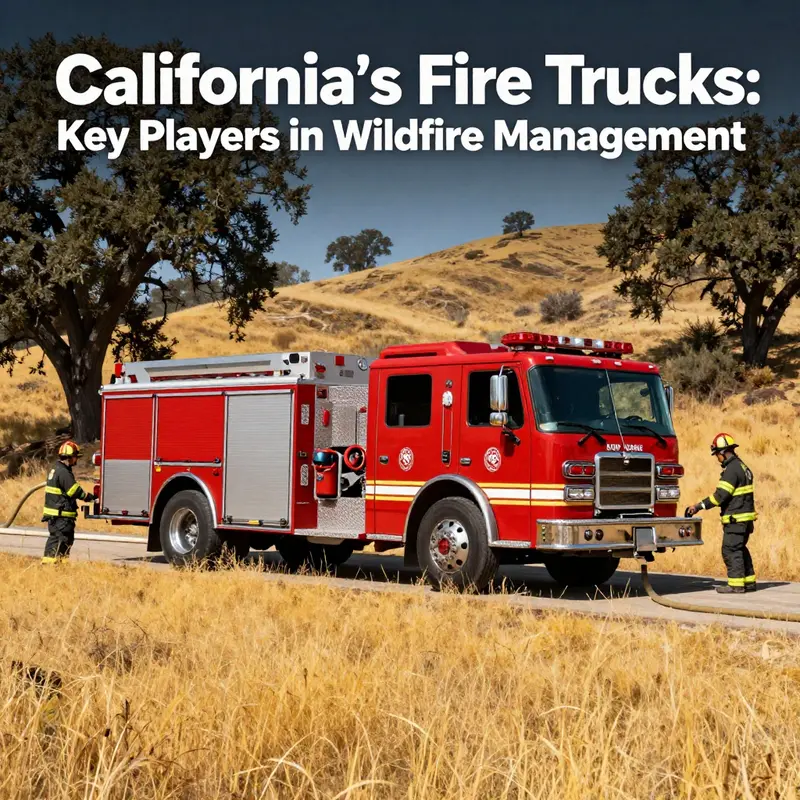
People often ask whether California has stopped deploying fire trucks in its battle against wildfires. The answer, in plain terms, is no. In fact, the state’s firefighting philosophy rests on a robust, evolving fleet of fire engines and support apparatus that forms the backbone of initial attack, rapid containment, and ongoing suppression across urban centers, rural communities, and the sprawling wildland-urban interfaces that define California’s fire season. The question behind the question is not just about trucks but about what it takes to keep people safe when flames arrive fast, under dry air and erratic winds, in places where a spark can become a wall of fire within hours. California has chosen to prioritize ground operations as a constant, even as air support remains essential when weather and visibility permit. The fleet is not a static instrument; it is a dynamic, technologically enhanced network that connects crews, terrain, water, and time in a way that a single type of response could never achieve.
At the core of California’s approach is conviction: fire trucks are indispensable for getting firefighters to the scene, laying down a defense, and delivering the tools and water necessary to create a direct attack or a controlled burn as conditions dictate. The California Department of Forestry and Fire Protection, known as CAL FIRE, operates one of the largest firefighting fleets in the United States. Thousands of fire engines and support vehicles traverse the state’s roads and rugged country, moving in concert with helicopters, air tankers, and an ever-adapting command structure. This fleet includes specialized trucks designed for rough terrain, steep slopes, and the demanding environments where many fires take hold. In practice, a modern wildfire is not a single flash of flame but a choreography of activities: ground crews establishing lines, engines pumping water into hose lays, tankers coordinating drops with aerial assets, and a web of radios, maps, and mobile data feeds ensuring everyone on the ground knows what the next move must be.
The importance of ground operations becomes especially clear when one considers the terrain and the timing of fire growth. California’s landscapes are a mosaic of urban neighborhoods, agricultural belts, and remote wildlands. In many of these places, the quickest route to a developing fire is via a road with a capable engine, a crew, and a water supply. Aircraft can give the incident commander a map of the fire’s footprint and may slow the spread, but they cannot always substitute for the density of hose, pump capacity, and personnel required to build a defensive line around homes and critical infrastructure. In the earliest minutes after ignition, a fire truck’s responsibilities are manifold: they transport firefighters, bring in water or portable water supplies, carry hand tools and surge equipment, and help establish incident command from a position close to where the fire is taking hold. This is particularly true in the wildland-urban interface, where homes are nested among trees and brush. Here, a rapid, on-the-ground response can determine whether a neighborhood remains intact or is overtaken by flames.
CAL FIRE’s fleet is not merely a count of machines but a network of capability. The state’s fleet includes a wide array of apparatus tailored to different duties. Some engines are built to haul large volumes of water and maintain a strong pump capacity through rugged terrain. Others are designed for rapid deployment with compact footprints that can navigate narrow roads or work within tight neighborhoods. There are engines equipped for backburning, which involves deliberately burning off vegetation to create a barrier to the advancing fire. And in the modern era, these vehicles are increasingly integrated with a suite of technologies that improve situational awareness and coordination. Real-time data sharing, GPS tracking, and advanced communications systems stitch together the actions of multiple agencies across a landscape as varied as the state itself. This integration helps ensure that a single incident does not overwhelm a single unit but is instead managed through a shared picture of what is happening on the ground and in the air.
The emphasis on the fire truck as a foundational tool is as much about reliability as it is about capability. Ground operations remain essential precisely because weather patterns, drought conditions, and climate-driven changes in fire season demand sustained, repetitive, and scalable actions. Aircraft are powerful, but they are limited by cloud cover, visibility, and the distance between a fire’s point of origin and a suitable drop altitude. In many instances, helicopters and air tankers can contribute to suppression, but crews on the ground must still establish control lines, irrigate fuel breaks, and conduct backburns to secure a perimeter. The truck-based approach provides the continuity and momentum necessary to maintain progress once initial drops influence the trend of a fire. This is why CAL FIRE’s leadership has publicly stressed the ongoing modernization of the fleet, as well as the need to preserve and enhance ground response capacity even as new tools and platforms become available.
Beyond raw capacity, the fleet’s value hinges on how well it is integrated with other elements of the state’s wildfire response system. It is not enough to own many engines; those engines must be part of a responsive, well-coordinated network. In recent years, California has pursued advancements that connect dispatch centers with frontline crews, that allow real-time sharing of maps, weather data, and incident-wide logistics information, and that enable command teams to adjust tactics rapidly as conditions evolve. This shift toward integrated command and control is one of the quiet but critical changes that amplify the effectiveness of traditional ground responses. When a fire grows, when wind shifts, or when a shelter-in-place order is considered, the capacity to overlay data from multiple sources onto a single operational picture becomes a decisive factor in keeping communities safe. The fire truck, in this light, is not just a tool of suppression but a node in a larger, adaptive system that leverages geography, weather, and human coordination to shape outcomes.
The modernization trend also reflects a practical need to address longer and more intense fire seasons. As climate change intensifies drought cycles and lengthens the times when vegetation remains dry and combustible, the state’s firefighting strategy must be resilient, durable, and scalable. This means more efficient maintenance cycles, better forecasting of equipment readiness, and a broader set of capabilities to switch between rapid, initial attack modes and more prolonged operations that may involve multiple engines, coordinated water supply strategies, and staged defense lines. In this evolving context, fire trucks are not relics of a bygone era but frontline platforms that must be kept in optimal condition and equipped with up-to-date tools. CAL FIRE and partner agencies have continued to fund modernization programs, train new generations of firefighters to operate within a high-tech, high-demand environment, and invest in the infrastructure that supports a statewide response that is cohesive rather than fragmented.
The route from ignition to containment is rarely linear. It zigzags through neighborhoods, hillsides, and wilderness, often requiring rapid shifts in tactics. In the early moments of an incident, ground crews rely on the mobility, water-carrying capacity, and versatility of fire trucks to establish a defensible space around homes, to execute backburns when conditions permit, and to create safe access routes that allow larger suppression forces to join the fight. The presence of a strong ground apparatus footprint helps prevent the type of crowding at the scene that can impede operations and hamper the ability to establish an orderly incident command post. In these scenarios, the truck’s role extends beyond direct combustion control to include logistics, evacuation planning support, and the stabilization of perimeters that protect critical infrastructure such as power lines, water supplies, and transportation corridors. The strategic value of the ground team is, in large measure, a function of how quickly and efficiently those teams can be deployed to the most strategic locations.
Of course, public perception matters in all this. When dramatic images of smoke and flames dominate the news cycle, it can be easy to assume that ground response is a secondary concern behind air assets, which often receive the most visibility in coverage of large fires. Yet the day-to-day reality of wildfire management depends on a steady cadence of ground operations, sometimes in the most challenging landscapes. A neighborhood burn ban in a high-risk season is not a victory or a failure of vehicles alone; it is the culmination of a coordinated strategy that depends on trusted, reliable ground support to implement protective actions and facilitate evacuations if necessary. The trucks are visible symbols, but their effectiveness emerges from the systems that empower them: communication networks, maintenance practices, weather-informed planning, and the training that keeps crews ready to respond, adapt, and endure.
In discussing California’s continued reliance on fire trucks, it is also useful to reflect on how information flows through the response ecosystem. A modern fire incident is rarely just a contest of who has more hoses or bigger pumps; it is a test of who can share critical information fastest and use it to adjust tactics on the fly. For instance, improved communication systems and real-time data sharing enable incident commanders to track the location of arriving engines, monitor water pressure at different points in a circuit, and coordinate with aerial assets to refine attack lines or to deploy backburns in a way that minimizes collateral damage. In practice, this means a fleet that can be integrated with digital tools, mapped into a single operational picture, and maneuvered in concert with other teams responding to an evolving threat. The ongoing work to connect engines with the larger system reflects a forward-looking approach that recognizes the truck’s enduring importance even as new forms of firefighting technology emerge.
In the end, California’s stance toward its fire truck fleet is not a simple question of whether trucks are needed, but how trucks best fit into a multi-layered defense. The answer is not a retreat to old methods but a reaffirmed commitment to ground-based action paired with strategic use of air support, all under a unified command framework that can scale up in response to growing risk. The state continues to modernize its fleet, to upgrade training, and to expand its capacity for rapid response. The goal is not to replace one kind of asset with another but to ensure that, when a wildfire erupts, the ground teams have the tools, the training, and the coordination they need to move quickly, work safely, and protect communities from the first moment of ignition through the critical hours that determine whether a fire becomes a crisis or a contained incident. This is why California’s fire trucks remain a central, non-negotiable element of wildfire defense, a steadfast line of defense that travels with the fire rather than waiting for it to arrive.
For readers seeking broader context on how departments think about equipment, readiness, and frontline strategy, the Fire Truck Space blog offers a window into the conversations and decisions that shape a modern fleet. See firetruck.space/blog/ for perspectives on equipment, maintenance, and the evolving needs of fire service professionals as they confront increasingly complex landscapes.
External resource: CAL FIRE maintains a comprehensive overview of its approach to wildfire management and fire apparatus on its official site, which provides further detail on fleet composition, deployment practices, and modernization efforts. https://www.fire.ca.gov
Deploying Fire Engines in a Warming California
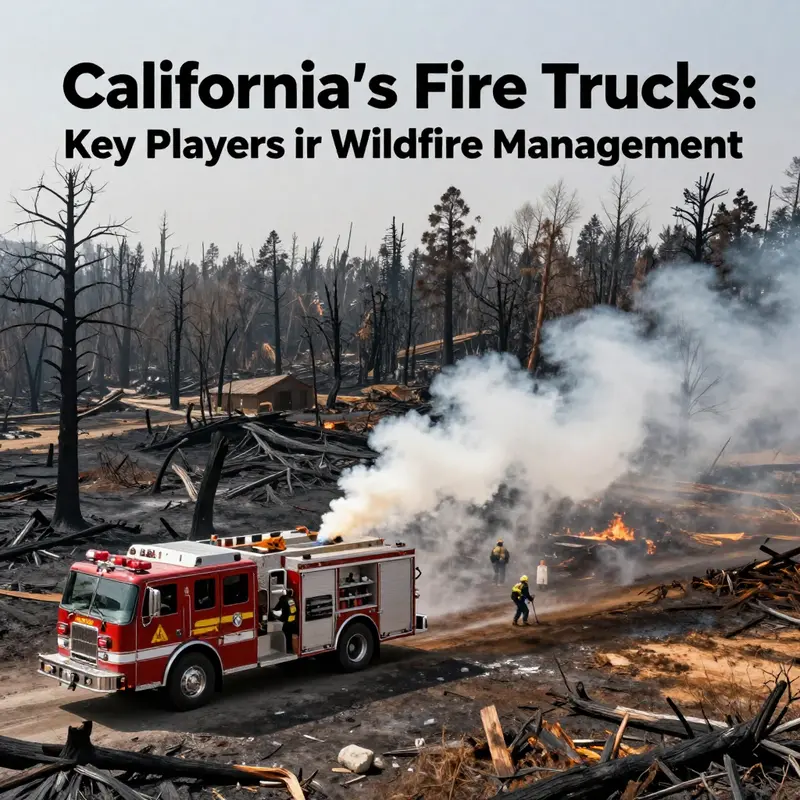
California continues to deploy fire trucks as climate pressures intensify. The fleet evolves toward smarter placement, mutual aid, and data-informed decision making to meet longer and more frequent wildfire seasons. This chapter examines how deployment patterns adapt to a warmer, drier landscape, how engines are positioned to reduce lead times, how different apparatus meet urban, rural, and wildland needs, and how interagency coordination across counties and borders shapes overall resilience. The central takeaway is that California has not stopped using fire engines; it has reoriented deployment to cope with new risk, balancing speed, capacity, and reach while maintaining readiness for the next call. It also highlights how technology, training, and governance enable faster, safer responses in a climate that tests emergency services.
Rolling Forward: California’s Fire Trucks on the Front Line in a Changing Climate
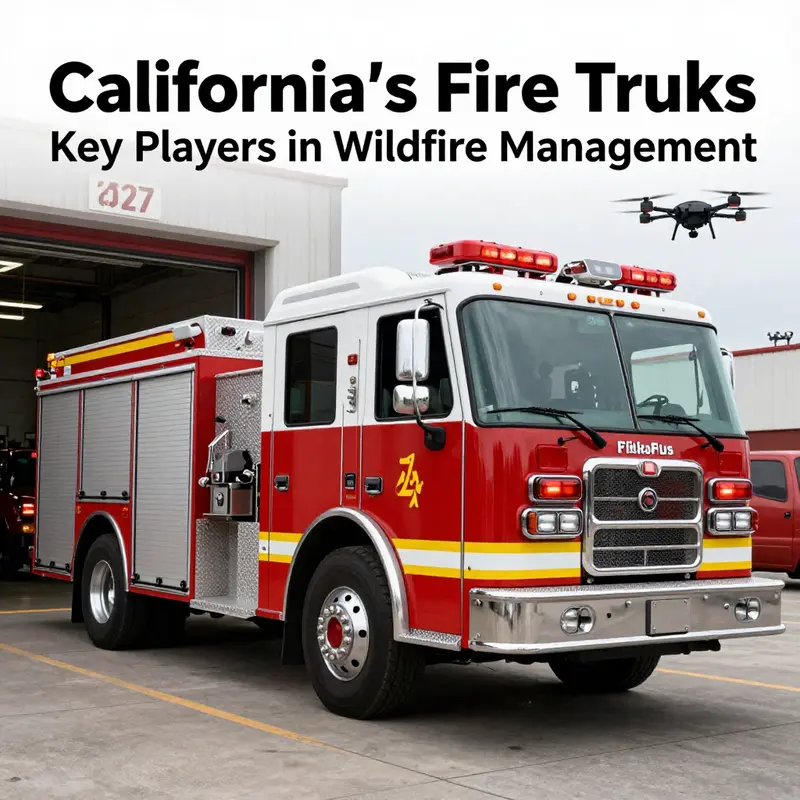
Did California stop fire trucks? The short answer is no. The longer truth is that the state has kept its fire engine fleets in nonstop service, expanding and modernizing them to meet a landscape that grows hotter, drier, and more unpredictable each year. Fire trucks remain the essential nerve center of California’s wildfire response and prevention strategy. They are not merely symbols of emergency services; they are moving laboratories on tilt, capable of delivering water, foam, and force to the ground where flames threaten homes, parks, and wildlands. From dense city blocks to the steep grades that define many rural corridors, these vehicles are calibrated to meet real conditions with real constraints. The fleet is large enough to cover routine incidents, but it is also adaptable enough to surge when a spark becomes a blaze that can jump a canyon. In short, California has chosen resilience through readiness, not retreat through retreatment of its firefighting fleet. This stance is not a static posture but a living system that evolves as the climate shifts and as communities demand faster, safer, smarter responses.
The practical reality behind the question lies in the daily rhythm of deployment. CAL FIRE, along with local fire departments, operates a diverse fleet designed for the state’s geographic and climatic variety. There are engines built to churn through the dry brush of the Sierra foothills, vessels engineered to haul water across arid frontiers, and apparatus tailored to the challenges of the wildland-urban interface where a single fire can threaten hundreds of homes within minutes. In urban districts, engines maneuver through traffic and respond to calls that demand swift compartmentalization of a structure fire, a task that requires precise coordination, pump pressure, and hose lines that can reach upper floors. In rural stretches, vehicles with rugged suspension and off-road capability push into ravines and steep grades where traditional road access is scarce. The result is not a single answer but a spectrum of solutions, each calibrated to the topology it must serve. This spectrum is no accident; it is a deliberate approach that recognizes fire as a moving, triaged problem rather than a one‑size‑fits‑all crisis.
The climate narrative adds urgency to the fleet’s role. Dry drought cycles, longer fire seasons, and the rapid spread of embers have elevated the importance of rapid, flexible response. When resources are tight and risk is high, the ability to deploy the right mix of vehicles quickly becomes a force multiplier. A well‑timed dispatch can keep a fire from exploding into a full burn plan that would overwhelm nearby communities. This is not a heroic lone effort of a single engine. It is teamwork across districts, with air support, ground crews, and logistics working through unified command structures to defend life and property. In many parts of the state, the interplay of weather events—wind shifts, humidity drops, and temperature spikes—dictates where and when a fleet can safely operate. Agencies have learned to balance aggressive suppression with risk management, to protect firefighters as they enter hazardous environments, and to minimize collateral damage to nearby neighborhoods and ecosystems. The fleet’s vitality, therefore, is inseparable from the climate realities it faces.
Technology is increasingly the language through which California describes and directs its firefighting effort. Across the state, engines and command units now carry devices and systems that were once the domain of the forest service headquarters alone. The most compelling development in recent years centers on augmented reality (AR) tools integrated into firefighter gear. AR‑enabled helmets can create real‑time, three‑dimensional images of burning structures, offering crews a visual map of exits, potential collapse zones, and hidden hazards. This kind of data translates to faster decision making and, crucially, a reduction in the exposure of crew members to dangerous conditions. The helmet becomes a translucent guide, overlaying critical information atop the smoke and flame, guiding choices about entry points, ventilation strategies, and the safest routes to safety. While the technology is still spreading and being refined, the trajectory is clear: the battlefield, once defined by sightlines and intuition, is increasingly defined by layered data that enhances human judgment rather than replacing it. The broader implications are profound. If a crew can understand a collapse risk before entering a structure, they can position themselves, deploy better protective measures, and adjust their plan of attack in seconds rather than minutes. In a state where a minute can determine whether a family keeps their home or loses it to fire, the value of sharper situational awareness cannot be overstated.
The AR paradigm and other tech upgrades sit within a broader ecosystem of modernization that also includes improved communications, better supply chains, and smarter dispatch. The story of California’s fire trucks is thus not only about hardware; it is about integrated systems that allow multiple agencies to speak the same language under stress. Dispatch centers connect weather data, fire behavior models, and on‑the‑ground reports to orchestrate a coherent response. Mobile data terminals, rugged field tablets, and real‑time mapping help crews navigate complex landscapes while staying within safe operating envelopes. This is particularly important in the wildland‑urban interface, where a single fire can threaten dozens of structures in minutes and where the terrain can complicate traditional suppression tactics. The promise of integrated tech is not merely convenience; it is a tangible reduction in response times, a clearer picture of risk, and a framework for making hard decisions under pressure.
The internal mechanics of keeping the fleet ready are equally telling. Maintenance schedules, spare parts inventories, and pipeline planning for fuel and equipment replacement keep engines in service rather than in retirement. Budget realities shape how aggressively agencies pursue modernization. In practice, the state has pursued a careful balance: invest in high‑impact technology like AR interfaces and advanced sensor networks, while also maintaining the core capabilities that have proven reliable over decades of service. This dual approach protects the existing competency of crews and ensures that new tools are not deployed in a vacuum, but within a tested, practical workflow. It also matters that the public understands the rationale behind continued investment. Fire trucks are visible reminders of readiness, but the real work happens in the quiet hours when crews rehearse pump operations, ladder deployment, and victim rescue protocols. The confidence that comes from consistent training builds trust with communities and helps sustain political and financial support for a robust fleet.
The social dimension of keeping fire trucks moving is often overlooked, yet it is central to the narrative. For communities on the front lines, seeing a steady stream of engines can be a reassurance during a season that feels increasingly volatile. For residents in areas prone to repeated ignition events, the knowledge that a diversified fleet is ready to adapt to evolving conditions provides a sense of security that extends beyond the immediate incident. Firefighters themselves speak of a shared professional pride that comes from working with modern, capable equipment and from knowing that the work they do saves lives while minimizing risk to themselves. This morale, fostered by ongoing training and the visible presence of a well‑equipped fleet, reinforces the social contract between emergency services and the communities they safeguard. The rhetoric surrounding the fleet, then, is not merely a matter of public relations; it is a reflection of a deeply held belief in preparedness and a collaborative approach to risk management that spans agencies, jurisdictions, and residents alike.
An important thread in this story is the public record of how California is responding to ongoing wildfire risk. Reports from reputable outlets confirm that the state is neither stepping back nor shrinking its firefighting capacity. On the contrary, deployments remain active and in some cases are expanding in response to greater wildfire risk. The steady drumbeat of engines on the landscape is a practical indicator that the state’s approach to fire protection remains dynamic and reliant on forward momentum. This is not nostalgia for older models of firefighting; it is a forward‑looking program that blends traditional suppression, preventive measures, and cutting‑edge technology to meet a new era of fire behavior. The chapter of California’s wildfire response that involves fire trucks is not a single act but an ongoing, adaptive performance—a choreography of engines, crews, air support, and information systems that changes shape as conditions change.
In keeping with the complexity of this effort, it is useful to acknowledge how the dialogue around emergency command and control has evolved. Modern responses increasingly hinge on a unified approach where local, regional, and state agencies operate within common procedures, terminologies, and information flows. This is where the practical realities of the fleet intersect with strategic governance. When a fire expands across jurisdictions, the ability to mobilize and reallocate resources quickly depends on a cohesive command framework. The kinds of challenges that accompany this transformation—communication bottlenecks, data fragmentation, and the risk of misalignment between field operations and dispatch decisions—are precisely what the improved command systems aim to address. Those improvements sit within a broader framework of evolving fire command systems—areas explored in depth in Overcoming challenges in fire command systems. The goal is not merely to push more equipment into the line; it is to ensure that the equipment works in concert with all parts of the operation, from dispatch desks to the last firefighter entering a structure.
This integrative approach has ongoing implications for public policy as well. The state’s decision to sustain and modernize its fire truck fleet reflects a longer horizon view of risk management. It recognizes that the costs of inaction—missed opportunities to protect life and property, greater long‑term losses, and the cumulative pressure on communities repeatedly exposed to fire—outweigh the up‑front investments required for newer technologies and expanded capacity. It is a decision that considers not just the immediate fire season but the entire arc of fire risk across years, including the devastating possibilities of rapid-fire events amplified by climate change. As equipment ages, the focus shifts to strategic renewal: replacing the oldest, least reliable machines while deploying the most impactful tools in places with the highest stakes. The result is a state that remains visibly prepared, even as the weather tests even the best plans.
Ultimately, the answer to whether California stopped fire trucks is a resounding no. The state has kept fire trucks at the center of its response framework, treating them as not only symbols of readiness but as dynamic assets that adapt to shifting conditions. The combination of a robust, adaptable fleet and a culture of continuous improvement in technology, training, and command coordination yields a system capable of meeting today’s challenges and preparing for tomorrow’s uncertainties. The story is not about miracle machines or solitary genius; it is about networks working in harmony—from the mechanics inside every engine to the commanders who allocate scarce resources, from crews marching toward danger to the communities that trust them with their safety. It is a story of staying power in a landscape that changes by the season and by the decade—an ongoing commitment to keep the front line of California’s wildfire defense ready, resilient, and responsive.
For readers who want to explore the cutting‑edge tech shaping this new era, the landscape includes augmented reality tools and sensor networks that promise to redefine how crews approach fires. These innovations are not distant prospects but increasingly common parts of the equipment cache that sits at fire stations and on the backs of responders. They embody a principle that guides modern emergency response: value the data as much as the fire. When you can see a structure through smoke, know the stability of its walls, and anticipate the next shift in wind, you gain a decisive advantage. That advantage translates into faster containment, safer missions, and, ultimately, greater protection for people and places. California’s ongoing commitment to fire trucks—paired with a disciplined adoption of new technologies—demonstrates how a traditionally field‑based profession can grow smarter without losing the essential courage and craft that define it. As climate realities continue to test preparedness, this blend of steadfast fleet readiness and innovative capability will likely remain central to California’s wildfire strategy for years to come.
External resource: https://www.wired.com/story/california-wildfire-moonshot-new-technology/
Rolling Forward: Why California Keeps Fire Trucks Ready in Wildfire Season
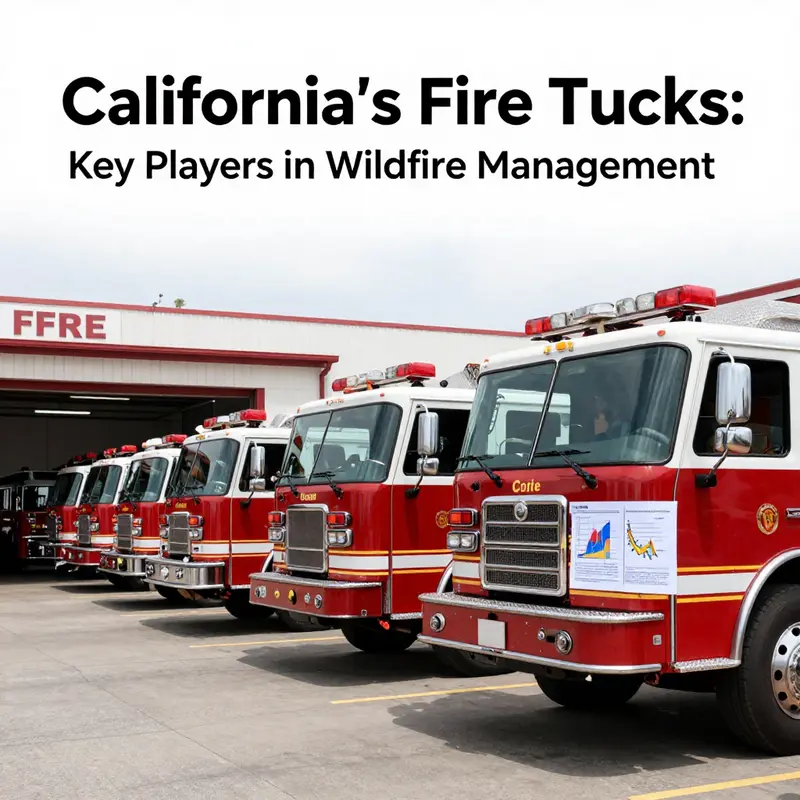
Public discussion can blur myth and fact: has California stopped sending fire trucks when flames threaten communities? The short answer is no. California has not halted fire truck operations; it continues to rely on a broad, highly visible fleet as a core element of wildfire response and prevention.
California’s fleet spans regular fire engines for city streets and rugged vehicles that reach backcountry and wildland-urban interfaces. It is a dynamic system, with engines rotating through preventive maintenance, crews shifting between incidents, and dispatch centers coordinating across jurisdictions.
The costs are sizable, but readiness is treated as a strategic investment that aims to reduce longer and larger losses. A rapid response can shorten incident durations, limit property damage, and prevent cascading emergency costs.
Interagency collaboration, mutual aid, and data-driven procurement are central to maintaining high readiness. The state emphasizes prevention, land management, and resilient infrastructure alongside immediate response.
Looking ahead, California is likely to maintain and refine its fire truck network, balancing readiness with prevention and recovery investments. In short, fire trucks remain essential to California’s wildfire defense for years to come.
Final thoughts
California’s commitment to using fire trucks in wildfire management highlights their importance as part of an ongoing strategy to combat increasing threats. As climate change exacerbates wildfire risks, understanding the economic factors and embracing technological advancements will ensure these resilient vehicles remain pivotal in protecting communities. Fire enthusiasts, aspiring firefighters, and emergency service professionals alike can appreciate the dedication embedded within California’s fire response, affirming the unwavering role these trucks play in safeguarding lives and landscapes.