
Water capacity in fire trucks is a vital measure of their firefighting capability, with variations that cater to specific needs. From small fire trucks maneuvering through tight city streets to large main attack vehicles ready for significant urban challenges, understanding these capacities can provide insights into firefighting strategies and equipment choices. Whether you’re a fire truck enthusiast, an aspiring firefighter, or an emergency services professional, this exploration will guide you through the fascinating world of fire truck water storage. We’ll dive into the capacities of small, medium, large, heavy-duty, and specialized fire trucks, ensuring you gain a comprehensive understanding of how much water these vehicles can hold and how it impacts firefighting effectiveness.
Tiny Tanks, Big Impact: How Much Water Small Fire Trucks Carry and Why It Shapes the First Moments on the Fireground
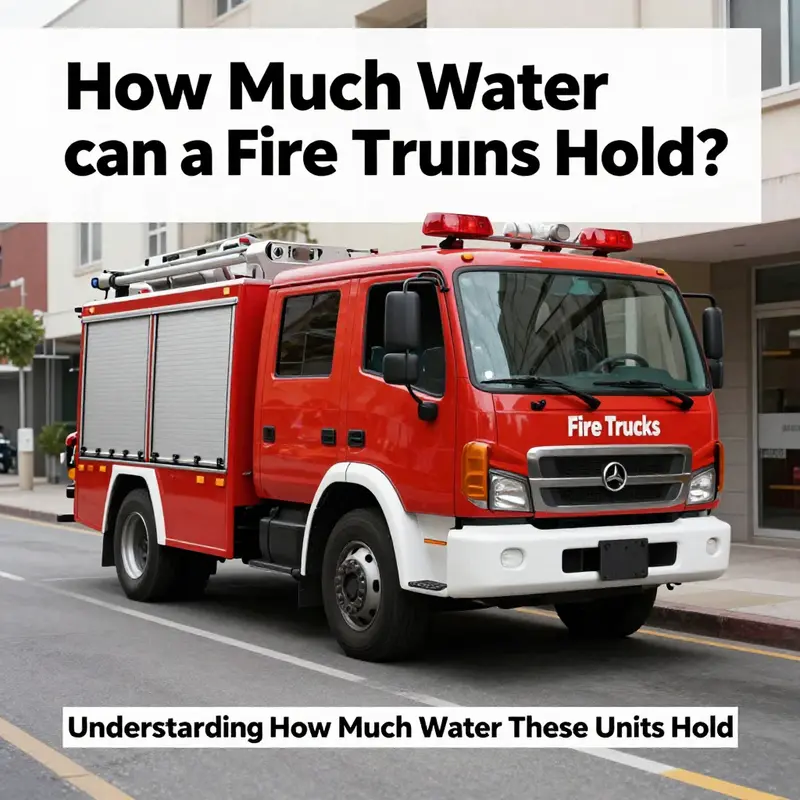
Small fire trucks occupy a paradox in fire service design. They are compact, nimble, and often the most familiar engines rolling toward a blaze in crowded neighborhoods, yet their true value rests less in sheer size than in the speed and flexibility they bring to the opening minutes of an incident. These units, commonly referred to as pumper or utility trucks, carry onboard water that buys responders time while larger engines thread their way through traffic or negotiate tight turns. The numbers tell a clear story: onboard water capacities for these small machines typically range from 250 to 1,000 gallons, which is about 946 to 3,785 liters. That range reflects a spectrum of configurations and mission profiles. A 250‑gallon tank is light, quick to deploy, and easier to maintain when every extra pound reduces maneuverability. At the other end, a 1,000‑gallon tank delivers a more substantial first push of water, enabling a faster initial knockdown and a more aggressive interior attack before a hydrant supply or a larger pumper arrives on scene. The capacity is not an abstract statistic; it translates directly into how long firefighters can sustain a spray, how quickly they can begin cooling hot surfaces, and how soon they can set up progressive lines to protect exposures and create a safer fire area for interior teams to work from.
Design choices for these small units are rooted in the realities of their intended environments. In neighborhoods with narrow streets, congested parking, or structures that face the street at oblique angles, the ability to maneuver matters as much as the volume of water on board. A compact tank tucked into the rear or along the side of the chassis frees space for hoses, restraining equipment, ladders, and hand tools. It also reduces unsprung weight and preserves the vehicle’s turning radius, both critical when responders must reach windows, doors, or roof access points before a larger engine can reposition. Yet even within this small class, the balance between water and gear is delicate. Firefighters must carry enough water to keep the first attack flowing while maintaining enough payload to accommodate pump gear, foam components (where applicable), and the everyday tools that help them adapt to the unfolding scene.
The tactical implications of onboard volume become especially clear during the first minutes of a fire. On a typical urban response, a small pumper may initiate a defensive or offensive posture using preconnected attack lines or booster lines that can be deployed rapidly from the curb. In those moments, every gallon counts, but so does the flow rate, reach, and reliability of the pump. A higher onboard volume can sustain a direct stream longer, which helps reduce radiant heat and begin to cool a fire compartment while crews work to open a doorway, advance to a second line, or set up a temporary water supply from a nearby hydrant. Conversely, a smaller tank reduces weight and increases speed, which is valuable when the initial reach of water is more important than the duration of the first attack. Fire departments must therefore tailor small truck configurations to the most likely incident types they face—whether densely built downtown blocks, sprawling suburban campuses, or rural corridors with limited hydrant access.
Another layer of complexity emerges when small trucks are viewed in the broader system of the fireground. They rarely operate in isolation. Instead, they function as the launchpad for a larger, more sustainable water supply. In practice, a small unit may draft from a hydrant or, more commonly, quickly connect to a larger pumper or aerial ladder that can deliver higher flow rates for extended operations. This orchestration matters because the initial water on a small truck buys time to position and secure the water supply architecture that will be relied upon for longer duration operations. The interplay between onboard capacity and external supply shapes tactical choices such as whether to knock down the main body of the fire first or to focus on hazard control and rescue operations while lines are being established. In this sense, the small truck’s water capacity is not merely a number; it is a constraint that informs strategy and tempo on the scene.
The variability in capacity across communities also matters when considering the lifecycle and cost of fire apparatus. Some regions prioritize ultra‑light, highly mobile responders for early-stage suppression, accepting a smaller onboard volume as a necessary trade‑off for speed and reach. Others prioritize a larger onboard reserve, accepting greater weight and space consumption to push a more aggressive initial attack. In either case, the decision is shaped by local fire risk profiles, street layouts, and the anticipated availability of a reliable external water supply. It is not unusual to see a spectrum where some small units hover near the lower end of the capacity range, around a couple of hundred gallons, while others push toward the thousand‑gallon mark and beyond. Those figures are not just numbers on a sales brochure; they reflect a deliberate design philosophy tuned to the kinds of incidents a community expects to face and the distances over which water must be moved before a larger engine can take over.
From a perceptual standpoint, the perception of “how much water do small fire trucks hold?” can obscure the broader truth about their role. The utility of a small truck is not solely measured by the amount of water in its tank but by the speed with which it can bring water to bear, the reliability of its pump, and the ease with which it can operate in tight quarters. The design also influences what crews can carry in terms of hoses, adapters, and auxiliary devices. A 250‑gallon unit might prioritize sleekness and quick deployment, while a 1,000‑gallon counterpart emphasizes sustained knockdown capability and a more robust preconnect setup. Both designs share the same ultimate aim: to create an early, effective pressure boundary that slows the fire’s growth and buys time for the arrival of more capable apparatus, responders, and support systems. In this sense, the chapter on small fire trucks becomes a meditation on the delicate choreography of a fireground—how weight, space, water, and tempo converge to shape outcomes even before the biggest engines arrive.
For readers who want a deeper sense of how these units fit into a broader ecosystem, a practical entry point exists in industry discussions and blogs that cover daily life at the edge of urban firefighting. A good starting point is the Fire Truck Blog, which offers perspectives on how small responders are used in real-world contexts and how their water capacities influence decision making on the curb and at the hydrant. This grounded viewpoint helps connect the technical numbers with the human factors—the crews’ judgments about when to push, when to relent, and how to synchronize with larger engines as the scene evolves. It is in these practical narratives that the abstract capacity becomes tangible, showing how a few extra gallons can extend a preconnected attack line long enough for a crew to establish a secure water supply and begin a measured, controlled suppression of heat and flame. For readers who want to explore that broader conversation, the Fire Truck Blog provides a helpful anchor while the technical references from national standards bodies offer a complementary framework for understanding how manufacturers and departments balance conflicting demands on space, weight, and performance.
Ultimately, the study of small fire truck water capacity is about more than quantifying a tank. It is about acknowledging the tactical realities of the first minutes on a fireground and recognizing how those minutes are shaped by the chassis, the tank, and the pump that form the core of these versatile responders. While a small unit’s onboard volume may sit toward one end of the spectrum in a given fleet, its real value lies in how quickly it can mobilize, how reliably it can deliver water, and how seamlessly it can integrate with the broader apparatus cohort that will bring the incident to a successful resolution. In practice, a city might measure success not by the biggest tank on the street but by how efficiently its smallest engines can lay the groundwork for faster, safer suppression—and how well those early efforts translate into reductions in heat exposure, structure damage, and overall risk for both responders and the communities they serve. As the firefighting landscape continues to evolve, the ongoing calibration between water capacity, maneuverability, and integrated water supply planning will remain a defining factor in how effectively small trucks contribute to safer outcomes on every call. For further exploration of how these themes are discussed across industry perspectives, see the linked resources in this chapter and the broader standards landscape, which together illuminate the practical and strategic significance of onboard water in small fire apparatus.
External resource for standards and specifications: https://www.nfpa.org/
Medium Fire Trucks in the Urban Arena: Balancing Water Capacity with City Mobility
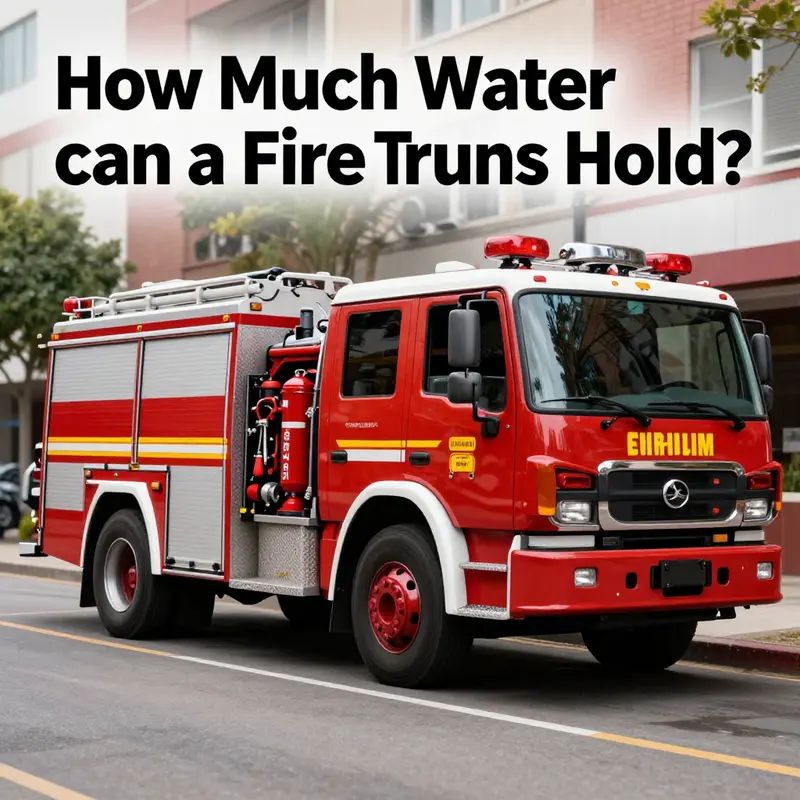
Medium fire trucks occupy a pivotal niche in the urban firefighting ecosystem. They are designed to weave through crowded streets, access tight corners of historic districts, and position quickly at foyers and stairwells where fires often ignite with stubborn momentum. Their appeal lies in a carefully calibrated balance: enough water to begin a decisive attack, yet enough maneuverability to arrive fast and reposition as conditions evolve. When we speak of their water capacity, the practical range is clear and telling. A typical medium-class tank holds between 5,000 liters (5 cubic meters) and 12,000 liters (12 cubic meters) of water. That span translates to roughly 5 to 12 metric tons of water, acknowledging that water’s weight becomes a key factor in how much gear and pump capacity can be carried without compromising road clearance and braking performance. The numbers are more than abstractions; they map directly to how a crew can initiate suppression on entry, how long a stream can be sustained before a relay is required, and how often a second or third unit must arrive to maintain pressure while firefighting continues deeper into a building or across a fleet-wide incident scene. In practical terms, the upper end represents a reserve that supports longer knockdown efforts in dense urban settings, while the lower end emphasizes speed and reach in narrow corridors or tight cul-de-sacs where a larger chassis would struggle to navigate.
Within this middle ground, a single medium truck can deliver substantial water directly to the fire scene, then rely on subsequent support to sustain operations. The capacity difference between a 5,000-liter vehicle and a 12,000-liter one is not merely about gallons or cubic meters; it shapes tactical choices. A crew with a 12,000-liter tank can begin a more substantial attack without immediate relay, maintaining a steady stream while other units position to replenish. Conversely, a 5,000-liter model can accelerate to a fire in a congested street, reach upper floors with a shorter approach, and quickly pivot to a rapid knockdown before escalating the response. This is the essence of a mobile, urban-ready asset: it does not attempt to replace the large-apparatus workhorses, but it streamlines the critical first phase of response where speed and reliability are most decisive.
The design engineers who shape these machines face a constant trade-off. Water weighs a heavy burden, and every additional liter demands space, structural reinforcement, and fuel for pumping. The chassis must accommodate a capable pump, hoses, foam systems if used, and compartments for tools, all while preserving enough payload and stability for safe operation. In the medium class, engineers often optimize by integrating efficient pump systems and compact foam capabilities that augment the effective range of the water on scene. Some configurations emphasize rapid water delivery, delivering what one industry briefing called a notable improvement in the velocity of water reaching the nozzle—an enhancement that can shave seconds off crucial early knockdown. In urban environments, those seconds translate into meaningful reductions in heat exposure for interior crews, lower structural deterioration, and clearer paths for occupants and bystander protection.
When we examine the operational realities, the differences among medium trucks become clearer still. In cities with dense hydrant networks, a medium truck can rely on a robust internal water supply and still rotate quickly to address multiple fronts of a developing fire. In neighborhoods where hydrants are sparser or where road layouts create chokepoints, the ability to transport a larger onboard water reserve becomes a strategic asset. Yet even at the upper end of 12,000 liters, a medium truck cannot sustain a long, multi-alarm operation on its own. The capacity often serves as the initial push, the first window of opportunity to knock down flames, before relay operations or a water shuttle system comes into play. This is why medium trucks are frequently viewed as the backbone of the initial attack in urban firefighting, the critical bridge between a quick arrival and the more expansive, coordinated response that follows.
Real-world performance trends reinforce this view. For many urban departments, the medium class is valued for its blend of reach and stability. A 12,000-liter model, for instance, can deliver a powerful, continuous water flow that buys valuable time while additional resources are staged and hydrant connections are secured. A smaller, 1,500-liter option—often characterized as a compact or mini variant—exemplifies the other side of the spectrum: it can access crowded backstreets and deliver water quickly where larger trucks would struggle to maneuver. This spectrum reflects a broader strategic calculus: departments tailor their fleets to match the layout of their jurisdictions, the typical fire load they encounter, and the preferred tempo of suppression. The emphasis is not on maximizing one parameter but on harmonizing capability with response speed and reliability.
To paint a fuller picture, imagine the medium class as a conduit for rapid water delivery that also remains adaptable to evolving circumstances. In a typical urban scenario, a medium truck arrives on the scene with a ready-to-use water supply and a pump capable of delivering substantial flows. The crew deploys hose lines, begins a controlled knockdown, and assesses whether interior operations can commence or must wait for additional units. The efficiency of pump systems within these vehicles matters; a design that reduces the latency between the firefighter turning the valve and the water arriving at the nozzle can significantly influence outcomes, especially in fast-moving fires where heat and smoke push occupants toward exits. This is where the stated improvement in water delivery speed—roughly 20 percent faster in some pump configurations—becomes more than a statistic. It translates into tangible safety margins for both civilians and responders, and it affects the pace at which a scene transitions from fire control to overhaul and salvage.
For readers exploring the current market and procurement considerations, the landscape of medium trucks is rich but highly context dependent. A department evaluating options will weigh factors such as tank capacity, pump performance, foam compatibility, and the ability to operate effectively in the urban fabric. The capacity figures—5,000 to 12,000 liters—provide a straightforward framework, but the real decision rests on how those liters are integrated with the vehicle’s pumping capacity, the time to deployment, and the reliability of the water supply during a sustained incident. In many agencies, this translates into a strategic preference for a solid, dependable middle-weight platform that can service a wide geographic area, support both residential blocks and commercial districts, and work in concert with larger tankers and water tenders when incidents require extended water supply.
For further reading on current market availability, and to explore options that emphasize the broader concept of medium trucks in the suppression landscape, see the market listings and sale platforms that compile a range of medium-class configurations. Medium trucks offer a pragmatic solution for urban firefighting, providing a credible and practical compromise between compact agility and robust water delivery. They are the workhorses that help ensure a rapid, controlled start to suppression, while the larger units backfill as the incident expands and the water supply network ramps up to meet demand. In the larger arc of urban fire response, the medium class is not merely a transitional step; it is a critical, dependable component that helps bridge the gap between an urgent arrival and an orchestrated, multi-unit operation.
For an example of how market options are presented and discussed in procurement conversations, explore related listings and sales platforms that offer medium-class configurations and water capacity details. Medium trucks are widely offered and continually refined, reflecting the ongoing evolution of urban firefighting strategies and the demand for reliable, adaptable equipment in the city streets. If you’re considering a fleet refresh or expansion, the middle-weight option remains a cornerstone of balanced capability and rapid response, a steadying force in the hectic tempo of urban fire incidents.
External resource: https://www.alibaba.com/product-detail/Dongfeng-1208-6×4-Fire-Truck-with-12cbm_1601271379549.html
Internal reference: For those exploring current market options and fleet composition, you may also review broader listings under fire-trucks-for-sale, which summarize the available medium-class configurations and their practical implications for urban response. fire-trucks-for-sale
Front-Line Giants: How Large Fire Trucks Carry Water and Sustain the Battle
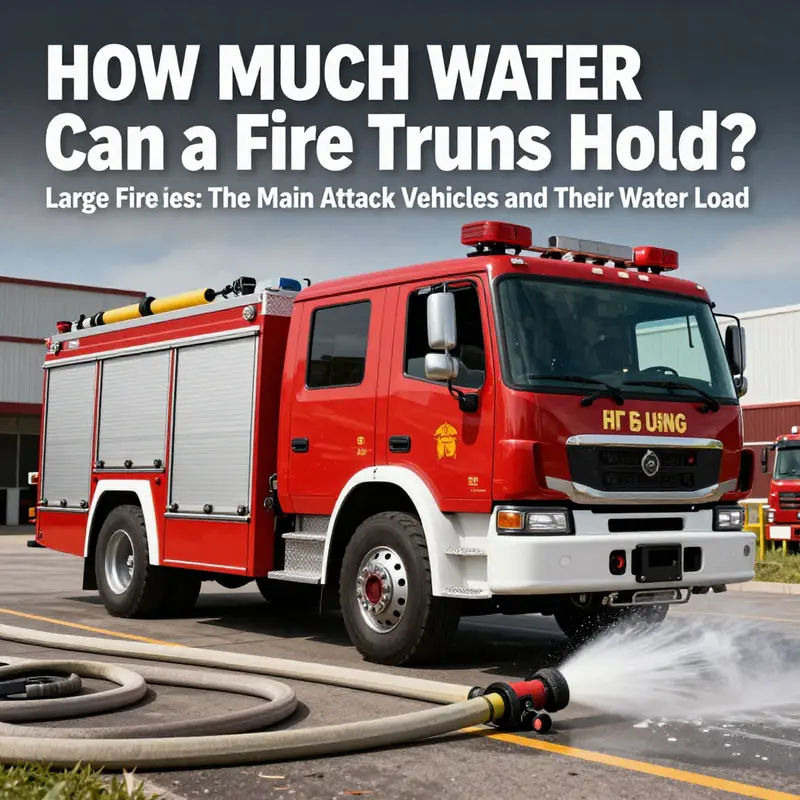
When the smoke begins to thicken and flames crawl toward the rafters, the fireground hinges on the ability of large fire trucks to deliver steady, reliable water at high pressure. These vehicles, often called pumper or attack units, are engineered to be the first major source of water for hose lines, bridging the gap between a hydrant’s reach and the structure’s interior corridors where heat and collapse threaten ground crews. Their value lies not just in raw volume but in the combination of tank size, pump capacity, hose layout, and maneuverability. In dense urban terrain, speed and reach matter as much as sustained pressure and reliability. A well-designed large fire truck can project water farther, keep a longer attack line pressurized, and offer enough endurance to begin a coordinated, multi-line assault that smothers flames before they gain a foothold in larger sections of a building.
Across jurisdictions, standard large attack trucks usually carry somewhere between three and eleven thousand liters of water, which translates roughly to a range of about one thousand to three thousand gallons. That spacing reflects a balancing act born from real-world constraints: the vehicle must remain maneuverable in crowded streets, not so heavy as to overwhelm traction or braking, and still capable of delivering a robust stream for a sustained initial assault. The practical implication is that, in many urban incidents, crews rely on that initial load to reach a critical threshold of control while additional water comes from hydrants, water tenders, or portable tanks brought in from neighboring districts. The water in the tank buys time and creates an anchor for the firefighters to establish a defensive perimeter, protect exposures, and begin offensive operations in a controlled, methodical sequence.
Nevertheless, some larger fleets push the ceiling higher to extend their operating window before refills, a feature increasingly valued in rural or remote settings where hydrants may be sparse. In such cases, tank sizes can rise to about five thousand liters, a scale that meaningfully stretches the duration of continuous pumping at the fire scene. In practical terms, a truck with a five-thousand-liter capacity can sustain an aggressive water application for longer stretches, reducing early dependence on external water sources and letting responders focus on critical tasks such as interior search, door control, and maintaining a continuous water curtain that checks the blaze’s momentum. This capability can be the deciding factor between rapid containment and a longer, more dangerous firefight that risks structural compromise. For readers curious about the market, there is a wide spectrum of configurations and chassis choices, including opportunities to explore what’s on the market at the Fire trucks for sale page, which highlights a range of equipment tailored to different needs and budgets. Fire trucks for sale.
Underneath the water tank sits a robust pump system, the heart of any large attack vehicle. Pumps in these trucks are designed to deliver water under high pressure to reach upper floors or distant corners of a building. Typical pump outputs are calibrated in the neighborhood of a hundred to two hundred pounds per square inch, with some configurations capable of higher pressure depending on the nozzle size, ladder placement, and the demands of a given incident. The hose complement that accompanies these pumps is not merely a single line but a carefully organized array of retractable and static hose reels, cross-connected with several attack, relay, and blitz lines. This network allows crews to stage water streams from multiple points, creating a coordinated assault that can flood different sectors of a fire as crews advance or as conditions shift. In practice, the synergy between pump capacity, water storage, and hose geometry is what makes a large truck more than a tank on wheels; it becomes a mobile hydraulics plant capable of shaping the fire’s behavior on the front line.
The design extends beyond the water system itself. Large attack units are equipped with an assortment of tools and systems that support the water mission and the broader life-safety goals of the operation. They carry extensive hose storage, seconds count in deploying lines, and offer ladders, rescue tools, and sometimes foam systems for tackling flammable liquids or mixed-fire scenarios. Foam, when deployed, can help blanket a hydrocarbon fire, increasing the effectiveness of the water and reducing the heat that radiates through compartments. Each of these features is chosen to complement the water load, ensuring the truck can not only reach the scene but also sustain a credible, versatile attack. The emphasis is on a carefully curated set of equipment that remains reachable even as the distance from hydrants grows or the incident evolves from a flashover risk to a long, controlled burn.
Mobility remains a critical constraint and opportunity in the design of large fire trucks. A robust four-wheel-drive chassis, for example, broadens the mission envelope from dense urban corridors to rugged rural edges where access roads degrade quickly under heavy weight. This mobility, combined with a strong payload and a high-capacity pump, enables crews to press through tight turns and soft ground without sacrificing water delivery. It is this resilient combination—water storage, pressurized delivery, and off-road capability—that defines the operator’s strategic options on the ground. When a truck can position itself to optimize nozzle pressure while preserving maneuverability, it becomes a tactical asset in the hands of firefighters who must adapt their plan to shifting heat intensities and the building’s evolving geometry.
Beyond the physics of volume and pressure, large attack vehicles influence the choreography of the fireground. They anchor the initial water supply, but they also coordinate with additional units to sustain flows as interior crews advance with handlines and as relay teams shuttle water from external sources. In practice, this often means the truck will orchestrate a relay system, where pump operators maintain a steady stream while engine companies feed the lines from the nozzle over longer distances. The result is a disciplined ballet: one unit lays the first line, another feeds additional water to keep it charged, and still others deploy tactical measures to protect exposures or search for hidden pockets of flame. The interplay of teams, backed by a dependable water load, shifts the focus from guessing and improvisation to methodical, data-informed decision making.
To understand the full scope of large fire trucks, consider the strategic implications of their water capacity during a multi-alarm incident. The tank acts as a buffer that buys critical minutes for incident command to marshal resources, stage additional water supply, and implement a graded attack that prioritizes life safety and property conservation. In many cases, the presence of a powerful main attack vehicle can deter fire growth by preserving the integrity of key structural elements and delaying attic flashovers, giving investigators and responders space to operate safely. The complexity of the vehicle’s systems—pump, tank, hoses, foam, and tools—requires ongoing training and practice so crews can quickly translate capacity into effective actions on the ground. It is this seamless integration of capacity, reliability, and mobility that makes large fire trucks indispensable on the modern fireground.
For those exploring how fleets choose between configurations and how the market supports different missions, this chapter emphasizes the central truth: water capacity alone is not a magic bullet. It is the interaction of volume, pressure, response time, and the ability to refill and relocate that determines the true effectiveness of the main attack vehicle. In every incident, the truck’s water load is the anchor around which the tactical plan turns, but the success of the firefight depends on disciplined teamwork, precise pump operations, and the rapid coordination of multiple units to sustain the flow where it is needed most. The modern large fire truck embodies this synthesis, delivering predictable water delivery while remaining adaptable to a range of fire types and terrains. The result is a vehicle that does not just carry water—it helps shape the fire’s development, buys time for firefighters to execute life-safety goals, and keeps communities safer as the incident unfolds.
External reference for advanced specifications and configurations can be found at a detailed product page: https://www.alibaba.com/product-detail/I-Veco-4X2-1500-Gallons-5000-Litres_1600479157445.html?src=seo&alkey=1600479157445%2C1600479157445%2C1600479157445&spm=a2g0s.search0101.0.0.7f3e4a5dPnVZkW
Reservoirs on Wheels: Capacity, Tactics, and the Science Behind Heavy-Duty Fire Trucks
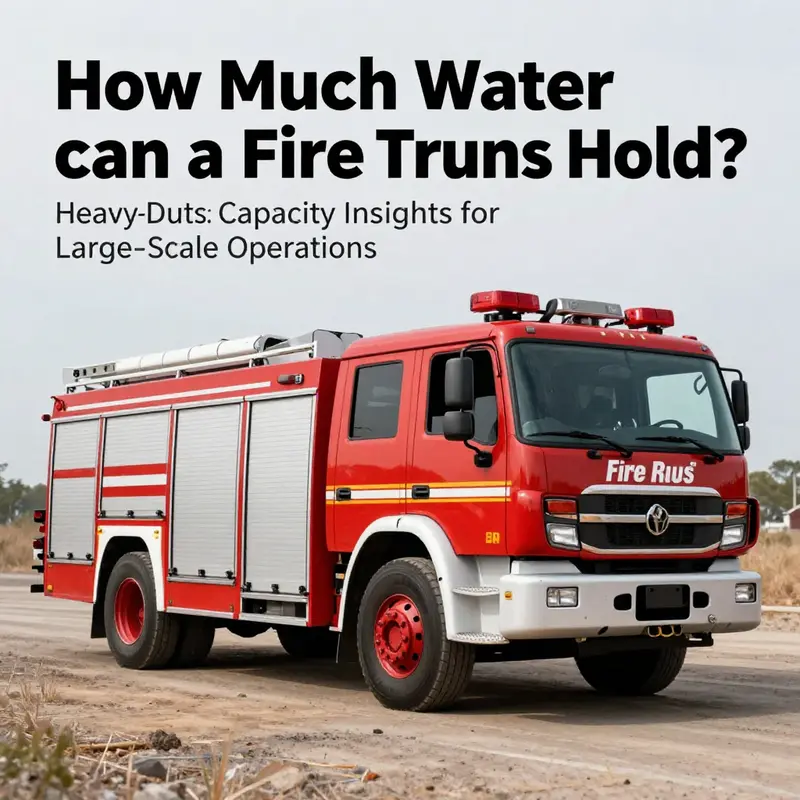
Water is the first line of defense when a blaze grows beyond a small flare. In large-scale emergencies, a fire department’s capacity to hold and move water becomes a deciding factor in how quickly flames are contained and how long crews can work before a new water source is secured. Heavy-duty fire trucks are designed not just to deliver water, but to sustain a coordinated assault across hours of operation. Their significance lies not only in the amount stored, but in how that storage integrates with pumps, foam systems, and the support network that keeps water flowing from hydrants, ponds, or tanker trucks to the front line where pressure and reach matter most. The market trend is revealing: the most common capacity range for heavy-duty units sits around five hundred to a thousand gallons, roughly two to four thousand liters. That band reflects a balance between maneuverability in tight spaces and the volume needed for serious suppression. Yet this is only part of the story. When fires threaten industrial complexes, refineries, or multi-structure urban scenes, departments reliably opt for significantly larger reserves. In practical terms, a single heavy-duty vehicle may carry tens of thousands of liters of total fluid, with a substantial portion allocated to water, a portion dedicated to foam concentrate, and a robust pumping capability to push that mix onto the fire scene. For example, some models in this category can boast total fluid capacities around twenty-one thousand liters, with about ten cubic meters devoted to water and thousands of liters allocated to foam concentrate. Such configurations enable sustained operations even as supply lines bend and bend again under the weight of a long, stubborn fire. The pump on these machines is sized to keep pace with the demand; a typical design might deliver around eighty liters of water per second, which translates to roughly twelve hundred gallons per minute. Those numbers are not simply digits; they define how many hoses can be laid, how many streams can be kept hot and flowing, and how quickly teammates can advance their position against heat and smoke. Foam systems further extend the reach of a heavy-duty truck, offering improved adhesion and cooling for flammable liquid fires. The most common foams used in modern networks blend film-forming agents with water to create a barrier between fuel and air, giving firefighters more time to apply the suppression effort without excessive water runoff. The manual and automatic controls surrounding foam injection are tailored to the mission. In industrial environments, FFDP or similar formulations may be deployed to tackle hydrocarbon fires, while AFFF-type blends are common in municipal settings where liquid fuels present a continuous hazard. The capacity to store a large amount of foam concentrate alongside water creates a strategic advantage: crews can initiate an aggressive attack, then sustain it without frequent trips to refill, which preserves precious manpower for other critical tasks on the scene. When planning these machines, departments weigh not only how much water to carry but how long a single apparatus can sustain flow, and how quickly it can replenish its own supply from external sources. Heavy-duty chassis designs emphasize durability in harsh conditions. Operators expect not just strength but reliability in extreme heat, chemical exposure, and, in some cases, challenging terrain around industrial facilities or remote locations. The cabs and structural members are often reinforced to resist heat and impact, while the electrical systems are built to withstand vibration, moisture, and the possibility of exposure to hazardous materials. In this sense, the build goes beyond a simple tank and pump; it becomes a compact logistics node that can shuttle water and foam across the battlefield. For the firefighter, this translates into fewer stops, steadier pressure, and a more predictable firefighting rhythm. The integration of advanced stabilization and foam technologies is part of a broader shift toward multiagent suppression, where water and foam act in concert to suppress both class A materials and hydrocarbon liquids. In practice, this means crews can adapt their approach mid-operation, switching from water-focused streams to foam-assisted tactics when encountering challenging fuels or layered fires. The ethical and logistical calculus of capacity is not purely technical. It also depends on funding, maintenance cycles, and the availability of compatible water sources. In urban centers, the density of hydrants and the proximity of water tenders influence how much on-board storage a department prioritizes. In more remote or industrial settings, a larger on-board reserve becomes essential, and the fleet may include additional support vehicles specifically tasked with supplying water to the frontline. The concept of a mobile water depot—where a heavy-duty truck functions as a temporary reservoir supplying a network of smaller apparatus—illustrates how capacity transcends a single vehicle. This approach minimizes downtime spent refilling and maximizes the time crews can devote to suppression rather than logistics. When researchers and practitioners discuss these trucks, they often invoke a spectrum rather than a single number. The smallest end of heavy-duty configurations may echo the more familiar urban engine with a water tank in the low thousands of liters, yet the upper end of the spectrum stretches well into tens of thousands for dedicated tanker operations. The practical takeaway is that capacity is a design choice aligned with a department’s anticipated incidents, geography, and partnerships with other agencies. A robust heavy-duty platform is not merely a larger tank on a truck; it is a carefully engineered system that harmonizes tank size with pump performance, foam deployment, and the ability to sustain a coordinated fight under pressure. This is where the narrative circles back to the idea of scale. In cities facing dense development, high-rise and large commercial occupancies demand more water, more foam, and more continuous supply. In industrial zones, the risk profile shifts toward hazardous materials, which pushes the adoption of dual-agent capabilities and specialized suppression chemistries. The end result is that a single heavy-duty unit acts as a backbone for resilience on the fireground, ready to fill gaps in supply, bridge to water tenders, and sustain fire suppression over the long haul. For readers seeking a tangible sense of how these decisions play out, consider the broader landscape of heavy-duty apparatus through the lens of steel-focused designs and their enduring relevance to rugged environments. It is not a stretch to connect the idea of structural robustness with the need for reliable capacity; steel-based configurations are often favored for their durability under repeated use, exposure to heat, and the potential for harsh conditions typical in industrial firefighting. See how such platforms are described in the context of steel fire apparatus to appreciate how a vehicle’s frame and ballast contribute to keeping a large water payload usable in demanding scenarios. steel fire apparatus. In the end, capacity on a heavy-duty fire truck is a measure of readiness as much as volume. It embodies the deliberate choices that departments make about how to balance water, foam, pump speed, and durability to meet the challenges of large-scale incidents. The mathematics of gallons and liters is the language, but the goal is a unified capability: to deliver effective suppression for as long as necessary while maintaining the flexibility to adapt as conditions evolve. External resources and field-tested configurations continue to shape best practices, driving improvements in both equipment design and on-scene tactics. For further perspective on the evolving landscape of large-capacity platforms, a detailed reference from a major equipment provider offers a technical snapshot of multi-agent systems and the role of high-capacity solutions in sustained operations: https://www.howotruck.com/product/18-ton-dual-agent-fire-truck.html
Hydraulic Giants on the Fireground: How Much Water Do Specialized Tankers Really Carry?
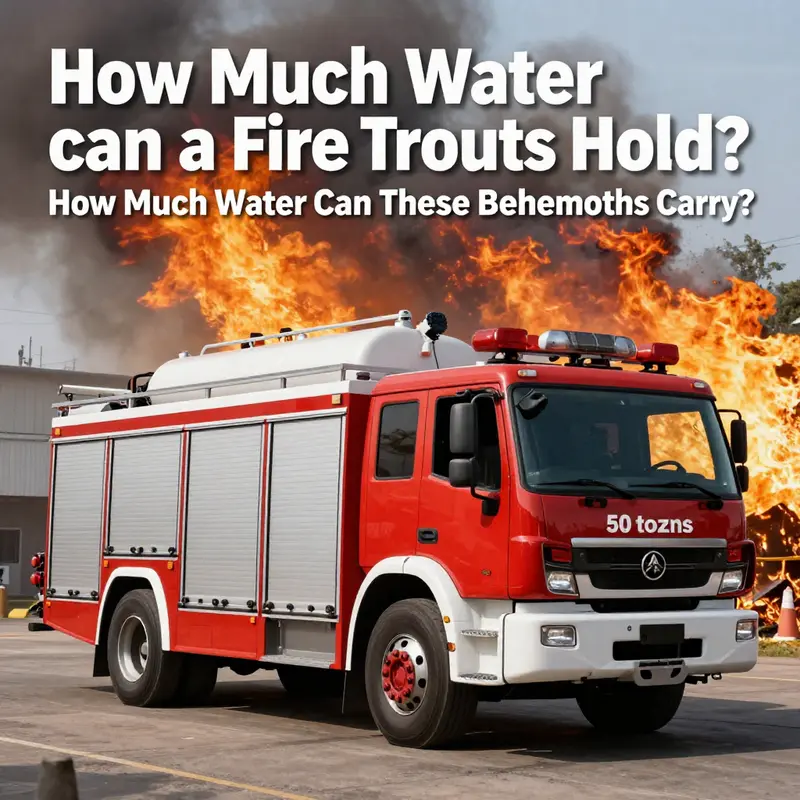
When a blaze stretches across distance, over uneven terrain, or into areas without ready hydrants, the firefighting toolkit expands beyond the standard pumper. Specialized fire trucks are built not just to spray water, but to carry, conserve, and deploy it with strategic precision. They are the quiet workhorses that turn limited urban water sources into a controlled, sustained assault. Across the fleet spectrum, these behemoths vary enormously in capacity, reflecting different mission profiles, road realities, and the stubborn physics of moving a heavy liquid payload. In the simplest terms, water capacity on these machines scales with purpose: the more they are designed to operate where water sources are scarce or far away, the more stubbornly the tank grows to keep the fire in sight while refilling becomes less frequent. The result is a spectrum that ranges from a few thousand liters to tens of thousands, with the most extreme designs capable of supplying hundreds of tons of water when a scene demands it. To understand the practical implications, it helps to picture the operator’s challenge: a finite tank must power a sustained attack, feed a pair of pumps, and still leave enough maneuvering margin to move between supply points and the fight itself without becoming a rolling bottleneck. That balancing act—volume, flow, weight, and mobility—defines what a specialized vehicle can do on scene, and it explains why modern departments invest in a class of trucks that look like outsize workhorses but are engineered around very precise firefighting needs.
At the upper end of the scale, a few heavy-fill units are designed to deliver long, relentless water streams without constant resupply. These have water capacities around twenty tonnes, or roughly twenty thousand liters. In practical terms, this means a single one of these tankers can sustain a coordinated attack for many minutes, even hours, without needing to pull off the line to refill. The impact of such capacity is not merely the ability to douse flames; it is the freedom to deploy dual water cannons, fashion extended water curtains, and create resilient relay setups that keep pressure and volume stable as they move through a fire scene. The dual-cannon configuration is especially valuable when teams must attack from more than one angle or when the fire consumes compartments that require separate lines. Such arrangements do not erase the need for a steady water supply; they merely buy time for the more complex tasks of access and ventilation, and they reduce the frequency with which ground crews must break their rhythm to chase a hydrant or a distant pool of water.
But not all specialized tankers are built to the same ceiling. A broader group exists with substantial, yet more modest, capacities tailored for varied geography and operational doctrine. Many configurations sit in a range from ten thousand to twenty-five thousand liters, depending on chassis, wheelbase, and the intended mission. A 4×4 or 6×6 crewed vehicle with a knuckle crane, for instance, often marries a significant water reserve with the flexibility required to operate in constrained urban cores or rough terrain. The crane is not a cosmetic addition; it is a critical tool that supports rescue operations while the water trunk remains anchored for supply and fire suppression. In these cases, the precise water volume is influenced by the payload limits of the truck, the structural design of the tank, and the engineering choices that prioritize off-road capability or compact footprint. The result is a family of machines where a high-water configuration remains feasible without sacrificing maneuverability, a balance that is essential for wildland-urban interfaces, industrial sites, and disaster response zones where road networks are compromised.
The landscape of capacity across specialized units is not only about tank size. It is also about how the water is moved, stored, and deployed. A large tank must be paired with a robust pumping system that can translate volume into force at the nozzle. The design conversation includes pump type, intake strategies, and the number of discharge points. A truck can carry twenty thousand liters, yet if its pumps cannot sustain a high flow or if the intake is poorly sited, the advantage of volume may be muted. Conversely, even a more modest tank can be most effective when its pumps deliver reliable, high-volume streams, and its crew can quickly position it for drafting or relay pumping. This interdependence between storage and pumping is a reminder that capacity is a performance metric, not a single number. It reflects the synergy between tank, pump, and operator, a triad that turns sheer liters into practical extinguishing power on the ground.
In scenarios where access to hydrants is severely constrained—such as remote wildfires, industrial complexes, or congested urban canyons—these specialized bodies act as water towers on wheels. They establish pipelines, engage in drafting from natural or artificial sources, and feed other units via relay pumping. The ability to generate a sustained water supply from a single vehicle reduces the scramble for refills and stabilizes the operation’s tempo. It also shapes the tactical approach to firefighting: space is cleared for the aerial or interior teams to advance, ladder placement is supported by ample water, and the overall cohesion of the attack is preserved. When a truck carries a large reserve, it also imposes discipline on the scene. The crew must manage weight distribution, keep doors and hatches closed to minimize slosh, and coordinate with incident command to sequence water supply with the evolving demands of the fire. In this way, the volume is not just a numeric advantage but a strategic resource that informs every decision on the ground.
As with any fleet, the deployment of these machines depends on regional needs and infrastructure. Some regions prioritize heavy, long-duration water supply for large industrial fires or for forested landscapes where hydrants are sparse. Others focus on urban adaptability, choosing configurations that are capable of traversing tight streets while still offering substantial water capacity. The broader point is that capacity is a spectrum, not a single ceiling. Across that spectrum, the most capable specialized tankers push the envelope by combining large reserves with robust pumps, multiple discharge options, and ancillary tools like cranes or twin cannons. Yet the true value of this equipment emerges only when it is integrated into a well-coordinated firefighting strategy—one that choreographs the tanker’s water-dense payload with relay pumps, on-scene ventilation, interior crews, and external water sources. In practice, this means a department’s investment in heavy tankers is inseparable from its training, incident command practices, and the readiness of neighboring units to supplement or receive a water feed when a scene tests the limits of supply.
For readers who want to explore the market and spot the kind of configurations discussed here, there is a range of resources that illustrate how these vehicles are positioned in real fleets. Fire-service operators often weigh fragmentation of demand against the logistics of procurement, seeking platforms that offer a balance of capacity, mobility, and resilience. If you’re curious about current inventories or example builds in your region, consider looking into the broader marketplace for fire trucks for sale, which showcases a variety of chassis, tank sizes, and equipment layouts that reflect local needs and budgets. fire-trucks for sale provides a starting point for understanding how departments approach the trade-offs between weight, volume, and response time on the road. While specific models and configurations will differ, the underlying principle remains constant: the bigger the water reserve, the longer a trained crew can keep pressure on the fire line without losing momentum or control.
Within this larger conversation about water capacity, it is helpful to recognize that the most dramatic figures sometimes capture sensational headlines, but the practical value lies in reliability, resilience, and the ability to integrate water supply with every other element of the firefighting effort. A twenty-tonne water load is a statement of endurance; a ten- to twenty-five-thousand-liter range is a practical toolkit for diverse terrains; and even larger tankers, reaching up to thirty or potentially fifty tons in remote supply scenarios, illustrate an extreme end of the same principle: water is a resource that buys time, divides space, and shapes strategy when every second counts. The chapter of the fire department’s story dedicated to specialized tankers is, at heart, a chapter about logistics on the move—how to carry not just water, but a plan for turning that water into decisive action when the scene refuses to yield to simple, single-point solutions.
External resource: https://www.howotruck.com/
Final thoughts
Understanding the water capacities of fire trucks highlights their critical roles in firefighting. From quick-response small units to massive specialized tankers, each type serves a unique purpose dictated by its design and intended use. The information gleaned from this examination not only appeals to enthusiasts and aspiring firefighters but also serves as a resource for professionals seeking to optimize their operations. Whether in urban settings or large-scale rural firefighting scenarios, the appropriate selection and deployment of fire trucks ensure effective responses to emergencies, ultimately saving lives and property.