
Fire trucks are the backbone of firefighting efforts, and understanding their weight is crucial for enthusiasts, aspiring firefighters, and professionals in the field. The weight of a fire truck varies significantly based on factors such as type, equipment, and operational purpose. From the imposing 6×4 water tanker fire trucks used in demanding situations to smaller rescue units, each vehicle plays a vital role in emergency response. This article delves into the diverse types of fire trucks and their specific weight characteristics, the impact of equipment on their weights, and the legal regulations that govern these specifications. Furthermore, we’ll examine how weight affects firefighting efficiency and provide a comparative analysis of different models. By the end, you’ll have a well-rounded understanding of fire truck weights and their importance in firefighting operations.
Weight as Strategy: How Fire Trucks’ Mass Shapes Firefighting Reach, Responsiveness, and Road Reality
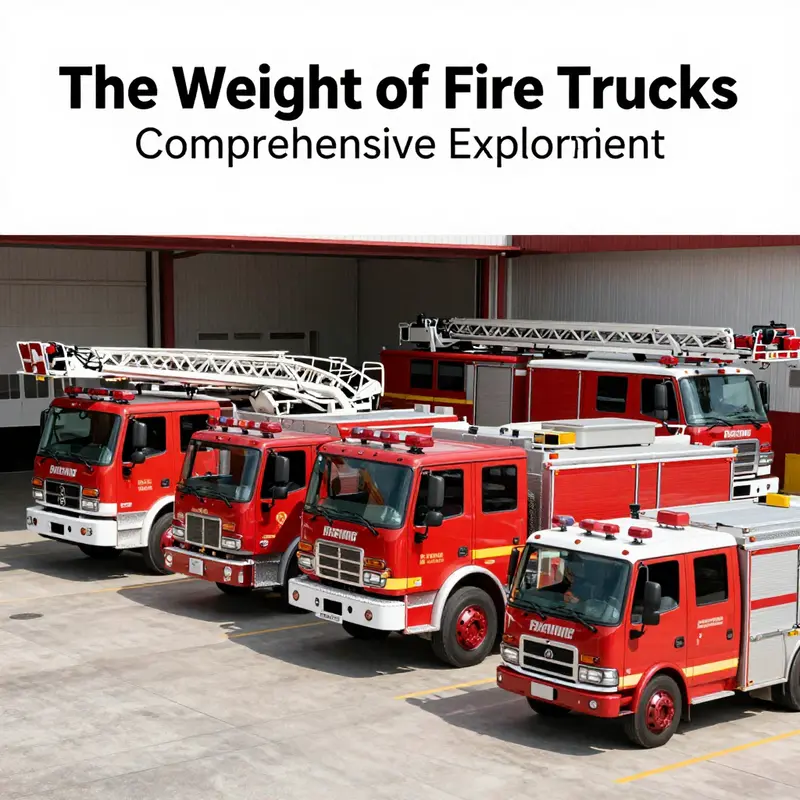
Weight is not merely a measurement of mass when a fire engine rolls out of the station; it is a strategic constraint and an operating parameter that shapes every fork in the road between response, safety, and maneuverability. The mass of a fire truck reflects the role it is built to fulfill, the environment in which it must operate, and the kinds of resources it carries to survive the first critical minutes at a scene. A modern fleet relies on a spectrum of chassis, pumps, tanks, ladders, and support equipment, each addition to the scale that determines how quickly crews can reach hydrants, how reliably water can be delivered, and how the vehicle behaves under braking, acceleration, and cornering. In practice, weight influences everything from tire choice and braking systems to center of gravity and spectral policies for road usage. Understanding this weight is essential for planning sustainable, safe, and effective firefighting operations, particularly when teams must balance speed with control and payload with performance on real streets and rural routes alike.
The most common workhorse in many departments is a pumper, whose primary purpose is to deliver water through hoses to the fire scene. The curb or empty weight of this type falls roughly in the 15,000 to 25,000 pounds range, a reflection of a robust chassis, a mid-sized water tank, a compact but powerful pump, and the crew’s general equipment load. Even within this broad band, the math behind the weight shifts as soon as you add water. A tank that holds several hundred to around a thousand gallons carries thousands of pounds of water when full. Since water weighs about 8.34 pounds per gallon, the difference between an empty unit and a fully loaded one can be measured not just in single digits but in the tens of thousands of pounds. This is why a pumper’s practical weight is seldom a fixed value; it is a moving target that climbs as soon as the tank is filled and the hoses, tools, and auxiliary gear are in place. The vehicle’s design must accommodate this reality, ensuring that once fully loaded, the truck remains controllable, stable, and able to meet the needs of a dynamic incident.
Above the pumper in the weight hierarchy sits the aerial ladder and platform trucks. The inclusion of an extendable ladder, a working platform, and related hydraulic systems adds substantial mass. Even without counting hoses and water, these vehicles can sit in a range that starts around the mid-twenties in thousands of pounds and can extend well beyond forty thousand pounds when you factor in a tall, heavy, hydraulically powered ladder, counterweights, stabilizers, a larger pump package, and the crew’s apparatus. The extra mass from these components serves a critical purpose: it prevents the ladder from pitching or buckling during extension and operation, and it provides the traction and braking margin needed for on-street deployment, often with a heavy platform at height. That elevated mass also affects turning radius, acceleration profile, and braking distance, demanding careful route assessment and driver training to keep responses efficient without compromising safety.
Tanker and foam-focused or forest-fire oriented configurations illustrate another dimension of weight: the balance between payload and mobility when you deliberately choose a large tank and a specialized fluid system. Many of these units carry substantial volumes of water or foam concentrate to extend reach away from hydrants or to cope with remote locations. The tanks themselves can hold thousands of liters, placing water and foam weight in the tens of thousands of pounds once the vehicle is fully loaded. In practice, a 10,000-liter capacity, paired with heavy chassis and a high-capacity pumping system, produces a total mass that pushes the upper bounds of what the vehicle can safely haul on typical road networks. While this capacity is indispensable for certain fire scenarios, it also means those trucks demand more robust braking systems, enhanced suspension, and precise weight distribution to maintain stability during offloading and terrain shifts.
Wildland and brush fire units carve a different path through the weight spectrum. They are often lighter and more maneuverable by design, prioritizing off-road mobility and rapid positioning over ultra-high water-carrying capacity. These vehicles typically sit in a lighter range, from roughly 10,000 to 18,000 pounds, reflecting their smaller tanks and specialized tires or tracks. Even so, their equipment load and foam or water systems still contribute meaningfully to overall mass. The goal in these cases is not simply to carry as much water as possible, but to maximize the chance of reaching a flare-up quickly, getting to a safe staging area, and maintaining traction and steering control on uneven or obstructed terrain. The weight distribution on such vehicles often emphasizes a low, wide stance and a careful balance between water storage and mobility, a design ethos that translates into predictable handling when every second counts.
Across all these configurations, the weight of a fire truck is a composite figure: the chassis and body contribute a baseline mass, while the water and foam systems, pumps, ladders, and tool inventories add layers that can swell the total. The weight must be considered in light of regulatory frameworks and road-use realities. Most jurisdictions apply gross vehicle weight rating (GVWR) limits, and engineers design these machines to stay within those limits under typical operating configurations. Yet actual driving conditions, such as the need to travel with a full compliment of crew and equipment or to operate at full pump capacity, push the vehicle toward the upper end of its rated mass. As a result, departments plan for weight not as a fixed constraint but as a performance parameter that shapes route planning, tire selection, and braking strategy. The balance between power and control becomes especially acute when stairs, ladders, and aerial extensions are deployed mid-incident, demanding precise weight management and careful operational discipline.
From a planning perspective, weight also informs the other side of firefighting readiness: maintenance, accessibility, and lifecycle costs. Heavier vehicles experience amplified wear on brakes, tires, and suspension, and the added weight magnifies the consequences of a collision or a rollover risk if the load shifts unexpectedly. As a result, departments invest in higher-grade braking systems, more robust tires, and suspension strategies that help keep weight over the axles where it belongs. The chassis selection, too, is guided by weight projections: a heavier payload requires a stouter frame, stiffer axles, and a drivetrain tuned for stable, predictable performance when fully loaded. The result is a fleet that can adapt to a wide range of emergencies, from urban rescues to rural, water-scarce environments, with weight providing a reliable gauge for what the vehicle can reasonably do and how quickly it can do it.
All of this matters when crews plan a response. Weight informs how quickly a truck can accelerate from a standstill, how it climbs grades, and how it behaves when the operator positions it for a deployable hose line or a ladder task. It also governs the braking distance required in an emergency stop and the likelihood of wheel lock under hard braking with a full load. Even fuel efficiency and heat management are affected, since a heavier vehicle consumes more energy to keep the pump and hydraulics within safe operating ranges during a shift. In practical terms, weight is the lens through which the entire incident command unfolds—from the moment responders hear the page to the point they back the apparatus into a safe, stable position at the scene. A well-informed, weight-conscious approach helps ensure that the equipment can perform when ignition is imminent and that crews arrive with a margin of safety that protects both people and property.
For readers who are evaluating options on the market, the considerations extend beyond raw capacity. The real question becomes how a given weight profile aligns with the city’s streets, the community’s water supply, and the tactical approach favored by responders. Listings that compare different configurations often highlight tank size, pump capacity, ladder length, and the overall weight class, allowing agencies to balance cost, availability, and performance. If you are exploring current market options, you can consult market listings that present a range of configurations and weights to match local needs. Fire Trucks for Sale offers a snapshot of how weight, tank size, and equipment—paired with a common drive configuration—converge toward practical firefighting solutions. The aim is not to select the heaviest machine but the one that offers the best combination of reach, speed, stability, and reliability for a given community and its typical response patterns.
On the technical side, the body of knowledge that underpins these decisions includes standardized regulatory frameworks that help ensure safety across agencies and jurisdictions. Standards bodies, engineering practices, and compliance regimes shape how weights are documented, how loads are tested, and how performance is validated under real-world conditions. Together with vehicle dynamics, weight distribution, and payload management, these regulations help keep the fleet capable of performing critical tasks even under stress. As a result, the question of how much a fire truck weighs becomes more than a numerical curiosity; it is a driver of design philosophy, a predictor of on-road behavior, and a determinant of the readiness that communities rely on during emergencies. The interplay of weight, equipment, and mission is a central thread that weaves through every chapter of this discussion, guiding decisions about procurement, maintenance, and daily readiness.
For a deeper dive into chassis and body configurations, external manufacturer specifications can be consulted here. external manufacturer specifications.
Weight on the Line: How Fire-Truck Equipment Shapes Mass, Balance, and Mission
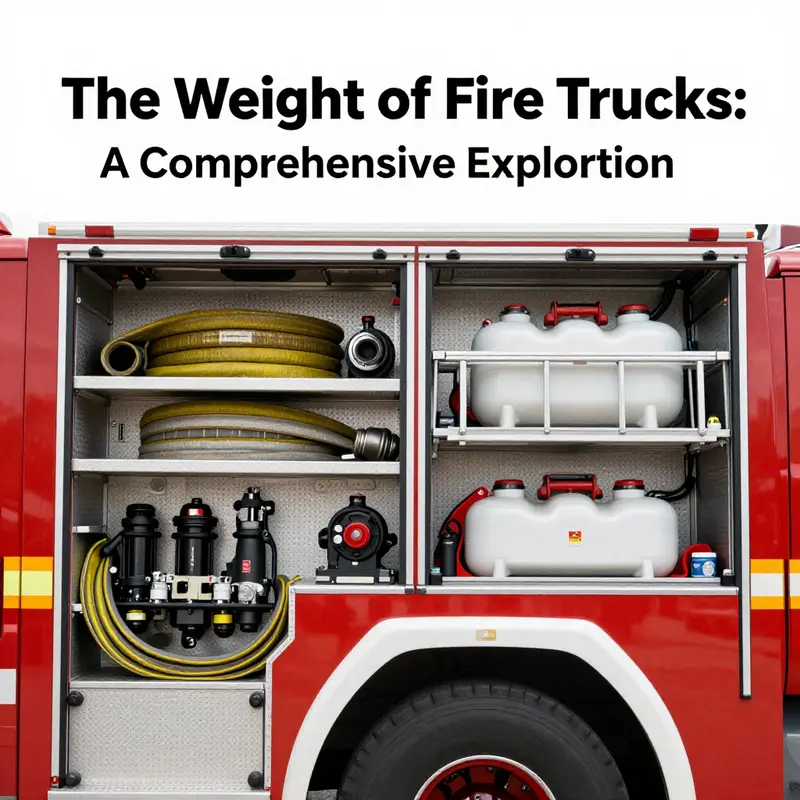
The weight of a fire truck is not a single number to memorize; it is a living part of the machine that governs how fast it can move, how safely it can steer, and how effectively it can deliver help when seconds matter. In practice, weight is the sum of many discrete pieces bonded into a single, mission-critical vehicle. The empty chassis, the body shell, and the foundational structure provide a base mass. Then comes the payload of water, fuel, crew, and the array of firefighting equipment that turns a chassis into a working fire engine. The way this equipment is chosen, arranged, and integrated determines not only how much the truck weighs but also where that weight sits and how it behaves in motion, on a ramp, or when the lights of an emergency scene demand abrupt stopping and rapid acceleration. When people ask how much fire trucks weigh, they are really asking how much mass is required to balance power, reach, and resilience against the unpredictable demands of a fire scene. The short answer is that weight varies widely, and the range is driven by how much water the unit carries, which kinds of pumps and hoses are installed, and what additional apparatus the department needs to perform its missions most effectively.
At the core of weight is the water tank. Water is the primary payload for most pumpers and tankers because it is the raw material that fights fires on the ground. The density of water makes the math almost straightforward: a liter of water weighs about one kilogram. A compact, four-ton class fire truck equipped with a 4,000-liter water tank already carries roughly four metric tons of water. That figure alone can push the loaded mass into a range well beyond the base weight of the chassis and body. The actual total depends on the shell that holds the tank, the tank’s construction, and any internal baffles or foam compartments designed to optimize delivery. Increase the tank to 10,000 liters, and the water allowed on board climbs to about ten metric tons. Add the same robust suite of pumps, hoses, and tools, and the vehicle’s overall mass continues to grow, affecting fuel economy, braking distances, and the ability to accelerate quickly from a stop when the siren goes live.
A related truth is that not all water is carried as a single, simple tank. Some configurations deploy multiple tanks or integrated reservoirs designed for different flows or spray patterns. The result is a higher total water load than a single-tank system, and with it comes a cascade of weight-related considerations. The choice of tank capacity often aligns with the intended duty cycle of the vehicle: urban response, rural access, or vast industrial environments. Smaller urban pumps may privilégié faster response and easier maneuverability, balancing a smaller water load against a lighter overall mass. Larger tankers, designed for sustained firefighting and longer attack lines, sacrifice some agility to meet their chosen mission profile. In either case, the weight implications are not abstract; they translate directly into how quickly the truck can respond, how stable it stays while advancing through traffic, and how the crew manages stabilization when the truck stops to lay lines or set up a pump.
Beyond the water, the pump system itself adds appreciable heft. A high-pressure pump, a power unit, and the piping network necessary to move water from the tank to handlines and attack devices are not light. The pump mechanism, the booster lines, and the manifold assemblies are engineered for reliability and pressure performance, but they also contribute meaningful mass. The more elaborate the system—whether it supports ultra-high flow rates or specialized foam and suction arrangements—the more the weight budget shifts. Then there are the hoses and reels, hoses themselves carrying weight both when stowed and when laid out. The lengths, diameters, and material choices for hoses determine not just capacity but also the physical load they contribute to the chassis as a whole. A long reel of reinforced hose, coiled and ready, sits like a spring-loaded weight waiting to be deployed.
Ladders, foam systems, and onboard tools complete the picture of on-board equipment that matters for weight. An aerial ladder or hydraulic platform adds not just reach and versatility but a significant mass to the front or rear of the vehicle, depending on design. Even when the ladder is folded, its structural skeleton and articulation mechanisms inhabit space and contribute to the vehicle’s mass close to the center of gravity. Foam proportioning systems, designed to blend foam concentrate with water for certain fire types, add their own hardware, tanks, and plumbing, all of which push the mass higher than a plain water-only configuration. Onboard tools—hydraulic rescue tools, cutters, spreaders, stabilization gear, and portable lighting—are essential for rescue operations and for enabling effective fire suppression, but every tool adds weight that the chassis must support without compromising handling.
The equation becomes more complex as electrical and illumination systems enter the mix. Modern fire apparatus carry extensive lighting, warning systems, communication gear, and diagnostic electronics. Though these components may seem lightweight relative to the water tank, they are not inconsequential when measured against the vehicle’s weight class. The energy demand of these systems also translates into engine and transmission load, which indirectly affects fuel economy and performance. Stabilization outriggers, pump panels, and electronic control units all contribute to the total mass, and they demand careful placement to preserve balance. The chassis must tolerate this mass in a way that preserves steering feel, braking response, and the ability to remain upright and controllable when power is demanded in an emergency.
Engineering teams confront a fundamental tension: how to maximize pumping capacity, reach, and on-scene versatility while keeping mass within acceptable limits. The weight budget must align with the gross vehicle weight rating, or GVWR, a regulatory ceiling that defines how heavy the vehicle can be when fully loaded. Achieving this alignment is a matter of meticulous design optimization. Placing heavy components, such as the water tank or the aerial apparatus, away from the centerline can affect steering response and stability. A well-balanced design seeks to distribute weight across axles in proportion to each axle’s load rating, ensuring legal compliance and predictable handling on city streets, rural roads, or uneven terrain. Supplying enough wheel contact with the road is not just about grip; it is about safety and control during high-stakes maneuvers that can be required at a moment’s notice.
The way weight is managed also reflects a broader set of practical concerns. A heavier vehicle tends to burn more fuel, and its accelerative behavior is slower, which matters when seconds count in traffic or when maneuvering through narrow streets. Braking distances lengthen as mass increases, so the braking system must be robust enough to stop not only the vehicle but the water and equipment it carries. And when the truck is fully loaded for a long incident, the center of gravity can shift in response to dynamic road forces. This is why the arrangement of equipment and the selection of each payload are not arbitrary decisions but engineering choices that influence reliability, safety, and mission success.
In this light, a four-ton mini fire fighting truck with a four-thousand-liter tank demonstrates how large-capacity water storage alone can redefine the vehicle on the road. The tank and water payload account for roughly the majority of the mass increase from empty to loaded. The same logic scales up for larger models, where a ten-thousand-liter water tank or more pushes the vehicle into a heavier class, demanding a sturdier chassis, stronger suspension, and more capable braking systems. The resulting design challenges—predictable handling, safe cornering, and the ability to stop promptly under heavy load—drive precision in manufacturing and calibration. The placement of heavy components is intentionally planned to keep the center of gravity within safe bounds, particularly when the vehicle needs to brake hard or negotiate a slope while maintaining wheel contact and stability.
In the discussion of weight, it is important to acknowledge how materials and construction influence mass. The choice of materials and the way the body and tank are integrated with the chassis also affect not just weight, but durability, corrosion resistance, and service life. For a deeper look at how materials contribute to overall weight and resilience in fire apparatus, see the discussion at steel fire apparatus. This reference underlines that heavy-duty construction does not simply add mass; it is designed to endure the rigorous demands of emergency response while preserving operability and reliability under strenuous conditions. steel fire apparatus
The practical upshot of these considerations is that weight is a fundamental design parameter rather than a static attribute. Departments tailor configurations to their typical response profiles, weather and terrain, and the heights and lengths of their typical routes. A city with tight streets and frequent urban incidents might favor a lighter, more agile platform with a smaller water tank, while a rural district facing longer hose lays and higher fire loads might opt for a heavier chassis with a larger tank and more robust support systems. In any case, the weight decisions are inseparable from performance goals, maintenance expectations, and the legal framework that governs road usage and vehicle operation. When a reader encounters a catalog listing or a case study describing a fire apparatus, the numbers are not just about mass for mass’s sake. They signal a carefully calibrated balance between the size of the water hold, the reach of the pump, and the on-board capability to support crews in a high-pressure environment. The vehicle must be ready to deliver water, to reach the seat of the fire, to rescue, and to endure the rigors of daily service, all while staying within weight limits that keep it safe and road-legal.
External reference: For a practical example of how a compact platform accommodates a large water tank and related equipment, see this external listing: https://www.alibaba.com/product-detail/4Ton-Dongfeng-Mini-Fire-Fighting-Truck-Fire-Engine_1600728539951.html
Weighing the Law: How Legal Limits Shape Fire Truck Mass and Public Safety
Weight governs more than size on a fire truck. It governs how quickly a rig can stop, how it handles on curves, and whether it can safely traverse a city street, a highway overpass, or a rural twist of road. In the fire service, mass has a direct connection to performance and safety. A vehicle that is too heavy for a given route can compromise stopping distance, tire longevity, and the structural integrity of bridges and pavements. This immediate practicality makes weight a central consideration for both procurement and daily operations. When we speak about the weight of these specialized vehicles, we must balance two intertwined realities: the cargo they carry and the roads they share with everyone else. The truck’s job is to deliver water, equipment, people, and rescue tools to a scene. The load it bears can range from a few hundred gallons of water to several thousand gallons, plus pumps, hoses, ladders, rescue tools, and a full crew. Each component adds to the overall mass, and each weight increment carries a meaning for maneuverability, fuel efficiency, and legal compliance. A typical large, heavy-duty water-tanker fire apparatus used by many departments weighs roughly 15 to 20 tons when empty. That figure places the vehicle in a mass class where every choice—from chassis configuration to tank material—matters deeply for on-road performance and incident response. When water and equipment are added, the weight climbs quickly. Water weighs about 8.34 pounds per gallon, a simple fact with outsized implications. If a tanker carries 1,500 gallons of water, that water alone adds about 12,500 pounds to the curb weight. Add foam systems, rescue gear, a high-pressure pump, ladders, and hoses, and the total easily surpasses this baseline. The result is a vehicle whose weight is not merely a number but a built-in constraint that affects every decision in the design and operations chain. It is here that the phrase “gross vehicle weight” finds practical meaning. The GVWR is the maximum allowable combined mass of the vehicle, including its own weight, fuel, water, equipment, and passengers. The weight of a fire apparatus is therefore not fixed; it changes with configuration, tank capacity, pump capacity, and the gear it carries. Different tank sizes and materials shift the math. A steel tank may differ in weight from an aluminum one, and the structural choices—such as whether certain components are integrated or mounted externally—also influence total mass. The choice of materials is not neutral. It affects durability, corrosion resistance, and, crucially, weight. This is where the concept of design balance becomes evident. Even the selection of construction features matters because it translates directly into what the vehicle can—and cannot—do on a given route. For readers exploring procurement or fleet planning, the weight discussion should always connect to the broader picture of operational readiness. The vehicle must be robust enough to perform in the worst possible conditions while still obeying road limits. That tension is not simply academic. It drives decisions about tank capacity, chassis selection, pump systems, and what apparatus is mounted on the apparatus. In the spectrum of heavy-duty fire apparatus, there is a spectrum of weights tied to configuration. A larger tank holds more water but adds more mass. A more powerful pump adds to the system weight but increases firefighting capability. Extra ladders and rescue gear improve effectiveness but push the vehicle further toward its weight limits. The practical takeaway is clear: weight is a design variable as much as a consequence of what the truck is built to do. This leads to one of the most important moments in the vehicle’s life: the moment when weight becomes a legal, regulated parameter. In Washington State, the regulatory framework for firefighting apparatus is codified in RCW 46.44.190, which addresses firefighting equipment and related vehicles. Subsection (5) states that operators of firefighting apparatus that exceed the weight limits established in subsection (4) must apply for an overweight permit with the Department of Transportation. This is not a bureaucratic obstruction; it is a safety mechanism that protects road surfaces, bridges, and other road users while allowing essential emergency services to operate with the capabilities they need. The permit process is designed to be practical. It begins with accurate weight calculations that reflect current load, including water, fuel, personnel, and gear. It then requires planed routing that avoids structures or routes that cannot safely bear the vehicle’s weight. The permit typically outlines the permitted route, travel times, and any required escorts or special conditions. Understanding these rules is essential for anyone who intends to operate, plan, or expand a fleet. The exact limits and the precise steps for obtaining an overweight permit depend on the vehicle’s configuration and the jurisdiction’s specific rules. In Washington State, the official guidance is accessible through the state’s Department of Transportation resources. The weight limits are case-specific, and they are designed to account for road quality, bridge clearances, and safety margins. For those who want a definitive, up-to-date understanding of the limits and the process, consulting the official site is advisable. While the exact weight numbers and method of calculation may vary by vehicle type and fuel load, the principle remains constant: when a fire truck’s mass is increased beyond standard limits, a formal overweight permit ensures that the combination of weight and route remains within safety and infrastructure safeguards. The regulatory framework is not a hurdle to service; it is a framework that supports reliable, safe, and timely responses. Fleet managers often face a balancing act: how to maximize firefighting capability without compromising road safety or violating weight laws. This balancing act influences every major procurement decision. It informs the choice of tank capacity, the method of construction, and even the selection of equipment carried on the truck. The interplay between weight and performance can be subtle, but it is always active. When departments consider a new apparatus, they evaluate how changes in tank size, chassis, pump system, and payload shift the vehicle’s mass and, consequently, its ability to traverse the routes it must protect. The question of weight thus becomes a central thread in the broader conversation about preparedness and resilience. If a department needs a more agile response on crowded urban streets, it might favor a lighter configuration with a smaller water tank or a different chassis. If the mission demands longer on-scene water delivery, a heavier arrangement may be justified, provided the route planning and regulatory compliance align. The narrative of weight, regulation, and readiness is not about choosing between extremes but about aligning capabilities with the realities of the communities served. For engineers, the task is to design trucks that maximize safety and effectiveness without stepping over regulatory thresholds. For fleet managers, the task is to plan routes, schedule maintenance, and navigate permit requirements in service of reliable emergency response. And for policymakers, the framework must balance infrastructure protection with the public’s need for rapid, capable fire apparatus that can reach critical incidents wherever they arise. The best approach is pragmatic and informed by both engineering realities and legal obligations. It is a holistic view of a vehicle that must perform in life-or-death situations while sharing the road with millions of other users. The endgame is not a single number but a spectrum of values that reflect design choices, regulatory constraints, and the dynamic demands of each emergency. In practice, a department will consult manufacturer specifications or reputable product listings to confirm the exact GVWR and axle loads for a given configuration. The precise figures matter when planning routes, estimating stopping distances, and determining spare capacity for equipment during a response. A broad understanding of weight offers a practical lens through which to view every other aspect of fire apparatus planning—from the ride height and center of gravity to the fuel economy and maintenance costs associated with heavier platforms. For readers who want to explore related topics, consider examining how steel versus aluminum constructions influence overall mass and performance, as these materials choices can shift a vehicle’s weight profile significantly. See Steel Fire Apparatus for further discussion on how material choices interact with weight and durability. In summary, the weight of a fire apparatus is a dynamic attribute rooted in purpose, design, and the safeguards that keep roads and crews protected. The Washington state framework anchors safety by requiring overweight permits when limits are exceeded, ensuring that firefighting capability remains aligned with public safety and infrastructure integrity. As you move from theory to practice, keep in mind that precise weights are not mere numbers; they are practical constraints that shape every decision a department makes—from the initial spec to on-the-ground operations. For those seeking official, jurisdiction-specific guidance, the Washington Department of Transportation’s resources offer detailed, authoritative information on overweight permitting and weight-related road use requirements. External resource: https://www.dol.wa.gov
Weight as a Strategic Asset: The Mass-Mobility Equation That Drives Modern Firefighting
Mass and momentum shape every moment of a fire response, from the moment the call comes in to the moment a stream of water meets a fire front. In the world of fire apparatus, weight is not a simple burden carried to the scene; it is a carefully managed resource that can either magnify or impede a crew’s effectiveness. The dialogue around how much a fire truck weighs centers on a practical truth: a vehicle’s mass determines how quickly it can accelerate, how controllable it remains on city streets or rural lanes, how much water or suppressant it can carry, and how far it can push its payload before refueling or resupply. Those relationships are not abstract. They translate into the difference between a rapid knockdown and a stubborn, dangerous spread. For heavy-duty operations, the standard six-by-four water tanker and similar large configurations exemplify the tension between payload and agility. Empty, these vehicles rest at a weight that signals capability—often in the broad range of fifteen to twenty tons—ready to gulp water, foam concentrate, and a full complement of equipment. Add water and gear, and the scale tips toward the upper end of the spectrum, where the capabilities come with a commensurate demand for traction, braking, and handling on a wide range of surfaces. In practice, weight is a live parameter that manufacturers tune with every design choice, from chassis and tank geometry to pump systems and the distribution of compartments for hoses, nozzles, and rescue tools. The weight figures that regularly surface in procurement listings reflect a snapshot of a much larger engineering conversation, one focused on balancing mass against mission.
Weight classifications in modern fleets underscore a philosophy: heavier vehicles can be armored with more robust water or foam payloads, enabling longer suppression efforts before needing resupply. The heavier end of the spectrum—vehicles in the twelve- to eighteen-tonne class—are purpose-built to carry substantial water or foam payloads, typically in the range of about one thousand to three thousand litres. That capacity translates into prolonged suppression capability on a single run, reinforcing efficiency by reducing the frequency of water replenishment and the need for auxiliary water tenders to accompany the unit. Yet this same mass comes with a cost. The more you load, the more momentum you must brake, the more chassis and tires you stress, and the more the vehicle’s center of gravity shifts. Urban environments, with tight turns, tight streets, and the constant challenge of pedestrians and other vehicles, magnify these dynamics. Narrow rural byways and forest service roads pose their own risks, where heavy vehicles may struggle with clearance, weight limits, or soft ground. The trade-off is never simple: greater water capacity supports sustained suppression, but every kilo added to the curbside mass can shave seconds off response time and complicate maneuvering in dense neighborhoods. The most effective designs acknowledge this balance and seek to optimize every ounce in service of faster, safer, and more reliable responses.
The materials that make up a fire apparatus matter just as much as the hours of testing and the liters of water carried. Structural composition is a core lever in weight management. Modern manufacturers often combine a spectrum of materials to achieve weight-to-strength goals without compromising durability. Common materials range from stainless steel to carbon steel and aluminum alloys. For a chassis and related structural components, high-strength aluminum alloys and carbon steel are frequently used in complementary roles, supported by stainless steel selections in places where corrosion resistance and long-term durability are essential. The resulting weight profile depends not only on the raw mass of the metals but also on where and how they are used in the vehicle’s frame, tanks, and internal compartments. These material choices are not arbitrary. They are guided by rigorous engineering methods, including computer-aided design and finite element analysis, or CAD–FEA, which allows designers to stress-test components under simulated loads, then refine shapes, thicknesses, and join methods to achieve necessary strength with minimal deadweight. In practice, CAD–FEA helps identify hotspots where weight can be removed or redistributed without compromising safety or performance. It also informs the design of pump houses, manifolds, and the tank shells themselves, ensuring the vehicle carries what it needs—neither more nor less—with the utmost efficiency. In this sense, the quest to reduce a truck’s nonessential mass is not a race to lighter metal but a disciplined optimization that respects the realities of firefighting tasks and the environments where the apparatus must operate.
A portion of this optimization strategy is the deliberate selection of materials to sustain rugged service while preserving overall weight discipline. For instance, aluminum alloys such as Al 7075-T6 offer a compelling weight-to-strength ratio, making structural members lighter without sacrificing rigidity or fatigue life. When combined with strong, corrosion-resistant stainless steels in non-load-bearing areas or in fittings, the result can be a chassis and tank assembly that resists the wear and tear of daily use, while keeping critical mass within a target window. Carbon steel, with its high strength, remains a staple in zones where impact resistance and durability under harsh conditions are paramount. The juxtaposition of these materials, carefully drafted in CAD models, allows engineers to shave a few hundred kilograms here and there, without ever compromising the ability to deliver water, foam, and rescue tools in a life-saving sequence. This material science approach translates into several practical benefits that touch the day-to-day reality of firefighting: improved fuel efficiency, reduced tire wear, and greater agility in turning and lane changes. When a vehicle can accelerate promptly and brake efficiently, it preserves precious seconds for crews to deploy lines, set up equipment, or initiate a direct attack on a fire. In tight urban corridors, that agility matters even more, and every kilogram saved in the chassis or tank can contribute to safer, faster response.
The conversation about weight becomes particularly nuanced in rural and wildland firefighting. In these arenas, access challenges, uneven terrain, and limited water resources push for configurations that are both lighter and robust enough to traverse rough ground. The trend here is toward efficient suppression systems that maximize impact with minimal payload. High-expansion foam, precise foam-to-water ratios, and carefully engineered nozzle systems can deliver effective knockdown with less water, reducing the overall mass that must be transported across challenging landscapes. In such environments, lighter configurations enable a broader set of routes to be pursued and allow responders to reach the fire more quickly, often with less risk of becoming mired in difficult stretches of road or field. The evolving approach to rural and wildland work reflects a broader engineering philosophy: tailor the weight not merely to what is carried on the tank, but to the unique mission profile and terrain at hand. In other words, the weight budget is spent where it yields the greatest practical benefit—on reach, resilience, and speed—while trimming nonessential mass that would hinder access or response.
This integrated philosophy—balancing payload, materials, and propulsion—illustrates why weight is discussed in the context of firefighting efficiency rather than as a standalone metric. The heavier end of the spectrum offers clear advantages in sustained suppression and extended operations, but it must be counterbalanced by design strategies that preserve maneuverability, acceleration, and stopping power. The best modern fire apparatus succeed not by minimizing weight at all costs, but by optimizing it in concert with payload needs, terrain realities, and the demands of fast, coordinated action. In practice, that means a chassis and tank system that can carry a substantial water or foam load when required, but can also negotiate urban streets and rural lanes with a nimbleness that keeps response times short and safety margins high. The net effect is a vehicle that acts as a force multiplier: its mass enables robust suppression and resilience, while its design preserves the swift, precise dispatch that a fast, reliable response demands. For engineers, fleet managers, and frontline crews alike, the central lesson remains clear. Weight matters, but its significance lies in how intelligently it is managed to serve the mission, not merely how heavy the truck is on the scale. This balance—between weight as capability and weight as liability—defines the frontier of modern fire apparatus design and, ultimately, the effectiveness of firefighting operations across diverse environments. The conversation continues to evolve as new materials, new suppression technologies, and new operational theories push the weight-performance envelope further toward peak efficiency.
For readers who want to explore how this balance is discussed in industry literature, see the discussion on fire truck weight and efficiency. In particular, the exploration of payload capacity, material selection, and operational effectiveness offers deeper insights into how weight translates into real-world outcomes on the fire ground. steel fire apparatus provides a useful entry point into how structural choices influence weight and performance, grounding the more abstract concepts in tangible design decisions. As the field progresses, these principles will continue to shape what crews can do when seconds count, and every pound matters in the pursuit of safety and resilience on the fire front.
External reference: For a broader, evidence-based perspective on weight and efficiency, see the external resource on fire truck weight and efficiency. https://www.firefightingequipment.com/fire-truck-weight-and-efficiency/
Heavy by Design: Weigh Variation and Purpose in Modern Fire Trucks
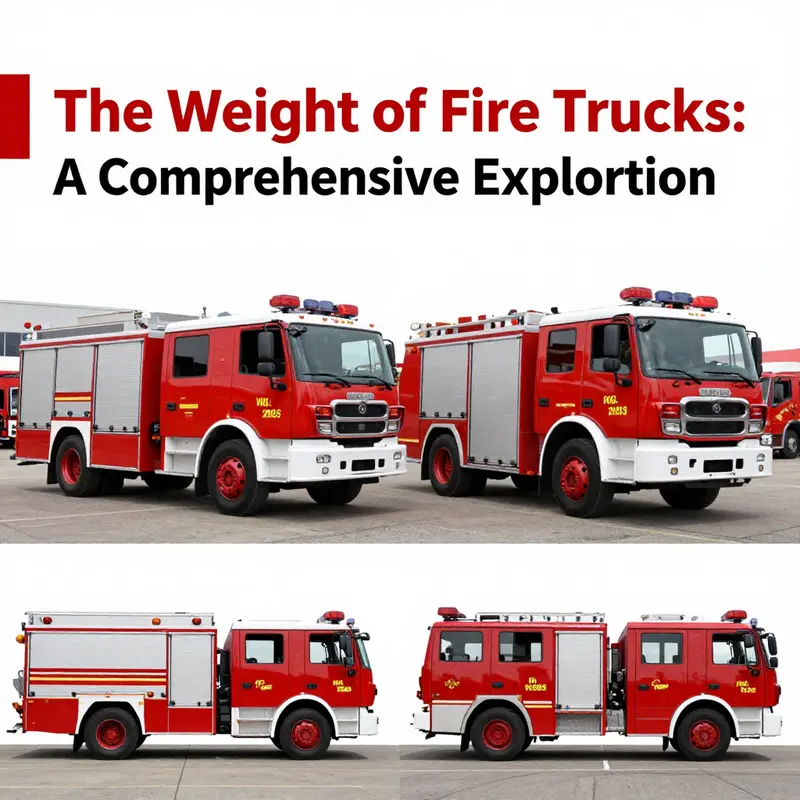
Weight is a tangible measure of capability, and in firefighting it operates as a practical constraint and a design driver. Fire departments use a spectrum of apparatus, each tuned to its mission. A heavy-duty water-tighting vehicle built to operate in congested urban canyons will weigh differently from a rugged unit built for open-country wildland work. In broad terms, the empty mass of a large, commercial-grade water-tanker fire vehicle sits in the 15 to 20-ton range, translating to roughly 30,000 to 40,000 pounds. But empty weight is only part of the story. When water, foam, rescue tools, hoses, ladders, and specialized equipment are loaded, the total mass climbs quickly, and with it the demands on braking, acceleration, handling, and structural integrity. This variation in weight across models is not chaos; it is a measured response to the demands of different environments and the rules that govern safety and performance.
At the heart of weight variation are a handful of design choices that cascade into mass. The chassis forms the backbone of stability and load-bearing capacity. A sturdier, multi-axle framework can carry heavier water tanks and pumps, but that extra steel and structure add to the overall weight. The water tank itself is a major contributor; its capacity is directly proportional to the mass it holds and the volume that must be moved. A larger tank means more water, and water is heavy. The pump system, including the pump’s capacity and the associated hydraulic machinery, adds more mass, both from the pump unit itself and the plumbing and hoses that connect it to the tank. Then there are ladders or aerial devices, which can add dozens, even hundreds, of kilograms depending on reach, extension mechanism, and load-bearing requirements. Add in rescue tools, foam concentrates, generators, lighting, onboard electronics, and communication gear, and weight accumulates in layers rather than as a single lump.
The concept of weight becomes even more nuanced when engineers consider how much can be loaded at any moment. The vehicle’s gross vehicle weight rating, or GVWR, sets a ceiling that accounts for the vehicle’s structural strength and its braking and handling performance with payload. Operators rarely think about GVWR in the moment of responding to a call, but it governs how much water and equipment can be carried safely and how quickly the vehicle can accelerate, stop, and maneuver. If a unit is loaded to or beyond its GVWR, performance degrades, tire wear accelerates, and the risk of wheel lift or chassis distortion increases. Therefore, weight is not just a static number; it is a dynamic parameter that shapes deployment strategies, response times, and even the types of missions a department assigns to a given vehicle.
A practical way to understand why weight matters lies in the two ends of the operational spectrum. In dense urban settings, maneuverability, turning radius, and braking demand a careful balance between chassis strength and weight. A vehicle that can navigate narrow streets, deliver water rapidly, and retreat a safe distance quickly benefits from a weight profile that favors controllability and tire contact with the road. Conversely, in open terrains where longer ranges and greater water volumes are required, payload tends to rise. The weight in those cases supports sustained pumping, larger water reserves, and extended reach, but it also places greater stress on the suspension, steering, and braking systems. In both cases, the distribution of weight—not just its total mass—shapes handling. A heavy tank mounted high can elevate the center of gravity, influencing roll stability, while a well-distributed load across multiple axles maintains traction and braking efficiency.
Beyond the mechanical and aerodynamics, weight interacts with how a vehicle is built and certified. In many markets, technical standards and certifications influence or even constrain how a vehicle is assembled, including how heavy it can be while still meeting safety requirements. Standards such as national or regional performance benchmarks specify not only how fast a unit should accelerate or how quickly it can discharge water but also how the vehicle’s weight must be distributed to ensure stable handling under diverse operating conditions. Compliance with these standards often drives the selection of components, the thickness of structural members, and the choice between heavier-duty steel versus lighter alloys, all of which feed back into the vehicle’s mass.
The global landscape of production adds another layer to this weight conversation. China has emerged as a substantial hub for fire apparatus production, with a dense ecosystem of manufacturers concentrated in a single region. This clustering supports vertically integrated supply chains that cover steel fabrication, hydraulic system integration, and final assembly and testing. The scale and proximity of suppliers can influence not only price but also the feasibility of offering heavier configurations. For international buyers, the advantage is clear: access to cost-competitive, capable platforms with the option for heavy-duty specifications that meet rigorous safety and performance standards. This regional economy helps explain why weight configurations for many platforms around the world share common mass ranges, yet remain tailored to local mission profiles.
Of course, weight is inseparable from safety and compliance. Buyers must evaluate technical standards and certifications when comparing models. In the United States, NFPA 1901 sets apparatus performance benchmarks and helps define acceptable configurations and payload tolerances. In Europe, EN 1846 governs the suitability of emergency vehicles, and CE marking signals conformity with European market expectations. Beyond regional compliance, ISO 9001 certification signals a manufacturer’s commitment to consistent quality management, while CCC certification remains a prerequisite for domestic sales in China. These standards do not remove weight from a vehicle; they shape the way weight is accommodated through design, testing, and quality control. They also affect lifecycle considerations, including maintenance intervals and parts availability, which in turn influence how heavy a fleet can be kept in service without compromising reliability.
The supplier ecosystem feeding these designs further complicates the weight conversation. A dense marketplace—especially in high-volume production regions—offers a broad spectrum of materials, components, and customization options. Suppliers typically provide flexible payment terms, digital verification tools such as live factory tours and pre-shipment video inspections, and standardized delivery timelines that, in many cases, range from roughly a few weeks to two months after order confirmation depending on the level of customization. For procurement managers, municipal agencies, and defense contractors, the challenge is to balance technical competence, operational reliability, risk exposure, and long-term partnerships. A robust sourcing framework does not simply chase the lowest upfront price; it seeks a robust, certifiable platform that can deliver the right weight, the right configuration, and the right support across the vehicle’s entire life cycle. The result is a fleet that stays within target mass envelopes while remaining adaptable to evolving firefighting needs.
In discussing weight, it is helpful to acknowledge how different design choices encode mass into a vehicle’s behavior. An emphasis on modular, steel-heavy construction can shift mass toward the chassis and body, which has implications for center of gravity and stability under high pitch loads like ladder deployment or high-pressure pump operation. On the other hand, advances in materials science and structural engineering can yield lighter yet equally strong frames, potentially reducing mass without sacrificing safety. The debate between weight and strength is ongoing in the field, with engineers weighing trade-offs between durability and performance. The interplay between tank size, chassis configuration, and equipment packages means that two trucks serving similar roles can diverge significantly in total weight, yet still meet the same fundamental mission: to pump water efficiently, reach inaccessible areas, and deliver critical tools where needed.
For readers curious about how these mass calculations translate into real-world procurement decisions, it is worth noting that many buyers approach weight as a part of a larger optimization problem. Cost, availability of spare parts, service networks, and maintenance overhead all feed into the total cost of ownership, which in turn influences whether a heavier configuration is deployed as a standard solution or reserved for specialized tasks. A well-considered acquisition strategy recognizes that weight is not merely a structural constraint but a signal about intended use, reliability, and readiness. When a department equates mass with capability, it is recognizing that heavy equipment can sustain longer operations and deliver more water or rescue capacity during critical incidents—precisely the kind of performance that ends up saving lives.
The practical upshot for practitioners is simple: if you want to compare fire trucks by weight, do so with an awareness of mission, not merely mass. Empty weight gives a baseline, but the payload, tank capacity, pump configuration, and tool load define the unit’s real-day performance. Understanding how manufacturers balance these factors within regulatory constraints—and how regional supply chains shape what is possible—helps explain why weights vary so much across models and how those variations align with the diverse theaters of operation that fire services must cover. This perspective frames weight not as an obstacle but as a design parameter that aligns form with function, efficiency with safety, and mass with mission.
To explore a practical facet of this balance, consider the structural and materials choices that influence mass in the broader context of fire apparatus design. The steel and alloy components, the thickness of structural members, the geometry of the body, and the configuration of load-bearing points all contribute to weight. For readers seeking deeper insight into how steel-based architectures shape overall mass and performance, see the steel fire apparatus discussion in the linked resource. steel fire apparatus
In sum, fire truck weight is not a single datum but a landscape. It reflects the vehicle’s intended duties, the engineering choices that enable those duties, and the regulatory and market environments in which the vehicle is built and operated. As procurement channels continue to evolve, and as manufacturers test new materials and configurations, weight will remain a central parameter—one that informs how quickly a unit can reach a scene, how much water it can deliver, and how safely it can operate under demanding conditions. The dialogue between mass, mission, and machinery will continue to shape the next generation of life-saving fire apparatus, and readers who track these developments will gain a clearer sense of why some trucks feel heavier than others even when they seem to perform similar tasks. ExternalContext: For a broader view of the global supplier ecosystem that underpins these decisions, external readers may consult the industry directory of international fire-truck suppliers.
External resource: https://www.alibaba.com/showroom/fire-trucks.html
Final thoughts
Understanding the weight of fire trucks is not just a matter of curiosity for enthusiasts, but a critical aspect of effective firefighting. The chapters explored various fire truck types and their weight characteristics, how equipment impacts their overall mass, the legal regulations surrounding vehicle weights, the relationship between weight and firefighting efficiency, and a comparative analysis of models. Firefighters must be acutely aware of how these factors influence their performance in emergencies, as every ounce can make a difference in mobility and effectiveness on the scene. By gaining insights into these considerations, we appreciate the engineering marvel that fire trucks represent and their indispensable role in saving lives.